



OPEC+ set for existing deal despite China, overcompliance concerns
The OPEC and its allies (OPEC+) are continuing to slowly relax the output cuts they introduced in 2020
Share this:

The OPEC+ meets again on Thursday and once again it is expected to confirm a previously agreed output hike of 430,000 barrels per day in June.
The OPEC and its allies (OPEC+) are continuing to slowly relax the output cuts they introduced in 2020 when demand collapsed as major economies went into lockdowns to curb the spread of Covid. The group is set to increase output targets by 432K bpd every month until the end of September. At that point, the remaining production cuts should be fully unwound.
But demand has recovered strongly from the lows of 2020 and oil prices have gushed higher, before surging again on the back of Russia’s invasion of Ukraine. Against this backdrop, you would think the OPEC+ would be keen to add oil more quickly than they have been doing so. Yet, they have continually refused to do that, while many members have been unable to ramp up their production to levels called for under the supply deal.
This begs the question: What is the point of ratifying another increase in production month after month, if the alliance is not able to reach it? Why are they still going at it?
The short answer is that the OPEC does not want to send the wrong signal. It has already come under a lot of scrutiny by not being able or willing to raise its output more than it has done so far. If it were to set the productions targets even lower, this would give some members more excuse not to hit the production target, and thus keep the market undersupplied. Even if the OPEC+ collectively wanted to raise output even more slowly, it would not look good on their part. Yes, you have a slowing Chinese economy, but this is to be offset by falling Russian oil exports as Western nations attempt to phase out their dependence on Russian energy.
EU unveils plan to ban Russian oil imports
On Wednesday, the EU announced a phased embargo on Russian oil. The plan, which needs to be ratified by all 27 EU member states, will see Russian supply of crude oil phased out within six months and crude products by the end of the year. If it manages to convince its members to ratify the plan and prevent Hungary and Slovakia to buy more oil than they need, then this will have a huge impact on Russian oil exports.
Overcompliance
At some point, the OPEC will need to address over-compliance. According to a Reuters survey, OPEC’s April oil production rose only by 40K bpd from March. As a result, OPEC compliance with pledged cuts was 164%, compared to 151% in March. With the exception of February, the OPEC has consistently undershot the pledged hikes since October.
The problem is that many producers lack the capacity to pump more crude. This is because of insufficient investment, which was exacerbated by the pandemic. Among the OPEC members, Libya and Nigeria have struggled to raise their production the most. In the case of the former, it was losing more than 550,000 bpd from blockades on fields and terminals at one point in April. Libya is among the exempt members from making output cuts. Although Saudi Arabia and to a lesser degree Iraq have moved to offset the production short falls, this has not been near enough to meet the group’s target.
As any investment in the industry will take time to help increase supply, it looks very unlikely that the OPEC will address the overcompliance issues at this meeting. It will also point to the situation in China as a reason to remain cautious. As a result, we expect the OPEC to stick to a deal reached last July and hike output by another 432K bpd.
What does it all mean for oil prices?
In short, we are more likely to see elevated levels of Brent and WTI prices than lower, especially given the difficultly the OPEC has had in raising its oil output of late. In other words, the market is likely to remain tight for a while yet. Oil prices will thus remain supported on the dips, hurting consumer incomes and underpinning inflationary pressures. The only caveat to that view is that if China ramps up its lockdowns due to its zero Covid policy and the recent spread of the virus there. Indeed, the OPEC+ will be keen to highlight this risk as it explains why it is not opting for higher output quotas than planned.
Brent likely to climb around $110-$120 range
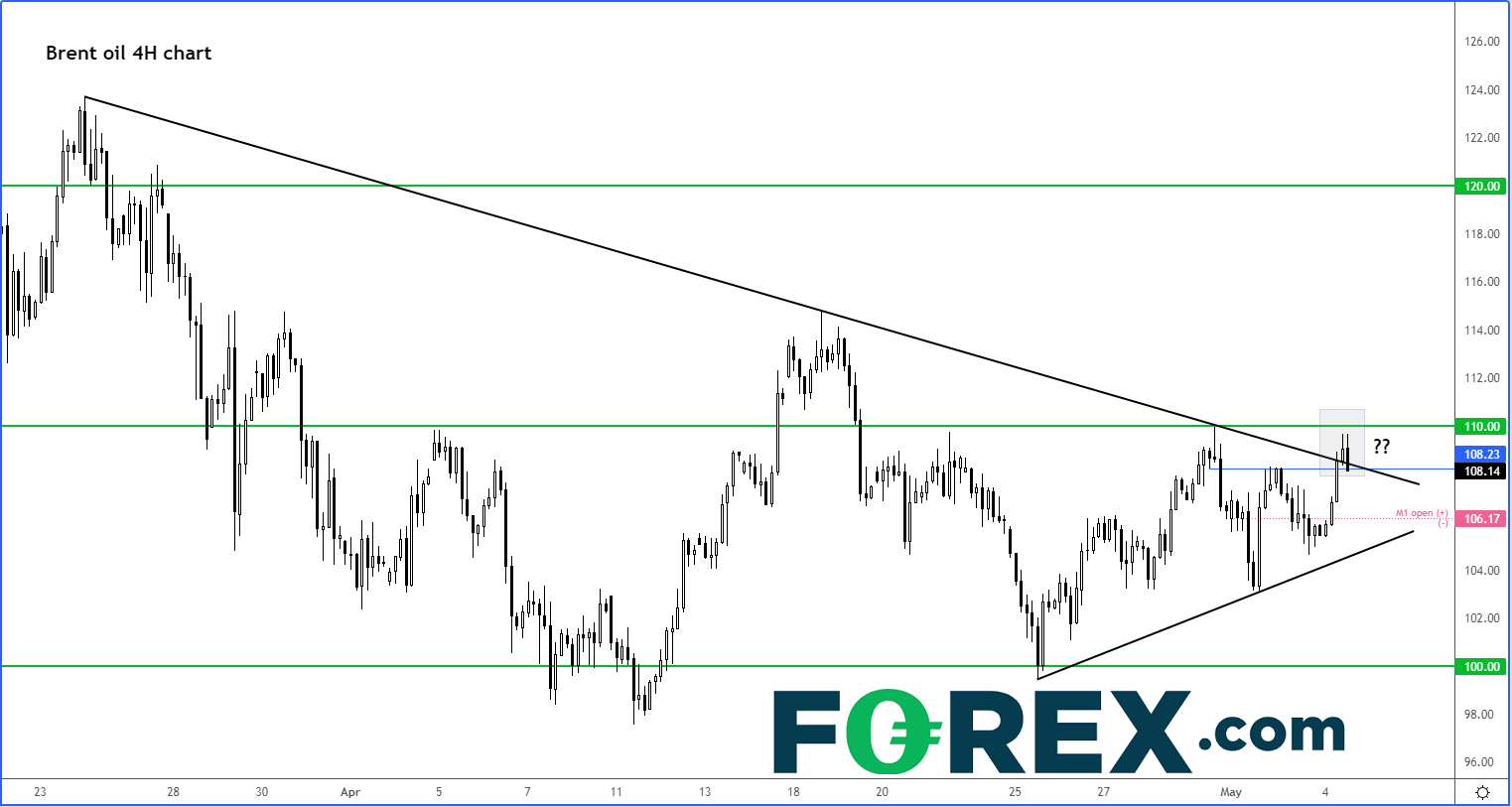
Brent may have formed a base around $100.00 after spending several weeks in consolidation above this psychologically important level. If it manages to hold the breakout above the trend line shown on the 4-hour chart, then prices may find a new range between $110 to $120 per barrel, especially in light of the Russian oil export ban and OPEC’s ongoing policy stance.
Source: StoneX and TradingView.com
How to trade with FOREX.com
Follow these easy steps to start trading with FOREX.com today:
- Open a Forex.com account, or log-in if you’re already a customer.
- Search for the pair you want to trade in our award-winning platform.
- Choose your position and size, and your stop and limit levels.
- Place the trade.
The OPEC+ meets again on Thursday and once again it is expected to confirm a previously agreed output hike of 430,000 barrels per day in June.
The OPEC and its allies (OPEC+) are continuing to slowly relax the output cuts they introduced in 2020 when demand collapsed as major economies went into lockdowns to curb the spread of Covid. The group is set to increase output targets by 432K bpd every month until the end of September. At that point, the remaining production cuts should be fully unwound.
But demand has recovered strongly from the lows of 2020 and oil prices have gushed higher, before surging again on the back of Russia’s invasion of Ukraine. Against this backdrop, you would think the OPEC+ would be keen to add oil more quickly than they have been doing so. Yet, they have continually refused to do that, while many members have been unable to ramp up their production to levels called for under the supply deal.
This begs the question: What is the point of ratifying another increase in production month after month, if the alliance is not able to reach it? Why are they still going at it?
The short answer is that the OPEC does not want to send the wrong signal. It has already come under a lot of scrutiny by not being able or willing to raise its output more than it has done so far. If it were to set the productions targets even lower, this would give some members more excuse not to hit the production target, and thus keep the market undersupplied. Even if the OPEC+ collectively wanted to raise output even more slowly, it would not look good on their part. Yes, you have a slowing Chinese economy, but this is to be offset by falling Russian oil exports as Western nations attempt to phase out their dependence on Russian energy.
EU unveils plan to ban Russian oil imports
On Wednesday, the EU announced a phased embargo on Russian oil. The plan, which needs to be ratified by all 27 EU member states, will see Russian supply of crude oil phased out within six months and crude products by the end of the year. If it manages to convince its members to ratify the plan and prevent Hungary and Slovakia to buy more oil than they need, then this will have a huge impact on Russian oil exports.
Overcompliance
At some point, the OPEC will need to address over-compliance. According to a Reuters survey, OPEC’s April oil production rose only by 40K bpd from March. As a result, OPEC compliance with pledged cuts was 164%, compared to 151% in March. With the exception of February, the OPEC has consistently undershot the pledged hikes since October.
The problem is that many producers lack the capacity to pump more crude. This is because of insufficient investment, which was exacerbated by the pandemic. Among the OPEC members, Libya and Nigeria have struggled to raise their production the most. In the case of the former, it was losing more than 550,000 bpd from blockades on fields and terminals at one point in April. Libya is among the exempt members from making output cuts. Although Saudi Arabia and to a lesser degree Iraq have moved to offset the production short falls, this has not been near enough to meet the group’s target.
As any investment in the industry will take time to help increase supply, it looks very unlikely that the OPEC will address the overcompliance issues at this meeting. It will also point to the situation in China as a reason to remain cautious. As a result, we expect the OPEC to stick to a deal reached last July and hike output by another 432K bpd.
What does it all mean for oil prices?
In short, we are more likely to see elevated levels of Brent and WTI prices than lower, especially given the difficultly the OPEC has had in raising its oil output of late. In other words, the market is likely to remain tight for a while yet. Oil prices will thus remain supported on the dips, hurting consumer incomes and underpinning inflationary pressures. The only caveat to that view is that if China ramps up its lockdowns due to its zero Covid policy and the recent spread of the virus there. Indeed, the OPEC+ will be keen to highlight this risk as it explains why it is not opting for higher output quotas than planned.
Brent likely to climb around $110-$120 range
Brent may have formed a base around $100.00 after spending several weeks in consolidation above this psychologically important level. If it manages to hold the breakout above the trend line shown on the 4-hour chart, then prices may find a new range between $110 to $120 per barrel, especially in light of the Russian oil export ban and OPEC’s ongoing policy stance.
Source: StoneX and TradingView.com
How to trade with City Index
You can trade with City Index by following these four easy steps:
- Open an account, or log in if you’re already a customer
• Open an account in the UK
• Open an account in Australia
• Open an account in Singapore
- Search for the company you want to trade in our award-winning platform
- Choose your position and size, and your stop and limit levels
- Place the trade
Related tags:
Latest market news



The complete CFD trading experience
Award-winning platforms, competitive spreads, low commissions and dedicated support.
We live and breathe the markets and are dedicated to helping traders realise their ambitions as we continue to set the industry bar.
Economic calendar
Web Trader platform
Our sophisticated web-based platform is packed with features.
Related articles
S&P 500 forecast: Stocks extend drop as correction risks grow
US and global equity markets have extended Wednesday’s sell-off, with Wall Street opening lower after a weak handover from Asia and Europe. The deterioration in risk appetite has been spreading across global markets. The dollar was firmer, Treasury yields were holding onto yesterday’s gains, while gold, silver and bitcoin were all under pressure alongside equities and major currencies.
Wall Street Forecast: DJIA falls as treasury yields hit new highs and ahead of the Trump-Xi summit
U.S. stocks are falling, further extending losses from the previous session, as oil prices move higher alongside Treasury yields and caution reigns ahead of the summit between President Trump and Xi Jinping.

Gold forecast: XAU/USD could take a larger dive after the big rise in yields
Gold prices have been falling in the last few days after last week’s post-FOMC pop faded amid rising interest rate expectations, higher oil prices and a strengthening US dollar. As before, I wasn’t convinced gold would thrive in the current macro backdrop.
StoneX Europe Ltd may make third party material available on this website which may contain information included but not limited to the conditions of financial markets. The material is for information purposes only and does not contain, and should not be construed as containing, investment advice and/or investment recommendation and/or an investment research and/or an offer of or solicitation for any transactions in financial instruments; any decision to enter into a specific transaction shall be made by the client following an assessment by him/her of their situation.
StoneX Europe Ltd makes no representation or warranty and assumes no liability as to the accuracy or completeness of the information provided, nor any loss arising from any investment based on a recommendation, forecast or other information supplied. You should always seek independent advice as to your suitability to speculate in any related markets and your ability to assume the associated risks, if you are at all unsure. We are not under any obligation to update any such material. Any opinion made may be personal to the author and may not reflect the opinion of StoneX Europe Ltd.