
Risk sentiment remained somewhat downbeat in Europe on Friday morning as oil prices continued to push higher, causing the major EU indices to remain under pressure. Investors were not looking to take on much risk ahead of the weekend, which is totally understandable, even if they were still holding out hope that soon there might be some positive news to come. After falling for three weeks on signs of de-escalation, Brent was up some 17% on the week at the time of writing. Considering that a couple of US indices have hit record highs this week and have pulled back from there only modestly, it is not a full-on risk-off environment. Granted, the US is far less impacted by the Middle East conflict than Europe and Asia area, but the impressive performance clearly shows investors are still hopeful that the situation will be resolved soon and without too much damage to the global economy. For crude oil forecast however, the ongoing stalemate can only mean one thing: higher prices. The higher the oil price goes, the worse it will be for European assets. This explains why the DAX has been unable to rally to new highs despite the S&P 500’s advance to uncharted territories.
Crude oil closes in on $110 as US-Iran stalemate drags on
Oil has been on a firm upward trajectory this week, clearly driven by the collapse of planned talks between the US and Iran. Tehran has refused to engage while the naval blockade remains in place, fuelling concerns over tightening supply and pushing prices well above $100 per barrel again. There was a brief pause when Trump opted to extend the ceasefire, but the effect proved short-lived. With no clear timeline for negotiations and both sides entrenched, markets remain in limbo — and prices continue to grind higher.
Brent crude was trading around $107 per barrel on Friday, with tensions in the Strait of Hormuz ongoing. Recent incidents — including tanker seizures and military action at sea — have only reinforced the risk premium being embedded in prices.
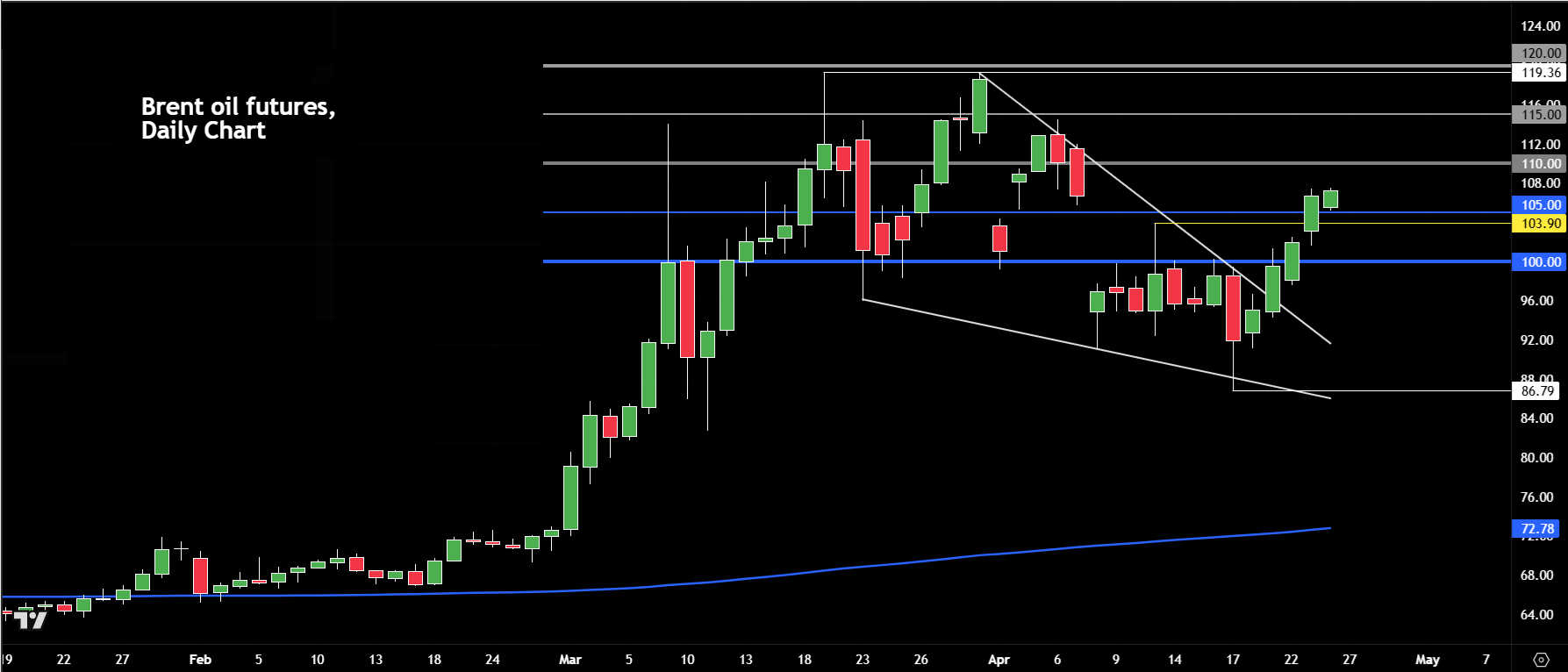
In a worst-case scenario, a renewed escalation into open conflict could trigger a much sharper move higher. For now, as long as the Strait remains restricted, that geopolitical premium is unlikely to dissipate. Verbal intervention alone is unlikely to bring prices down in any meaningful way.
Ultimately, the direction of oil will continue to hinge on developments between the US and Iran. Until there is a clear resolution, the path of least resistance appears higher and Brent could be heading above $110 soon.
The global economy remains deeply reliant on energy flows from the Gulf, and alternative supply sources are limited. The longer the disruption persists, the greater the imbalance becomes. While some demand adjustment may occur — through rationing or reduced consumption — it is unlikely to offset the shortfall in any significant way.
In practical terms, a sustained move lower in oil prices would likely require a genuine reopening of the Strait of Hormuz and a resumption of normal shipping flows. Until then, upside risks remain firmly in place.
DAX forecast undermined oil surges
Oil continues to dominate the narrative, with the Strait of Hormuz still effectively closed as US-Iran talks remain stalled. Brent prices have now pushed well past that psychologically important $100 mark and were approaching $110. Oil could go even higher if the geopolitical situation deteriorates further.
Rising oil prices are weighing on equity markets in Europe, where economies remain heavily reliant on imported energy. The German DAX reflects this strain, lagging behind US indices such as the Nasdaq 100, which have managed to push to fresh highs.
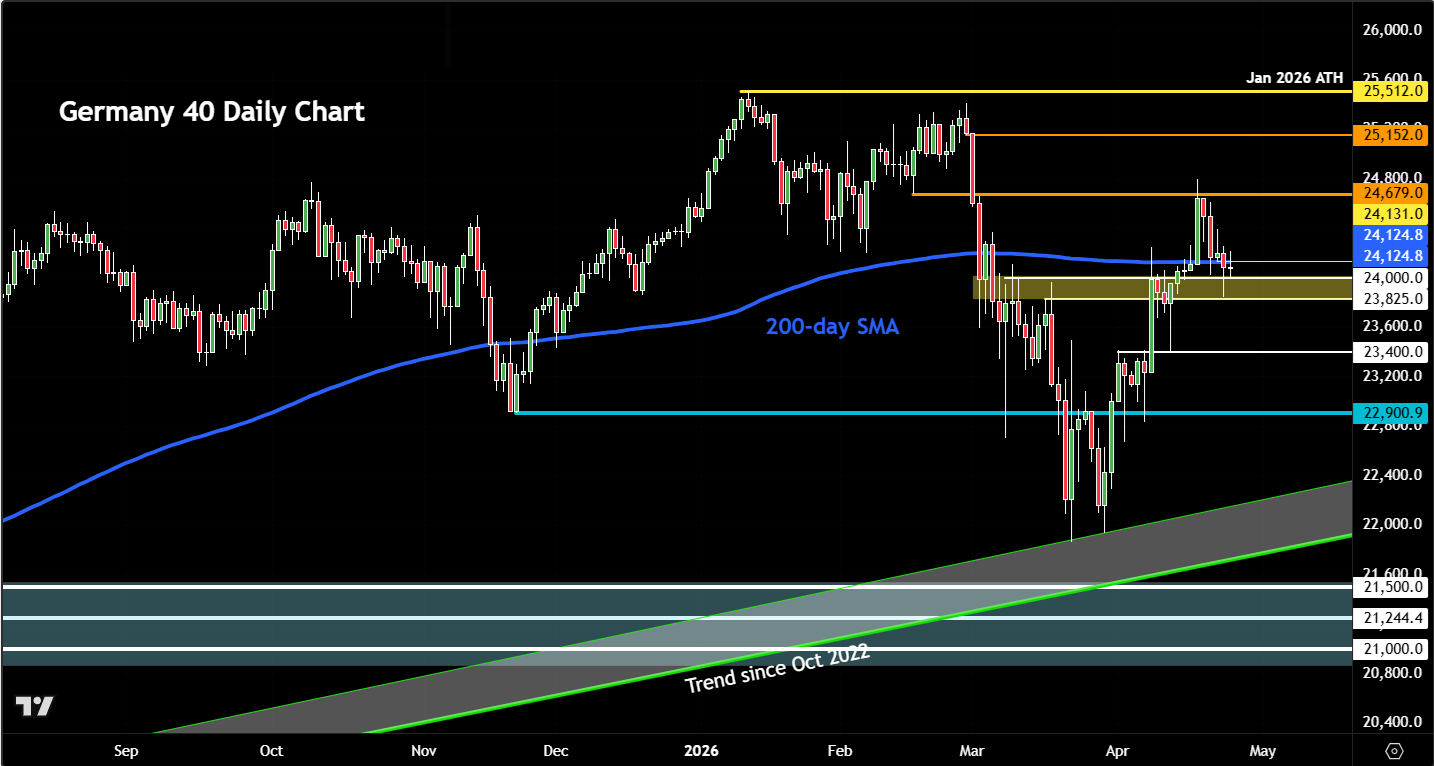
Technically, the DAX is testing an important support zone in the 23,825–24,000 region — an area that previously acted as resistance before the recent breakout. The market has bounced from this level, but we haven’t seen much upside follow-through yet with the 200-day average providing resistance at around the 24,130 area. A a move back above this key moving average on a closing basis, would be seen as constructive.
However, a break below the support area mentioned would shift the tone more decisively bearish in the short term, opening a move towards 23,400, and potentially down to the 22,900 region — the lows seen late last year.

-- Written by Fawad Razaqzada, Market Analyst
Follow Fawad on Twitter @Trader_F_R