October 17, 2026 04:00 AM



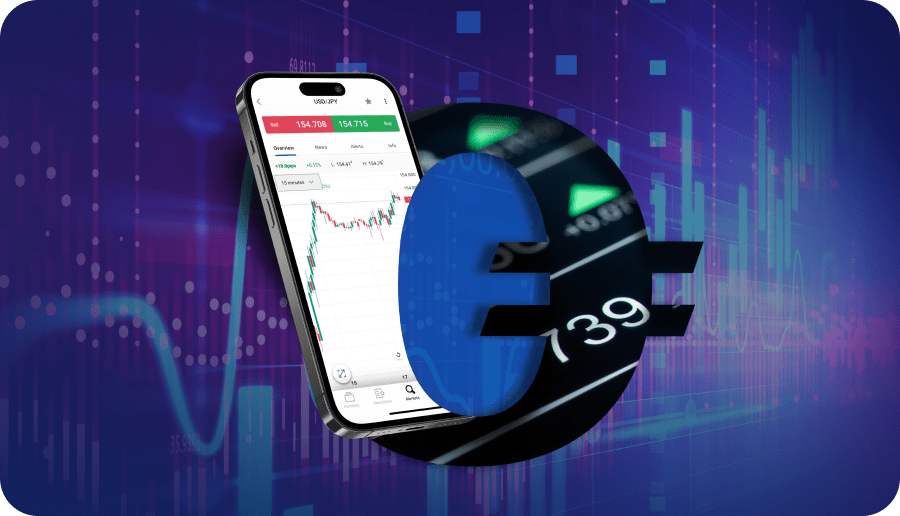
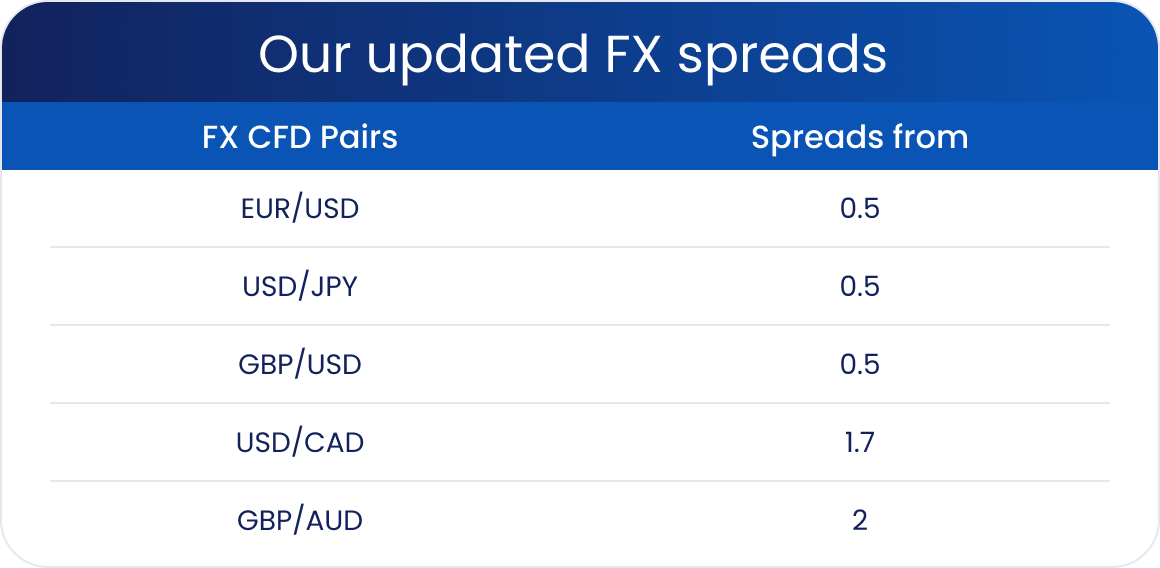
Enjoy lower trading costs – including EUR/USD, USD/JPY and GBP/USD from just 0.5 points with zero commissions
Including majors, minors and exotics
ForexBrokers.com 2025 Annual Awards “Best in Class - Overall” winner



Forex trading is the buying and selling of global currencies. When you trade forex with FOREX.com Australia, you can go long or short on the price of currency pairs using CFDs or Spot FX.
Currency markets are open 24 hours a day because there’s no central exchange. Instead, prices are determined by interbank trading, the exchange of currencies between banks on a constant basis, all over the world.
¹ Based on demo and active live trading accounts globally 2025.
² Elapsed time between market order receipt and execution globally between March 31, 2025, 5:00 pm ET, and April 30, 2026, 5:00 pm ET.
¹ Based on demo and active live trading accounts globally since 2023.
² Elapsed time between market order receipt and execution globally between March 31, 2025, 5:00 pm ET, and April 30, 2026, 5:00 pm ET.
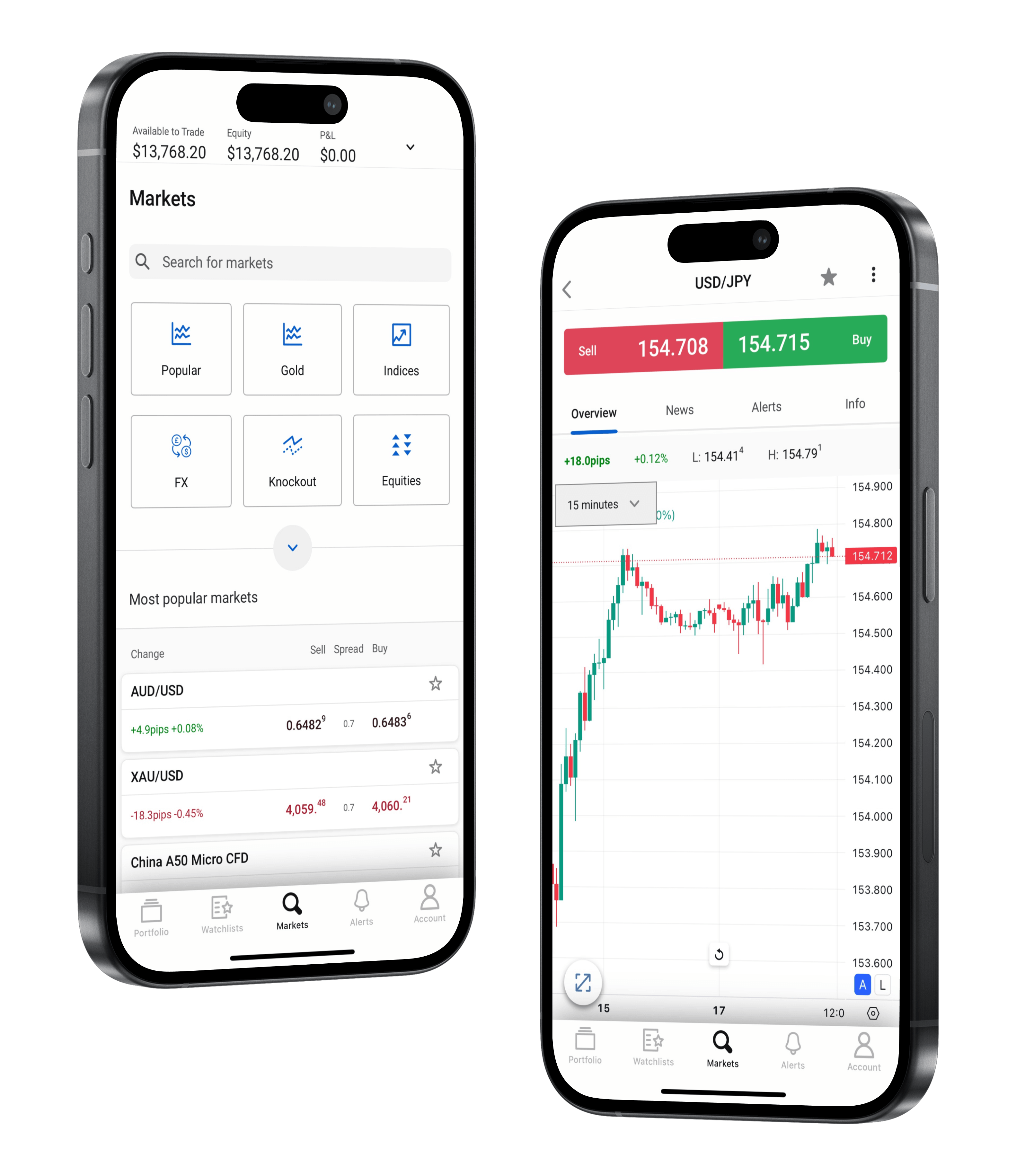
Seize trading opportunities with our easy-to-use mobile apps, with simple one-swipe trading, advanced charting, and seamless execution. Available on Android and iOS.
Complete with in-chart trading, custom indicators, alerts and drawing tools.
Gain deeper insight into your trading and discover how you could improve your performance.


*T&Cs apply
Yes, forex trading in Australia is legal and is regulated by the Australian Securities and Investments Commission (ASIC). There is a strict framework that governs forex trading, but this is to protect Australian traders and promote healthy competition.
Brokers and banks have to be registered with ASIC before they can offer forex and CFDs.
Learn more about FOREX.com Australia
You as an individual do not need a licence to trade forex in Australia. However, FOREX.com does have an Australian Financial Services Licence (AFSL) as required by ASIC.
Learn more about FOREX.com Australia
There is no minimum legal age to trade forex in Australia. However, you must have a bank account to fund your forex trading account, and you can’t open a bank account in Australia if you’re under 18 without parental consent.
See what documents you need to open a forex trading account in Australia.
Forex is traded by a broad range of participants, from banks, brokers, and hedge funds to retail traders. Any company that operates or has customers overseas will need to trade FX. Central banks are also active in forex markets, as they seek to keep their currency trading within a specific range.
Learn more about forex trading.
Banks trade forex on behalf of their clients and as speculative trades from their own dealing desks – the purpose of which is to hedge client exposure. Banks trade millions of dollars’ worth of forex, so have a greater influence over the market than smaller players.
Banks also don’t trade forex over short timeframes like retail traders do, instead they only take a few larger positions that they’ll hold for longer.
Learn what moves forex markets.
Foreign exchange (forex) or FX trading involves trading the prices of global currencies, and at FOREX.com it is possible to trade on the prices of a huge range of global currencies using CFDs. Currency trading allows you to speculate on the movement of one currency against another, and is traded in pairs, for example the euro against the US dollar (EUR/USD).
Currency markets are open 24 hours a day. There is no central exchange for trading Forex: instead prices are determined by interbank trading, the exchange of currencies between banks on a constant basis, all over the world.
The currency market is much bigger than share markets. The daily volume of global forex markets is estimated at over $6 trillion.
Currencies are traded in pairs – this means you can only trade one currency against another. You can’t trade a currency in isolation. Each currency has its own three letter code, for example, the US Dollar is abbreviated to USD.
An example of a major currency pair is the USD/JPY pair.
If traders are positive on the prospects for the Yen, they would expect overall number to go down – i.e. the Yen would be getting stronger against the Dollar. Traders would be buying less Yen with a Dollar as the Yen got stronger. Similarly, if the Yen was expected to weaken, forex traders would expect the Yen number to go up, reflecting the fact that the dollar could buy more yen.
Currency markets never decline in absolute terms – for one currency to go up, there will be others weakening against it. All currencies cannot go up at the same time. There is always going to be a loser.
Currency markets are important to a broad range of participants, from banks, brokers, hedge funds and investor traders who trade forex (FX). Any company that operates or has customers overseas will need to trade currency. Central banks can also be active in currency markets, as they seek to keep the currency they are responsible for trading within a specific range.
*Includes all valid trade and orders requests globally between 1 and 28 February 2025, excluding those entered on the MT4 platform.
† Category award winner for 'Best in Class Overall' and 'Best in Class for Platforms & Tools' - ForexBrokers.com 2025 Annual Awards