
Crude oil prices have remained largely negative following a late day recovery yesterday when doubts were raised about an imminent peace deal between Ukraine and Russia. Reports that they had accepted the peace deal terms were off the mark obviously, but the mood is still constructive enough, even if several tricky issues remain under negotiation between Kyiv, Moscow and Washington. The US is pushing harder than ever to land a truce, and Ukraine is now signalling a willingness to bend on certain points. Steve Witkoff, Trump’s peace envoy, is speaking with President Putin today. Any hint of real progress could soften energy prices, although even without a deal the upside potential for oil prices remains limited given the underlying issues: excessive supply and weak demand growth. For this reason, the crude oil outlook is still leaning slightly bearish, and we could see more losses in the weeks ahead. Much of the bearish factors have already been priced by now, but the overall macro backdrop is not yet supportive.
Could Russia-Ukraine conflict end soon?
Oil’s more recent weakness has been due to a potential peace deal between Ukraine and Russia. Now, nothing is signed yet—there’s still a lot of negotiation left - but markets have started to price in this deal, which is why both the euro and European stocks have rallied. Risk sentiment has improved but you might be wondering why the reports haven’t also lifted oil prices given the risk on backdrop. Well, that’s partly because peace in the Ukraine-Russia conflict could mean sanctions on Russia may eventually be eased, and that could bring more Russian supply back into a global oil market that’s already pretty well-supplied. More supply equals more downward pressure on prices.
Oversupply concerns linger
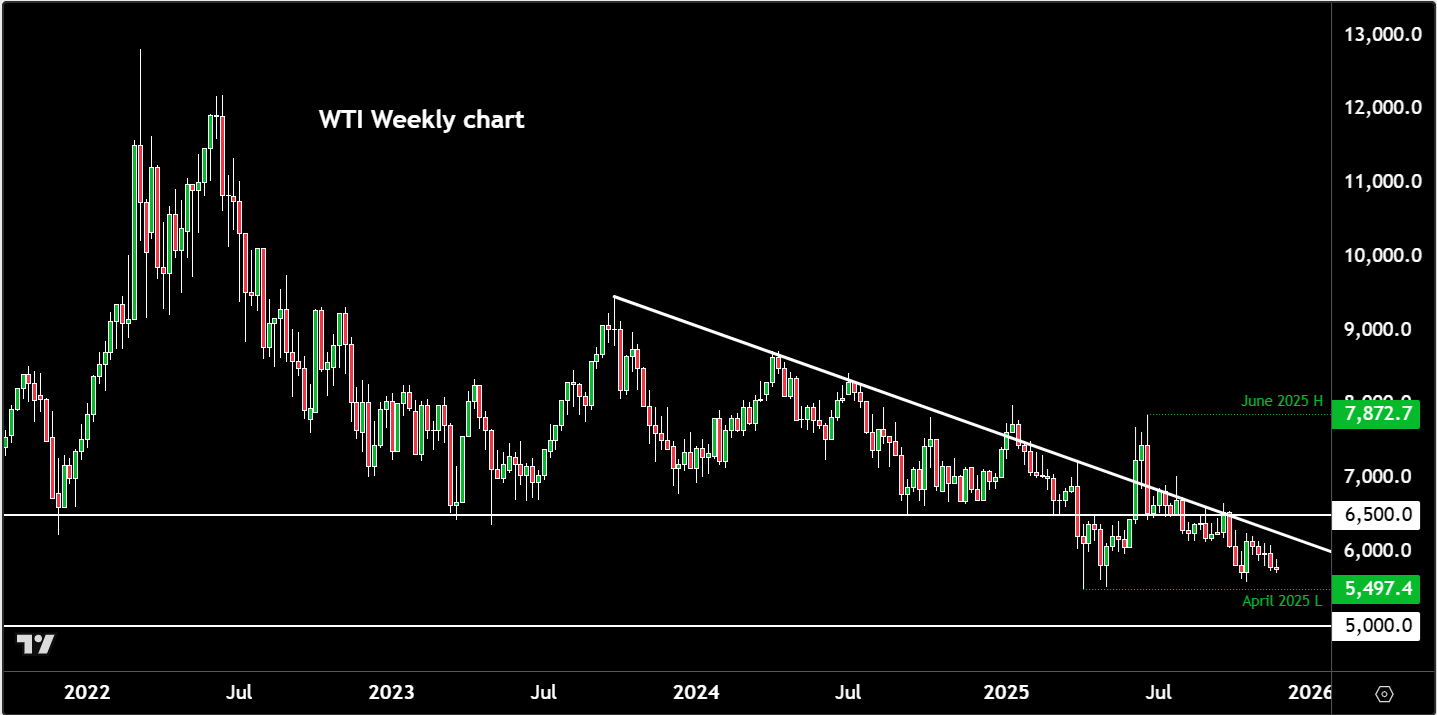
Even before this geopolitical shift, crude was already struggling under heavy bearish pressure. WTI had been on a multi week losing run and holding below the psychologically important $60.00 level. The OPEC+ has been releasing previously withheld output over recent months. In simple terms—they’re pumping more oil, and the market doesn’t really need it right now. Then you’ve got US shale producers, who’ve been producing more than needed. That extra output adds to a growing global glut. When too much oil hits the market, prices naturally fall. And right now, oversupply concerns remain front and centre.
Weakening demand
Supply is only half the story, although a bigger half when it comes to oil prices. But the demand outlook is also looking shaky. Recent US economic data has been soft, raising questions about whether oil demand will hold up heading into next year. If demand weakens while supply keeps rising—as it’s expected to—the market could tip further into oversupply. In that scenario, oil may need to adjust lower to find a new equilibrium. So, without stronger economic data or signs of improving demand, crude prices could remain under pressure.
Crude oil outlook: Technical analysis
From a technical perspective, the chart of oil tells you everything you need to know. As shown by the daily chart of Brent, crude oil continues to print lower lows and lower highs, which is classic downtrend behaviour.
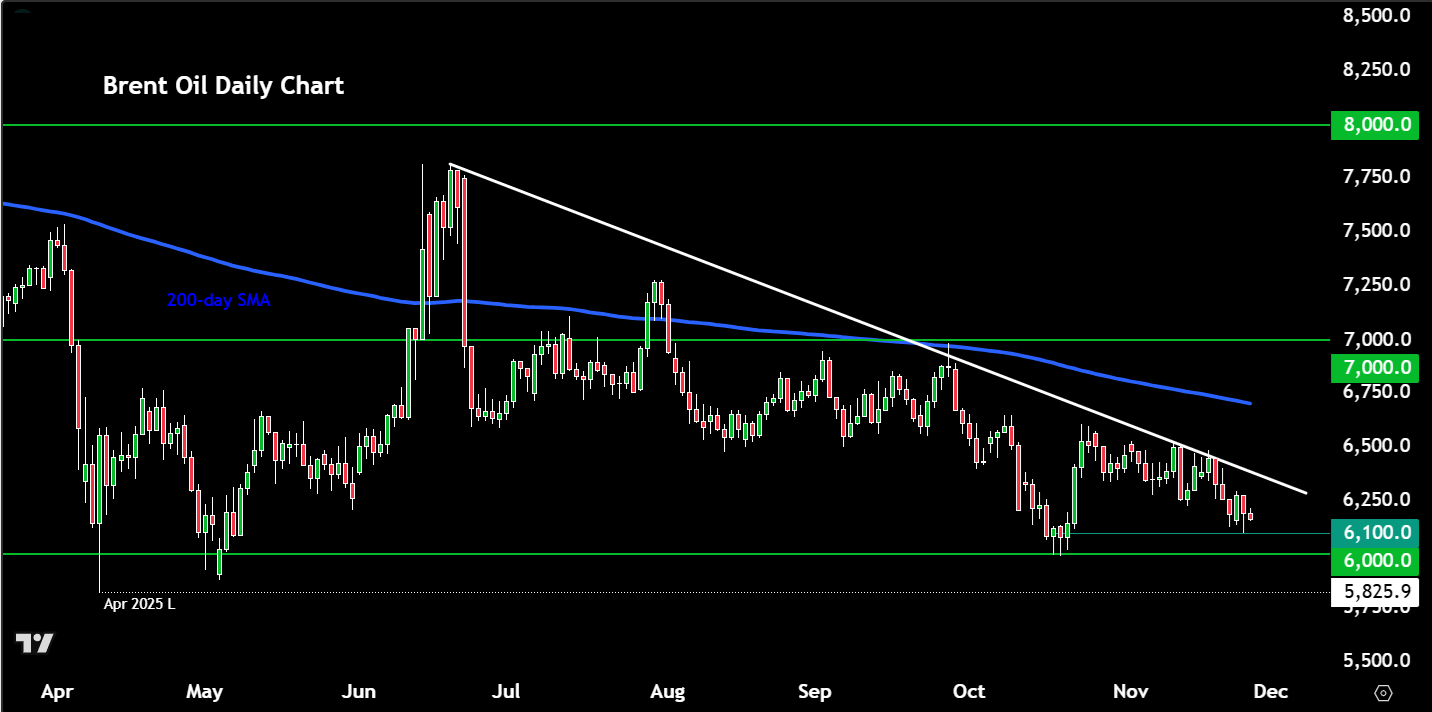
The key level to watch below $61, yesterday’s low, right now is $60 per barrel. It’s a major support zone. If Brent breaks below that, the next target on the downside is $58.25, which was the low back in April.
Unless something changes fundamentally, we could easily see a continuation of the current downtrend in the days and weeks ahead.
In summary
So, between improving geopolitical conditions, rising supply, weakening demand, and a bearish technical picture, crude oil is facing pressure from pretty much all directions. For that reason, we maintain a slightly bearish crude oil outlook, knowing full well that much of the negative influences are already priced in.
Source for all charts used in this article: TradingView.com

-- Written by Fawad Razaqzada, Market Analyst
Follow Fawad on Twitter @Trader_F_R