
- EUR/JPY coils in pennant structure near highs
- Momentum indicators starting to turn higher
- BOJ decision key for near-term yen direction
- No hawkish surprise may favour upside break
Summary
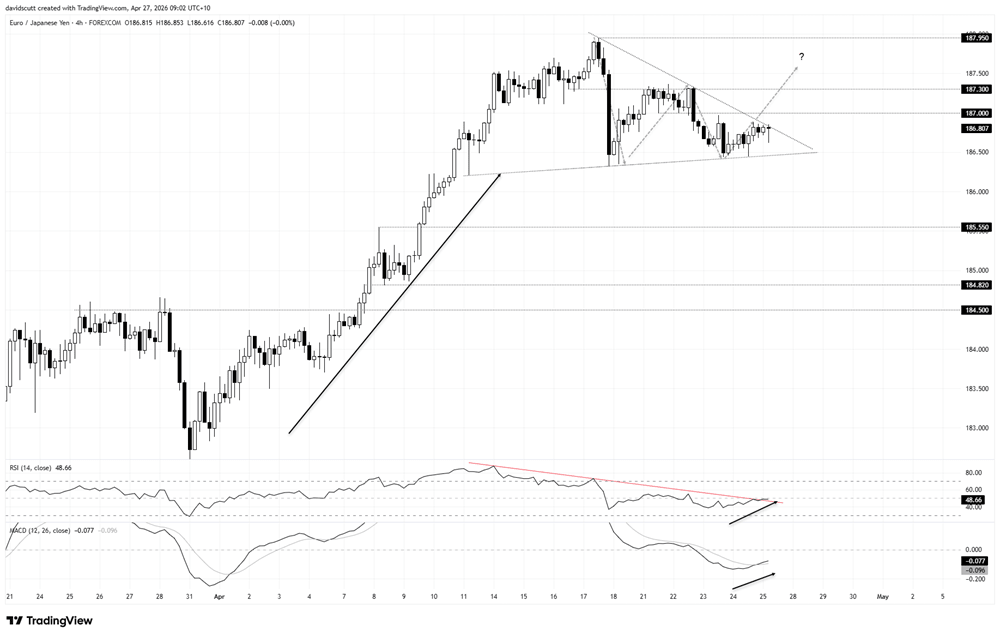
EUR/JPY is eyeing a potential bullish breakout from a pennant structure on the H4 chart, putting the focus on whether the price can retest the April highs. With momentum indicators starting to improve and the looming BOJ decision carrying major implications for the yen, the setup offers a blend of technical opportunity and event risk. Unless the BOJ delivers a genuine hawkish surprise, the broader backdrop may continue to favour yen weakness and upside risks for the pair.
Pennant Breakout in Focus
Source: TradingView
With the price coiling within a structure resembling a bull pennant, and with signs momentum may be starting to turn, traders should be alert to the risk of a bullish breakout and retest of the April highs in EUR/JPY. After a strong rebound from the swing low set in late March, the pair has spent much of the past fortnight consolidating in a compression pattern characterised by a series of higher lows and lower highs on the H4 chart.
After grinding higher late last week, the price now finds itself testing the downtrend running from the high set on April 17. Should we see a clean break of this level, it may be enough to encourage fresh longs, putting 187 and 187.30 on the immediate radar given both have acted as support and resistance over recent weeks. A push above the latter would likely see bulls hone in on 187.95. It screens as an appropriate trade target for those looking to act upon a possible bullish breakout. A stop beneath pennant support would provide protection against reversal.
While still neutral for the moment, the message from the oscillators suggests momentum may be starting to shift back in favour of the bulls. RSI (14) had been trending lower over recent weeks but has since broken higher to sit at 50. MACD has also crossed the signal line from below but remains marginally in negative territory, suggesting at the very least the downside strength evident over the past fortnight is fading. Should this trend persist, it would favour long setups over shorts.
BOJ Looms Large for Yen
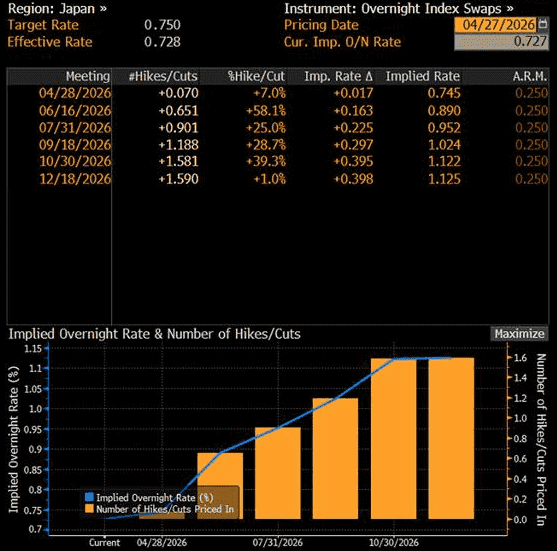
As for fundamental catalysts that could generate volatility in EUR/JPY, as outlined in my weekly outlook guide for USD/JPY released over the weekend, the looming BOJ interest rate decision on Tuesday will be important for the yen’s near-term trajectory not only against the dollar but also major crosses. With very little signalling of an impending hike from Governor Ueda despite ample opportunity over recent weeks, market pricing for a 25 basis point increase has dwindled from above 70% earlier this month to now less than 10%. That means the strongest market reaction would likely come from a surprise hike, an outcome that would be detrimental to the bullish trade idea outlined above.
If the BOJ keeps policy rates steady, markets expect a hawkish hold, indicating rates are still likely to rise further once certainty is restored and if it remains on track to achieve its growth and inflation forecasts, which will be updated at this meeting. But that is largely expected, as indicated by the implied probability from swaps markets that put a June hike around 65%.
Source: Bloomberg
With an inflation pulse re-emerging as a result of higher energy prices stemming from the Iran war and the effective shuttering of the Strait of Hormuz, it may require a substantial hawkish surprise, be it multiple dissents from members voting for a hike at this meeting, or sizeable upside revisions to inflation forecasts alongside only modest GDP downgrades, to convince markets the BOJ is willing to lift policy to levels that bring inflation back to acceptable levels.
If there are few dissents and the forecasts are skewed more towards downside growth risks than upside inflation risks, it would be an invitation for traders to resume selling the yen. Markets have been telling the BOJ and Japanese government for months that higher rates are required to compensate for the inflation and fiscal outlook, otherwise the adjustment mechanism will likely come via a weaker yen instead. While renewed yen weakness may risk the MoF instructing the BOJ to intervene in support of the currency, as seen in prior intervention episodes, unless conducted in an environment where fundamentals are aligned, such an outcome would likely only offer temporary relief rather than solve the issue entirely.