

Key Events
- Mean reversion across major markets is becoming evident following expectations of a hawkish Fed election outcome, as markets transition from the New Year January effect into February.
- The DXY’s sharp rebound above the 97 level capped gains across major currency pairs, keeping EURUSD below 1.20 and GBPUSD below 1.38.
- U.S. NFP data may alter the sustainability of the recent dollar rebound, alongside evolving geopolitical negotiations under the Trump administration, keeping high-time-frame levels in focus amid rapidly shifting headlines.
Following the sharp momentum seen between late 2025 and early 2026, markets appear to be entering a mean-reversion phase—a classic pattern often observed after the Christmas rally and New Year effect, typically unfolding into February and March. High-time-frame levels remain critical in defining longer-term structural shifts amid fast-moving headlines.
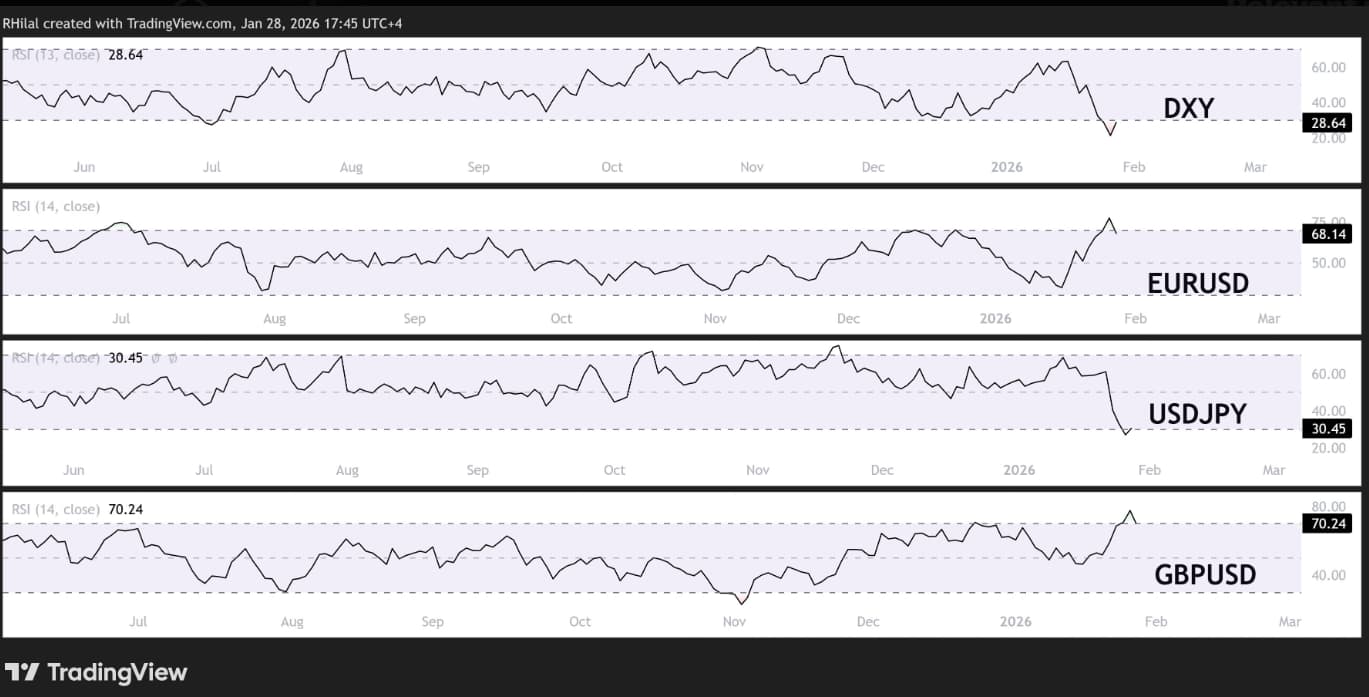
The latest headline to move markets was the nomination of Kevin Warsh, a hawkish-perceived Fed chair, which lifted the U.S. Dollar Index and major currency pairs from daily oversold and overbought conditions last seen in July -August 2025. This short-term contrarian forecast was highlighted on Wednesday, preceding the DXY’s sharp rebound above the 97 mark.
Source: Trading view
DXY Outlook: Monthly/ Weekly Time Frame – Log Scale

Source: Tradingview
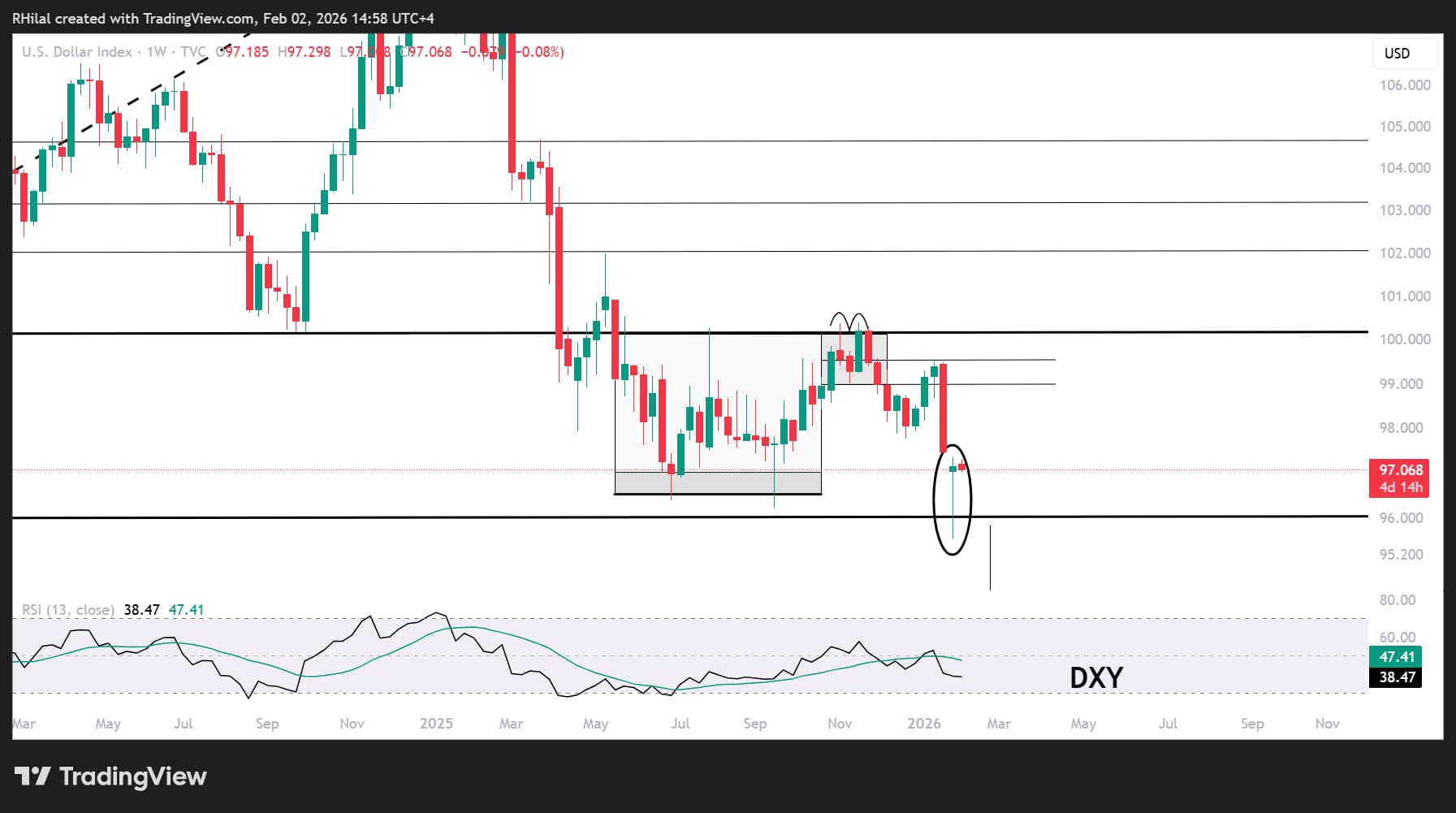
To put the latest rebound into perspective, the DXY printed a sharp downside wick on the weekly time frame, signaling an unsustained bearish hold. Bullish dominance remains intact, as this wick aligns with the lower boundary of a well-respected uptrending channel in place since 2008, effectively capping EURUSD gains below the 1.20 level.
This narrative would change should the DXY close below 96, shifting the 17-year bullish structural bias into a bearish one, increasing de-dollarization concerns.
EURUSD Outlook: Monthly Time Frame – Log Scale
Source: Trading view
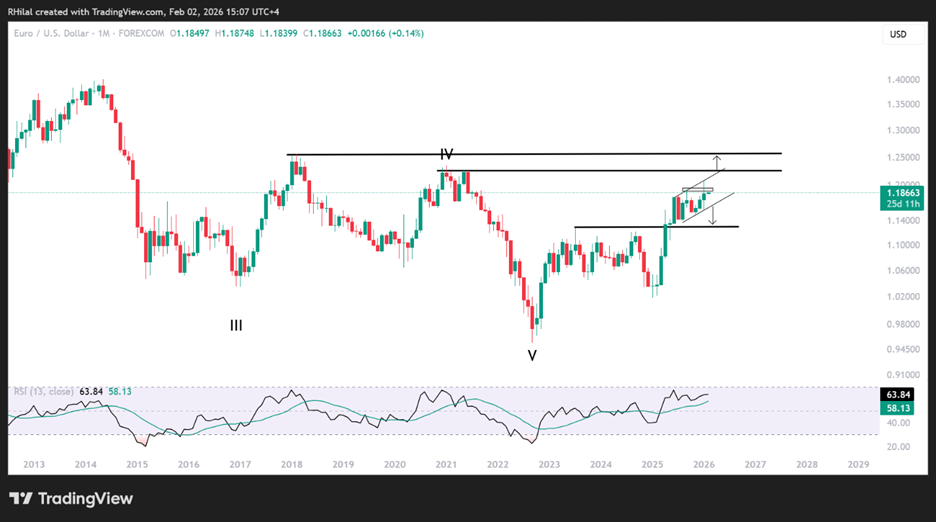
From a monthly perspective, EURUSD’s upper wick aligns with the series of higher highs formed between July and September 2025, with upside targets at 1.2250 and 1.25, levels last seen in 2020 and 2018, respectively. These levels could be reached with a sustained close above 1.20, although such a move may set up another strong resistance zone given monthly overbought conditions, similar to those seen in 2018 and 2020.
On the downside, a close back below 1.18 and 1.1580 would expose deeper drawdown risks toward the 1.12–1.11 zone.
Considering the extended state of the U.S. dollar index, longer-term directional forecasts will depend on whether the dollar realigns with its multi-year uptrend or confirms a bearish structural breakout below 96.
Written by Razan Hilal, CMT
Follow on X: :Rh_waves