

With a 9-session bullish streak, the Nasdaq index has recorded one of the most relevant upward moves of recent years, pushing price to new all-time highs above the 26,000 level in the short term.
The strong buying pressure has remained consistent, driven by renewed market confidence and optimism surrounding potential negotiations in the Middle East. If this sentiment remains in place, buying pressure is likely to continue dominating Nasdaq price action in the coming sessions.

Confidence continues to rebound
Today’s session has been accompanied by new developments in the Middle East conflict. President Trump has publicly stated that, in addition to ongoing negotiations with Iran, a 10-day ceasefire between Israel and Lebanon has been reached.
Although this does not fully resolve the conflict, it reinforces the idea that more concrete negotiations are taking place, contributing to a more stable geopolitical environment in the short term. This has allowed risk perception to continue declining, supporting a more optimistic market backdrop.
This shift is already reflected in confidence indicators. The CNN Fear and Greed Index has entered the “greed” zone for the first time in months, reaching levels around 62 points, well above 37 points a week ago and near 20 points a month ago, when markets were in “extreme fear.”
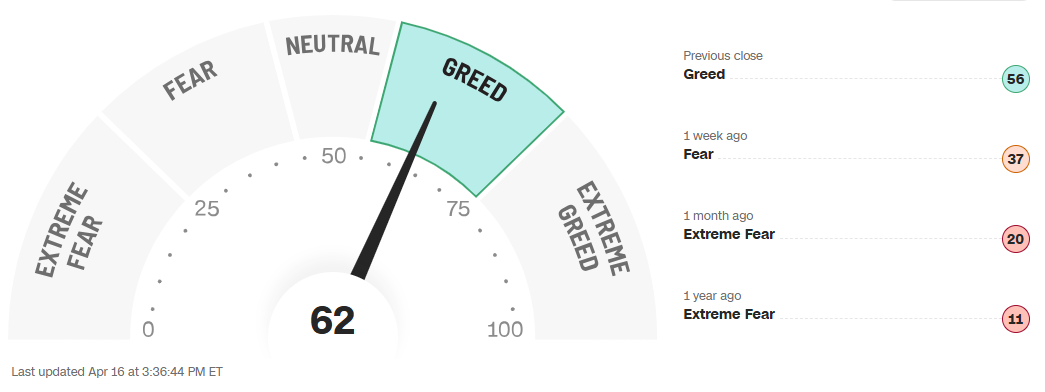
Source: CNN
This rebound in confidence has led to a renewed appetite for risk assets, moving away from the preference for safe-haven assets seen in previous weeks. This is also reflected in ETF flows, particularly the Invesco QQQ Trust, which has recorded net inflows close to $1 billion since the start of the week, maintaining a positive trend through April 15.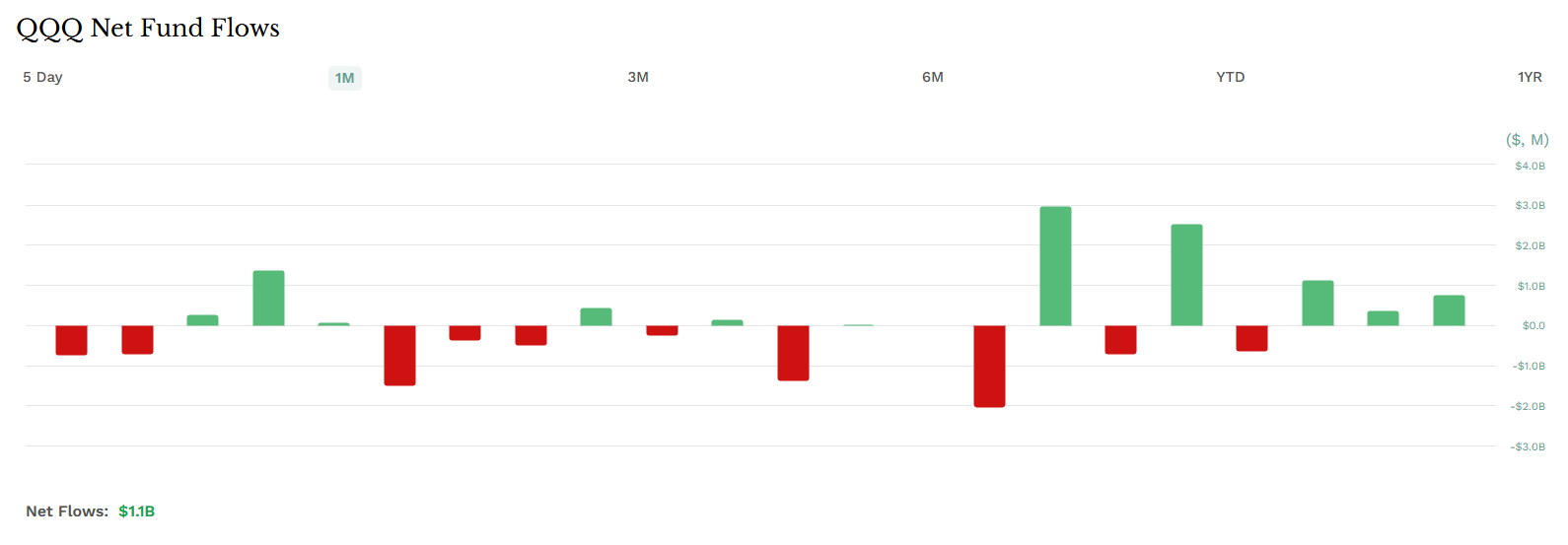
Source: ETF.COM
In this context, rising confidence is creating a favorable environment for Nasdaq demand in the short term. However, this scenario remains dependent on continued progress in Middle East negotiations. If an agreement is reached, buying pressure could remain strong, but a renewed escalation could quickly reverse this dynamic.
Long-term confidence remains fragile
Despite the improvement in the short term, the longer-term outlook remains fragile. According to the AAII Investor Sentiment Survey, optimism for the next six months stands at 31.7%, neutrality at 25.5%, and pessimism at 42.8%, indicating that sentiment remains tilted toward the downside.
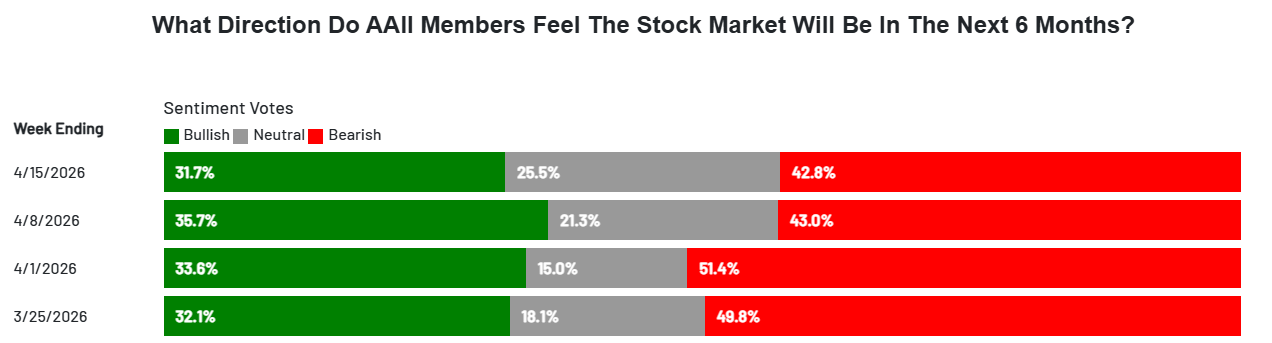
Source: AAII
This environment could limit a more structural recovery in equity markets, as lingering uncertainty may constrain sustained demand. If this bias persists, a phase of indecision could remain present in Nasdaq price action over the medium term.
Nasdaq 100 Technical Outlook
Source: StoneX, Tradingview
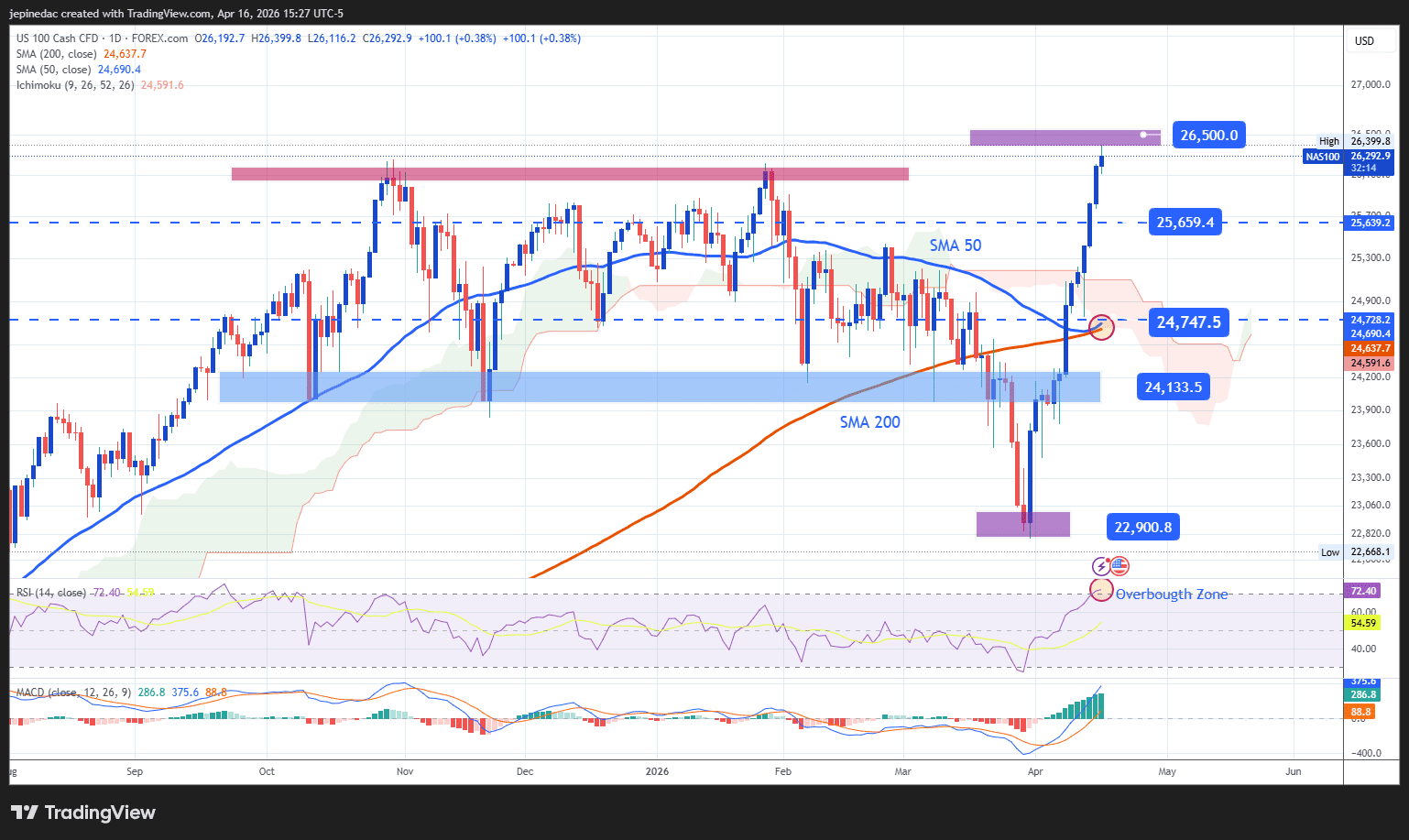
- Bullish momentum breaks key barriers: The recent recovery in the Nasdaq has been strong enough to break previous all-time high levels and establish new record prices. This move could support the development of a more structured bullish trend in the coming weeks. However, the speed of the rally may also be creating a short-term overextension scenario, which could open the door for potential corrections.
- MACD: The MACD histogram remains consistently above the zero line, suggesting that short-term moving average momentum continues to show a bullish bias. If this behavior persists, buying pressure is likely to remain relevant in the short term.
- RSI: The RSI presents a slightly different picture, as it has moved closer to the overbought zone (70). This suggests that buying momentum may be reaching elevated levels, potentially opening the door for short-term pullbacks in the coming sessions.
Key levels:
- 26,500 points – Key resistance: With no higher historical references, this level stands as the closest psychological barrier in the short term. Price action above this level could reinforce a more aggressive bullish bias in the coming sessions.
- 25,650 points – Near-term barrier: A recent retracement level that may act as a reference point for potential short-term corrections.
- 24,740 points – Key support: A relevant support zone aligned with the 50- and 200-period moving averages. A move toward this level could weaken the current bullish bias and lead to a more consistent phase of indecision in the coming weeks.
Written by Julian Pineda, CFA, CMT – Market Analyst
Follow him on: @julianpineda25