
Implied volatility for USD/JPY has surged ahead of today’s nonfarm payrolls (NFP) report, which is hardly surprising given its importance for Fed policy expectations and the potential for currency intervention by Japan’s Ministry of Finance (MOF). With the one-day implied volatility band sitting at 233% of its 20-day average, the options market is pricing a move of around 111 pips in either direction for USD/JPY. However, as I outline below, a weaker-than-expected NFP report could trigger the larger move, as it would not only prompt traders to pare back hawkish Fed expectations but also revive concerns that the MOF could intervene to support the yen.
View related analysis:
- NFP Preview: Would a Strong Jobs Report Put a Q3 Fed Hike in Play?
- USD/CAD Eyes Pullback as CAD/JPY Decouples from Crude Oil, AUD/CAD Stabilises
- FX Futures Positioning: GBP Shorts Hit Records as USD Rally Slows | COT Report
- Australian Dollar Outlook: AUD/USD Shows Early Signs of a Swing Low
USD/JPY Awaits NFP as Fed and MOF Risks Collide
Strong US Data Continues to Support USD/JPY
US economic data continues to outperform expectations, reinforcing expectations of further Fed tightening and providing the main fuel for the US dollar’s recent rally. Another strong NFP report could cement expectations for a September rate hike and provide further support for the greenback.
It is also worth noting that NFP has beaten expectations in each of the past three months despite concerns over AI-driven job losses and the conflict in the Middle East. From that perspective, the odds appear to favour another resilient jobs report.
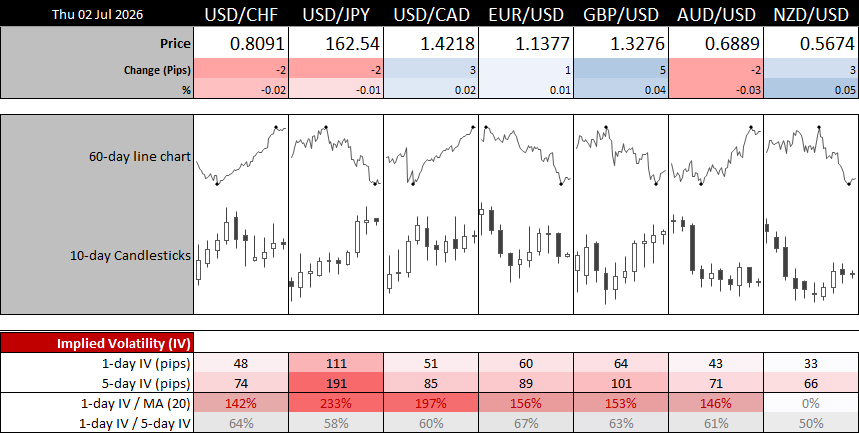
Source: LSEG
Why a Weak NFP Could Trigger the Bigger Move
A strong NFP report could see USD/JPY extend its rally, potentially forcing the MOF to tolerate further yen weakness. The more interesting scenario, however, is a downside surprise. A weaker-than-expected payrolls report could unwind hawkish Fed expectations, weigh on the US dollar and create a far more favourable backdrop for the MOF to intervene.
That is largely what unfolded on July 11, 2024, when softer-than-expected US CPI triggered a sharp decline in USD/JPY following a suspected intervention by Japanese authorities. A similar combination of weaker US data and official intervention would likely prove far more effective than attempting to resist a US dollar rally driven by another strong payrolls report.
For the record, I do not expect the MOF to intervene today unless the wheels truly fall off the US labour market. However, a weaker-than-expected NFP report could be enough to trigger a bout of bearish volatility, as traders pare back Fed hike expectations while also increasing the odds of MOF intervention.
The key difference this time is that Fed rate cuts are not on the table. Even so, the larger market reaction today is more likely to stem from a downside NFP surprise than yet another upside beat, given much of the good news appears to be priced into the US dollar already.
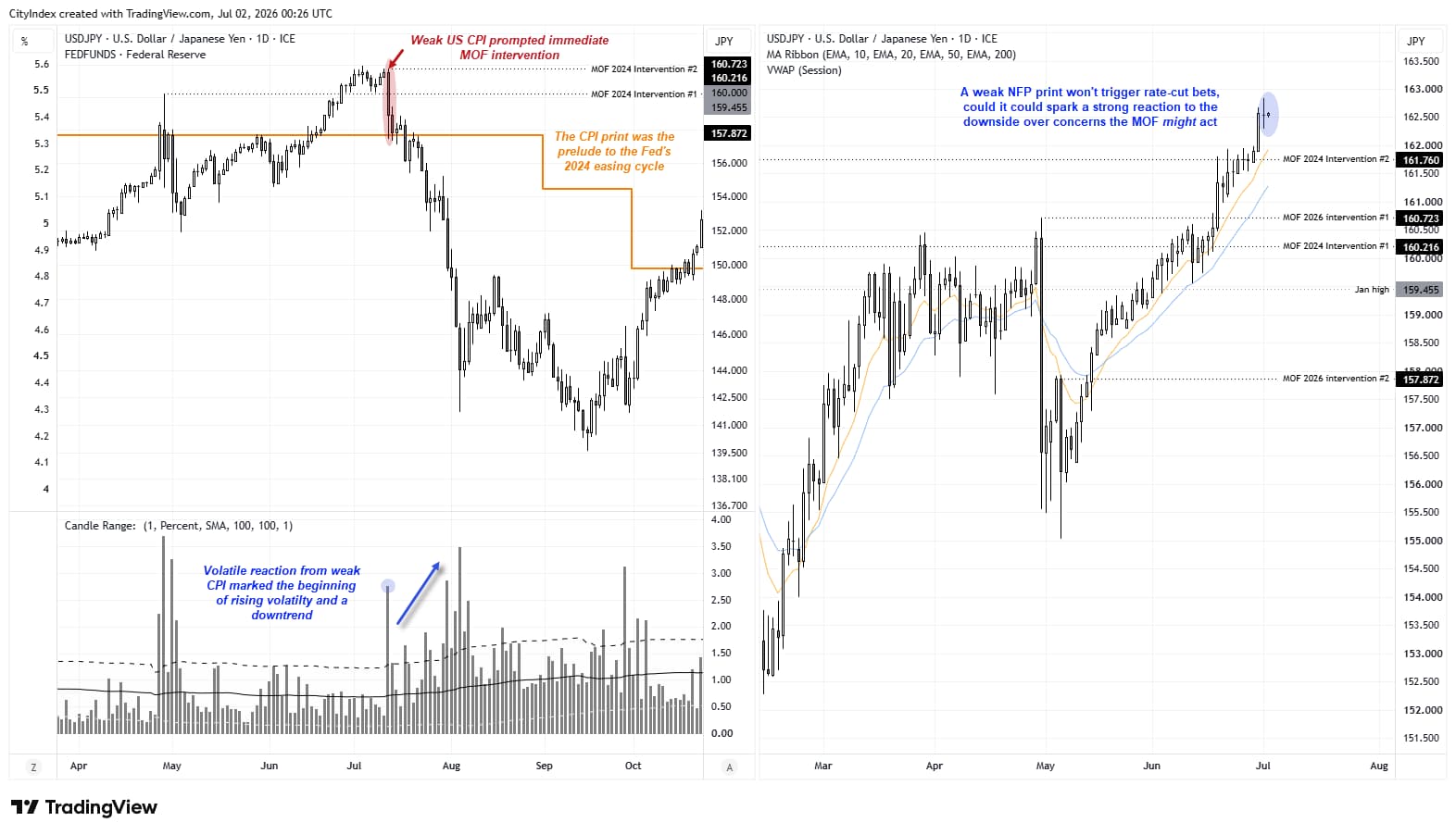
Source: ICE, Federal Reserve, TradingView

USD/JPY Technical Analysis: US Dollar vs Japanese Yen
The daily chart shows a well-established uptrend, with prices holding above the 10-day EMA and accelerating away from it on Tuesday to reach a fresh 40-year high. Wednesday’s rickshaw man doji suggests some hesitation ahead of today’s NFP report, although the wider-than-usual implied volatility bands highlight the potential for a sharp increase in volatility.
Note the 10-day EMA, the 2024 high and the 2024 intervention levels just below 162 as potential support. The 20-day EMA sits near the lower one-day implied volatility band. On the upside, the weekly R1 pivot aligns closely with the upper one-day implied volatility band around 163.60, making it a potential target if USD/JPY breaks above 163.
Until US economic data weakens sufficiently to undermine Fed hike expectations and revive discussion of rate cuts, it is difficult to envisage a meaningful reversal of USD/JPY's bullish trend. Even if prices experience a sharp pullback around current levels, dip buyers are likely to remain active.
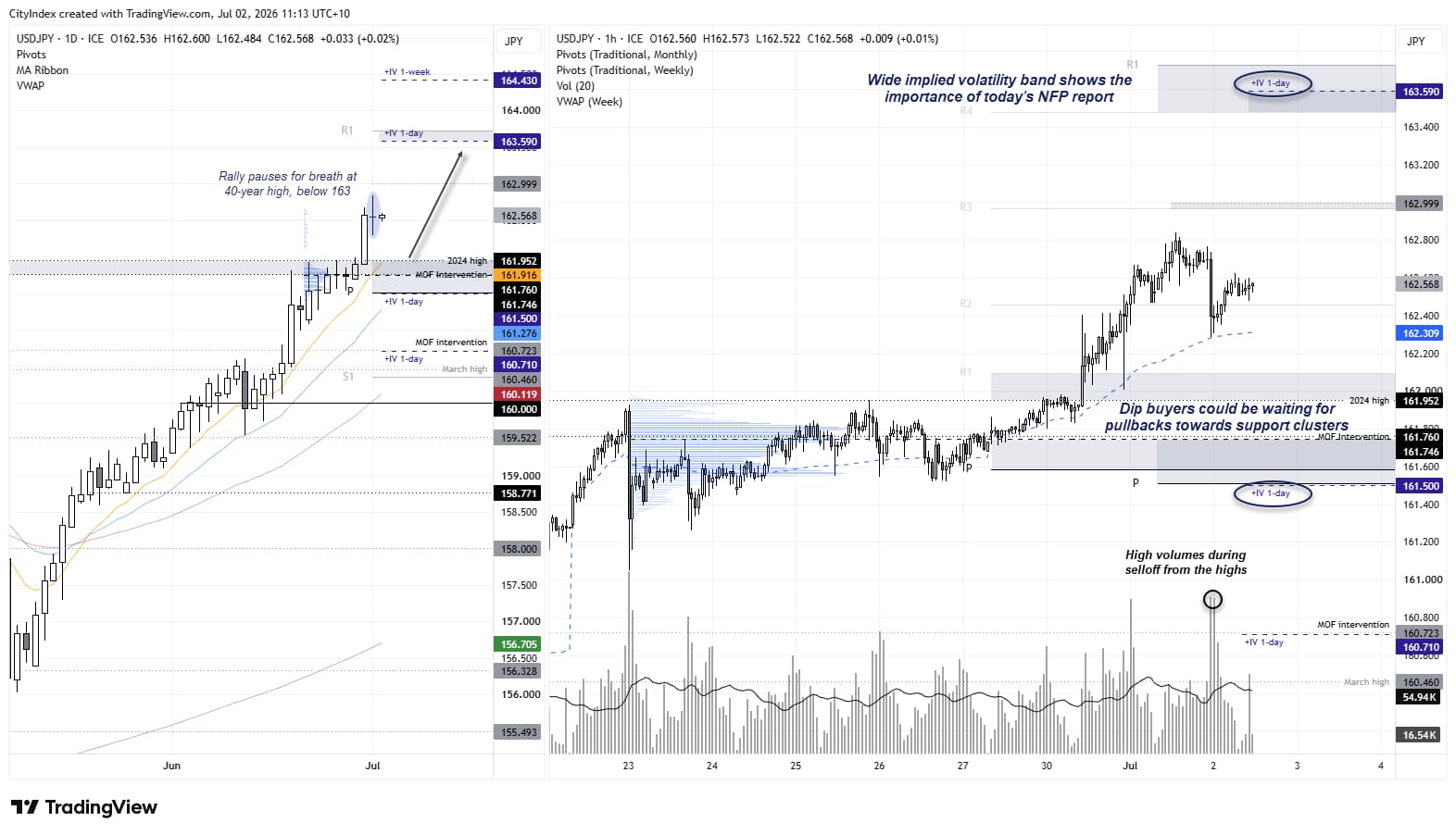
Source: ICE, TradingView
View the full economic calendar
-- Written by Matt Simpson
Follow Matt on Twitter @cLeverEdge