

It has been a challenging period for the Japanese yen in the short term. The USD/JPY pair has extended its four-day winning streak with an increase of almost 2.7%, reflecting the yen’s continued weakness against the U.S. dollar. For now, bullish pressure remains strong, fueled by uncertainty surrounding the new fiscal policies proposed by Japan’s new political leadership. This uncertainty has caused the yen to consistently lose ground, and as long as this outlook persists, buying pressure on USD/JPY could continue to strengthen in the coming sessions.

New Party Leader
On October 4, Sanae Takaichi was elected as the new leader of Japan’s Liberal Democratic Party (LDP). Takaichi, a veteran politician with extensive ministerial experience, is on track to become Japan’s first female prime minister, pending confirmation by parliament.
However, what has truly moved the markets are the economic plans expected from her incoming administration. Takaichi is known for advocating aggressive public spending to stimulate growth — a stance that has raised concerns over Japan’s rising debt levels and fiscal sustainability. In addition, her government could push for lower interest rates to support the economy in the short term, potentially conflicting with the Bank of Japan’s (BoJ) inflation-control objectives.
Looking at Japan’s inflation curve, prices have eased but remain above the 2% target, with the latest reading at 2.7% in August. This suggests that the BoJ should maintain a tighter policy stance to bring inflation back to target. However, the government’s new fiscal direction could undermine that effort, creating a sense of weakened inflation control and possibly reducing confidence in yen demand.

Source: TradingEconomics
Before Takaichi’s victory, markets expected the BoJ to end the year with an interest rate of 0.75%, slightly above the current 0.50%. However, this outlook could change under the new leadership, keeping Japan among the developed economies with the lowest interest rates. Over time, this may make yen-denominated investments less attractive.
Moreover, the combination of fiscal uncertainty, the risk of economic overstimulation, and weak inflation control could further erode confidence in the yen, leading to a persistent loss of appeal. This environment could reinforce steady buying pressure on the USD/JPY in the near term.
Is the U.S. Dollar Recovering?
Despite the ongoing U.S. government shutdown, the dollar has shown resilience, rebounding over recent sessions. This strength partly stems from its role as a temporary safe haven amid political uncertainty in the United States.
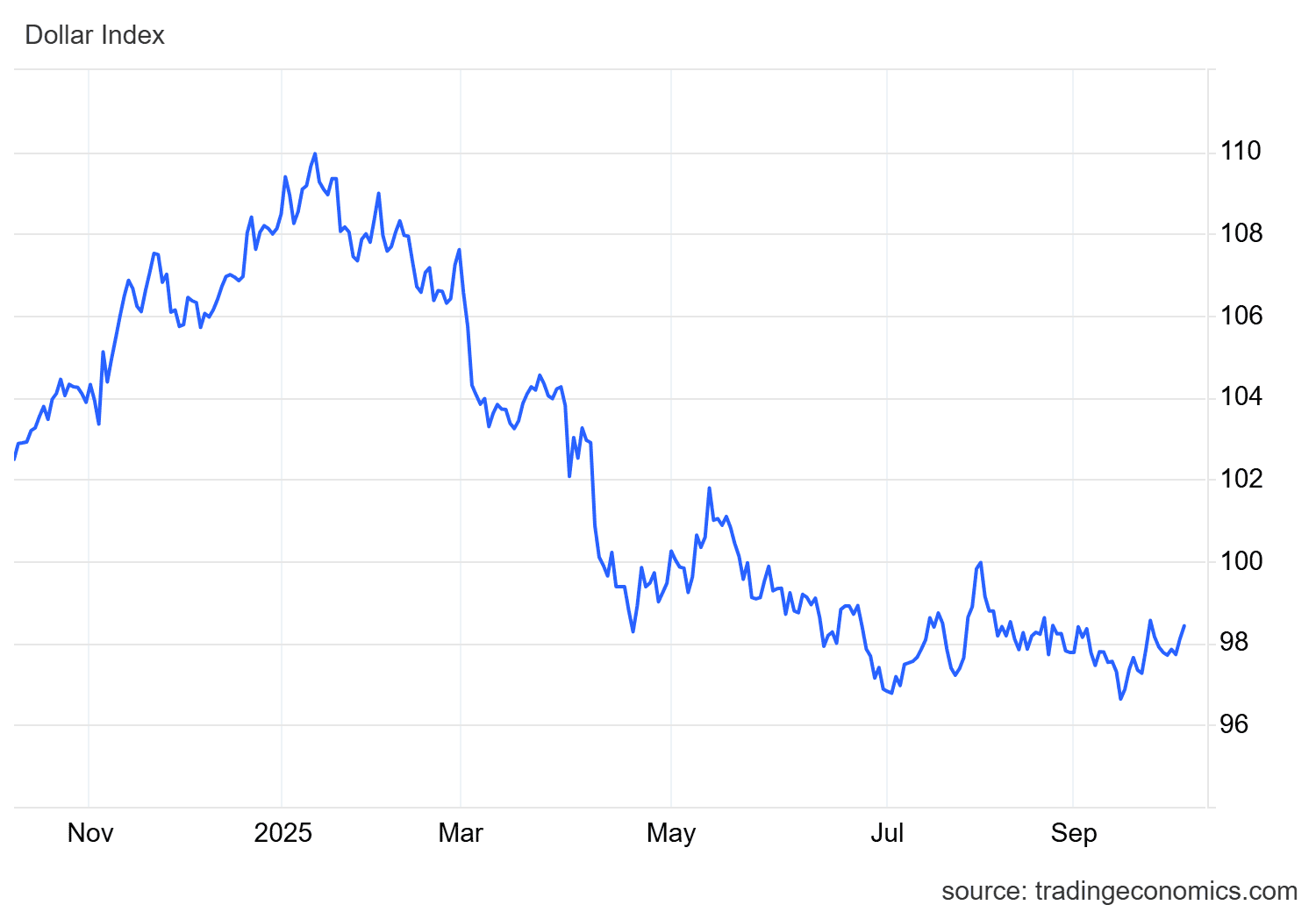
The dollar’s recovery is also reflected in the DXY Index, which measures Greenback’s performance against a basket of major currencies. The index remained above 98 points, maintaining a positive upward slope over recent sessions.
Source: TradingEconomics
This trend indicates that confidence in the U.S. dollar has been steadily improving. As long as the DXY maintains this upward trajectory and market perception of U.S. stability continues to strengthen, the yen’s room for recovery will likely remain limited — further supporting upward pressure on USD/JPY.
Technical Outlook for USD/JPY
Source: StoneX, Tradingview
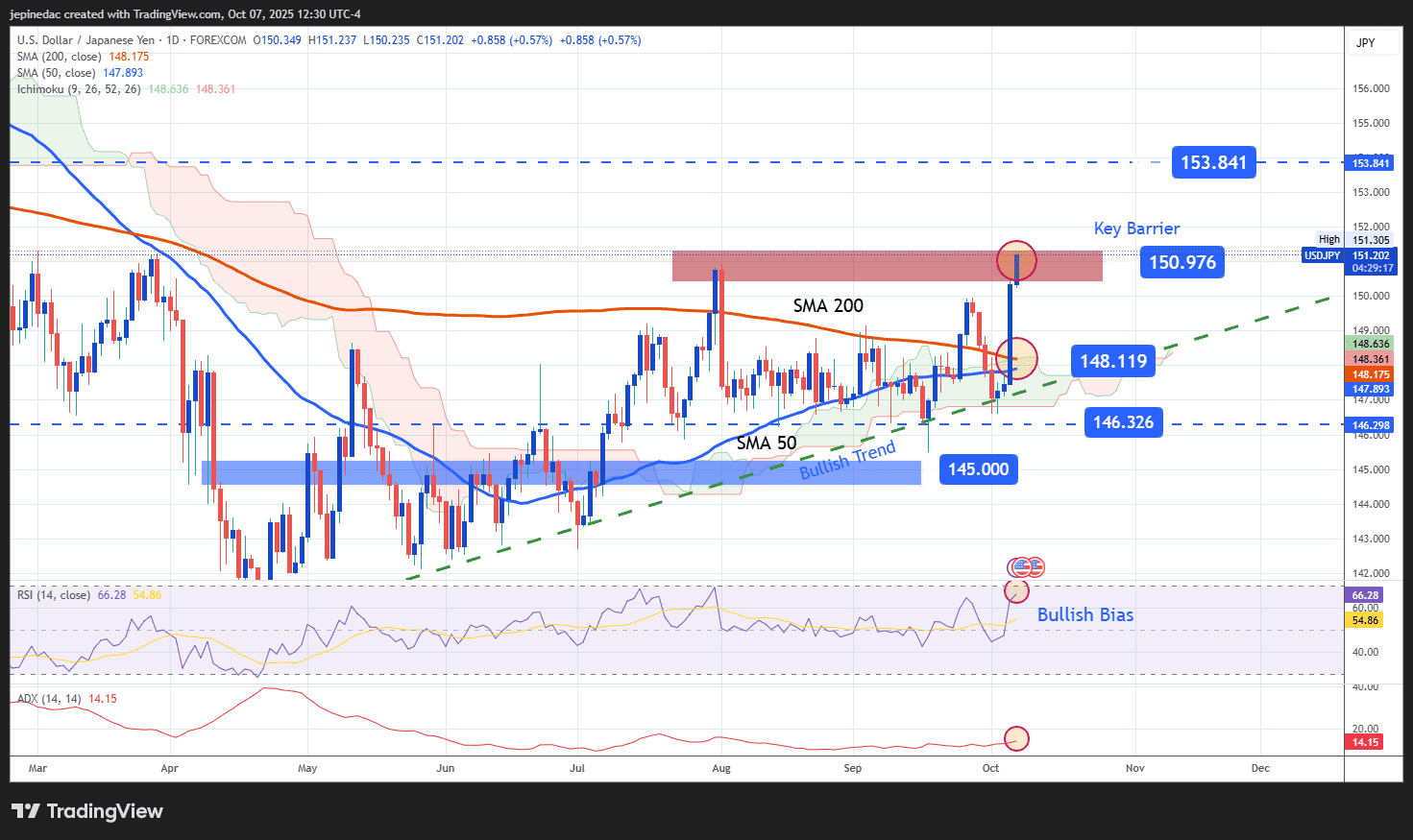
- Uptrend Back in Play: Since late April, USD/JPY has maintained a solid bullish trend, with consolidation zones acting as structural support. The latest bullish impulse has driven the pair to new highs, confirming that the dominant formation remains upward. If the price manages to break above key resistance levels, buying pressure could continue to dominate in the short term.
- RSI: The RSI readings show that the average buying momentum remains strong over the past 14 sessions. However, the indicator is approaching the overbought zone (70), suggesting that the market could be entering a short-term imbalance phase. This could open space for minor corrective pullbacks if buying pressure becomes excessive.
- ADX: The ADX indicator remains below the neutral 20 level, signaling limited volatility and possible price indecision in the near term. A rebound in this indicator could suggest an increase in trend strength and directionality.
Key Levels:
- 150.976 – Current Barrier: Aligns with previous multi-week highs and stands as the nearest resistance level. A sustained break above this area could reinforce the ongoing uptrend, though short-term technical corrections may occur near this zone.
- 153.841 – Major Resistance: A level not seen since February. If price action reaches this point, it could trigger a more aggressive bullish extension, strengthening the medium-term buying bias.
- 148.119 – Primary Support: Coincides with the 50- and 200-period moving averages. A downside break below this area would threaten the existing uptrend line and potentially shift the pair toward a bearish short-term bias.
Written by Julián Pineda, CFA – Market Analyst
Follow him on: @julianpineda25