

Cryptocurrencies have begun to show a decline in short-term confidence, as new fundamental factors emerge suggesting that central banks such as those of Canada, the United States, and Europe may keep interest rates stable, which in the long run could affect demand for digital assets.
This scenario has increased bearish volatility since the start of the week, pushing the market toward traditional assets at the expense of cryptocurrencies. If high interest rates persist toward the end of the year and investors continue to favor safe-haven assets over risk assets such as cryptocurrencies, selling pressure is likely to remain dominant in the short term.

Central Bank Decisions
This week saw several key monetary policy decisions from central banks around the world. The most notable were:
- European Central Bank (ECB): kept its deposit rate unchanged at 2.00%, reaffirming a neutral stance heading into year-end.
- Bank of Canada: cut its interest rate to 2.25% but warned that further reductions may pause if inflation fails to keep easing.
- U.S. Federal Reserve (Fed): reduced its benchmark rate by 0.25%, bringing it to a new range of 4.00%. However, comments from Jerome Powell, the Fed Chair, indicated that another rate cut in December is not guaranteed, as the lack of recent economic data has led the central bank to adopt a more cautious tone in the short term.
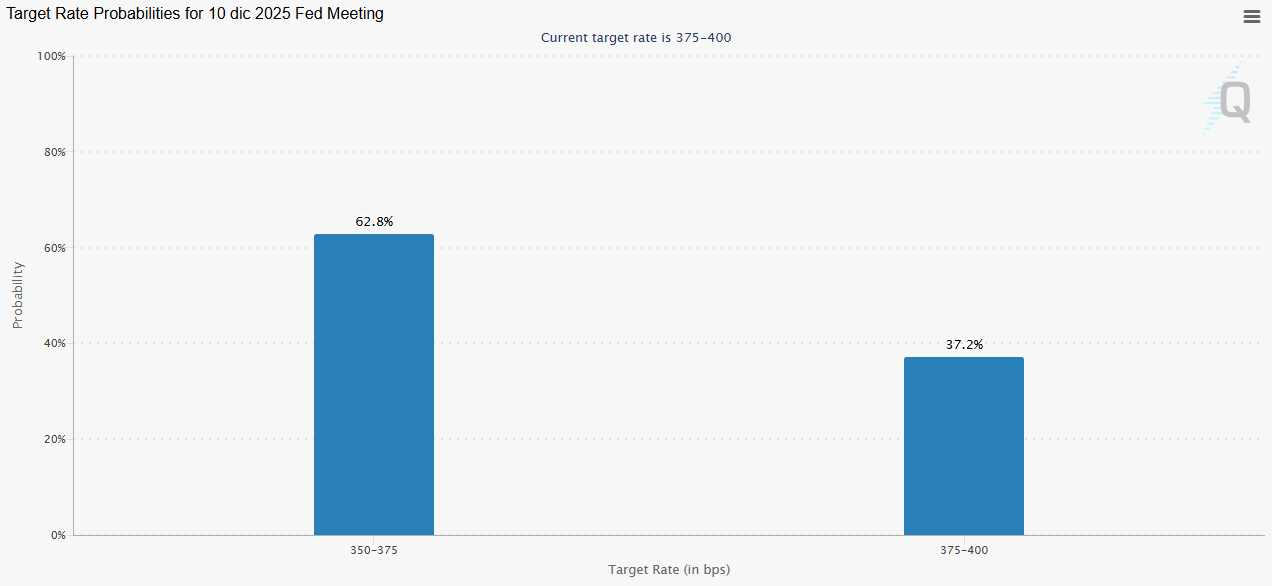
Following these announcements, the CME Group lowered its probability estimate for another rate cut in December. Prior to the decision, the odds were above 80%, but have since fallen to 62.8%, reflecting the growing perception that the Fed may hold rates steady at its final meeting of the year.
Source: CMEGROUP
In this context, the shift in tone among major central banks — toward a more neutral or restrictive stance — has begun to weigh on cryptocurrency demand.
Higher or stable interest rates raise the cost of consumption and investment, increasing debt costs and limiting spending, which in turn reduces demand for risk assets, including cryptocurrencies. Moreover, hawkish central bank comments have fueled a recovery in the bond market, as fixed-income assets are perceived as safer investments, reducing the appeal of alternative markets such as crypto.
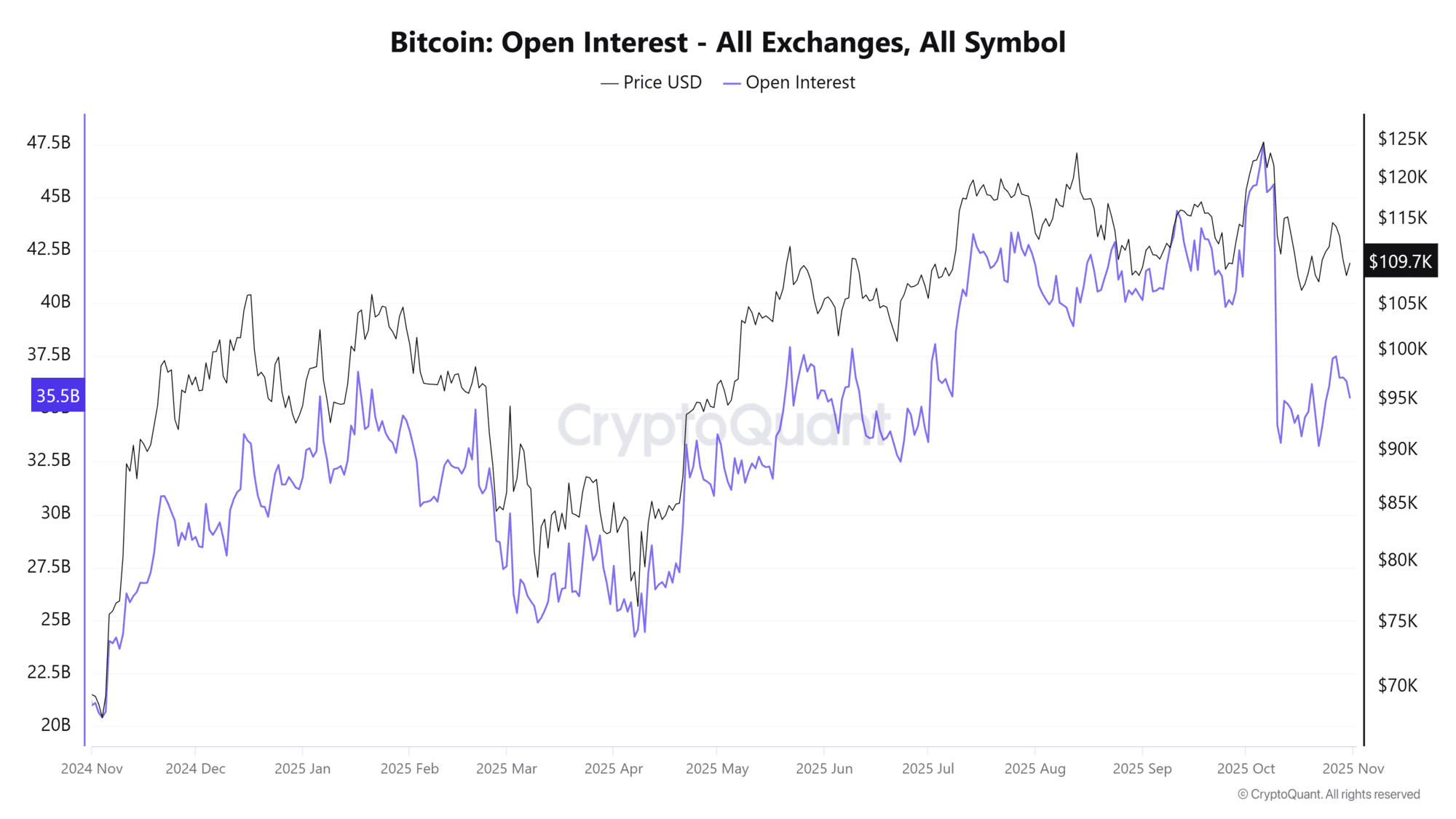
This lack of risk appetite is also reflected in the decline of Bitcoin’s (BTC) Open Interest, which measures the total number of open positions in the market. The indicator has fallen steadily to around $35.5 billion, accompanied by a drop in BTC’s price — both pointing to a consistent closing of long positions and a decrease in institutional interest.
Source: Cryptoquant
As long as central banks maintain a cautious and restrictive policy stance, selling pressure is likely to remain a defining feature of the cryptocurrency market in the sessions ahead.
Bitcoin vs. Other Markets
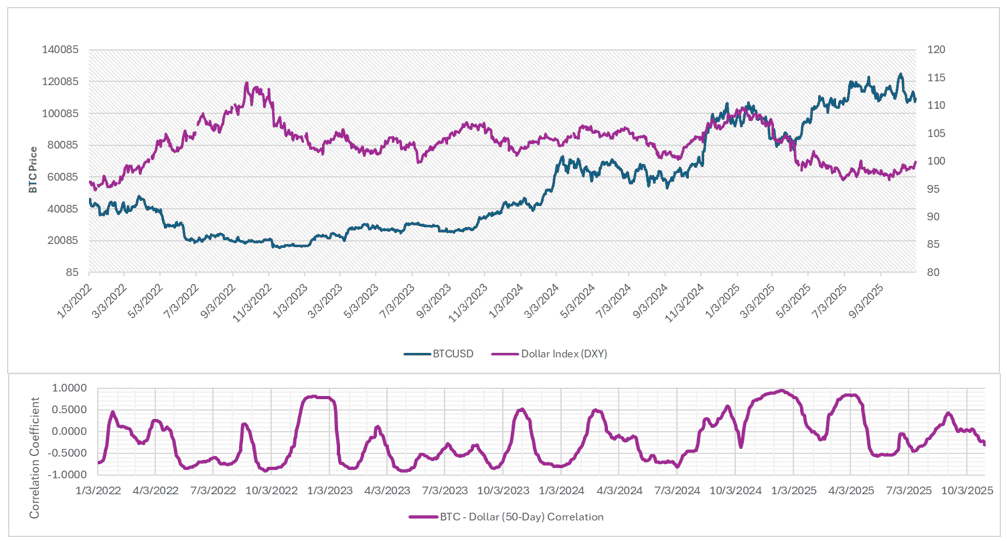
Recent Bitcoin (BTC) movements have shown an increasingly negative correlation with the DXY index, which measures the strength of the U.S. dollar against other major currencies. Over the past 50 sessions, the correlation coefficient has approached -0.5, suggesting that as the U.S. dollar strengthens, BTC tends to weaken. It is important to note that this correlation may fluctuate as trading sessions progress.
This is relevant because the U.S. dollar market has once again become an attractive asset class, supported by rising Treasury yields — a result of the Fed’s more hawkish tone. This dynamic has limited investors’ risk appetite and, in turn, reduced Bitcoin’s attractiveness in recent sessions.
Source: Data – TVC, StoneX, Tradingview
As long as Bitcoin maintains this negative correlation with the U.S. dollar, it will likely continue to be perceived as a less attractive asset in the short term — both as a risk investment and as a store of value. In this sense, the growing interest in the dollar could further limit Bitcoin’s recovery and, by extension, that of the broader crypto market, reinforcing consistent selling pressure in the coming sessions.
Market Sentiment
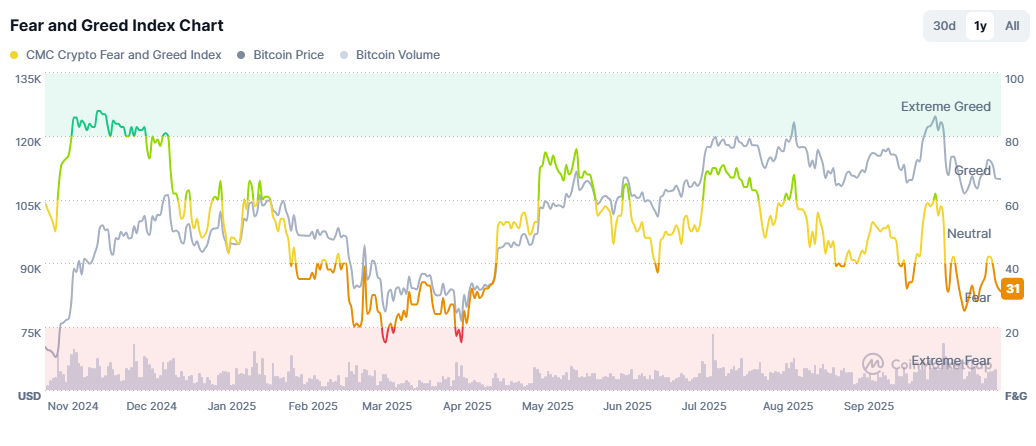
The Crypto Fear & Greed Index currently stands at 31 points, down from the previous week’s close, and continues to hover in the “fear” zone. This indicates a steady decline in market confidence, which could weigh on sustained demand for cryptocurrencies in the short term.
Source: Coinmarketcap
If the index continues to move closer to the extreme fear zone, negative sentiment could further accelerate selling pressure, increasing the likelihood of sharper declines across major cryptocurrencies — including Bitcoin.
Written by Julian Pineda, CFA – Market Analyst
Follow him on: @julianpineda25