
The trading week continues to unfold and, for now, USD/CAD remains trapped in a relatively consistent phase of indecision. The Canadian dollar has managed to hold on to some of its recent strength, which can be seen in the pair's performance over the last two sessions, where it has declined by roughly 0.2%. While this move does not reflect outright dominance from the Canadian dollar, it also highlights the lack of a clear bullish push from the U.S. dollar, reinforcing a neutral tone across the market.
This indecisive environment comes just ahead of the release of U.S. inflation data, an event that could reshape expectations surrounding Federal Reserve policy. At the same time, a recent moderation in U.S. bond yields has reduced some of the momentum behind the dollar and allowed the Canadian dollar to regain a degree of stability. As long as these conditions remain in place, indecision could continue to dominate USD/CAD price action over the coming sessions.

Are Bond Market Yields Losing Momentum?
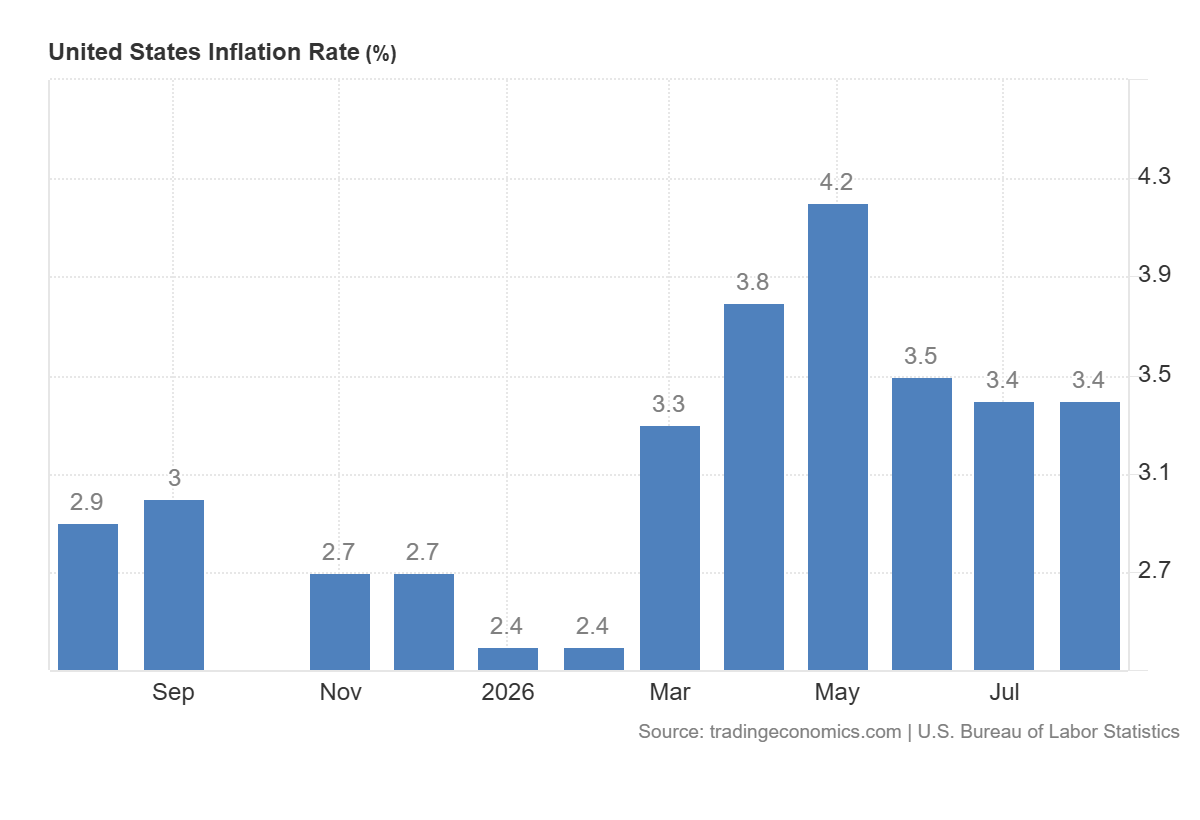
Preliminary U.S. inflation data will be released tomorrow. Markets are currently expecting a moderate acceleration in inflation pressures, with annual CPI projected to rise to 3.6% from 3.4%, while Core CPI is expected to increase to 2.5% from the previous 2.4%.
This remains important because it would suggest that the disinflation process continues to face challenges. Since annual CPI reached a recent low of 3.4% in July, inflation has struggled to move meaningfully lower, keeping concerns alive that price pressures may remain an important issue for both the U.S. economy and the Federal Reserve over the coming months.
Source: TradingEconomics
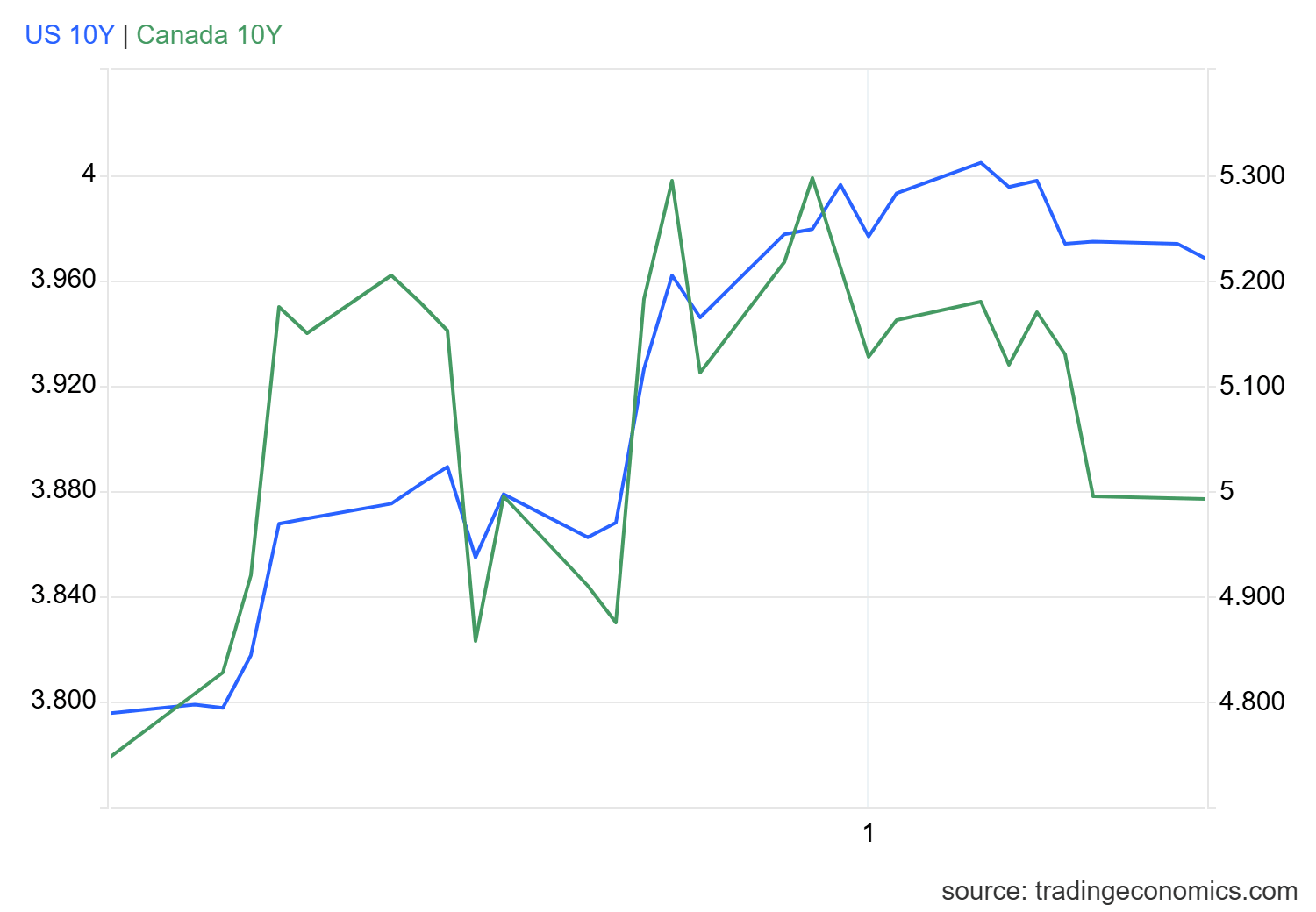
However, ahead of the release, markets do not appear fully convinced that inflation will surprise significantly to the upside and force a more aggressive stance from the Federal Reserve. This caution is already visible in the behavior of the U.S. bond market, where 10-year Treasury yields have started to pull back from recent highs and are now trading closer to the 5.2% area.
The picture in Canada is somewhat different. Canadian 10-year government bond yields have remained relatively stable near 3.8%, avoiding the decline seen in the United States. This difference is important because the more stable performance of Canadian bonds has reduced part of the relative advantage that U.S. fixed income had gained in previous weeks and has helped maintain interest in the Canadian dollar.
Source: TradingEconomics
The moderation in U.S. yields has also become a headwind for the dollar. As Treasury securities lose some of their relative appeal, the incentive for international capital to remain concentrated in dollar-denominated assets may begin to ease.
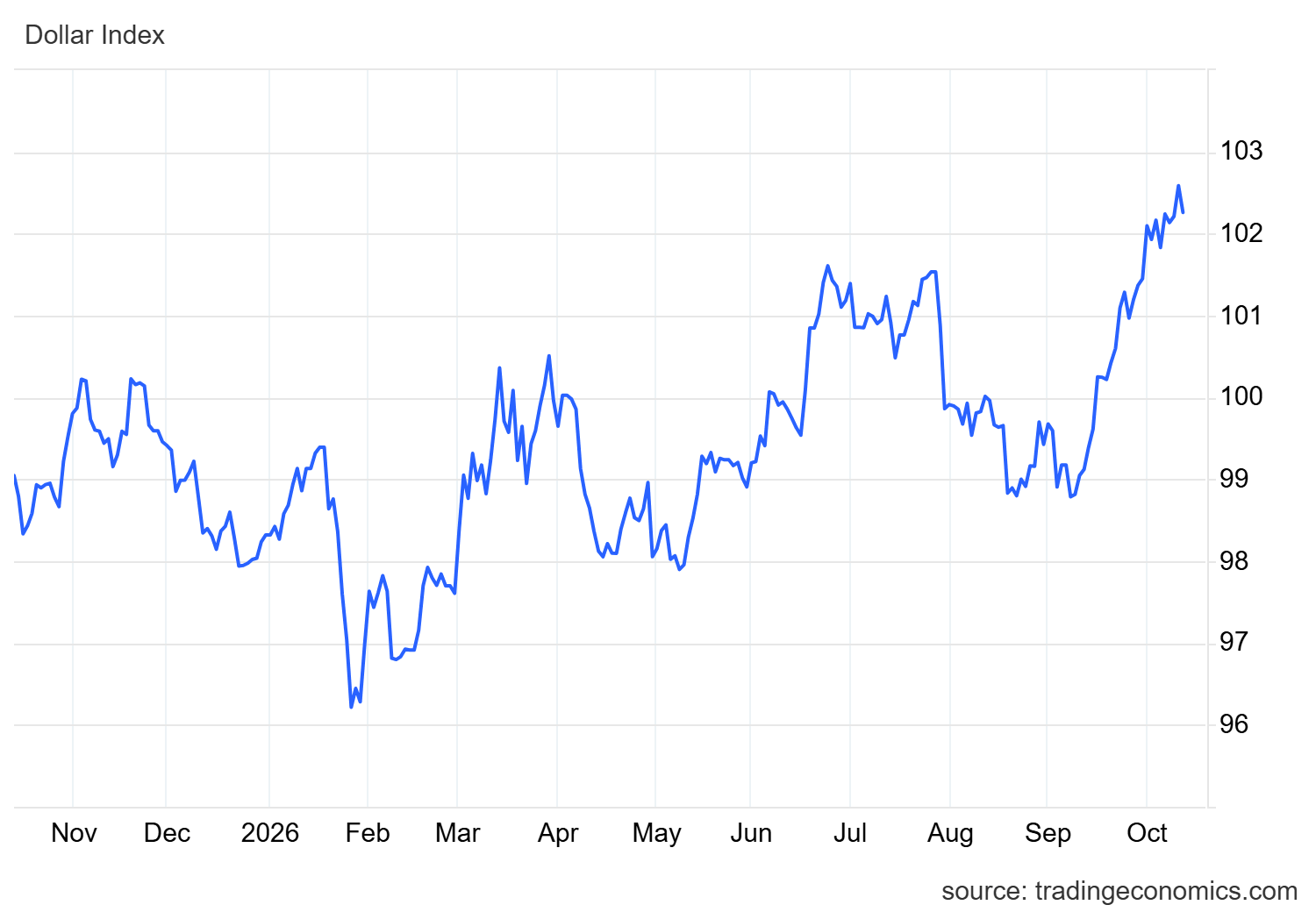
That dynamic is already starting to appear within the DXY, the index that measures U.S. dollar strength against its major peers. Over recent sessions, the index has moved back toward the 102-point area, reflecting a modest loss of momentum that coincides with the recent pullback in Treasury yields.
Source: TradingEconomics
With all of this in mind, the dollar's strength has recently been limited by softer U.S. yields and the relative stability of Canadian bond markets. This environment has helped the Canadian dollar avoid further significant losses and has supported a broader phase of stability across USD/CAD.
As long as these conditions remain in place, indecision could continue to dominate the pair. However, it is also important to remember that U.S. inflation data could quickly alter the outlook. If inflation comes in above expectations, it could reinforce expectations of a more aggressive Federal Reserve, restore strength to Treasury yields and revive buying pressure around USD/CAD.
USD/CAD Technical Forecast
Source: StoneX, Tradingview
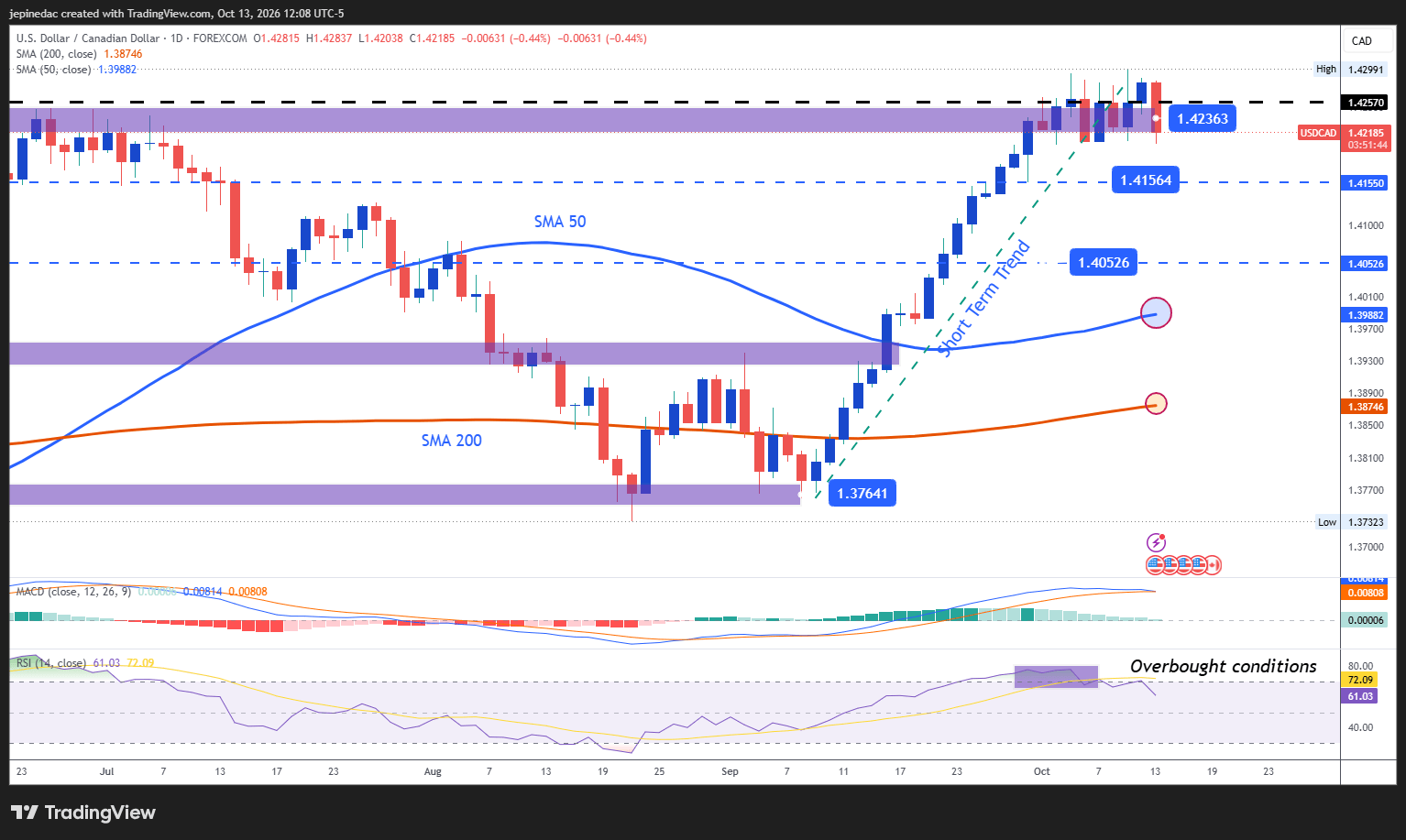
- The aggressive uptrend is beginning to lose momentum: Although USD/CAD developed a relatively strong bullish trendline over previous weeks, recent price action has started to reflect a more evident phase of indecision. This not only places the existing bullish structure under pressure but also highlights the lack of a clear directional bias. If this dynamic persists, a broader consolidation range could begin to gain relevance over the coming sessions.
- MACD: The MACD histogram continues to slow and is gradually approaching the 0 neutral line. This reading reflects fading momentum within short-term moving averages and supports the possibility of a more established neutral phase around USD/CAD.
- RSI: A similar dynamic can be observed in the RSI, which continues to show a progressive slowdown in buying momentum. This suggests that the bullish strength seen in previous weeks has begun to fade and supports the possibility of a more relevant phase of indecision in the near term.
Key Levels:
- 1.42363 – Key Resistance: The most important upside barrier observed in recent months and a high not seen since June. Price action that manages to consolidate above this level could reinforce bullish control once again and support the formation of a stronger upward structure in the weeks ahead.
- 1.41564 – Near-Term Barrier: An important retracement level observed weeks ago that now stands as the nearest support to monitor. This area could become the key level to watch if recent corrective declines continue.
- 1.40526 – Critical Support: An important equilibrium zone from previous weeks that remains the most significant downside barrier within the current structure. Moves toward this level could begin to reflect a more visible loss of direction, place the current bullish trendline at risk and open the door to a broader consolidation phase that could evolve into a more established trading range over the coming weeks.
Written by Julian Pineda, CFA, CMT – Market Analyst
Follow him on: @julianpineda25