

Recent trading sessions have produced mixed results for the Japanese yen. By the end of last week, USD/JPY had fallen by more than 1.00%, reflecting a modest recovery in the yen. However, the start of this week has seen the pair move slightly back in favor of the U.S. dollar, posting gains of around 0.04%. This behavior suggests that the market still lacks a clear directional bias and that caution continues to dominate USD/JPY price action.
Much of this uncertainty stems from two competing forces. On one hand, expectations of a more aggressive Federal Reserve continue to support the dollar. On the other, concerns about potential intervention to support the yen have returned to the spotlight. The combination of these factors has limited stronger moves in either direction and may continue to favor a more neutral trading environment in the days ahead.

Is Intervention Risk Still on the Table?
The possibility of fresh intervention remains an important market theme following the coordinated action taken to support the yen at the end of July. Since then, every significant bout of yen weakness has been accompanied by growing speculation that authorities could step back into the market if depreciation becomes excessive.
The issue gained renewed attention following last week's meeting between Donald Trump and Japan's Prime Minister. During official comments, the U.S. president expressed concerns about the weakness of the yen, while Japan's leader noted that an excessively weak currency can create challenges for the domestic economy. Shortly afterward, Japan's Finance Minister declined to comment on potential intervention measures, a response that has helped keep uncertainty alive around the subject.
All of this comes as USD/JPY once again moved closer to the 160-yen-per-dollar area, a level that has historically been associated with previous intervention efforts. The combination of recent political remarks and the pair's proximity to this threshold has revived speculation that authorities could take coordinated action if yen weakness intensifies further.
Market participants are also watching the September 30 release of Japan's monthly intervention data from the Ministry of Finance. If the report confirms that officials have remained active in the currency market during recent weeks, confidence in the yen could strengthen again in the short term. However, that potential support continues to face a powerful opposing force: the widening divergence between the Bank of Japan and the Federal Reserve. While markets continue to price in a more hawkish Fed, the relative appeal of the U.S. dollar remains significant. As a result, the combination of intervention concerns and persistent dollar strength may continue to encourage a cautious and indecisive environment around USD/JPY in the near term.
Is Fed Divergence Still Supporting the Dollar?
At the start of the week, markets continue to price in the possibility of a more aggressive Federal Reserve over the coming months. This can be seen in expectations surrounding the October 28 meeting, where there is now more than a 70% probability of another rate increase, potentially taking the benchmark rate to 4.25%.
In contrast, expectations for the Bank of Japan's October meeting continue to show roughly an 80% probability that rates will remain unchanged at 1.25%. This divergence not only preserves the substantial gap between the two economies but also creates room for monetary policy differences to widen further in the coming months.
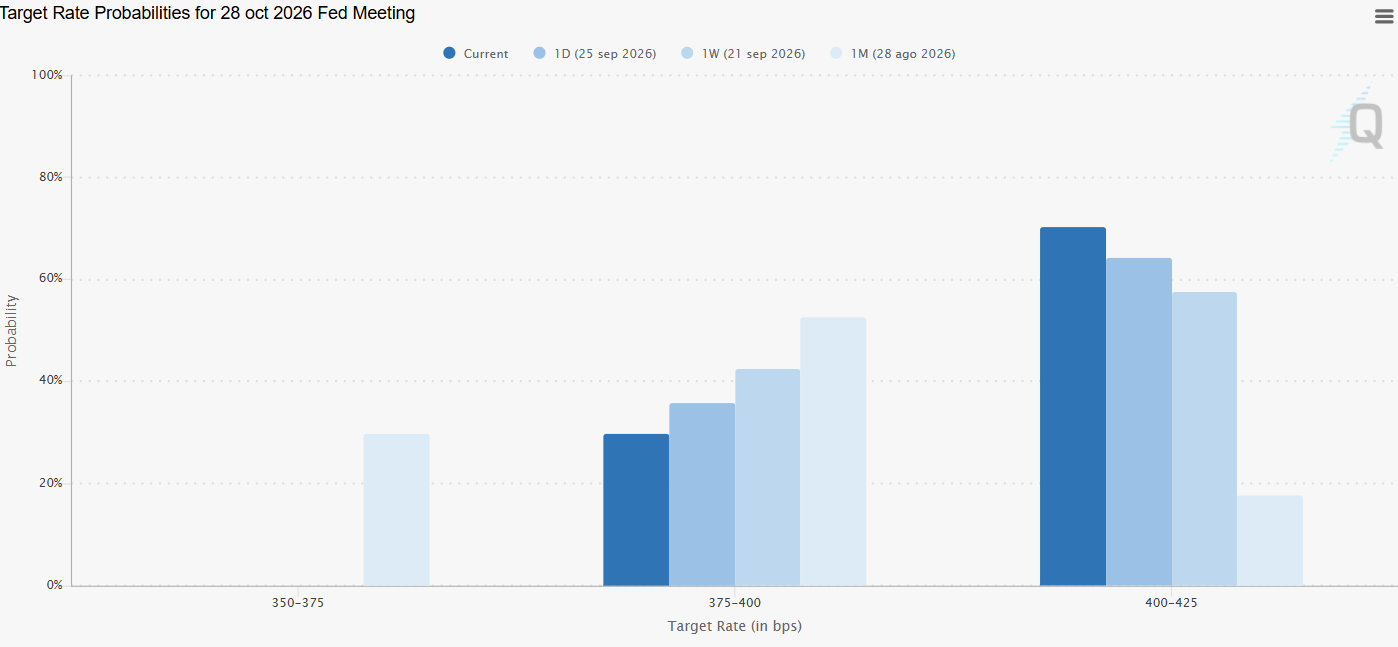
Source: CMEGROUP
In this environment, the U.S. dollar continues to benefit from a higher-rate backdrop, as elevated yields generally improve the attractiveness of dollar-denominated investments, particularly within fixed-income markets. This dynamic remains visible in the performance of DXY, which continues to trade above the 100-point mark and maintains a relatively constructive short-term outlook.
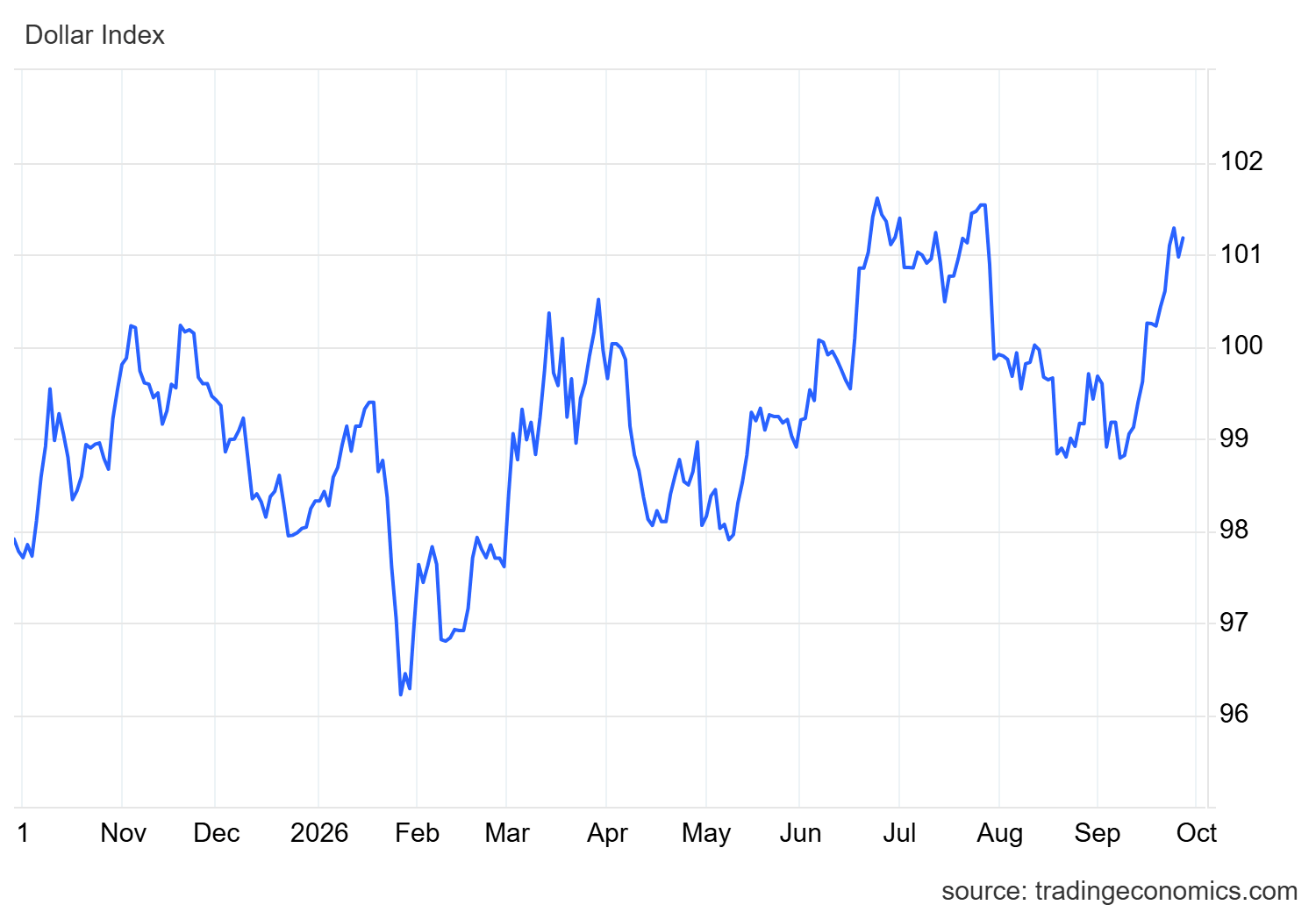
Source: TradingEconomics
Taking all of this into account, the divergence between both central banks continues to favor the dollar and may keep supporting upside moves in USD/JPY. Even so, intervention risks remain an important variable for the market and continue to prevent buyers from gaining full conviction.
For now, the result is a market caught between bullish and bearish forces. However, if concerns surrounding intervention begin to fade while dollar strength remains intact, buying pressure around USD/JPY could start to regain momentum over the coming weeks.
USD/JPY Technical Forecast
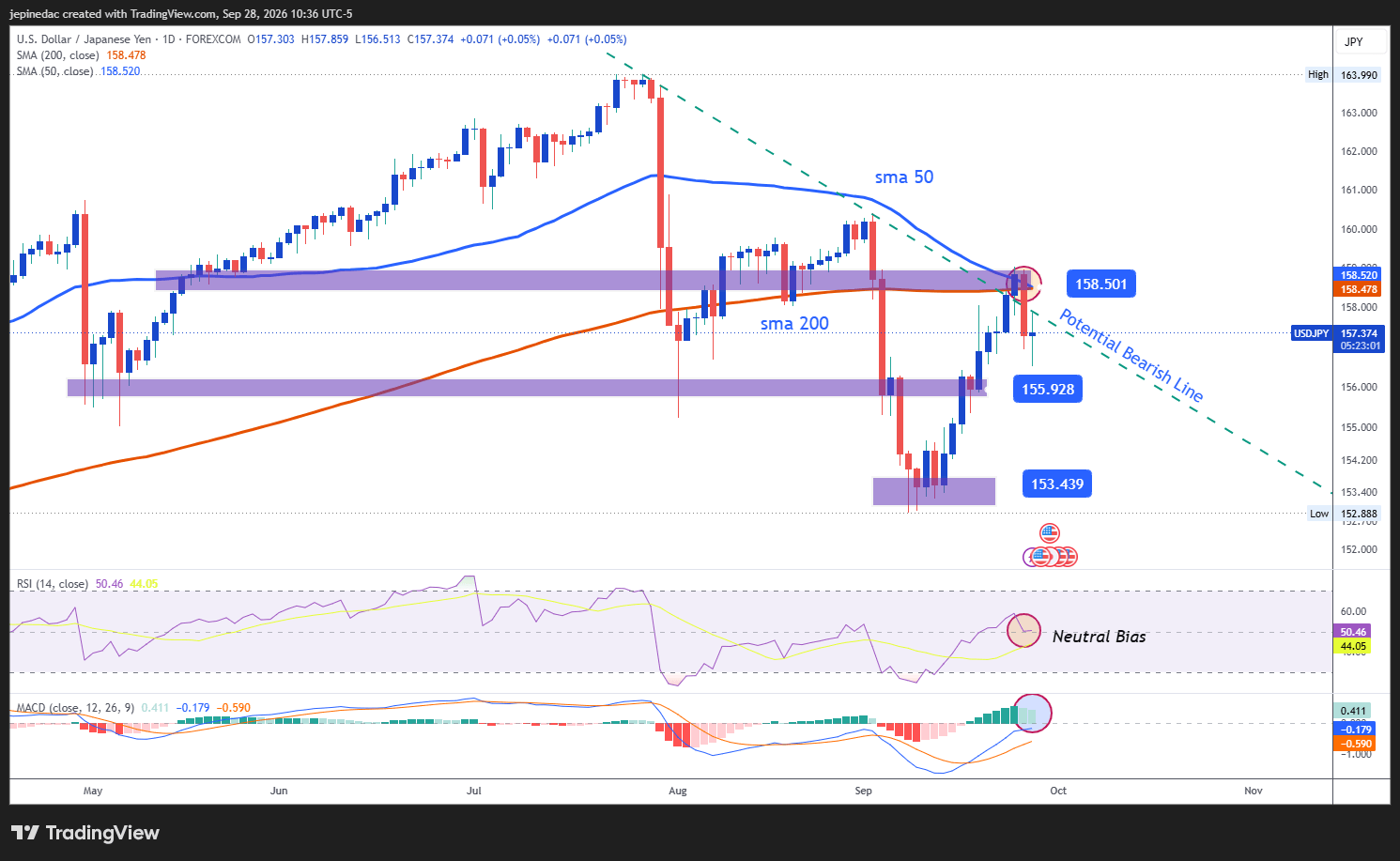
Source: StoneX, Tradingview
- Bearish trendline remains under pressure: Over recent weeks, USD/JPY developed a bearish trendline that became one of the most important technical structures on the daily chart. However, the recent price recovery has started to challenge that formation. The pair is currently trading near the base of the trendline, making the sellers' ability to regain control particularly important. If bearish momentum fails to return consistently, the structure could begin to lose relevance and open the door to a more established bullish recovery.
- MACD: The MACD histogram continues to show a gradual loss of momentum and is once again approaching the 0 neutral line. This reading reflects a slowdown in bullish momentum across shorter-term moving averages and points to a potential period of balance within the market.
- RSI: A similar picture can be observed in the RSI, which remains oscillating around the 50 neutral level. This suggests that buying and selling pressures are becoming increasingly balanced, a reading that aligns with the lack of direction currently visible in USD/JPY price action.
Key Levels:
- 158.50 – Key Resistance: This level coincides with important retracement zones from previous weeks and aligns with both the 50-period and 200-period simple moving averages. Price action that manages to establish itself above this area could bring an end to the recent bearish structure and open the door to a more meaningful bullish bias on the daily chart.
- 155.92 – Near-Term Barrier: A key retracement area that continues to serve as the market's main equilibrium zone. As long as prices remain around this level, a sense of neutrality could persist and even give way to a broader consolidation phase in the short term.
- 153.43 – Major Support: An important support area that continues to represent one of the most relevant downside references of recent months. A move back toward this level could restore relevance to the bearish bias and reinforce the downtrend as the dominant structure over the coming weeks.
Written by Julian Pineda, CFA, CMT – Market Analyst
Follow him on: @julianpineda25