
A new trading week is underway and the euro continues to show signs of weakness in the short term. This can be seen in the recent performance of EUR/USD, which has fallen nearly 0.5% over the last three trading sessions, reflecting a relatively consistent loss of momentum in the European currency.
For now, selling pressure is being driven primarily by renewed strength in the U.S. dollar as markets await this week's monetary policy decisions from both the United States and Europe. This environment has reinforced a cautious tone across financial markets and is making it increasingly difficult for the euro to regain ground in a consistent manner. As long as this dynamic remains in place, selling pressure around EUR/USD could continue to be relevant in the coming sessions.

What Is Expected from the Central Banks?
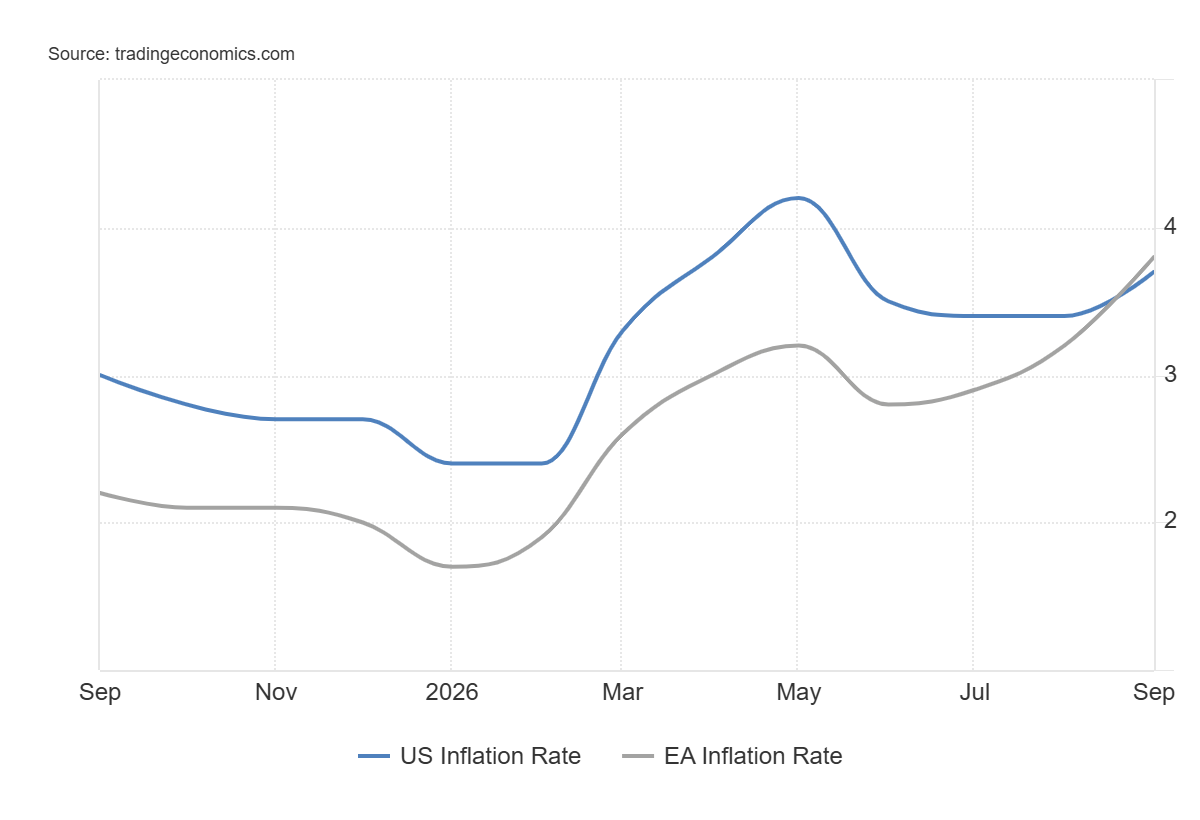
With monetary policy decisions only days away in both the United States and Europe, inflationary pressures continue to display relatively similar characteristics across the two regions. The latest data show annual inflation in the United States holding near 3.7%, while the most recent reading for Europe stands around 3.8%.
This remains important because both economies continue to face relatively persistent inflation pressures while remaining well above the 2.0% target maintained by their respective central banks. As a result, inflation remains a key element within the monetary policy debate and continues to leave the door open for potential additional policy adjustments further down the road.
Source: TradingEconomics
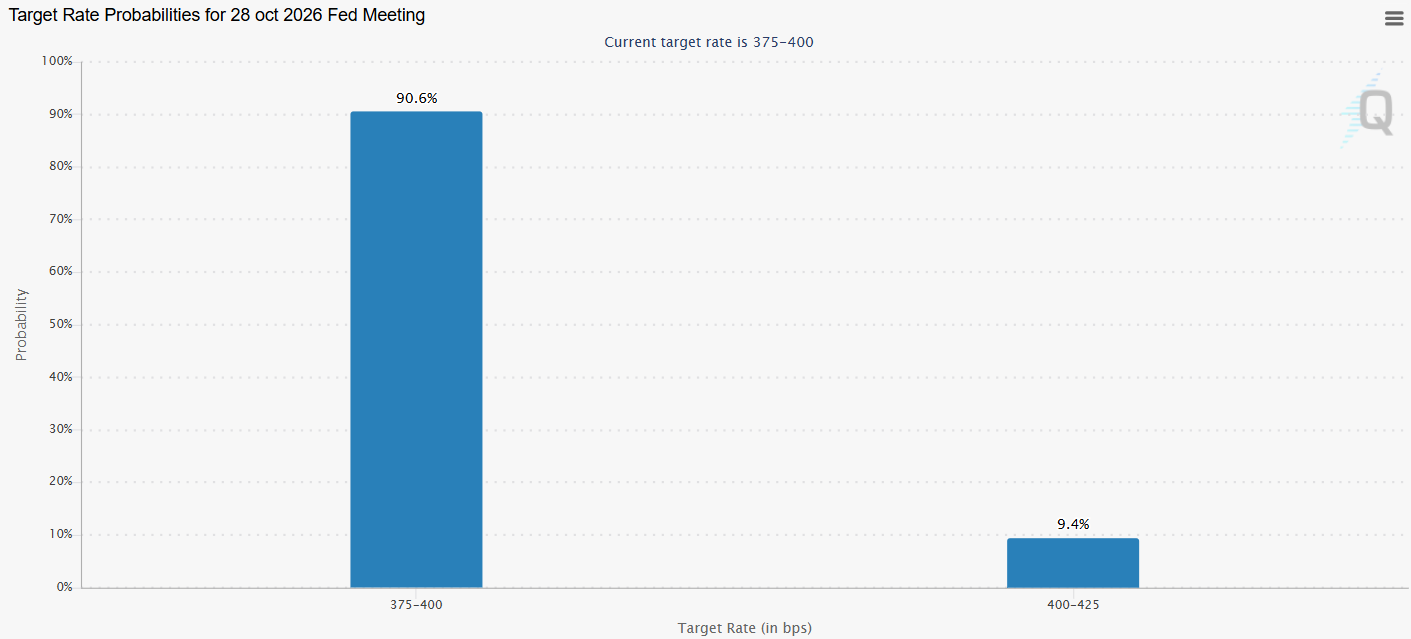
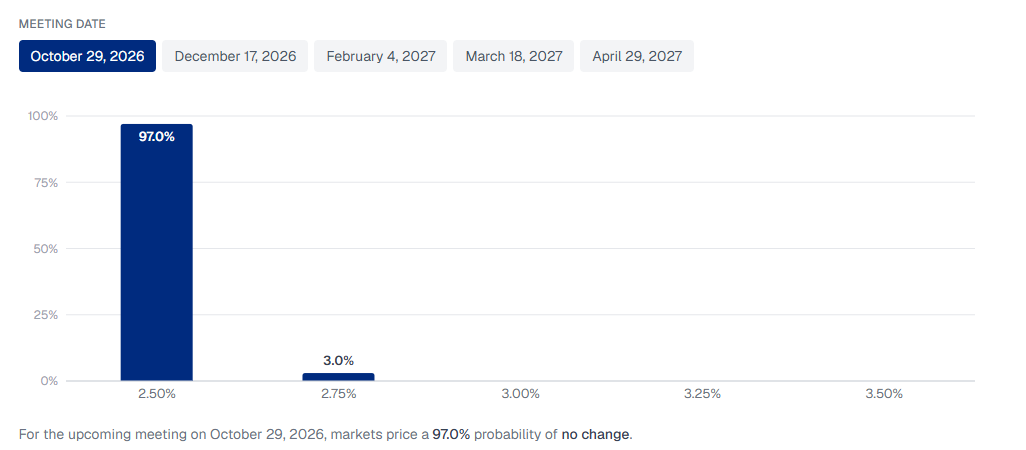
This backdrop is particularly relevant because both central banks appear to be following a relatively similar path. For this week's meetings, markets continue to price in a high probability of no immediate changes to interest rates.
In the United States, markets assign more than a 90% probability that the benchmark rate will remain unchanged around 4.00%. Meanwhile, in Europe, the probability of the European Central Bank maintaining its deposit rate at 2.50% exceeds 97%.
This suggests that both institutions continue to operate under a relatively cautious and aligned policy approach, supported in part by the similarity in recent inflation trends.
Source: CMEGROUP
Source: ECBWATCH
What remains particularly important is that the wait for these policy decisions has reinforced market caution. In this environment, one of the main factors supporting the dollar against the euro over recent months has once again moved into focus: the interest rate differential between the two regions.
While the U.S. benchmark rate remains near 4.00%, the ECB's deposit rate continues to stand around 2.50%. This gap remains significant because it supports the perception that dollar-denominated investments offer a stronger relative return than euro-denominated assets.
Moreover, if both central banks continue following similar policy paths over the coming months, markets may increasingly conclude that this differential is likely to remain in place for an extended period. This remains an important limitation for the euro's ability to regain relative strength against the dollar and could continue supporting demand for U.S. assets.
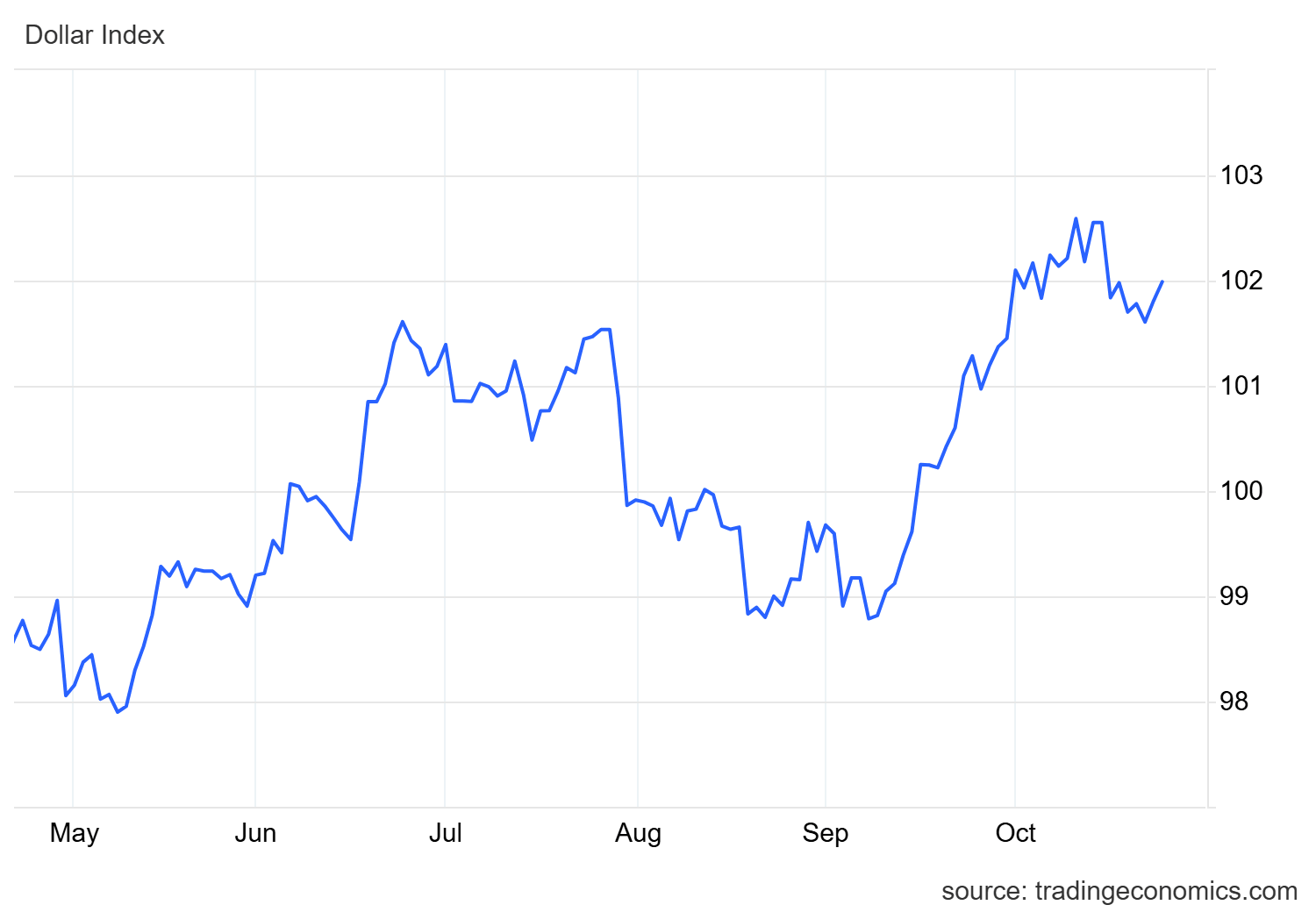
In fact, this dynamic is already becoming visible in the recent performance of the DXY, the index that measures the U.S. dollar against its main peers. At the beginning of the week, the index resumed a consistent recovery and is once again approaching the 102-point area, highlighting renewed dollar strength just ahead of this week's central bank decisions.
Source: TradingEconomics
Taking all of this into account, central bank expectations remain the most important factor to monitor this week. The U.S. dollar has started to regain momentum amid the cautious environment ahead of policy announcements, and this trend could persist if the Federal Reserve delivers a relatively more hawkish message than its European counterpart.
Under that scenario, the interest rate differential could continue acting as an important source of support for the dollar while limiting the euro's recovery potential. As a result, selling pressure around EUR/USD could remain relevant in the weeks ahead.
EUR/USD Technical Forecast
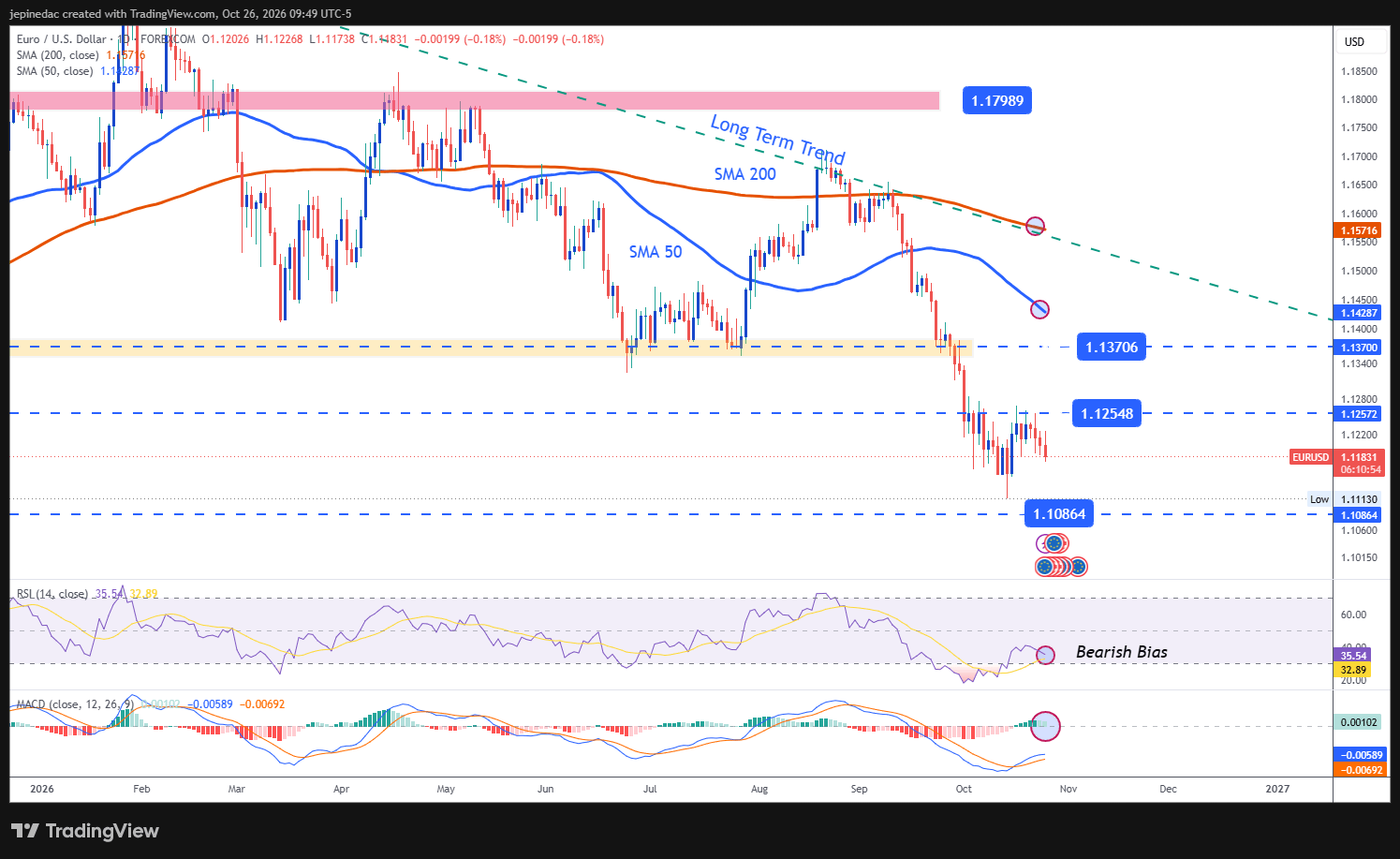
Source: StoneX, Tradingview
- The broader bearish structure remains dominant: Since January 2026, EUR/USD has developed a significant bearish trendline that continues to serve as the dominant technical structure on the daily chart. During recent sessions, selling pressure has once again begun to regain prominence and, if price manages to break key support levels, the current downtrend could accelerate further in the weeks ahead.
- RSI: The RSI continues to develop below the 50 neutral level, a reading that suggests selling momentum remains dominant. As long as this behavior persists, the bearish bias could continue to play an important role in EUR/USD price action over the short term.
- MACD: The MACD histogram has started to show a relatively consistent slowdown, reflecting a loss of momentum within short-term moving averages. This reading could also begin to support a phase of sustained weakness or even a broader period of indecision around current price action.
Key Levels:
- 1.13706 – Key Resistance: A level that coincides with an important previous support area and now acts as the main upside barrier on the chart. A sustained move above this level could reduce the selling pressure observed over recent months and open the door to a more established neutral phase, potentially allowing a short-term trading range to develop.
- 1.12548 – Near-Term Barrier: A level that aligns with an important retracement zone observed in recent weeks and currently serves as one of the market's primary equilibrium references. It could become the most important level to monitor in the event of short-term bullish corrections.
- 1.10864 – Major Support: A price area not seen since May 2025 that remains the most important downside barrier within the current structure. A move back toward this level could restore prominence to the bearish bias and support a more aggressive extension of the prevailing downtrend in the weeks ahead.
Written by Julian Pineda, CFA, CMT – Market Analyst
Follow him on: @julianpineda25