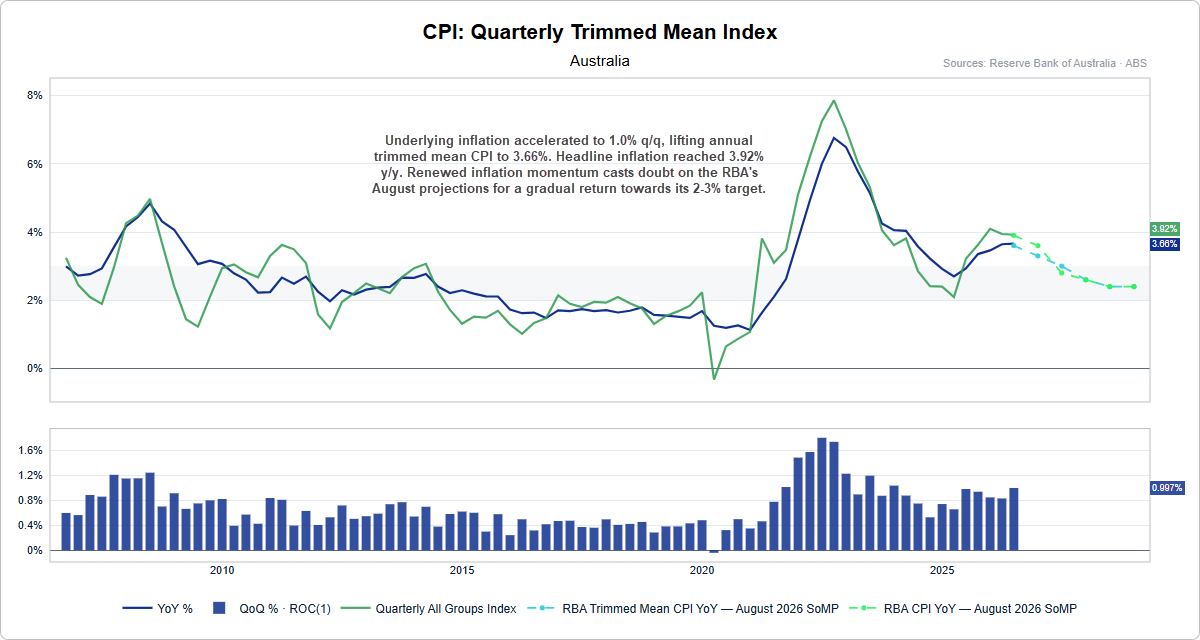
Australian Q3 inflation figures have effectively cemented expectations for another RBA interest rate hike on 3 November. Quarterly trimmed mean inflation accelerated to 1.0% from 0.8% in Q2, lifting the annual rate to 3.7%. That marks the fourth consecutive quarter above the RBA's 2–3% target band, while headline inflation remained elevated at 3.9% y/y.
View related analysis:
- USD/JPY and EUR/JPY: Diverging Setups Ahead of ECB and BOJ
- Gold Bulls Treat $4,000 as a Bargain Once Again
- AUD, NZD, CAD: Commodity FX Faces a 24-Hour Central Bank Storm
- ECB Meeting Preview: EUR/USD Bears Face a Sentiment Test
Australian Q3 Inflation Fuels RBA Hike Expectations Despite Economic Weakness
Australian Inflation Pressures Extend Beyond Energy
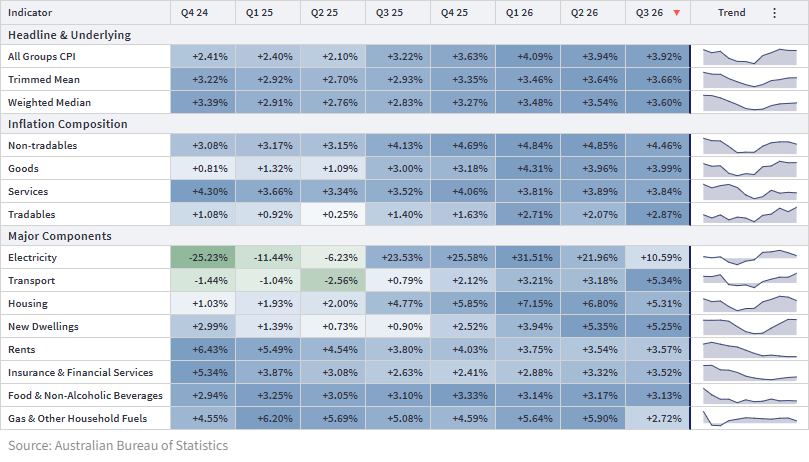
While rising energy prices have contributed to headline inflation, the problem extends beyond fuel. Non-tradables inflation remained elevated at 4.5% y/y, alongside services inflation at 3.8%. Housing inflation also remained relatively high at 5.3%, while new dwelling prices rose 5.3%.
However, inflation is not accelerating across the board. Services, non-tradables and housing inflation have moderated, while tradables inflation accelerated to 2.9% from 2.1%.
This suggests that while domestic inflation pressures remain persistent, the latest acceleration is uneven, with external price pressures playing an increasingly important role.
Persistent Q3 Inflation Strengthens the Case for an RBA Hike
The RBA's Sarah Hunter had already signalled concerns over inflation when her interview aired on 60 Minutes on Sunday. Governor Michele Bullock reinforced the Bank's concerns during Wednesday's parliamentary hearing, warning that inflation remained far too high.
The RBA has also acknowledged that inflation is likely to exceed its August projections, with persistent domestic capacity pressures being compounded by higher global energy costs.
The acceleration in quarterly trimmed mean inflation is particularly concerning. At 1.0% q/q, underlying inflation is running at a pace inconsistent with a sustained return to the RBA's 2–3% target. And with inflation already tracking above earlier expectations, the Bank looks set to revise its inflation projections higher next week.
This content was created by an affiliate of FOREX.com and represents the views and opinions of the author/speakers, not the views and opinions of FOREX.com, StoneX Group Inc., or its subsidiaries. The content has not been independently reviewed by FOREX.com.
RBA Cash Rate Outlook: November Hike Looks Increasingly Likely
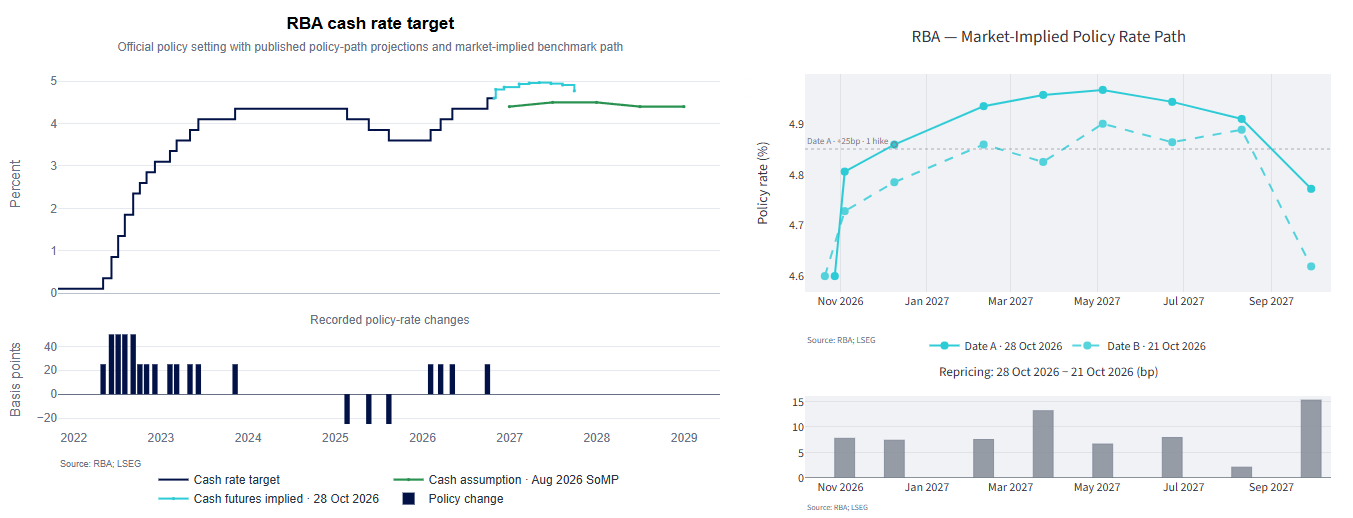
Markets are now pricing over an 80% probability of a November RBA rate hike, with the Q3 inflation figures reinforcing expectations of further monetary tightening.
The market-implied cash rate path also shifted around 6–8 basis points higher across much of 2027 following the CPI release, pointing to a peak near 5% around the middle of next year.
I doubt the RBA will follow up with another hike in December. However, next week's updated Statement on Monetary Policy should provide greater insight into its appetite for further tightening in 2027.
My base case is that the RBA retains a hawkish bias, potentially leaving room for one further hike in H1 2027.
Weakening Economic Conditions Could Limit Further RBA Tightening
While persistent inflation makes a November hike difficult to avoid, the broader Australian economy gives the RBA reason to remain cautious about further tightening.
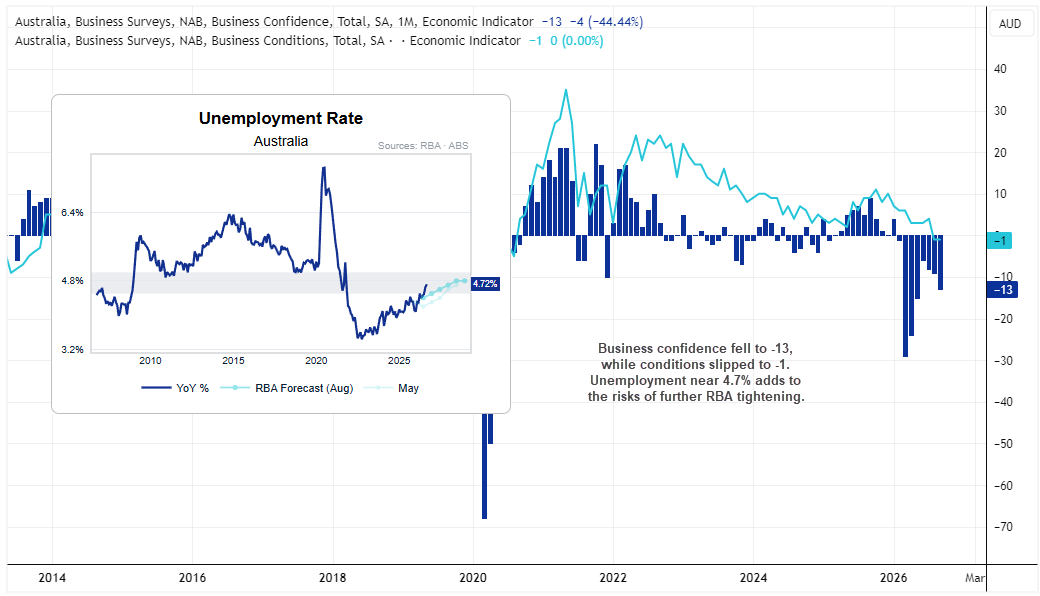
Employment has weakened, unemployment has risen to 4.7%, and consumer and business sentiment remain subdued. NAB business confidence fell to -13 in September, while business conditions slipped into negative territory.
The November decision itself may be relatively straightforward. The greater challenge for the RBA will be bringing inflation back under control without placing unnecessary strain on an already weakening economy.
And that could ultimately determine how much further the Bank is prepared to tighten in 2027.