US futures
Dow futures -0.9%, S&P 500 futures 0.19% & Nasdaq futures 1.6%
European futures
FTSE 2 %, DAX -2.5%
- US stocks opened mix as dip buyers step in.
- Tech leads the recovery after the Nasdaq closed 5.5% lower yesterday.
- U.S. Non-prime payrolls came in at 165,000 versus 65,00Expected.
- Oil is on track for its largest weekly decline since March 2020 COVID.
U.S. stocks mixed as markets weigh stronger jobs data
U.S. stocks have opened mixed, with tech stocks rebounding while the Dow Jones lags, as investors continue to digest the fallout from the midterm elections and the stronger-than-expected U.S. nonfarm payroll report.
Data showed that the U.S. economy added 165,000 jobs in October, more than twice what was expected, while the unemployment rate ticked down to 4.1% from 4.2%.
The market is now pricing in an 80% probability of a 25-basis-point rate hike in December, up from 70% ahead of the data.
Attention is turning to next week’s U.S. CPI data. Hotter-than-expected inflation, combined with a stronger-than-expected jobs report, could cement expectations for a December rate hike, putting stocks under pressure.
Rising Fed rate hike expectations have had little impact on stocks so far, which are rebounding following yesterday’s tech-led sell-off. Concerns that a Democratic Congress could slow the pace of AI data centre expansion fuelled a tech sell-off, which saw the Nasdaq close 5.5% lower.
The sell-off came amid existing concerns over AI investment, debt-funded spending and whether these investments will deliver timely returns. While buyers have stepped in at key technical levels, this doesn’t necessarily mean the market has found a bottom.
Corporate movers
AI and semiconductor stocks are climbing pre-market, recovering some of yesterday’s huge sell-off amid concerns over potential constraints on AI data centre expansion.
Airbnb is climbing 13% after Q3 EPS of $13.16 beat expectations of $2.85.
Moderna is rising 10% after beating Q3 earnings estimates and lifting its full-year sales growth outlook. It now expects 2026 revenue growth of 15% to 25%.
Lam Research, a semiconductor equipment maker, is up 11% after its board authorised a $25 billion stock buyback.
S&P 500 forecast – technical analysis
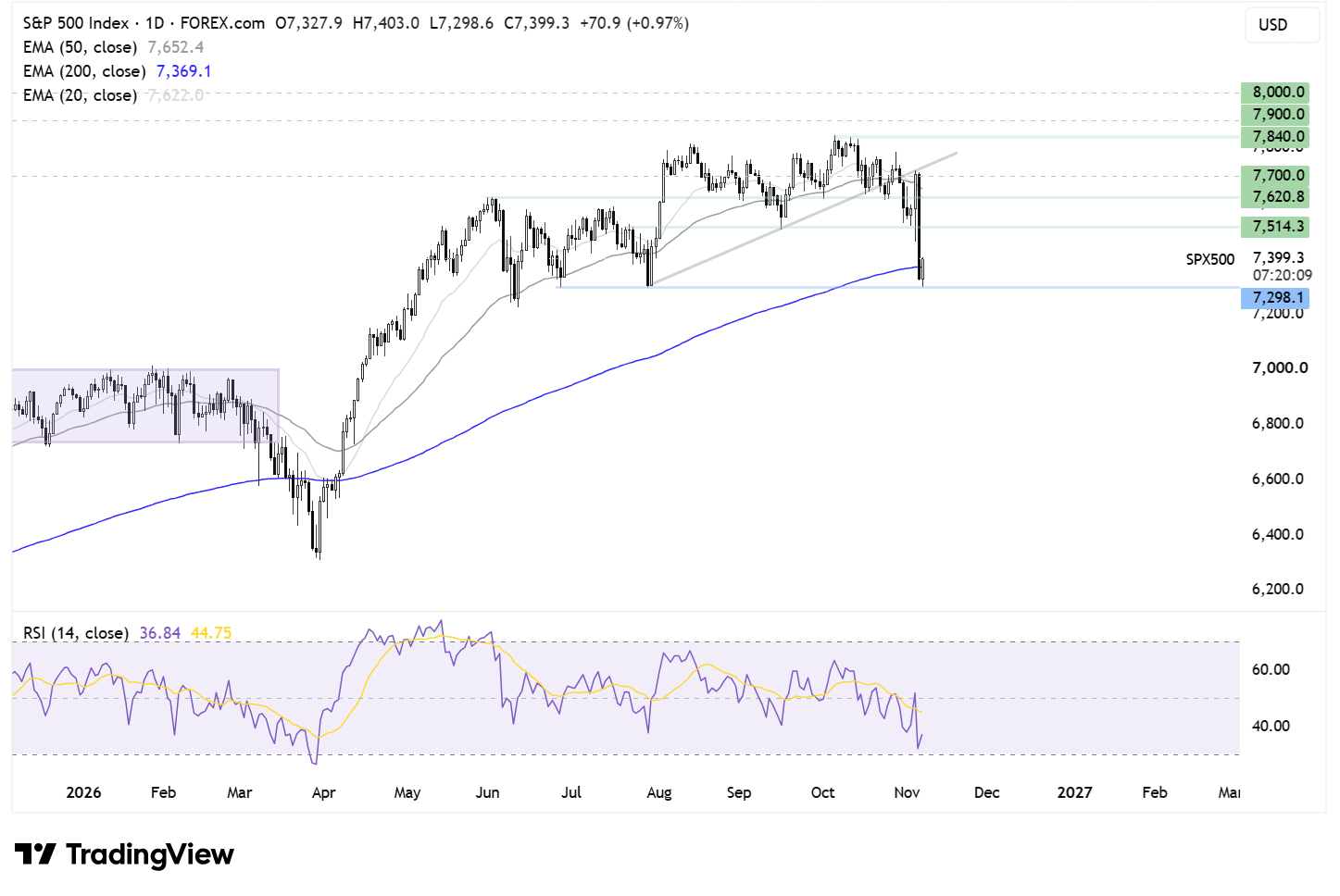
The S&P 500 faced rejection at 7,700, falling to find support at 7,300, the July low. The price has recovered from this level and is testing resistance at the 200 EMA at 7,370.
Failure to retake this level and close above it will keep bears in control. Sellers will look to break below 7,300 and 7,225, the June low. A break below here opens the door to 7,000, the January high.
Should support hold, buyers need to close above the 200 EMA at 7,370 to bring 7,500, the September low, into focus, ahead of 7,620 horizontal resistance. Above here, the price would be on a firmer footing.
FX markets – USD rises, GBP/USD falls
The U.S. dollar is rising as deteriorating risk appetite supports demand for the currency. Investors remain concerned about the future of AI, leading them to sell risk assets. Previously, this selling pressure has affected Treasuries, gold, the Swiss franc and the Japanese yen, but now attention is turning to the dollar.
EUR/USD is falling on U.S. dollar strength, despite hawkish comments from ECB chief economist Philip Lane. Lane considers that higher energy prices are likely to influence wage negotiations. This highlights concerns that higher energy prices could seep into the broader economy, creating second-round effects. His comments keep ECB rate hike expectations in December on the table.
GBP/USD is falling amid a rebound in the U.S. dollar, dropping towards 1.3425. The Bank of England hiked interest rates by 25 basis points to 4% yesterday, marking the first rate hike since August 2023. The vote was more hawkish than expected. Attention now turns to UK GDP data next week.
Oil falls sharply across the week
Oil prices are rising modestly on Friday but are still on track to fall sharply across the week after the U.S. midterm elections raised hopes of a de-escalation in the U.S.-Iran war.
WTI is on track for a 12% decline, while Brent is set to lose 16% this week, which would mark its steepest weekly decline since the start of the Covid pandemic.
A potential de-escalation in the war in the Middle East could see more crude exports out of the region, easing supply concerns and removing some of the risk premium that had been built into oil prices.
The market will want to see firm evidence of a deal being signed before significant further declines. This is particularly important given that tanker attacks in the Strait of Hormuz and the Gulf continue.