



USD/JPY Analysis: Can the Yen Continue Gaining Strength?
Recent sessions have been marked by heightened volatility in USD/JPY, as the pair has posted a decline of more than 2.11% on average over the last three trading days, reflecting a notable bearish bias that had not been seen in several months and highlighting a meaningful recovery in favor of the Japanese yen.
Share this:

Recent sessions have been marked by heightened volatility in USD/JPY, as the pair has posted a decline of more than 2.11% on average over the last three trading days, reflecting a notable bearish bias that had not been seen in several months and highlighting a meaningful recovery in favor of the Japanese yen.
The main driver behind this strong selling pressure has been expectations that emerged toward the end of last week regarding a possible intervention by the Japanese government and the Bank of Japan, aimed at purchasing yen. This event triggered sharp downside moves in the short term.
However, over the weekend, there were no clear confirmations regarding the continuation of this dynamic. As a result, in the absence of further information, a phase of indecision may begin to dominate USD/JPY price action in the coming sessions.


Possible intervention?
The end of last week marked a key turning point for USD/JPY. After the pair approached recent highs, reports surfaced of a potential intervention in the FX market by the Japanese government and the Bank of Japan through the purchase of yen and the sale of US dollars.
It is estimated that these operations could have reached between 5 and 6 trillion in yen purchases, which would represent the first intervention of this type since July 2024. This is particularly relevant as it suggests a shift in the country’s stance toward its currency.
The situation gained further attention when the Finance Minister stated that Japan was prepared to carry out significant FX operations. However, no concrete updates have been provided since then, and the same official has refrained from confirming direct action, maintaining an ambiguous stance.
This lack of confirmation has led to a pause in volatility, leaving the market waiting for clearer signals on whether this intervention dynamic will persist.
The rationale behind such intervention is likely linked to the economic impact of a weak yen, which increases the cost of imported energy and food, potentially generating additional inflationary pressures. In this context, intervention would aim to mitigate these effects.
Taking all of this into account, this event stands out as one of the most relevant catalysts for the yen this year. If further interventions are confirmed or if a structural shift in exchange rate policy emerges, downside pressure in USD/JPY could intensify again in the coming sessions.
The dollar shows signs of stabilization again
Another important factor for USD/JPY is that, despite the strong selling pressure seen at the end of last week, recent sessions have started to reflect a phase of indecision, driven by two main factors: the lack of new signals from Japan and the stabilization of the US dollar.
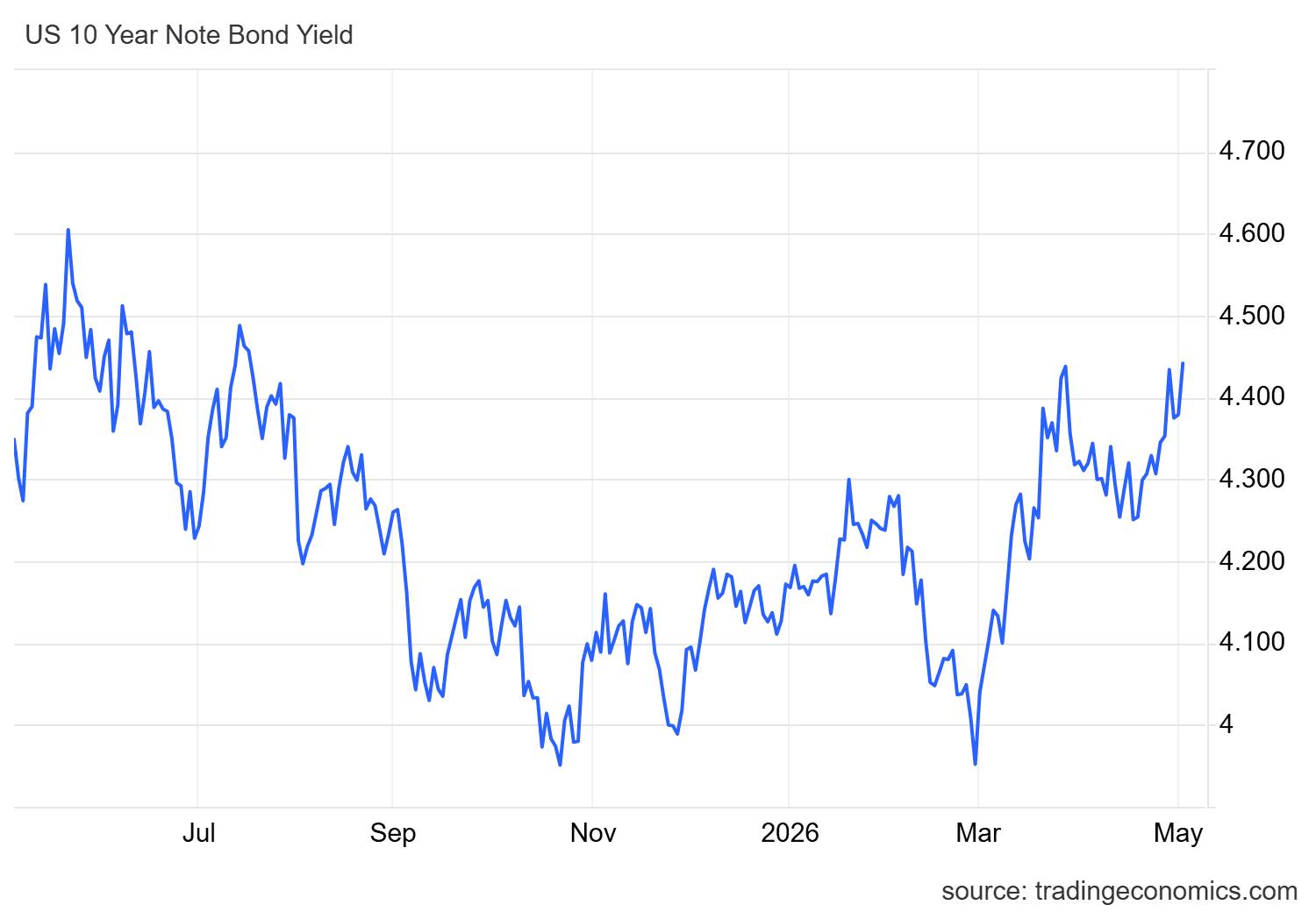
This behavior is closely linked to the bond market. US 10-year Treasury yields have resumed an upward trend, approaching the 4.5% level, near recent highs.
Source: TradingEconomics
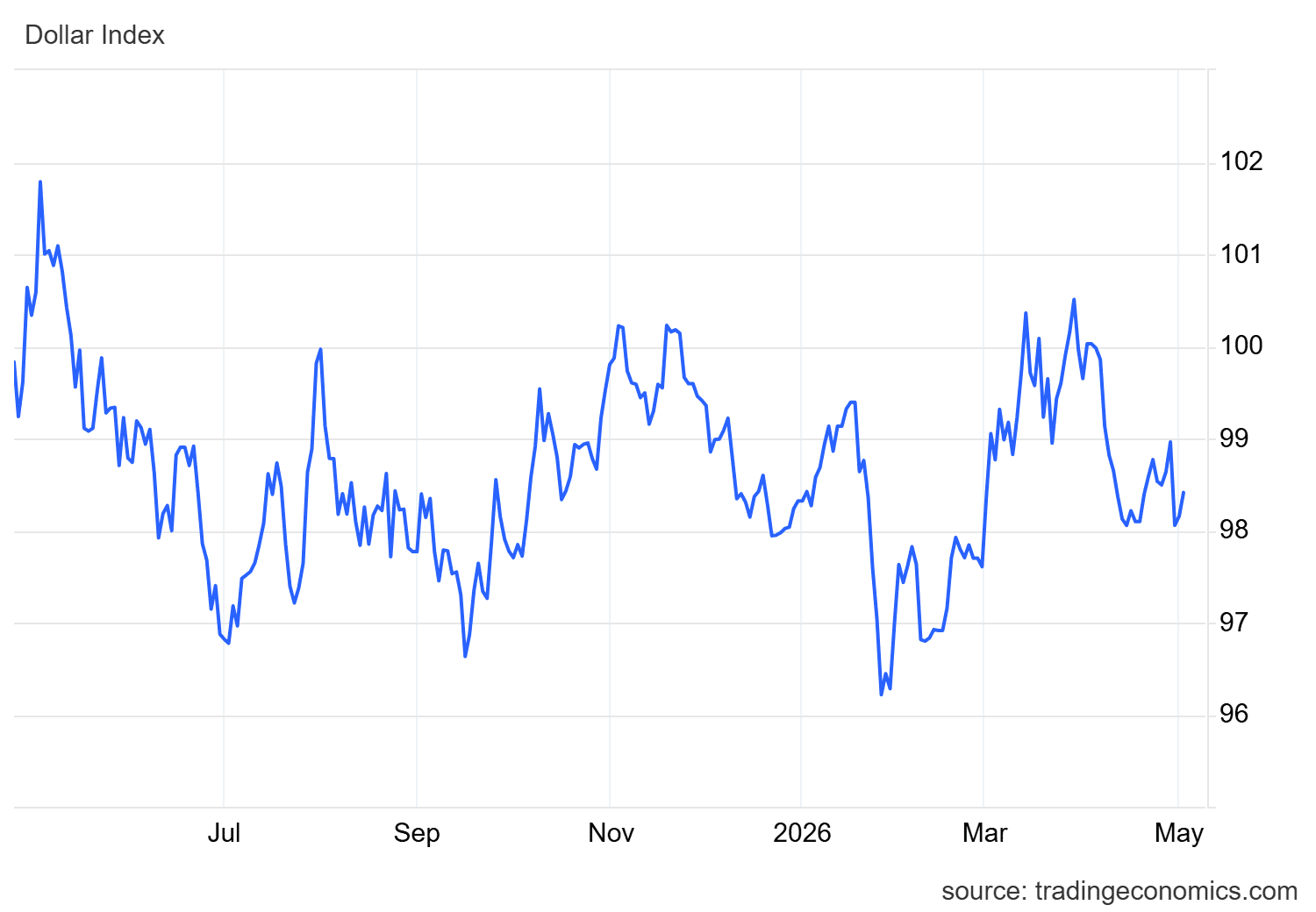
Rising yields reinforce the attractiveness of the US dollar, as they encourage capital inflows into fixed income markets. This effect has also been reflected in the DXY index, which has started the week with upward movements toward the 98.5 level, indicating a recovery in demand for the dollar in the short term.
Source: TradingEconomics
This environment is key because it limits the yen’s ability to continue appreciating in a sustained manner. As a result, this combination of factors has begun to generate a phase of neutrality in USD/JPY in recent sessions.
In this context, any break from this indecision will likely depend on new signals from Japan, particularly regarding intervention or changes in FX policy.
Technical outlook for USD/JPY
Source: StoneX, Tradingview
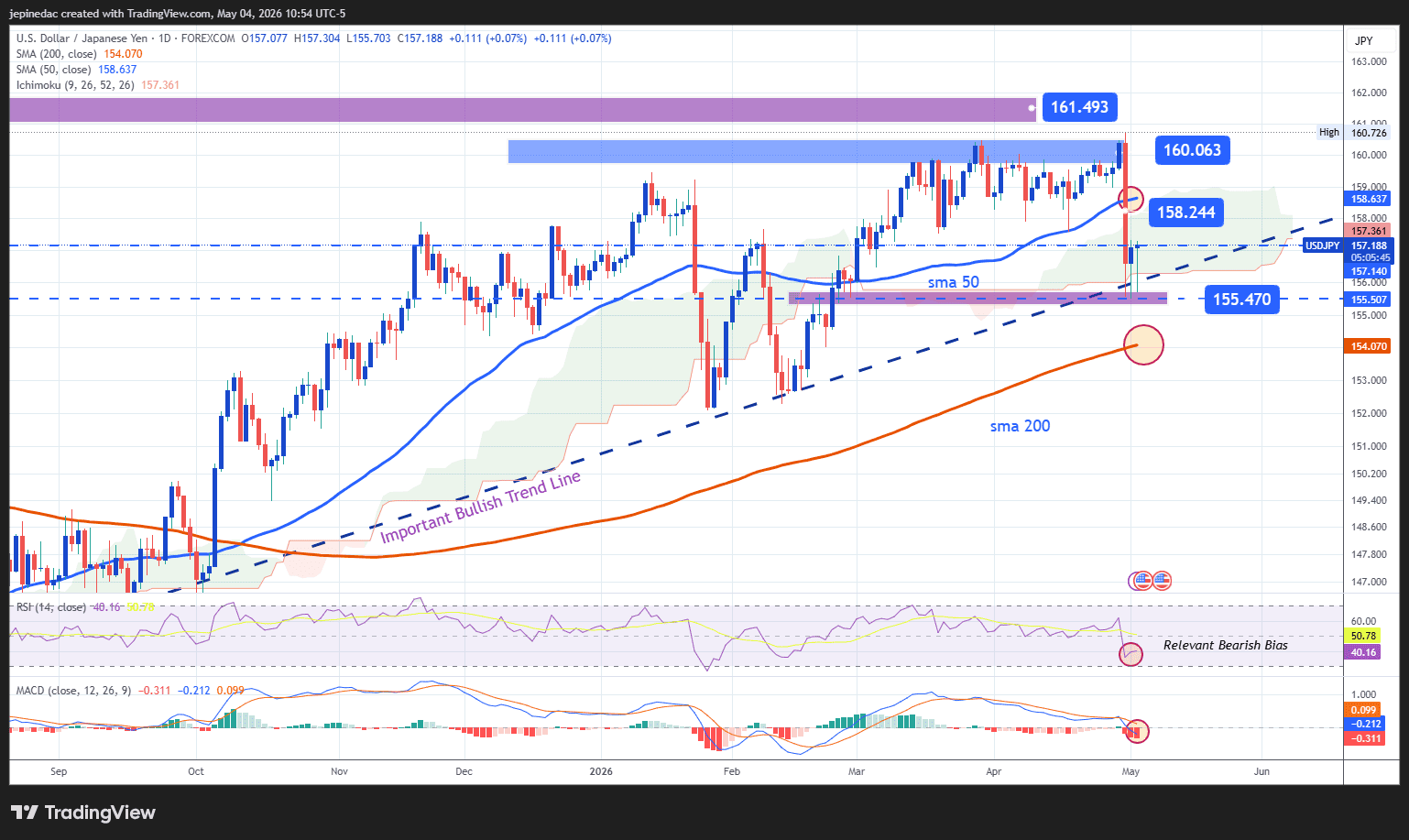
- Long-term uptrend under pressure: Although USD/JPY has maintained an upward structure for several months, the recent bearish move has started to challenge the strength of this trend. The price is now testing a key zone, pressing against the long-term trendline that has acted as support. If selling pressure consolidates, a break below this structure could trigger a more meaningful trend reversal in the short to medium term.
- RSI: The RSI remains below the 50 level, indicating that selling momentum is still dominant in the short term. Recent price action also shows that downside pressure has not yet weakened, which could continue to support corrective moves. If RSI remains in this zone, it may reinforce a bearish outlook unless the neutral level is regained.
- MACD: The MACD shows a similar pattern, with the histogram remaining below the zero line. This suggests that short-term moving average strength continues to favor a bearish bias, supporting the likelihood that downside moves remain relevant. As the histogram continues to post lower lows, selling pressure could become more dominant.
Key levels:
- 160.000 – Key resistance: A key psychological level aligned with recent highs. Moves toward this area could restore strength to the broader uptrend and reintroduce bullish momentum in the coming sessions.
- 158.244 – Near-term barrier: A neutral zone aligned with the 50-period moving average. This level could act as a reference point for potential short-term rebounds.
- 155.470 – Key support: A level of recent lows aligned with the base of the long-term trendline. A break below this level would put the current bullish structure at risk and could lead to a more dominant bearish bias over the coming weeks.
Written by Julian Pineda, CFA, CMT – Market Analyst
Follow him on: @julianpineda25
Latest market news




Open an account in minutes
Experience award-winning platforms with fast and secure execution, and enjoy tight spreads from 0.5 pts on FX and 0.3 pts on indices.
Economic calendar
Web Trader platform
Our sophisticated web-based platform is packed with features.
Related articles
EUR/USD Q4 2026 Outlook: Euro at a Crossroads as Fed, ECB Tighten 9 25 2026
EUR/USD enters Q4 at a pivotal inflection point as competing Fed-ECB policy paths and persistent inflation risks collide with major technical support.

S&P 500 Forecast: SPX rises as oil prices fall, but treasuries remain at multi-decade highs
U.S. stocks are rising on Friday after a volatile week that saw a surge in Treasury yields ripple through financial markets.

AUD/USD Q4 Outlook: RBA and Fed Hikes Set the Tone
AUD/USD enters Q4 with RBA and Fed hikes in focus as sticky inflation, rising unemployment and US dollar strength shape the Australian dollar.

This report is intended for general circulation only. It should not be construed as a recommendation, or an offer (or solicitation of an offer) to buy or sell any financial products. The information provided does not take into account your specific investment objectives, financial situation or particular needs. Before you act on any recommendation that may be contained in this report, independent advice ought to be sought from a financial adviser regarding the suitability of the investment product, taking into account your specific investment objectives, financial situation or particular needs.
StoneX Financial Pte. Ltd., may distribute reports produced by its respective foreign entities or affiliates within the StoneX group of companies or third parties pursuant to an arrangement under Regulation 32C of the Financial Advisers Regulations. Where the report is distributed to a person in Singapore who is not an accredited investor, expert investor or an institutional investor (as defined in the Securities Futures Act), StoneX Financial Pte. Ltd. accepts legal responsibility to such persons for the contents of the report only to the extent required by law. Singapore recipients should contact StoneX Financial Pte. Ltd. at 6826 9988 for matters arising from, or in connection with the report.
In the case of all other recipients of this report, to the extent permitted by applicable laws and regulations neither StoneX Financial Pte. Ltd. nor its associated companies will be responsible or liable for any loss or damage incurred arising out of, or in connection with, any use of the information contained in this report and all such liability is hereby expressly disclaimed. No representation or warranty is made, express or implied, that the content of this report is complete or accurate.
StoneX Financial Pte. Ltd. is not under any obligation to update this report.
Trading CFDs carries a high level of risk that may not be suitable for some investors. Consider your investment objectives, level of experience, financial resources, risk appetite and other relevant circumstances carefully. The possibility exists that you could lose some or all of your investments, including your initial deposits. If in doubt, please seek independent expert advice. Visit www.forex.com/en-sg/terms-and-policies for the complete Risk Disclosure Statement.