AUD/USD is showing tentative signs of a bullish reversal after an extended selloff, with support emerging around 0.6600 ahead of a busy economic calendar.
Australian CPI, US GDP and PCE inflation could test the increasingly divergent policy outlooks for the RBA and Fed, potentially providing the catalyst for the Aussie dollar's next significant move.
View related analysis:
- AUD/USD Outlook: Macro Forces Collide Ahead of US, AU Inflation
- ASX 200 Outlook: Wall Street Rebound Meets Domestic Economic Weakness
- Nasdaq 100: AI Valuation Fears Meet Thanksgiving Seasonality
- Australian Dollar Extends Slump as RBA Rate Hikes Look Dead and Buried
AUD/USD Outlook: Australian CPI, US GDP and PCE Take Centre Stage
US GDP: Consumer Spending and Investment Underpin Growth
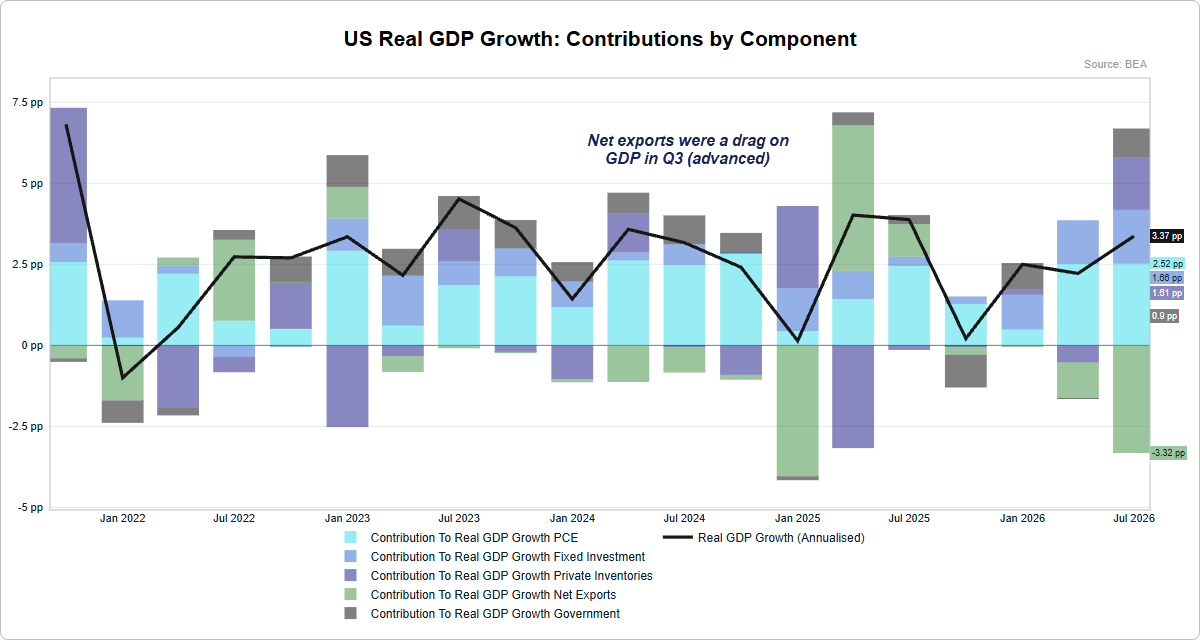
US economic resilience continues to support hawkish Fed expectations, with Wednesday's revised Q3 GDP figures providing another test of the economy's underlying strength.
As the chart shows, consumer spending and investment did much of the heavy lifting, while net exports were a substantial drag, partly reflecting surging equipment imports linked to the AI infrastructure boom. Any meaningful revisions to these components could influence expectations for growth heading into 2027.
US PCE: Inflation Persistence Keeps Fed Hawks in Control
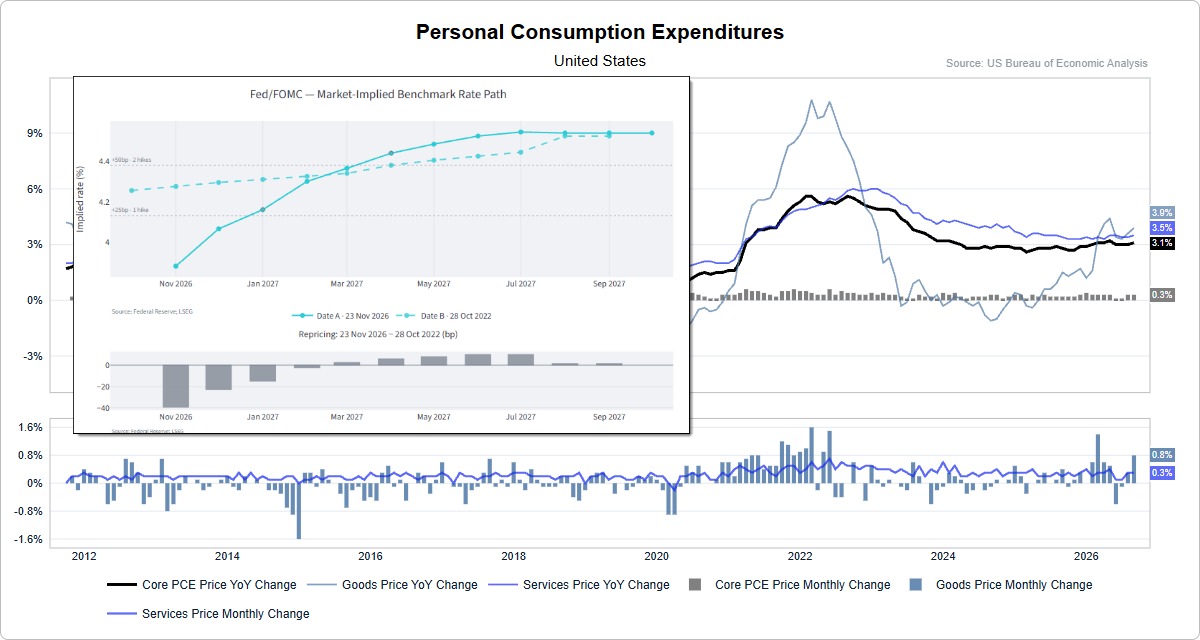
October's FOMC minutes reinforced the case for further tightening, with most policymakers favouring additional rate increases and some open to a more aggressive approach if inflation remains stubbornly high.
The PCE chart highlights persistent inflation pressures, particularly across services. PCE tends to be less volatile than other inflation measures and is somewhat backward-looking, so fireworks may be unlikely. However, an unexpected acceleration in services inflation could reinforce the Fed's concerns about inflation persistence and justify further tightening.
A December rate hike remains firmly favoured, as reflected in Fed funds futures pricing. The bigger question is the trajectory of rates throughout 2027, with markets anticipating further increases before rates stabilise later in the year. Stronger GDP and stubborn core PCE inflation could support that outlook and the US dollar, while softer readings risk challenging the more aggressive tightening path already priced in.
Australian CPI: Weak Employment Meets Stubborn Inflation
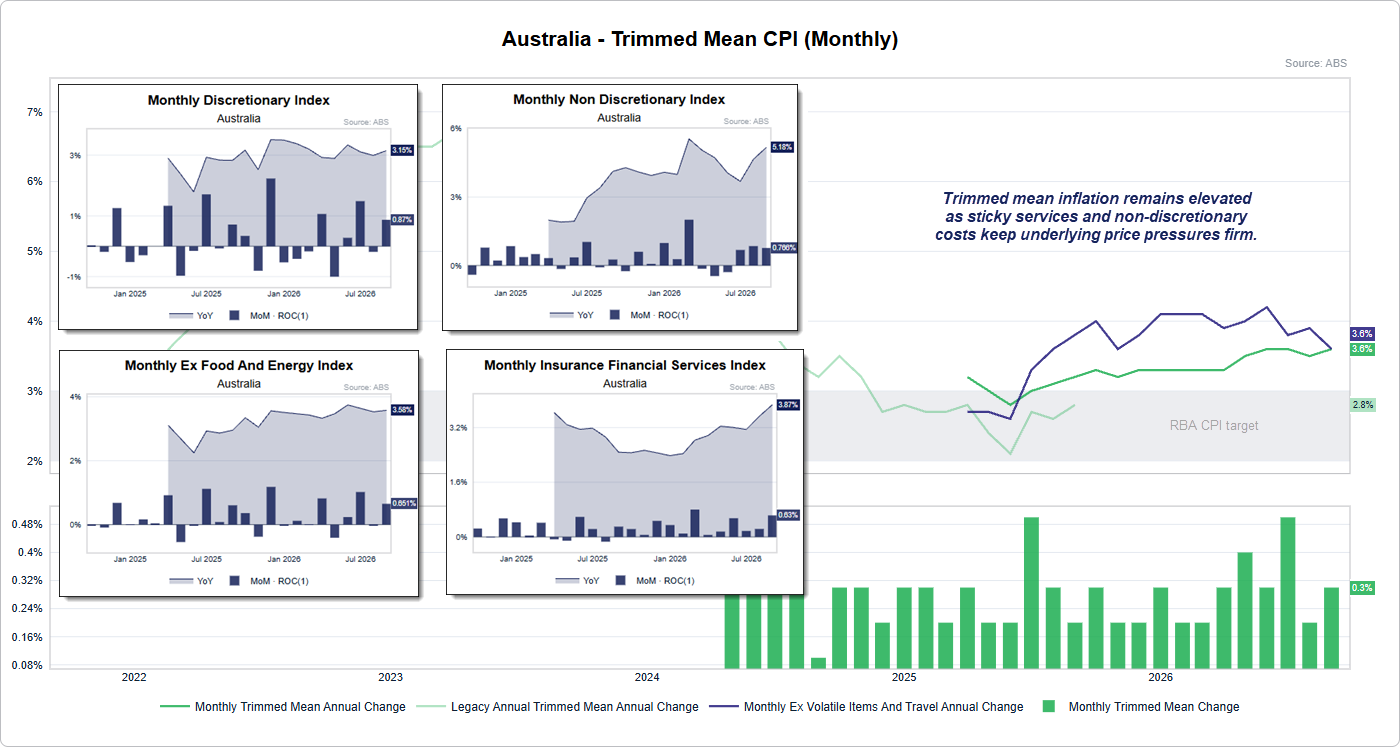
Australia's October CPI report arrives at an uncomfortable time for the RBA. Employment has fallen by nearly 80,000 over two months, unemployment has climbed to 4.9%, and November's flash PMIs point to a sharper contraction in private-sector activity. These developments reinforce the case that the RBA has finished hiking, despite inflation remaining well above target.
Headline CPI is expected to accelerate to 4.8% y/y from 4.3%, while trimmed mean inflation could rise to 3.7% from 3.6%. As the chart shows, underlying price pressures remain stubborn, with non-discretionary inflation above 5% and insurance and financial services costs continuing to rise. The composition of today's CPI will therefore be important, particularly whether inflation is becoming more broad-based despite signs of weakening domestic demand.
This content was created by an affiliate of FOREX.com and represents the views and opinions of the author/speakers, not the views and opinions of FOREX.com, StoneX Group Inc., or its subsidiaries. The content has not been independently reviewed by FOREX.com.
Complicating matters, the Australian dollar's trade-weighted index has fallen nearly 5% below the RBA's November forecast assumption, raising the risk of further imported inflation. That leaves policymakers facing an increasingly awkward trade-off between weakening employment and persistent price pressures.
Yet with bearish sentiment already entrenched, sticky inflation could catch AUD/USD bears off guard. A stronger-than-expected reading could challenge the market's shift towards RBA cuts in 2027 and trigger a short-covering rally, even if the broader fundamental outlook remains bearish.

AUD/USD: Bullish Reversal Signals Emerge Ahead of Australian CPI
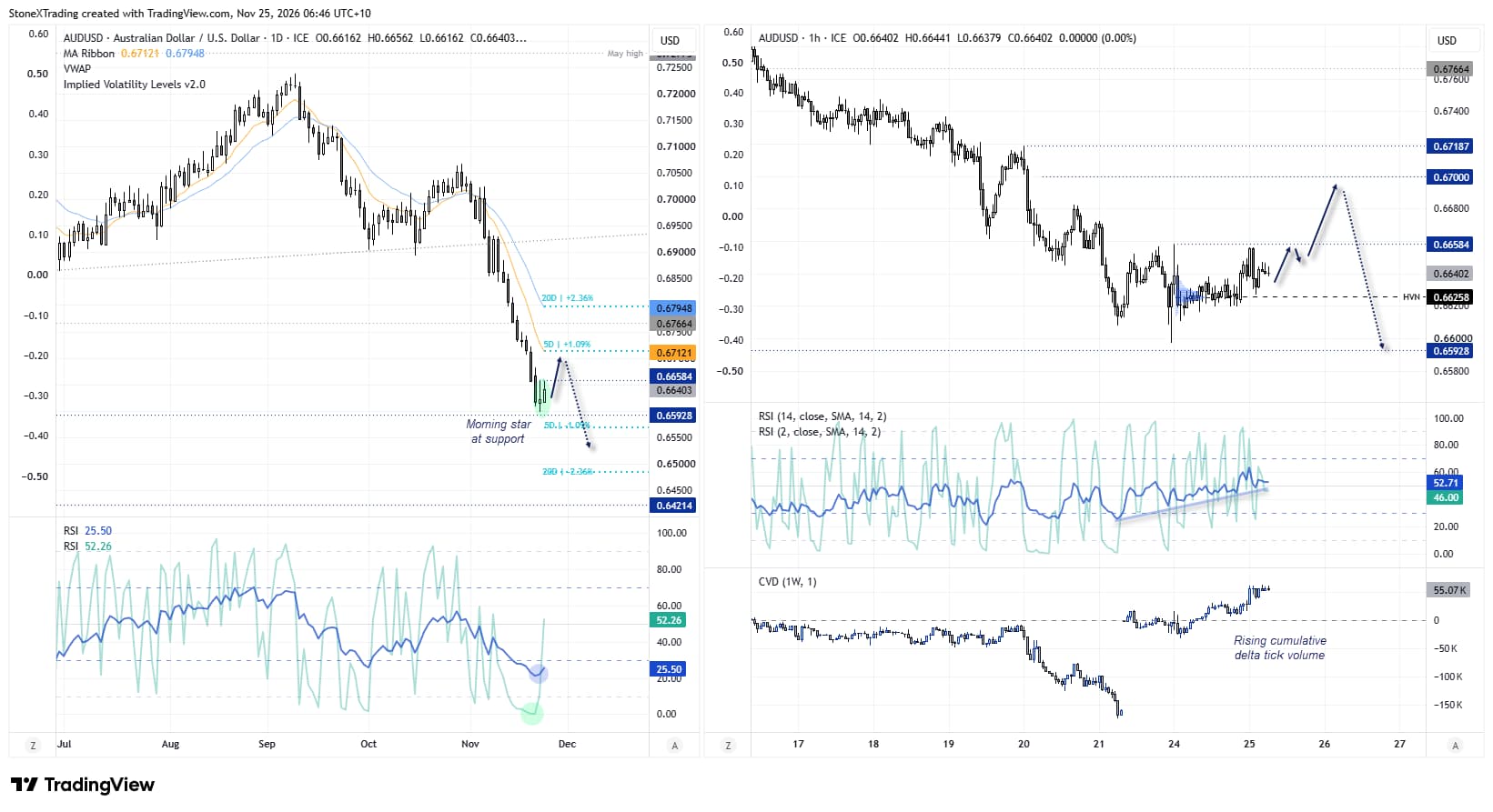
The Australian dollar's sharp decline has been well documented. However, with the US Thanksgiving holiday approaching and liquidity likely to thin, there is potential for AUD/USD's decline to pause for breath, if not retrace higher.
Support has emerged around 0.6600, just above the December 2025 low. Tuesday's bullish candle, following Friday's doji near support, hints at a potential morning star reversal pattern for bulls to consider. We're not expecting miracles here, but with Australian CPI likely to pack a punch, a sufficiently strong reading could shake some bears out of their positions at these lows, even as the AU–US two-year yield differential remains suppressed.
On the 1-hour chart, cumulative delta volume has been trending higher throughout the week, hinting at bullish accumulation. Bulls could seek dips within this week's narrow range, with a break above 0.6658 needed to signal a deeper retracement towards 0.6700. However, I suspect bears will be looking to fade rallies towards that level, given the strength of the broader downtrend.
Source: ICE, TradingView