



USD/JPY Weekly Outlook: Waller Validates Hawkish Shift as 160 Looms
Markets are no longer debating how quickly the Fed may cut rates, but whether another tightening cycle is beginning, leaving USD/JPY highly sensitive to every inflation, oil and Fed-related headline this week.
Share this:
- Markets have shifted from pricing Fed cuts to hikes
- Yield differentials remain the key driver for USD/JPY direction
- Fed governor Waller turns neutral. Will other Fed officials follow?
- Ueda cannot convey caution with two BOJ hikes priced this year
- 160 and BOJ intervention risks in focus
Markets Reprice the Fed Path
Fed pricing looms as the dominant driver for USD/JPY this week with markets now shifting from debating how many times the Federal Reserve may cut rates this year to whether it may need to tighten policy further over the next 12 months. That leaves incoming US inflation data, Fed speak and developments in the Gulf likely to dictate direction given the implications each may have for the inflation outlook and front-end interest rate pricing.
Yield Differentials Remain King
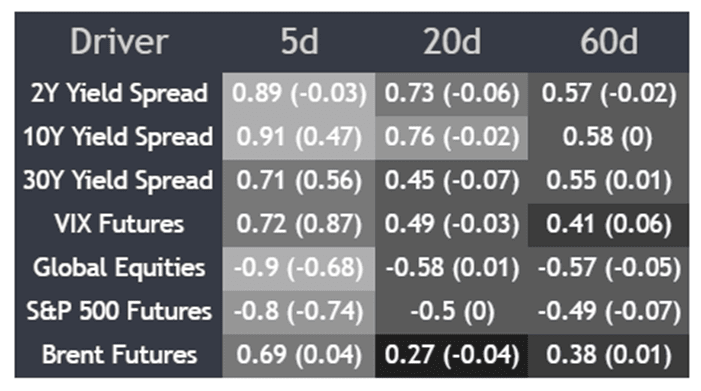
The correlation matrix continues to highlight the dominant influence yield differentials are having on USD/JPY price action, demonstrating the strongest and most consistent relationship with the pair across every timeframe measured. That relationship has become especially pronounced over the past week with the correlation coefficients between USD/JPY and US-Japan two and 10-year yield spreads sitting at 0.89 and 0.91 respectively.
Source: TradingView
While benchmark yield spreads have shown the slightly tighter relationship, it’s the continued build in Fed rate hike pricing that looms as the more important development directionally for the pair. By contrast, the relationship with risk appetite proxies has become increasingly muddied, likely reflecting greater two-way volatility seen recently in equity markets.
Markets Sniff a Turning Point
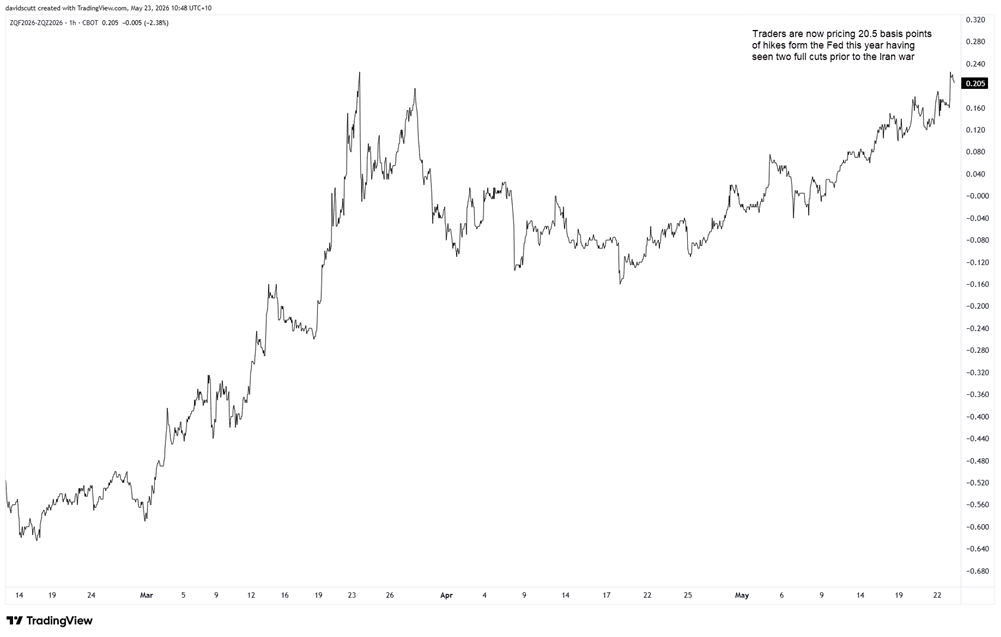
Prior to the outbreak of the Iran war, markets were pricing more than two quarter-point rate cuts from the Federal Reserve this year. That has since flipped dramatically, with Fed funds futures now implying 20.5 basis points of tightening by December and around one-and-a-half hikes priced by June 2027.
Source: TradingView
The move has come alongside growing concern that another sustained rise in energy prices may complicate the inflation outlook at a time where underlying price pressures were already proving sticky.
That shift in thinking was reinforced late last week when Federal Reserve Governor Christopher Waller effectively validated the hawkish recalibration already underway both within the FOMC and markets, saying it was “crazy” to even discuss near-term rate cuts with inflation still running above target.
Fed Speakers in Focus
Given the hawkish shift, the focus this week will be on whether other policymakers fall in line with the message delivered by Waller. New York Fed President John Williams will be key given he's previously delivered dovish messages, just like Waller, while Vice Chair Philip Jefferson along with Fed Governors Lisa Cook and Michelle Bowman will also attract scrutiny for signs the FOMC is moving towards eliminating the prospect of rate cuts this year altogether.
If markets begin to sense a broader hawkish shift within the committee, the repricing in front-end rates may still have considerably further to run. Once markets believe a policy turning point is underway, the adjustment in pricing can become a powerful force, especially in rates-sensitive pairs like USD/JPY.
Source: TradingView
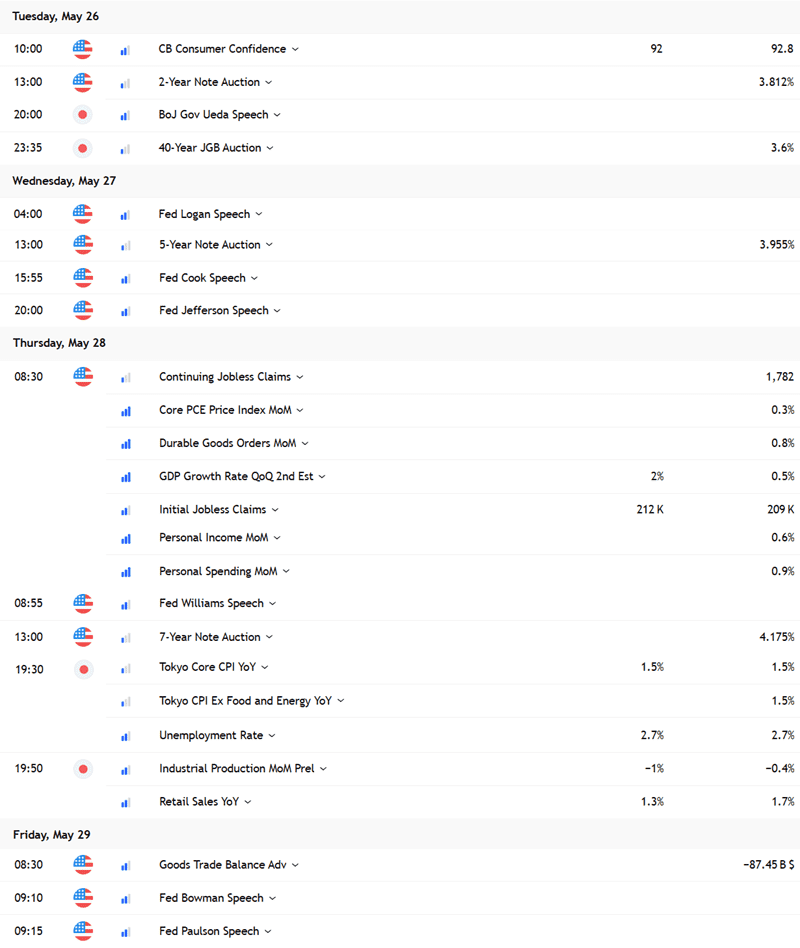
The economic calendar itself may matter less than usual. First quarter GDP already feels stale given the change in geopolitical backdrop, while the core PCE deflator has increasingly become a secondary-tier release after CPI and PPI data earlier in the month removed much of the risk of a major surprise. Personal income and spending data may actually prove more influential, offering insight into whether households can continue sustaining consumption in an increasingly inflationary environment.
Ueda Under Pressure
While the Fed outlook remains the dominant influence on USD/JPY direction, developments in Japan are also important with markets pricing around an 80% probability of another Bank of Japan rate hike in June and close to two by year-end. With so much tightening priced in, Governor Ueda cannot afford to sound overly cautious when he speaks early in the week. When he delivered a similar message in April with markets similarly priced for a hike, it generated fresh downside pressure on the yen.
Tokyo CPI may also attract attention given its strong lead relationship with the national inflation report released several weeks later. Base effects tied to surging food prices and temporary subsidies have helped push inflation sharply lower in recent months, leaving markets watching closely for evidence of whether elevated energy prices are beginning to spill over into price behaviour elsewhere in the economy.
Source: TradingView
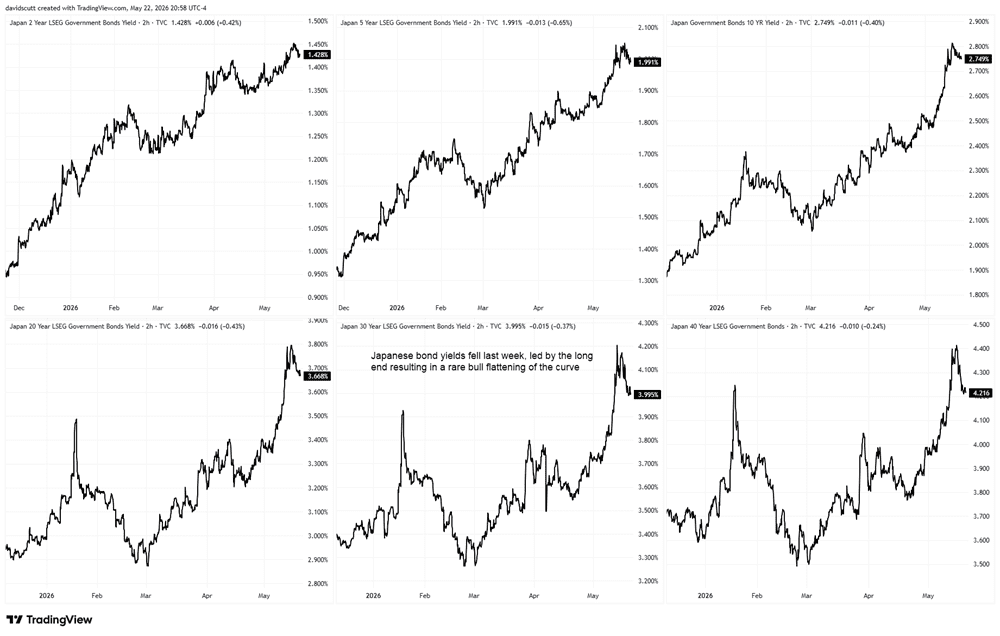
While the JGB curve experienced a rare bull flattening last week helped by lower energy prices, any reversal in that trend would only heap fresh pressure on the long-end and yen. Prolonged energy disruption in the Gulf would further complicate the outlook given the inflationary implications and risks to Japan’s current account position and broader economic outlook as a major energy importer.
USD/JPY Consolidates Beneath Intervention Zone
Source: TradingView
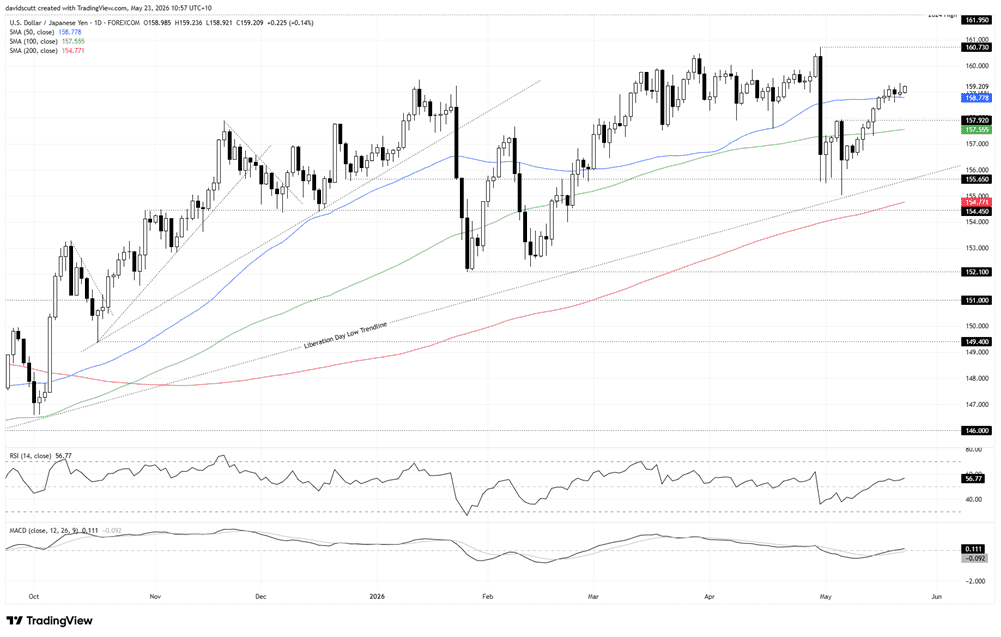
The rebound from the lows hit earlier this month stalled last week with the pair trading in a comparatively tiny range as lower energy prices and ongoing threat of renewed BOJ intervention offset building hawkish Fed pricing and dip buyers beneath the 50-day moving average. The latter remains the immediate level to watch underneath where the pair now trades with the former breakout zone of 157.92 and 100DMA the others after that.
Overhead, 160 remains a psychologically important level, marking the start of a zone that has seen multiple BOJ intervention episodes, including earlier this year. 160.73 was the peak hit before the last intervention episode, making it and the multi-decade high of 161.95 the key levels overhead should upside resume this week.
The oscillators have turned marginally bullish in terms of directional risks, although the message is hardly definitive.
One further thing to watch for early in the week is potential BOJ intervention given the Memorial Day long weekend in the States. That opens a window of extremely thin liquidity for policymakers to remind markets the threat remains, but as was the case in April and earlier this month, unless accompanied by underlying fundamentals, such episodes tend to provide better entry levels for longs rather than something markets genuinely fear.


The complete CFD trading experience
Award-winning platforms, competitive spreads, low commissions and dedicated support.
We live and breathe the markets and are dedicated to helping traders realise their ambitions as we continue to set the industry bar.
Economic calendar
Web Trader platform
Our sophisticated web-based platform is packed with features.
Related articles
Crude Oil Q4 2026 Outlook: Will a New Energy-Security Regime Emerge?
Crude Oil Q4 2026 Outlook: The U.S.-Iran conflict has done more than disrupt oil flows. It has challenged many of the assumptions underpinning the global energy security system established after the 1973 oil embargo.

WTI crude squeezed between Hormuz risk and diesel ban speculation
WTI is being pulled in opposite directions as Hormuz risk collides with growing political pressure over US diesel prices.

Gold Outlook: XAU/USD hit hard as US yields, dollar resume ascent
A stronger dollar, surging front-end yields and renewed geopolitical tension have combined to push gold back towards key technical support.
StoneX Europe Ltd may make third party material available on this website which may contain information included but not limited to the conditions of financial markets. The material is for information purposes only and does not contain, and should not be construed as containing, investment advice and/or investment recommendation and/or an investment research and/or an offer of or solicitation for any transactions in financial instruments; any decision to enter into a specific transaction shall be made by the client following an assessment by him/her of their situation.
StoneX Europe Ltd makes no representation or warranty and assumes no liability as to the accuracy or completeness of the information provided, nor any loss arising from any investment based on a recommendation, forecast or other information supplied. You should always seek independent advice as to your suitability to speculate in any related markets and your ability to assume the associated risks, if you are at all unsure. We are not under any obligation to update any such material. Any opinion made may be personal to the author and may not reflect the opinion of StoneX Europe Ltd.