
As November 2026 continues to unfold, weakness within the cryptocurrency market has once again become a dominant theme in the short term. Market confidence remains in a fragile position and demand has struggled to stabilize following two major developments: the U.S. midterm elections and the latest Non-Farm Payrolls (NFP) report.
Both events have made it more difficult for confidence to recover across the sector and have reinforced a bearish bias that continues to be evident in recent price action. This highlights how sensitive the crypto market remains to political and economic developments that influence risk appetite. As long as these factors continue to dominate the landscape, the recent phase of indecision and weakness could remain an important feature of the market during the coming trading sessions.

Is Risk Appetite Losing Momentum?
One of the most important developments of the week was the outcome of the U.S. midterm elections. The Democratic Party secured a meaningful victory, gaining control of both the Senate and the House of Representatives while also securing a significant number of governorships.
Initially, markets reacted relatively calmly as much of the uncertainty surrounding the election process disappeared. This helped support a temporary recovery in demand across several risk-sensitive assets. However, sentiment shifted toward the end of the week as investors began to assess the potential implications of the new political landscape.
For months, members of the Democratic Party have emphasized the need for tighter oversight of strategic industries such as artificial intelligence. With the new balance of political power now established, concerns surrounding additional regulation gained traction and created a renewed sense of caution around the U.S. technology sector.
As a result, confidence began to deteriorate across some of the sectors most closely linked to long-term growth and investment. This weakness gradually spread beyond technology stocks and into other risk-sensitive markets, including cryptocurrencies. At the same time, new concerns emerged for the crypto industry itself, as Democratic control could make it more difficult to advance regulatory initiatives that had previously received support from the Trump administration, including proposals such as the Clarity Act, which aimed to provide a clearer regulatory framework for the industry. Consequently, much of the recovery observed immediately after the elections faded as the week progressed.
This shift can be clearly seen in liquidation data across the crypto market. During the days immediately following the elections, short liquidations dominated, reflecting a rapid improvement in confidence. As regulatory concerns increased, however, the trend reversed and long liquidations began to accelerate, signaling a meaningful slowdown in demand toward the end of the week.
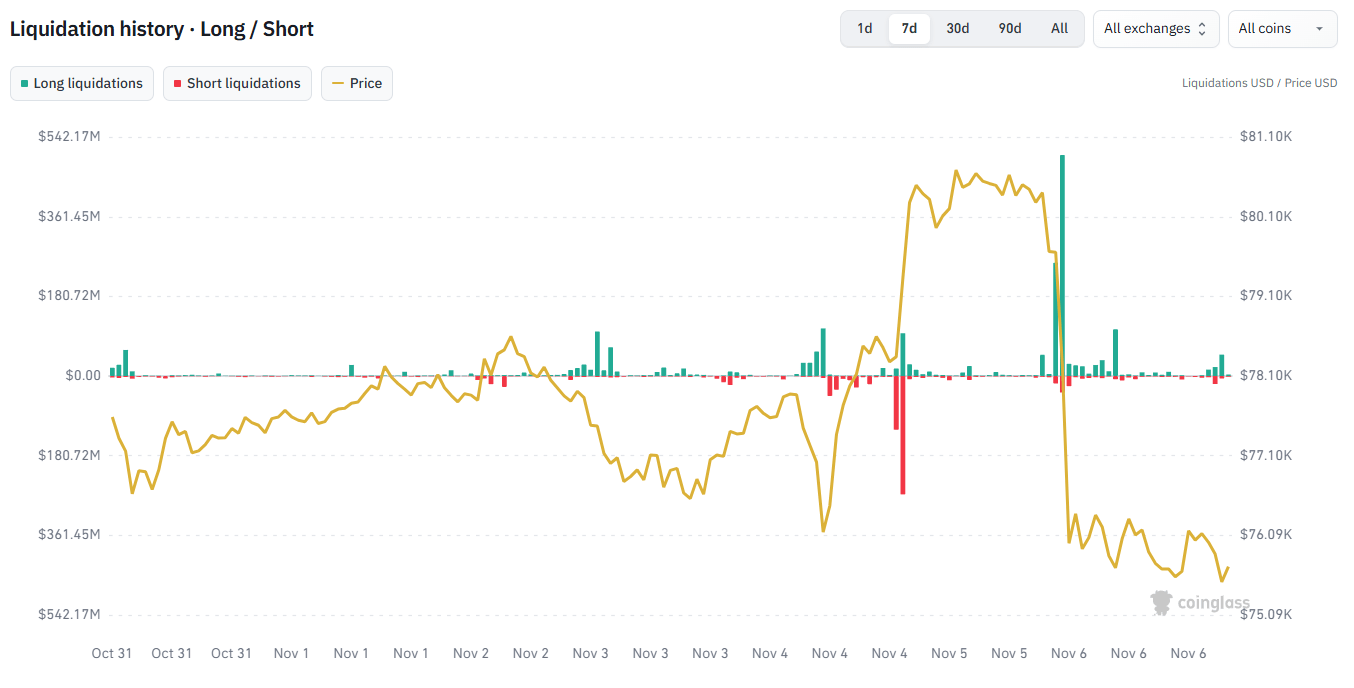
Source: Coinglass
Against this backdrop, cryptocurrencies continue to reinforce their role as risk assets within the broader financial environment. The same concerns that have affected U.S. equities have also begun generating pressure across the crypto sector.
This relationship becomes particularly evident when examining Bitcoin's behavior relative to the S&P 500. The average correlation coefficient over the last 25 sessions remains elevated, highlighting a strong positive relationship between the two markets in the short term. This suggests that the deterioration in confidence observed across U.S. equities is also spilling over into cryptocurrencies, which continue to show difficulty separating themselves from the broader direction of risk assets. Correlation coefficients can change over time.
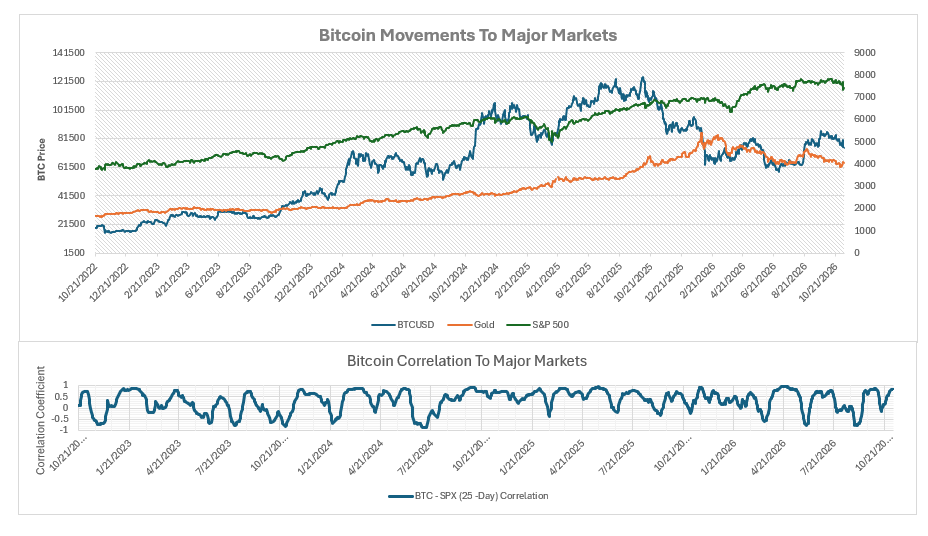
Source: Data – TVC, StoneX, TradingView
Under these conditions, the Democratic victory has not translated into stronger risk appetite. Instead, it has reinforced some of the regulatory uncertainty that was already present around several strategic sectors. As long as these concerns remain relevant and cryptocurrencies continue to maintain a strong relationship with traditional risk assets, the weakness observed in recent sessions could continue to play an important role within the market.
Is NFP Becoming a New Threat?
Beyond the political backdrop, another major event this week was the release of the latest NFP report in the United States.
Markets had expected the creation of approximately 65,000 jobs during October. Instead, the official report surprised to the upside, showing roughly 165,000 new jobs, a result that once again highlights the resilience of the U.S. economy and the relative strength of the labor market.
The importance of this report lies in the fact that employment remains one of the key pillars guiding Federal Reserve policy decisions. As labor market conditions remain strong, the central bank has more room to maintain a relatively aggressive stance toward inflation.
This perception has already begun to appear in market expectations. Prior to the NFP release, the probability of a rate hike at the December meeting stood near 66%. Following the report, that probability climbed toward 80%, reflecting renewed expectations that the Federal Reserve may adopt a more restrictive stance over the coming months.
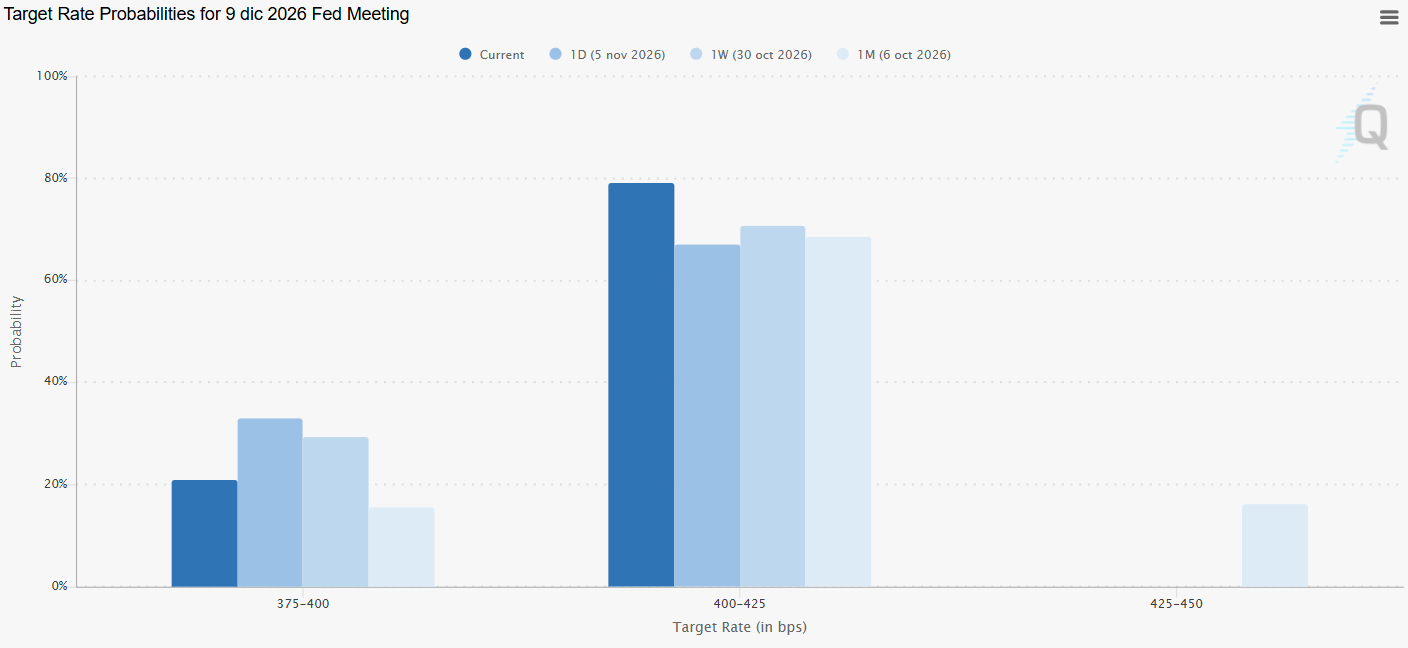
Source: CMEGROUP
This situation is also important for cryptocurrencies because much of the sector's behavior throughout 2026 has been heavily influenced by expectations surrounding U.S. interest rates. Higher rates typically increase borrowing costs, reduce market liquidity and diminish the relative attractiveness of risk assets compared with more conservative alternatives.
For this reason, if markets continue pricing in a more aggressive Federal Reserve following the latest employment data, this dynamic could continue limiting the recovery of confidence within the cryptocurrency market in the weeks ahead.
Confidence Struggles to Recover
Recent movements in the Fear & Greed Index continue to reflect a weaker environment within the crypto market. The indicator currently stands near 31 points, moving back into fear territory after the temporary improvement observed in previous sessions.
This remains relevant because it highlights a slowdown in the optimism that had been gradually developing over recent weeks and points to a more consistent deterioration in confidence following the latest events.
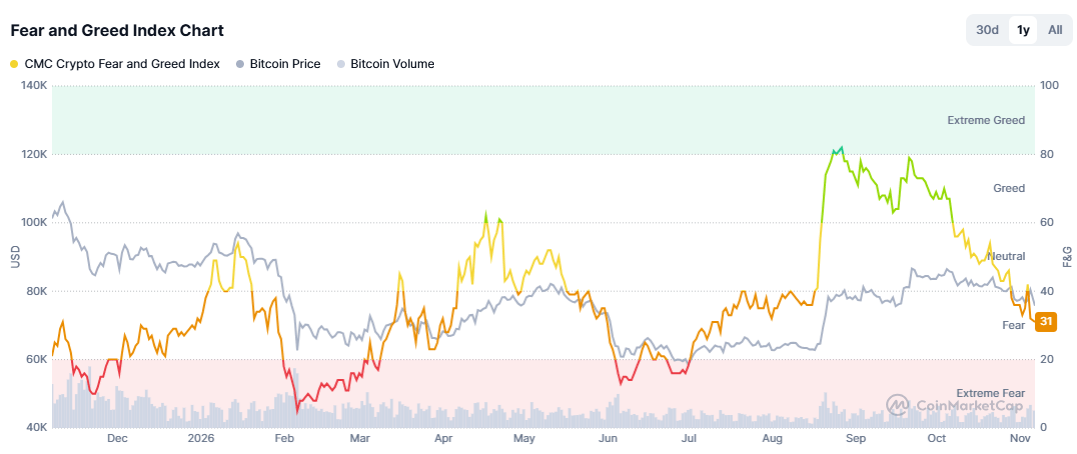
Source: Coinmarketcap
The evolution of this indicator remains important because it serves as a barometer of risk appetite within the cryptocurrency market. If confidence continues to struggle, it could limit the market's ability to sustain stronger demand and reinforce the perception that part of the capital flow is shifting toward more stable alternatives outside of risk assets.
Under this scenario, the loss of momentum in confidence could continue to support the phase of relative weakness that has increasingly become a feature of the cryptocurrency market and could remain relevant throughout the coming trading sessions.
Written by Julian Pineda, CFA, CMT – Market Analyst
Follow him on: @julianpineda25