



EUR/USD Analysis: The Euro Continues to Lose Ground After U.S. Employment Data Release
The EUR/USD has now posted six consecutive sessions of declines, marking one of the longest and strongest bearish streaks in recent months. In the short term, the pair has fallen by more than 1.6%, driven primarily by the steady strengthening of the U.S. dollar following the release of employment data in the United States.
Share this:

The EUR/USD has now posted six consecutive sessions of declines, marking one of the longest and strongest bearish streaks in recent months. In the short term, the pair has fallen by more than 1.6%, driven primarily by the steady strengthening of the U.S. dollar following the release of employment data in the United States.
Selling pressure has remained firm as confidence in the dollar increased after preliminary labor data came in much stronger than expected. This has reinforced expectations that the Federal Reserve could take a more cautious stance on future rate cuts, supporting persistent demand for the dollar and limiting any attempts by the euro to recover in the short term. As long as this scenario persists, downward pressure is likely to dominate the pair in the coming trading sessions.


How Do Employment Data Affect the Market?
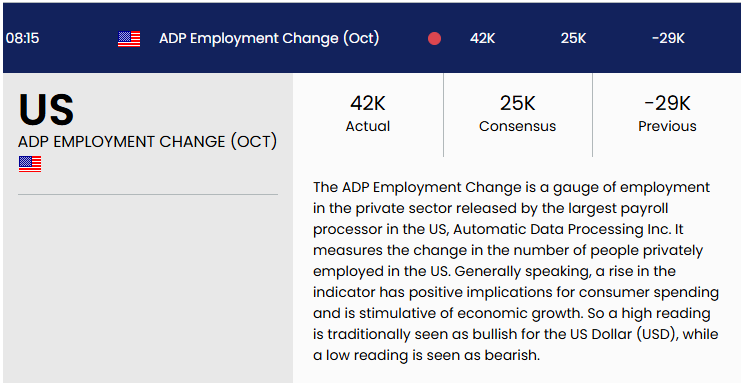
Today, the ADP Employment Change report for October was released in the United States. Market expectations were for 25,000 new jobs, but the actual figure surprised to the upside with 42,000 new positions created — almost double the forecast and well above the previous reading of -29,000.
Source: Data - FXStreet
This result is particularly significant because the partial U.S. government shutdown continues to delay the publication of Non-Farm Payroll (NFP) data. As a result, the ADP report has become a key reference point for the Federal Reserve, which may use it to guide short-term monetary policy decisions.
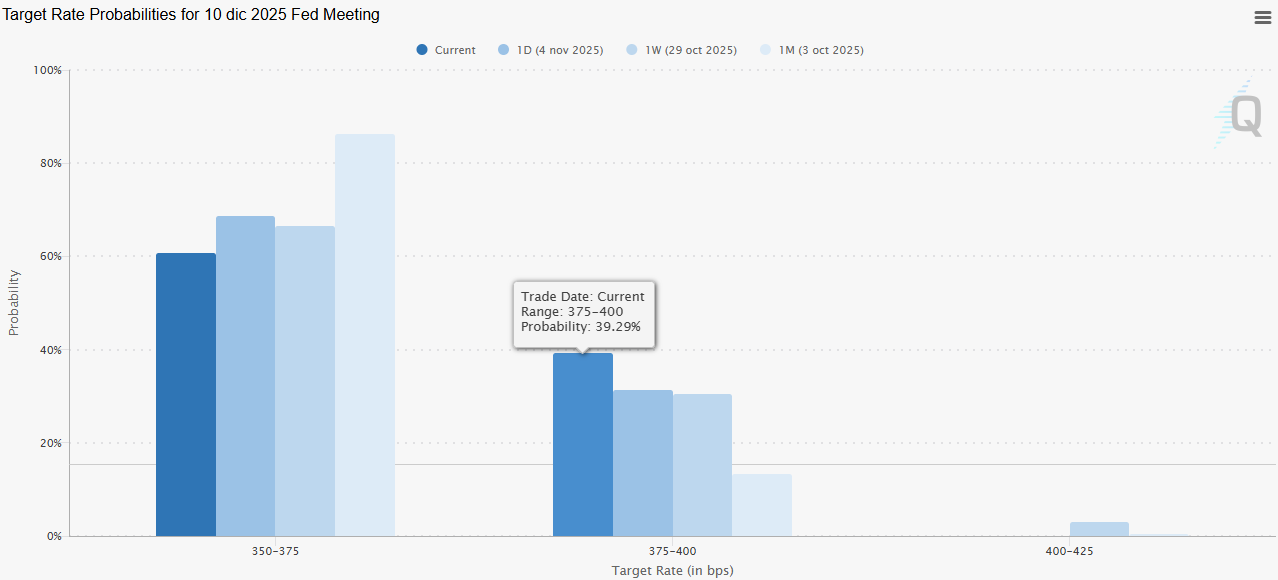
Consequently, market expectations for the upcoming December 10th Fed meeting have shifted noticeably. Until yesterday, the probability of a 0.25% rate cut stood around 68%, but after the release of the strong employment data, it dropped to 60%, while the odds of the Fed keeping rates unchanged rose to nearly 40%. This adjustment reflects a more neutral outlook toward the end of the year, as the Fed may opt to pause its rate-cutting cycle.
Source: CMEGroup
The possibility that the Federal Reserve will maintain rates at 4% has renewed demand for U.S. Treasury bonds, which now yield close to 4% and remain an attractive option for investors. This shift has strengthened demand for dollar-denominated assets, resulting in sustained buying pressure on the greenback.
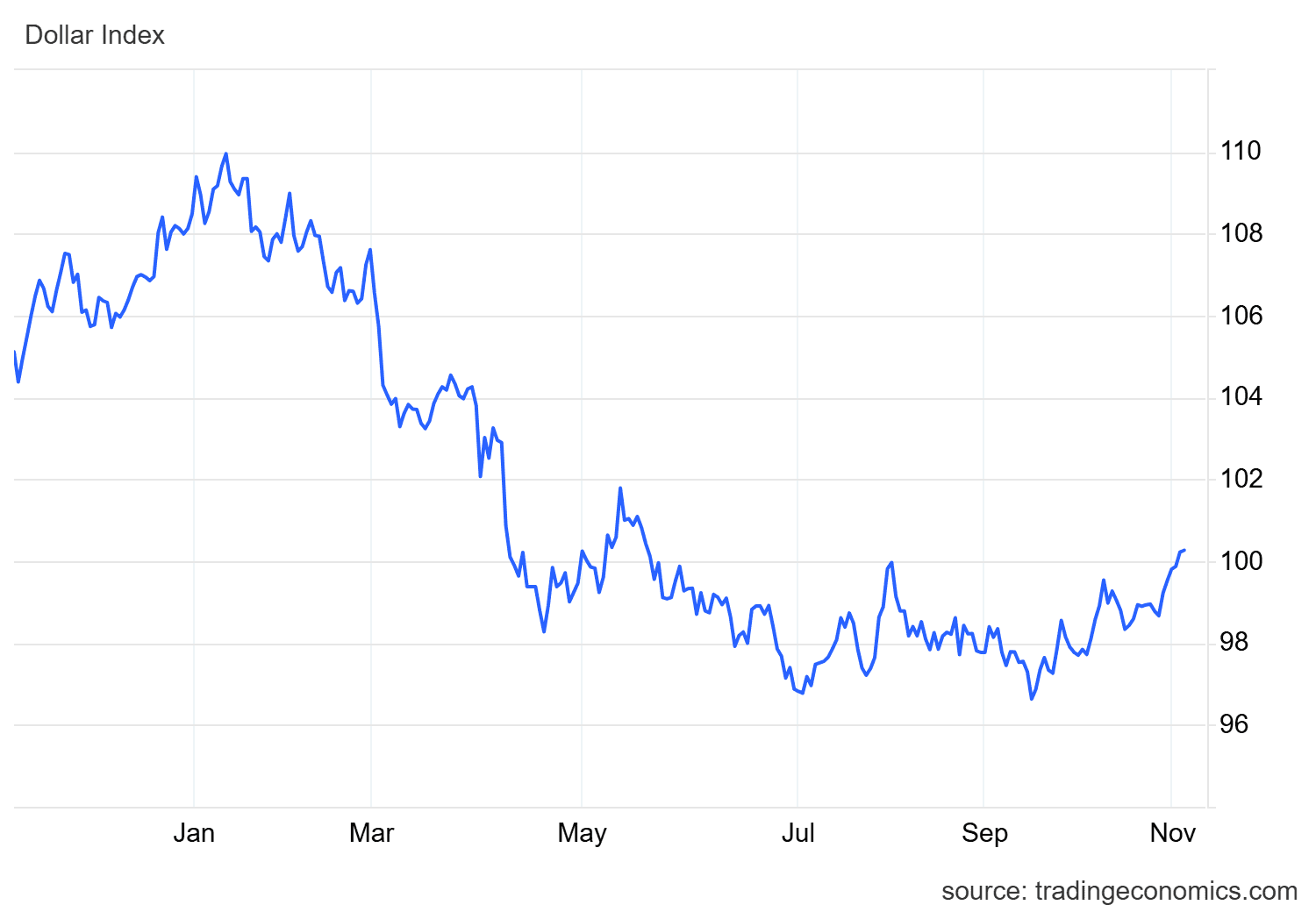
At the same time, the DXY index, which measures the dollar’s strength against other major currencies, has shown a notable advance, climbing above the 100-point mark. This key psychological level reflects strong confidence in the dollar, supported by robust employment data and expectations of a more conservative Federal Reserve.
Source: Tradingeconomics
In this environment, the positive labor data have acted as a catalyst for a more aggressive market stance in favor of the dollar, leading to persistent pressure on the euro, which continues to lose ground. As long as this trend persists, selling pressure is expected to remain dominant in the EUR/USD in the short term.
EUR/USD Technical Outlook

Source: StoneX, Tradingview
- A New Downtrend Emerges: Since reaching its yearly highs around September 17, the EUR/USD has developed a steady downward pattern, breaking out of a sideways range that had held for several weeks. The price is now forming a series of lower highs, suggesting the emergence of a new bearish trendline that could become the most relevant technical structure if selling pressure persists.
- RSI: The RSI line remains below the 50 level, indicating that bearish momentum has dominated over the past 14 sessions, reinforcing the current selling bias. However, the indicator is approaching the 30 level (oversold zone), which could signal a temporary imbalance in market forces and open the door to short-term technical rebounds.
- TRIX: The TRIX indicator continues to oscillate below the zero line, confirming a prevailing bearish bias in the average of exponential moving averages. This behavior supports the likelihood that downward momentum will continue to dominate in the medium term.
Key Levels:
- 1.15646 – Major Resistance: This level corresponds to the lower boundary of the previous lateral range and represents the most important short-term bullish barrier. A sustained break above this level could challenge the emerging downtrend.
- 1.14793 – Current Barrier: An indecision zone not seen since June, which could act as a technical rebound point for potential short-term corrections.
- 1.13489 – Key Support: This level aligns with the 200-period moving average and represents the most critical support zone. A break below this level would confirm a more aggressive bearish bias, solidifying a downtrend that could extend over the coming weeks.
Written by Julian Pineda, CFA – Market Analyst
Follow him on: @julianpineda25



Open an account in minutes
Experience award-winning platforms with fast and secure execution.
Economic calendar
Web Trader platform
Our sophisticated web-based platform is packed with features.
Related articles

EUR/USD, EUR/JPY: Hawkish Fed Weighs on Euro as Yen Bulls Struggle
Hawkish Fed bets weigh on EUR/USD as ECB caution grows, while EUR/JPY's bullish wedge breakout keeps 181.50 in focus despite broader downside risks.


US Dollar Forecast: AUD/USD, Gold, EUR/USD Under Pressure
Could the US dollar rally accelerate? Matt Simpson examines the outlook for DXY, AUD/USD, EUR/USD and gold, plus key technical levels across forex markets.

GBP/USD approaches breaking point as US yields surge
A historic repricing of US interest rate expectations has propelled the dollar higher, leaving GBP/USD testing a crucial support level ahead of UK GDP.

The information on this web site is not targeted at the general public of any particular country. It is not intended for distribution to residents in any country where such distribution or use would contravene any local law or regulatory requirement. The information and opinions in this report are for general information use only and are not intended as an offer or solicitation with respect to the purchase or sale of any currency or CFD contract. All opinions and information contained in this report are subject to change without notice. This report has been prepared without regard to the specific investment objectives, financial situation and needs of any particular recipient. Any references to historical price movements or levels is informational based on our analysis and we do not represent or warranty that any such movements or levels are likely to reoccur in the future. While the information contained herein was obtained from sources believed to be reliable, author does not guarantee its accuracy or completeness, nor does author assume any liability for any direct, indirect or consequential loss that may result from the reliance by any person upon any such information or opinions.
Futures, Options on Futures, Foreign Exchange and other leveraged products involves significant risk of loss and is not suitable for all investors. Losses can exceed your deposits. Increasing leverage increases risk. Spot Gold and Silver contracts are not subject to regulation under the U.S. Commodity Exchange Act. Contracts for Difference (CFDs) are not available for US residents. Before deciding to trade forex, commodity futures, or digital assets, you should carefully consider your financial objectives, level of experience and risk appetite. Any opinions, news, research, analyses, prices or other information contained herein is intended as general information about the subject matter covered and is provided with the understanding that we do not provide any investment, legal, or tax advice. You should consult with appropriate counsel or other advisors on all investment, legal, or tax matters. References to FOREX.com or GAIN Capital refer to StoneX Group Inc. and its subsidiaries. Please read Characteristics and Risks of Standardized Options.