



Will a Brexit breakthrough ever come
UK and EU leaders agree that negotiations should continue but a no-deal Brexit is still the most likely outcome on December 31.
Share this:

- What does a no-deal Brexit mean?
- How would a no-deal Brexit impact GBP?
- How would a no-deal Brexit impact the FTSE 100?
- How would a no-deal Brexit impact stocks?
What does a no-deal Brexit mean?
Brexit has brought nothing but uncertainty for the last four-and-a-half years, but we do know that, whatever the outcome, the relationship between the UK and the EU will be different at the start of 2021. Trade is currently flowing across the Channel as normal whilst the UK remains part of the EU’s single market and customs union during the transition period, but that will come to an end on December 31.
There will be changes that businesses will have to adapt to even if a new trade deal is agreed, but both sides have strived to minimise disruption and based negotiations on their existing relationship rather than trying to draw-up an agreement from scratch.
The changes are much more dramatic under a no-deal scenario. With no agreement in place, trade between the UK and the EU will have to fall back on World Trade Organisation (WTO) rules. This means new tariffs and barriers to trade, such as border checks, will be introduced on January 1 that didn’t exist the day before.
The WTO sets the terms of international trade between countries that have not signed a trade deal. In a nutshell, it provides a one-size-fits-all system that isn’t ideal for any country. Therefore, countries endeavour to strike deals with their main trading partners so they can cater terms to their specific economies and create mutual benefits that cannot be achieved on WTO terms.
No-deal would cause significant disruption for both sides, especially the UK. The EU is the UK’s single largest trading partner with 54% of everything imported into the UK coming from the EU, whilst 43% of UK exports head to the bloc, demonstrating the UK’s reliance on its closest neighbour.
Plus, the UK’s trade with other countries will also be affected. Trade with non-EU countries is currently governed by trade deals that have been signed with the EU and the UK will lose access to them at the end of the year. The UK has managed to get the likes of Canada, Norway, Switzerland and Singapore to sign new trade deals on the same basis as they trade with the EU, and it has struck new deals with countries like Japan that don’t have a deal with the EU. Still, the vast majority of the UK’s international trade will not be covered by any trade deals at the start of next year if an agreement can’t be reached with the EU.
Notably, a no-deal Brexit at the end of the year does not prevent the UK and the EU continuing discussions about a trade deal, but it could mean trade would fall back on WTO terms in the meantime.
You can keep up to date with the latest news on how Brexit is impacting financial markets here.
How would a no-deal Brexit impact GBP?
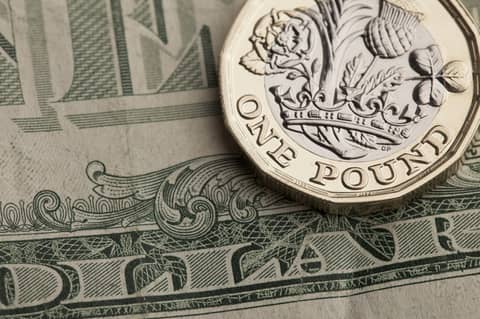
The pound has taken a battering this week, with GBP/USD having shed 1.9% while EUR/GBP has strengthened by 1.9%. Sterling’s weakness has demonstrated markets believed a deal would materialise and that they had not fully priced-in the possibility of a no-deal Brexit until this week.
It is likely that the pound would recover its recent losses and more if a last-minute deal is announced, but confirmation that we are headed for a no-deal Brexit in three weeks’ time is likely to drive sterling down even further against the euro and the dollar.
A weaker pound would have widespread effects for the UK – some good, some bad. On the downside, new tariffs and barriers under a no-deal Brexit would push up the price of imported goods and a fall in the pound would only exacerbate that – driving up inflation and the cost of living at a time when the economy will suffer from the cliff-edge divorce. On the other hand, it makes UK goods cheaper for overseas buyers and boosts exports, while also making UK assets more attractive to overseas investors.
Find out how to begin trading forex in the event of a no-deal Brexit here.
How would a no-deal Brexit impact the FTSE 100?
The FTSE 100 has underperformed compared to other major indices this year and the lack of clarity spawning from Brexit is the main cause.
Although the world is only starting to stage what will be a slow and steady recovery from the coronavirus-induced crisis that has caused economic turmoil this year, US markets have recently touched new all-time highs. European indices have also bounced back well since the sell-off in March, with the DAX trading just 5% below pre-pandemic levels. Meanwhile, the FTSE 100 is still down 12%.
A last-minute deal would provide the clarity needed for the FTSE 100 to stage a quicker recovery, but the impact of a no-deal Brexit is more complicated. On one hand, it is hard to imagine how the index – used as a barometer for how the country’s biggest businesses are performing – will benefit from the UK’s international trade being overhauled overnight.
On the other, many companies in the FTSE 100 are large and geographically diverse enough to weather any major disruption. Plus, softer sterling tends to provide a boost to the blue-chip index because its internationally-focused constituents see their overseas earnings boosted when they are converted into weaker sterling. Just 29% of the FTSE 100’s revenue is generated in sterling, according to Schroders. Still, it is not certain that a fall in sterling will be enough to offset concerns about how a no-deal Brexit will impact businesses.
The FTSE 250 is expected to underperform the FTSE 100 in the event of a no-deal. This is because the performance of more domestically-focused stocks is more closely-tied to the health of the UK economy, which is expected to suffer in the event of no-deal. Plus, a weaker pound would hurt sales and margins. This is also true for some blue-chip stocks. For example, Lloyds is seen as highly exposed to a no-deal because it exclusively concentrates on the UK market compared to international peers like HSBC and Standard Chartered that are more geared towards Asia.
Find out how to begin trading indices in the event of a no-deal Brexit here.
How would a no-deal impact stocks?
There will also be opportunities trading individual stocks. The key is to identify which stocks will be most affected by a no-deal Brexit as well as those that can prove more resilient. The impact of a no-deal would vary wildly for individual companies and industries. The key considerations when analysing the effects on different companies are; where does the company source and make its products, where does it sell them, and what currency does it generate revenue in.
One example of an industry that will undoubtedly suffer disruption from a no-deal is the UK supermarket stocks. They will, regardless of what happens, have to continue to import produce over the Channel and a no-deal Brexit would only push up prices and upend the industry’s ‘Just-in-Time’ supply chain.
Similarly, foreign carmakers would be among the biggest losers. Currently, newly-finished cars flow freely between the UK-EU tariff-free, but a no-deal Brexit would introduce a 10% tariff and cause delays at the border for the swathe of car parts that cross the border each day. The vast majority of cars made in the UK, made by the likes of Nissan and Toyota, are exported to the EU, while the UK is also a major destination for cars made in the EU.
At the other end of the scale, there are stocks that could outperform the wider market under a no-deal. Defensive plays would become more popular as investors seek safe stocks that provide reliable income such as water stocks Pennon and United Utilities. Truly global companies that count the UK as a small market, such as Diageo or British American Tobacco, are likely to be less impacted by a no-deal due to their size and geographical diversification. The same is true for the big mining companies that have the added benefit of reporting in dollars, shielding them from any adverse or volatile movements in GBP.
Find out how to begin trading stocks and shares in the event of a no-deal Brexit here.
- Brexit talks failed to deliver a breakthrough on Sunday, but both the UK and EU have agreed to continue negotiations ahead of December 31. No progress has been made on the major sticking points, but the extension provides hope that a deal can still be reached.
- However, UK prime minister Boris Johnson said no-deal was still the most likely outcome.
- Sterling could find short-term support as hopes of deal are revived but will remain under pressure and volatile as no-deal remains likely at the end of the year.
- Markets have already priced-in the possibility of a no-deal and the extension should be supportive to the FTSE 100, but uncertainty will mean the index is likely to continue underperforming.
Brexit talks to ‘go the extra mile’
Another deadline has come and gone, and yet we find ourselves in the exact same position as we did a week ago.
Negotiators were tasked with delivering a breakthrough this week and failed, but they have given both sides reason to believe a deal can be agreed in the short amount of time left. Prime minister Boris Johnson and European Commission president Ursala von der Leyen had a ‘useful phone call’ this morning and agreed to extend talks.
‘Our negotiating teams have been working day and night over recent days. And despite the exhaustion after almost a year of negotiations, despite the fact that deadlines have been missed over and over we think it is responsible at this point to go the extra mile,’ the leaders said in a joint statement. ‘We have accordingly mandated our negotiators to continue the talks and to see whether an agreement can even at this late stage be reached.’
No-deal is still ‘most likely’ outcome
The decision to continue negotiating is unsurprising. It would be nonsensical for either side to walk away so long as there is time for talks. But make no mistake, the extension does not imply progress is being made, just that there is still hope and willingness on both sides.
Still, optimism is waning as fast as the clock counting down to the end of the transition period on December 31. ‘I’m afraid we’re still very far apart on some key things,’ Johnson said soon after the joint statement was released. ‘The most likely thing now is we have to get ready for WTO terms’.
There are three major issues of contention – access to fishing waters, how any future disputes between the UK and the EU are governed, and how to maintain a level playing field between the two sides.
The last issue is a particularly thorny one. The EU fears the UK could undercut the bloc post-Brexit and give it an advantage over European rivals, and therefore wants a mechanism in place to ensure the UK doesn’t stray too far from EU standards and rules. The UK argues that this tethers the country to the EU and denies it the right to be an independent nation.
Is there still time for a deal?
With little progress made, it seems the Sunday deadline was only set to try to mount pressure and get the other side to blink first – but both still have their eyes firmly wide open. That is reinforced by the fact no new deadline was set. The only revelation that has come about this week is that December 31 is the only deadline that actually matters.
Simon Coveney, Ireland’s foreign minister, summed it up on Sunday when he said a deal was ‘clearly very difficult, but possible’.
Any late-stage deal would still need to be ratified by EU leaders and UK politicians. Considering there is less than three weeks to go, this would undoubtedly require extra sittings and meetings if there is any hope of getting something across the line before the end of the year. EU leaders held their last summit of 2020 earlier this week, and the UK House of Commons is scheduled to break for Christmas on December 20 until January 7.
A weaker pound would have widespread effects for the UK – some good, some bad. On the downside, new tariffs and barriers under a no-deal Brexit would push up the price of imported goods and a fall in the pound would only exacerbate that – driving up inflation and the cost of living at a time when the economy will suffer from the cliff-edge divorce. On the other hand, it makes UK goods cheaper for overseas buyers and boosts exports, while also making UK assets more attractive to overseas investors.
Reports suggest the EU is prepared to push through any agreement that is reached to ensure it can be activated as soon as possible. Reuters has reported EU diplomats intend to get EU member states to endorse any deal for ‘provisional application’ if there is no time for the EU parliament to approve the deal before the end of the year.
Notably, even if time does run out and the UK leaves the transition period under a no-deal Brexit, this does not prevent both sides continuing to negotiate next year. That would, however, make it likely that trade would have to fall back onto WTO terms in the meantime and that would cause significant disruption– possibly enough to show the urgent need for an agreement to both sides.
The December 31 deadline could, in theory, be extended but this is not likely. That in itself would require legislation to be changed and approved by both sides in what is already proving a tight timetable, and the UK has said it wouldn’t consider it.
What does this mean for markets?
The biggest fear on Sunday was that leaders would pull the plug on talks altogether, confirming that a no-deal Brexit would happen on December 31. That would have been the worst-case scenario for markets and has been avoided, for now.
You can read what a no-deal could mean for markets here.
How will GBP respond?
The pound shed value against both the euro and the dollar this week as markets began to price-in the possibility of a no-deal Brexit as the deadline approached.
The pound lost ground against the euro as talks failed to deliver a breakthrough because the UK will be more impacted by a no-deal Brexit than the EU, prompting traders to bet on the EU economy over the UK. This resulted in EUR/GBP strengthening by 1.3% this week, ending at its highest level since September. The extension could prompt the pound to recoup some of those losses.
Meanwhile, GBP/USD shed 1.3%. Although, that was in the wake of sterling hitting its highest level against the greenback in a year on December 4.
That trend implies the extension of talks could support sterling as hopes of a deal are revived, although the likelihood of a no-deal Brexit will remain a barrier to any gains. The pound will remain volatile for the rest of the year as markets count down to the December 31 deadline.
Get ready to start trading GBP and other forex here.
How will the FTSE 100 respond?
The FTSE 100 has underperformed other major indices this year and that is predominantly down to the uncertainty caused by Brexit. The FTSE 100 is down almost 14% since the start of the year while US indices have recently hit new all-time highs. Over the Channel, the DAX is only down 2% compared to the beginning of 2020.
This means, to a degree, that the possibility of a no-deal Brexit has already been priced-in and suggests the FTSE 100 could gain ground on Monday as hopes of a deal remain alive.
However, uncertainty is the market’s worst nightmare and, although there is still a chance of a deal, we remain no closer to a deal than we did a week ago. A messy divorce under a no-deal remains the most likely scenario at present and that will be at the back of investor’s minds, possibly weighing on the FTSE 100’s ability to recover.
Get ready to start trading the FTSE 100 and other indices here.

Open an account in minutes
Experience award-winning platforms with fast and secure execution, and enjoy tight spreads from 0.5 pts on FX and 0.3 pts on indices.
Economic calendar
Web Trader platform
Our sophisticated web-based platform is packed with features.
Related articles

New Zealand inflation report puts spotlight on hawkish RBNZ pricing
New Zealand's recovery is barely underway, yet markets have priced a series of RBNZ rate hikes. Thursday's inflation report will put that hawkish recalibration under the microscope.


British Pound Rallies into CPI as BoE Hike Bets Firm - GBP/USD, GBP/AUD
Sterling rallies ahead of UK inflation as BoE hike bets firm. GBP/USD tests resistance while GBP/AUD forms a potential bullish reversal.

GBP/USD Analysis: Sterling Gains Momentum After Employment Surprise
Over recent trading sessions, the British pound has begun to show a notable recovery. This can be observed in the performance of GBP/USD, which has gained more than 1.3% over the last four sessions, reflecting a consistent improvement in sterling's strength against the U.S. dollar.

This report is intended for general circulation only. It should not be construed as a recommendation, or an offer (or solicitation of an offer) to buy or sell any financial products. The information provided does not take into account your specific investment objectives, financial situation or particular needs. Before you act on any recommendation that may be contained in this report, independent advice ought to be sought from a financial adviser regarding the suitability of the investment product, taking into account your specific investment objectives, financial situation or particular needs.
StoneX Financial Pte. Ltd., may distribute reports produced by its respective foreign entities or affiliates within the StoneX group of companies or third parties pursuant to an arrangement under Regulation 32C of the Financial Advisers Regulations. Where the report is distributed to a person in Singapore who is not an accredited investor, expert investor or an institutional investor (as defined in the Securities Futures Act), StoneX Financial Pte. Ltd. accepts legal responsibility to such persons for the contents of the report only to the extent required by law. Singapore recipients should contact StoneX Financial Pte. Ltd. at 6826 9988 for matters arising from, or in connection with the report.
In the case of all other recipients of this report, to the extent permitted by applicable laws and regulations neither StoneX Financial Pte. Ltd. nor its associated companies will be responsible or liable for any loss or damage incurred arising out of, or in connection with, any use of the information contained in this report and all such liability is hereby expressly disclaimed. No representation or warranty is made, express or implied, that the content of this report is complete or accurate.
StoneX Financial Pte. Ltd. is not under any obligation to update this report.
Trading CFDs carries a high level of risk that may not be suitable for some investors. Consider your investment objectives, level of experience, financial resources, risk appetite and other relevant circumstances carefully. The possibility exists that you could lose some or all of your investments, including your initial deposits. If in doubt, please seek independent expert advice. Visit www.forex.com/en-sg/terms-and-policies for the complete Risk Disclosure Statement.