
As the trading week comes to an end, the euro has once again struggled to sustain a meaningful recovery against the U.S. dollar, highlighting renewed weakness within EUR/USD price action. During the final trading session of the week, the pair declined nearly 0.7%, reflecting that confidence around the European currency remains limited in the short term.
Selling pressure has regained relevance following the release of the latest Non-Farm Payrolls (NFP) report in the United States. For now, the prospect of a relatively more aggressive Federal Reserve has moved back into focus, making it increasingly difficult for the euro to recover ground consistently. As long as this perception remains in place, downside pressure on EUR/USD could continue to be an important feature of price action in the coming sessions.

What Happened with the NFP Release?
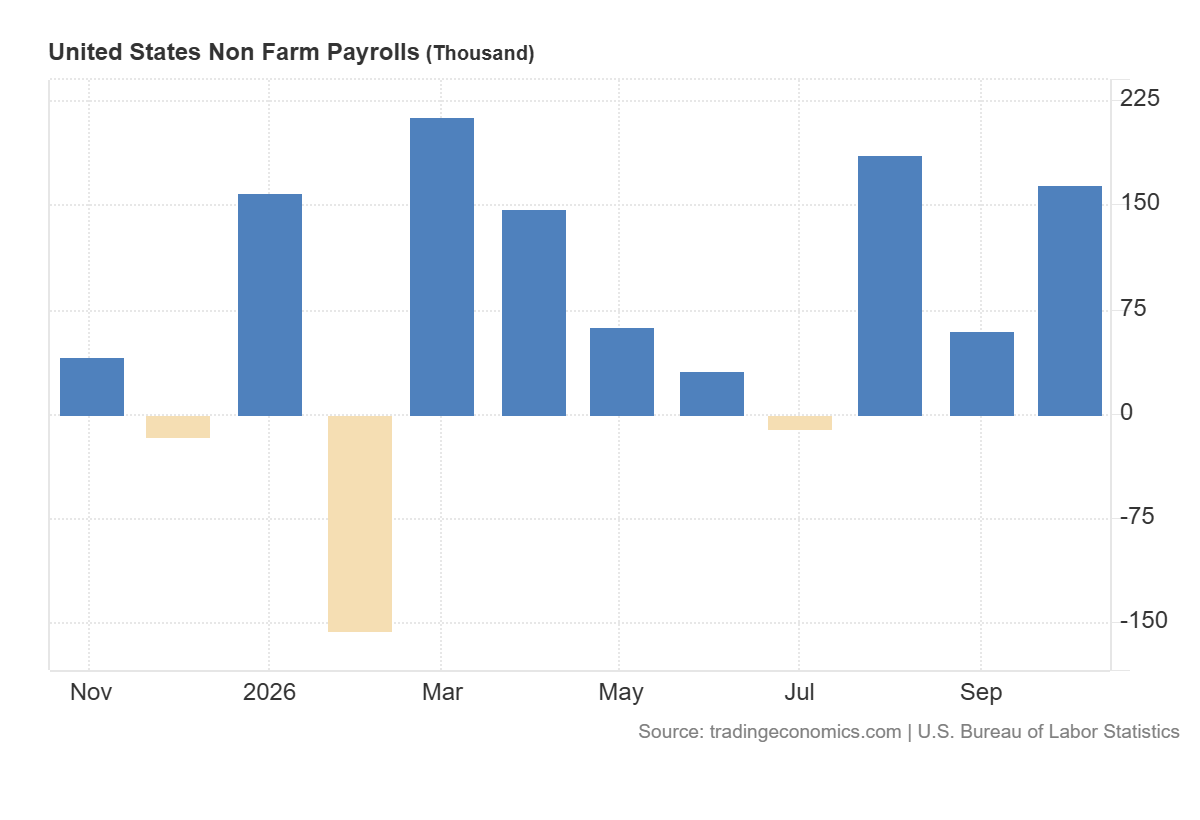
One of the most important economic releases of the week was the latest NFP report, which measures the number of jobs created in the U.S. economy during October.
The figure significantly exceeded expectations, with 165,000 new jobs created compared with forecasts of 65,000. This result represents an important shift from the narrative that had begun to develop weeks earlier, when September data pointed to a noticeable slowdown in job creation. Instead, the latest report suggests that the U.S. labor market remains considerably more resilient than many investors had anticipated.
Source: TradingEconomics
The report is particularly important because employment remains one of the key indicators the Federal Reserve monitors when making monetary policy decisions. While the U.S. interest rate (4.00%) already remains well above the eurozone reference rate (2.65%), the strength of the labor market could help preserve this interest rate differential in the months ahead.
The reason is that strong employment conditions reduce some of the concerns surrounding an economic slowdown caused by elevated rates and provide the Federal Reserve with additional room to remain focused on controlling inflationary pressures.
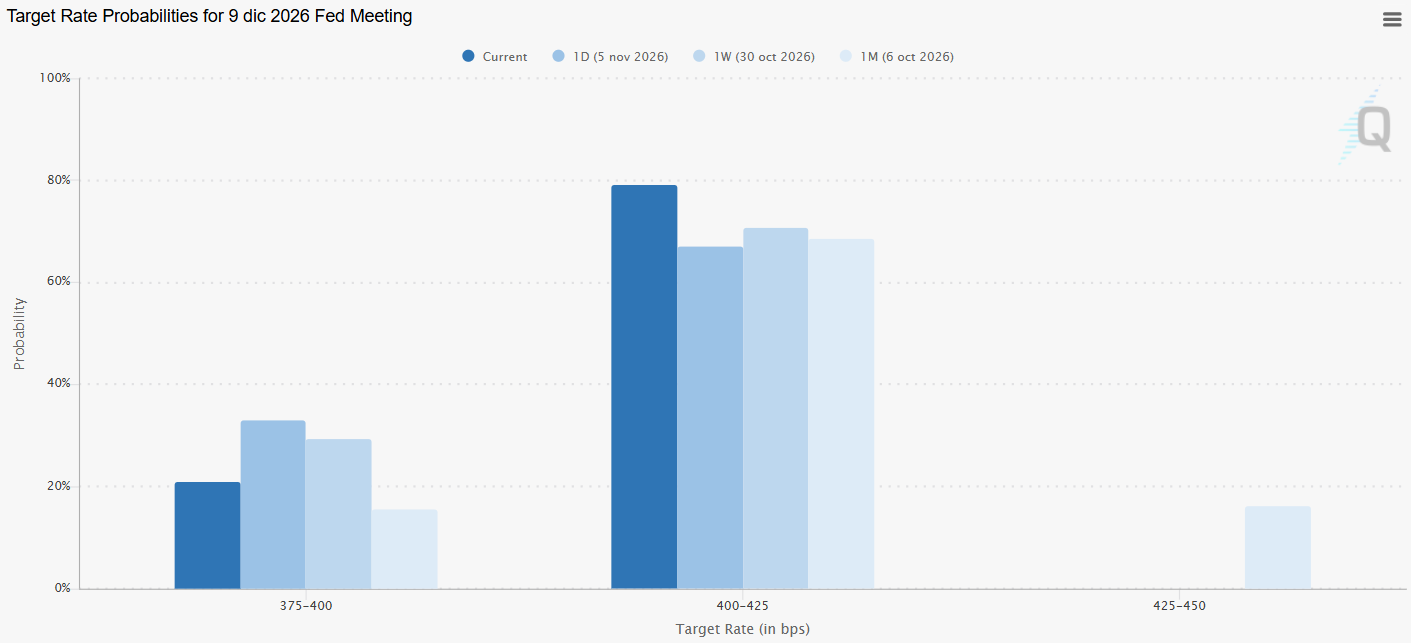
This shift is already becoming visible in market expectations. Just one day before the NFP release, the probability of a rate hike during the Fed's December 9 meeting stood near 66%. Following the employment report, that same probability increased to roughly 80%, reflecting that investors are once again pricing in the possibility of a more aggressive Federal Reserve into year-end.
Source: CMEGROUP
This dynamic remains particularly important for the U.S. dollar. The prospect of higher interest rates continues to increase the relative attractiveness of dollar-denominated investments compared with other developed economies, including the eurozone.
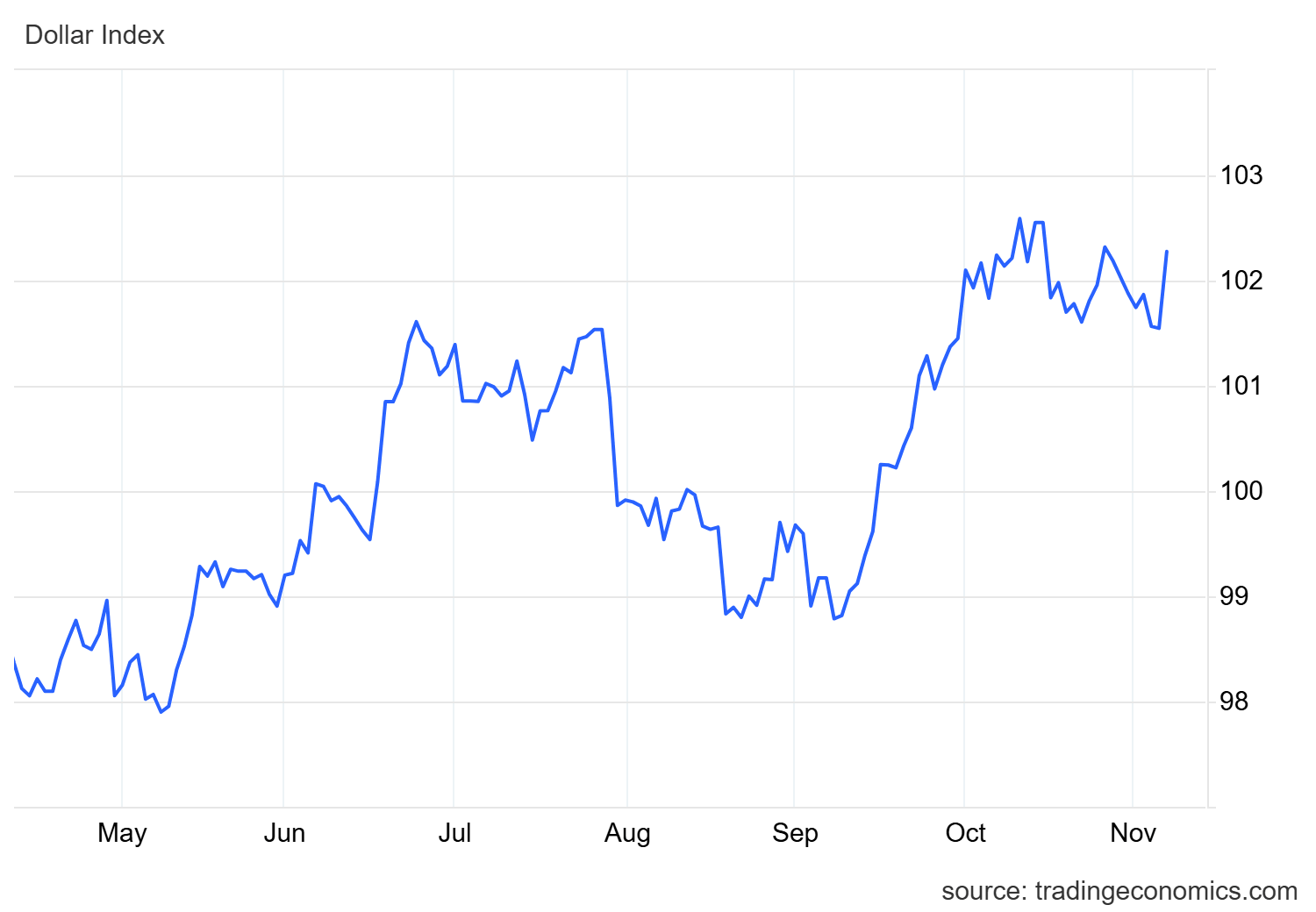
The impact can be clearly observed in the behavior of the DXY Index, which measures the strength of the U.S. dollar against its major peers. Following the NFP release, the index resumed its upward trajectory, moving back above the 102-point area and once again approaching its 2026 highs. This behavior suggests that demand for the dollar has begun strengthening once again after the employment data.
Source: TradingEconomics
With all of this in mind, markets have once again started to focus on the possibility of a relatively more aggressive Federal Reserve over the coming months. This expectation has helped support demand for the U.S. dollar while making it more difficult for rival currencies such as the euro to recover consistently. As long as this perception remains in place, selling pressure on EUR/USD could continue to be relevant in the coming sessions.
EUR/USD Technical Forecast
Source: StoneX, Tradingview
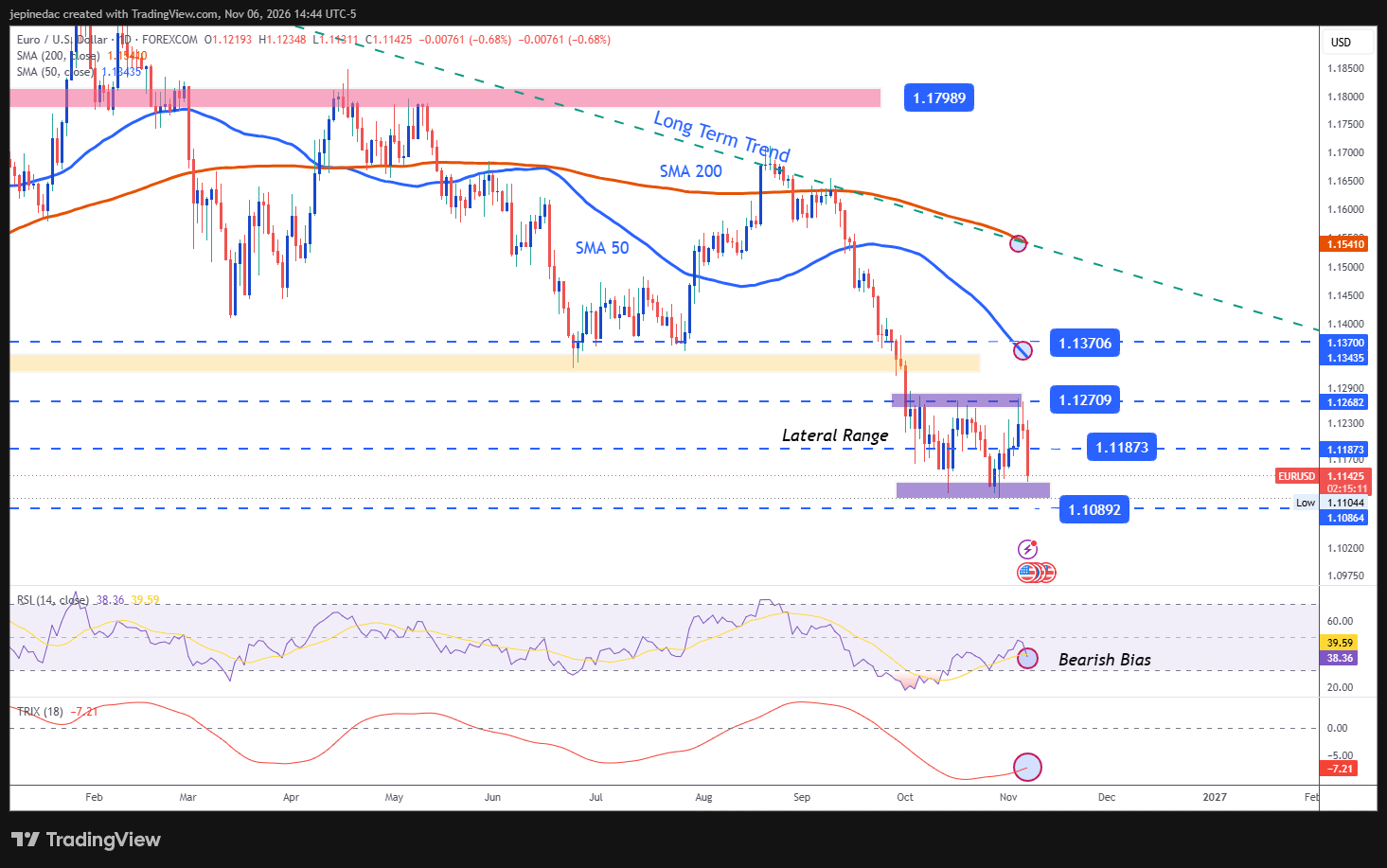
- The bearish trend is becoming relevant once again: Although EUR/USD had managed to sustain a relatively stable phase of consolidation over recent weeks, the latest selling pressure has once again highlighted the importance of the broader downtrend that has dominated the pair for several months. If price continues moving toward important support levels and new lows begin to emerge, the bearish trendline could re-establish itself as the dominant technical structure in the weeks ahead.
- RSI: The RSI remains below the 50 neutral level, reflecting that selling momentum continues to dominate the average behavior of the last 14 trading sessions. As long as this reading remains in place, downside pressure could continue to be an important feature of EUR/USD price action.
- TRIX: The TRIX indicator is showing a similar picture. The indicator remains below the 0 neutral level, suggesting that the average strength of exponential moving averages continues to reflect a relatively consistent bearish bias. This reading also supports the view that sellers remain in control of the pair's recent price action.
Key Levels:
- 1.12709 – Key Resistance: A significant high observed several weeks ago that now represents the main upside barrier on the chart. Price action returning toward this level could restore a more pronounced neutral environment and reduce the relevance of the recent bearish move.
- 1.11873 – Near-Term Barrier: An important retracement area observed over recent weeks that could become the main level to monitor in the event of short-term bullish corrections.
- 1.10892 – Key Support: A level not seen since May 2025 that remains the most important downside barrier within the current structure. Price action returning toward this area could restore seller dominance and favor a more aggressive extension of the bearish trend in the weeks ahead.
Written by Julian Pineda, CFA, CMT – Market Analyst
Follow him on: @julianpineda25