



The USDCAD appears to be headed for 13020
On Monday the USD/CAD broke out to the upside of a descending broadening pattern.
Share this:

The US Dollar was bullish against all of its major pairs on Tuesday. On the US economic data front, GDP rose to +33.4% for the third quarter third reading (+33.1% expected), up from +33.1% in the third quarter second reading. The Conference Board's Consumer Confidence Index dropped to 88.6 on month in December (97.0 expected). from a revised 92.9 in November. Finally, Existing Homes Sales slipped to 6.69 million on month in November (6.70 million expected), from a revised 6.86 million in October.
On Wednesday, the Mortgage Bankers Association's Mortgage Applications data for the week ending December 18th is expected. Durable Goods Orders for the November preliminary reading is expected to increase 0.6% on month, compared to +1.3% in the October final reading. Initial Jobless Claims for the week ending December 19th are expected to decline to 880K, from 885K in the week before. Continuing Claims for the week ending December 12th are expected to rise to 5,560K, from 5,508K in the previous week. Personal Income for November is expected to decline 0.3% on month, compared to -0.7% in October. Personal Spending for November is expected to slip 0.2% on month, compared to +0.5% in October. The University of Michigan's Consumer Sentiment Index for the December final reading is expected fall to 81.1 on month, from 81.4 in the December preliminary reading. Finally, New Homes Sales for November are expected to decrease to 995K on month, from 999K in October.
The Euro was bearish against most of its major pairs with the exception of the NZD, AUD and GBP. In Europe, the January German GfK leading indicator of household confidence declined to -7.3, compared to -6.8 the previous month (revised from -6.7). It was expected at -7.6. Separately, the U.K. GDP rebounded by 16% in the third quarter in the second estimate, compared to +15.5% in the first reading, and after a decline of 19.8% in the previous quarter. In addition, the budget deficit soared to 30.8 billion pounds in November, compared with a deficit of 5.5 billion pounds a year earlier and a figure of 26.8 billion pounds expected by economists.
The Australian dollar was bearish against all of its major pairs.
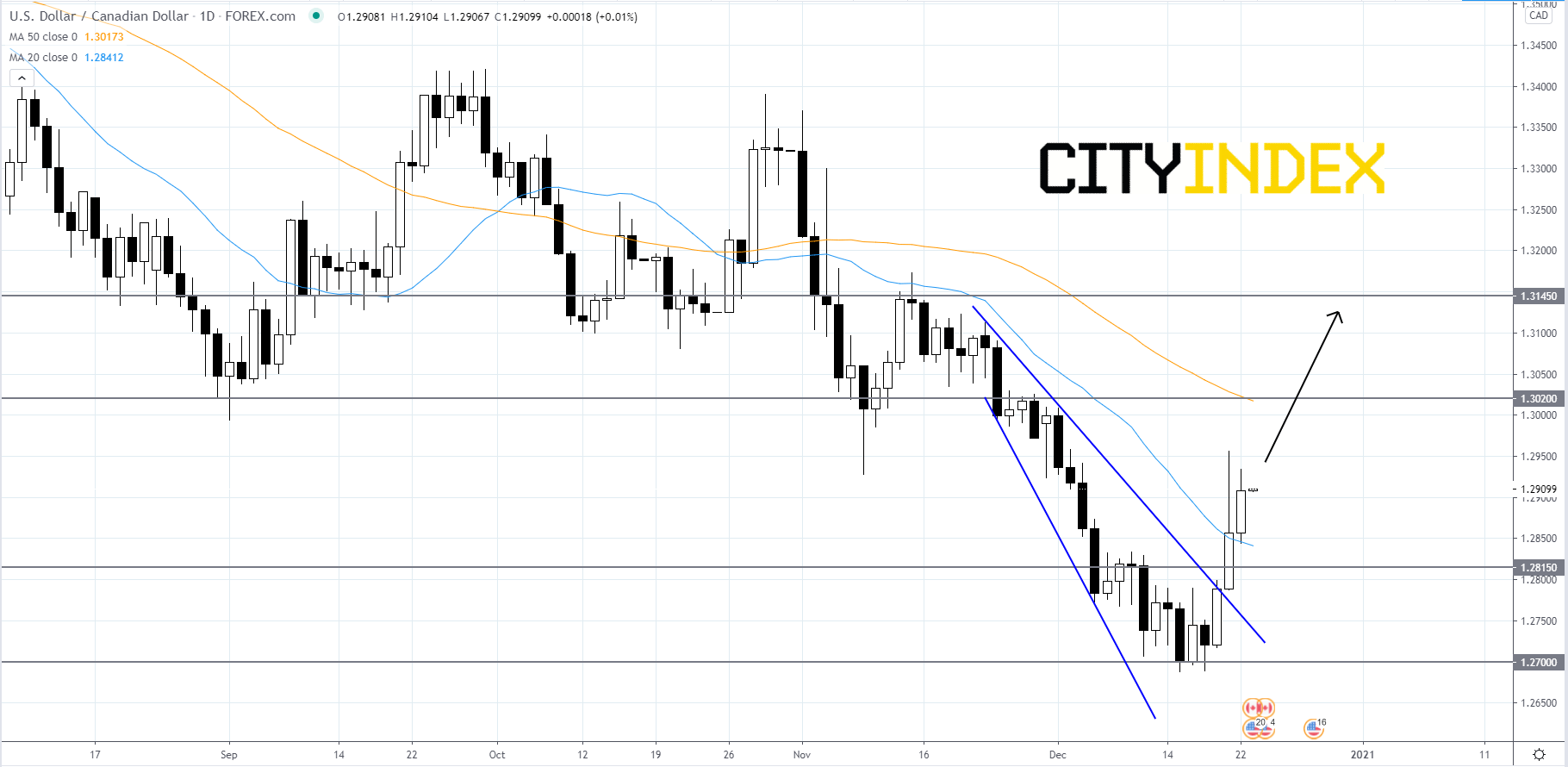
Looking at a daily chart, on December 21st, the USD/CAD broke out to the upside of a short-term descending broadening pattern that began to form in mid-November. The simple moving averages (SMAs) are arranged in a bearish manner, as the 20-day SMA is below the 50-day SMA. The pair will likely continue its counter trend rebound and reach for the 50-day SMA around the 1.3020 resistance level. If price can manage to get above 1.3020, then it could rally towards 1.3145. On the other hand, if price slips then speculators should look to 1.2815 for support. If the pair fails to be supported at 1.2815, it could slip back down to its 52-week low around 1.2700. If price action falls below 1.2700, it would be a bearish signal as it would be a continuation of the long-term downtrend.
Source: GAIN Capital, TradingView
On Wednesday, the Mortgage Bankers Association's Mortgage Applications data for the week ending December 18th is expected. Durable Goods Orders for the November preliminary reading is expected to increase 0.6% on month, compared to +1.3% in the October final reading. Initial Jobless Claims for the week ending December 19th are expected to decline to 880K, from 885K in the week before. Continuing Claims for the week ending December 12th are expected to rise to 5,560K, from 5,508K in the previous week. Personal Income for November is expected to decline 0.3% on month, compared to -0.7% in October. Personal Spending for November is expected to slip 0.2% on month, compared to +0.5% in October. The University of Michigan's Consumer Sentiment Index for the December final reading is expected fall to 81.1 on month, from 81.4 in the December preliminary reading. Finally, New Homes Sales for November are expected to decrease to 995K on month, from 999K in October.
The Euro was bearish against most of its major pairs with the exception of the NZD, AUD and GBP. In Europe, the January German GfK leading indicator of household confidence declined to -7.3, compared to -6.8 the previous month (revised from -6.7). It was expected at -7.6. Separately, the U.K. GDP rebounded by 16% in the third quarter in the second estimate, compared to +15.5% in the first reading, and after a decline of 19.8% in the previous quarter. In addition, the budget deficit soared to 30.8 billion pounds in November, compared with a deficit of 5.5 billion pounds a year earlier and a figure of 26.8 billion pounds expected by economists.
The Australian dollar was bearish against all of its major pairs.
Looking at a daily chart, on December 21st, the USD/CAD broke out to the upside of a short-term descending broadening pattern that began to form in mid-November. The simple moving averages (SMAs) are arranged in a bearish manner, as the 20-day SMA is below the 50-day SMA. The pair will likely continue its counter trend rebound and reach for the 50-day SMA around the 1.3020 resistance level. If price can manage to get above 1.3020, then it could rally towards 1.3145. On the other hand, if price slips then speculators should look to 1.2815 for support. If the pair fails to be supported at 1.2815, it could slip back down to its 52-week low around 1.2700. If price action falls below 1.2700, it would be a bearish signal as it would be a continuation of the long-term downtrend.
Source: GAIN Capital, TradingView
The US Dollar was bullish against all of its major pairs on Tuesday. On the US economic data front, GDP rose to +33.4% for the third quarter third reading (+33.1% expected), up from +33.1% in the third quarter second reading. The Conference Board's Consumer Confidence Index dropped to 88.6 on month in December (97.0 expected). from a revised 92.9 in November. Finally, Existing Homes Sales slipped to 6.69 million on month in November (6.70 million expected), from a revised 6.86 million in October.
On Wednesday, the Mortgage Bankers Association's Mortgage Applications data for the week ending December 18th is expected. Durable Goods Orders for the November preliminary reading is expected to increase 0.6% on month, compared to +1.3% in the October final reading. Initial Jobless Claims for the week ending December 19th are expected to decline to 880K, from 885K in the week before. Continuing Claims for the week ending December 12th are expected to rise to 5,560K, from 5,508K in the previous week. Personal Income for November is expected to decline 0.3% on month, compared to -0.7% in October. Personal Spending for November is expected to slip 0.2% on month, compared to +0.5% in October. The University of Michigan's Consumer Sentiment Index for the December final reading is expected fall to 81.1 on month, from 81.4 in the December preliminary reading. Finally, New Homes Sales for November are expected to decrease to 995K on month, from 999K in October.
The Euro was bearish against most of its major pairs with the exception of the NZD, AUD and GBP. In Europe, the January German GfK leading indicator of household confidence declined to -7.3, compared to -6.8 the previous month (revised from -6.7). It was expected at -7.6. Separately, the U.K. GDP rebounded by 16% in the third quarter in the second estimate, compared to +15.5% in the first reading, and after a decline of 19.8% in the previous quarter. In addition, the budget deficit soared to 30.8 billion pounds in November, compared with a deficit of 5.5 billion pounds a year earlier and a figure of 26.8 billion pounds expected by economists.
The Australian dollar was bearish against all of its major pairs.
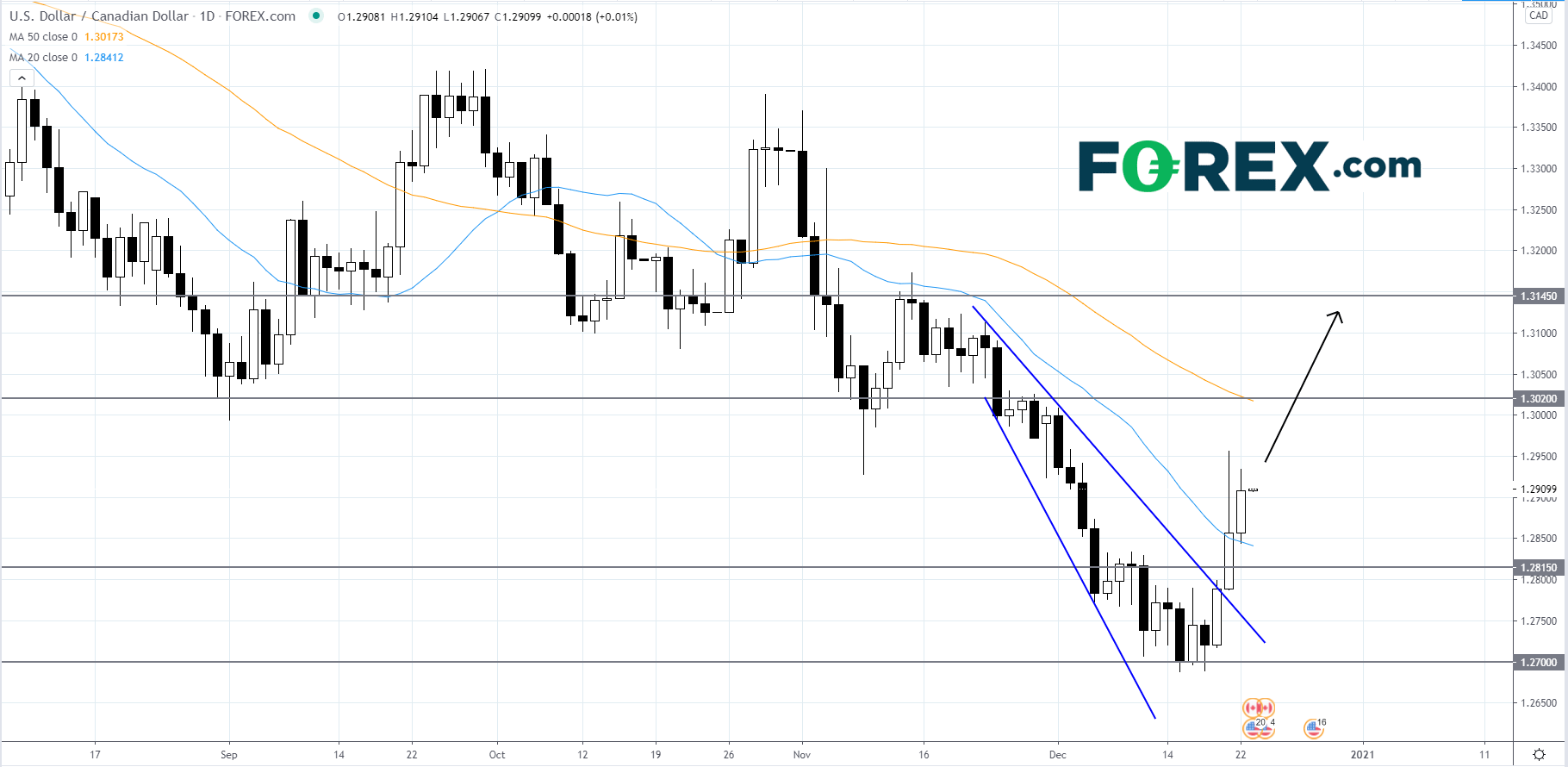
Looking at a daily chart, on December 21st, the USD/CAD broke out to the upside of a short-term descending broadening pattern that began to form in mid-November. The simple moving averages (SMAs) are arranged in a bearish manner, as the 20-day SMA is below the 50-day SMA. The pair will likely continue its counter trend rebound and reach for the 50-day SMA around the 1.3020 resistance level. If price can manage to get above 1.3020, then it could rally towards 1.3145. On the other hand, if price slips then speculators should look to 1.2815 for support. If the pair fails to be supported at 1.2815, it could slip back down to its 52-week low around 1.2700. If price action falls below 1.2700, it would be a bearish signal as it would be a continuation of the long-term downtrend.
Source: GAIN Capital, TradingView
On Wednesday, the Mortgage Bankers Association's Mortgage Applications data for the week ending December 18th is expected. Durable Goods Orders for the November preliminary reading is expected to increase 0.6% on month, compared to +1.3% in the October final reading. Initial Jobless Claims for the week ending December 19th are expected to decline to 880K, from 885K in the week before. Continuing Claims for the week ending December 12th are expected to rise to 5,560K, from 5,508K in the previous week. Personal Income for November is expected to decline 0.3% on month, compared to -0.7% in October. Personal Spending for November is expected to slip 0.2% on month, compared to +0.5% in October. The University of Michigan's Consumer Sentiment Index for the December final reading is expected fall to 81.1 on month, from 81.4 in the December preliminary reading. Finally, New Homes Sales for November are expected to decrease to 995K on month, from 999K in October.
The Euro was bearish against most of its major pairs with the exception of the NZD, AUD and GBP. In Europe, the January German GfK leading indicator of household confidence declined to -7.3, compared to -6.8 the previous month (revised from -6.7). It was expected at -7.6. Separately, the U.K. GDP rebounded by 16% in the third quarter in the second estimate, compared to +15.5% in the first reading, and after a decline of 19.8% in the previous quarter. In addition, the budget deficit soared to 30.8 billion pounds in November, compared with a deficit of 5.5 billion pounds a year earlier and a figure of 26.8 billion pounds expected by economists.
The Australian dollar was bearish against all of its major pairs.
Looking at a daily chart, on December 21st, the USD/CAD broke out to the upside of a short-term descending broadening pattern that began to form in mid-November. The simple moving averages (SMAs) are arranged in a bearish manner, as the 20-day SMA is below the 50-day SMA. The pair will likely continue its counter trend rebound and reach for the 50-day SMA around the 1.3020 resistance level. If price can manage to get above 1.3020, then it could rally towards 1.3145. On the other hand, if price slips then speculators should look to 1.2815 for support. If the pair fails to be supported at 1.2815, it could slip back down to its 52-week low around 1.2700. If price action falls below 1.2700, it would be a bearish signal as it would be a continuation of the long-term downtrend.
Source: GAIN Capital, TradingView
Related tags:
Latest market news




The complete CFD trading experience
Award-winning platforms, competitive spreads, low commissions and dedicated support.
We live and breathe the markets and are dedicated to helping traders realise their ambitions as we continue to set the industry bar.
Economic calendar
Web Trader platform
Our sophisticated web-based platform is packed with features.
Related articles
Gold Outlook: XAU/USD hit hard as US yields, dollar resume ascent
A stronger dollar, surging front-end yields and renewed geopolitical tension have combined to push gold back towards key technical support.
S&P 500, Nasdaq, Dow Forecast: Wall Street Split Widens Into Month-End 9 26 2026
Nasdaq strength contrasts with mounting Dow pressure as rising Treasury yields raise the stakes for stocks heading into the monthly close.

EUR/USD weekly outlook: Oil, inflation and NFP in focus
After coming under significant pressure in recent weeks, the EUR/USD came off its lows to finish the week on a positive note on Friday, albeit with only a mild rebound. That was not enough to prevent the exchange rate falling for the third consecutive week, as the US dollar and bond yields rallied across the board.

StoneX Europe Ltd may make third party material available on this website which may contain information included but not limited to the conditions of financial markets. The material is for information purposes only and does not contain, and should not be construed as containing, investment advice and/or investment recommendation and/or an investment research and/or an offer of or solicitation for any transactions in financial instruments; any decision to enter into a specific transaction shall be made by the client following an assessment by him/her of their situation.
StoneX Europe Ltd makes no representation or warranty and assumes no liability as to the accuracy or completeness of the information provided, nor any loss arising from any investment based on a recommendation, forecast or other information supplied. You should always seek independent advice as to your suitability to speculate in any related markets and your ability to assume the associated risks, if you are at all unsure. We are not under any obligation to update any such material. Any opinion made may be personal to the author and may not reflect the opinion of StoneX Europe Ltd.