
- EUR/USD forecast: Ceasefire weakens dollar as risk appetite improves
- Oil slump eases stagflation fears and supports the euro
- Key support at 1.1578–1.1605 remains critical for bullish structure
Global markets have stepped back from the edge, at least for now, after the US and Iran agreed to a two-week ceasefire last night. The initial reaction was fairly textbook: risk assets rallied as oil prices took a big drop. This morning saw equity indices in Europe push a bit more higher following the large gains in futures overnight, while the dollar held onto its losses after giving back a big chunk of its safe-haven bid it had built up through March. The big question now is whether this is just a relief rally or the start of something more durable. The EUR/USD forecast had been quite bleak during the height of the conflict as high energy prices had raised stagflation risks. While that risk is not going to go away just yet, the ceasefire means there is now hope that the worst-case scenario from both the conflict side and the economic sides can now be averted.
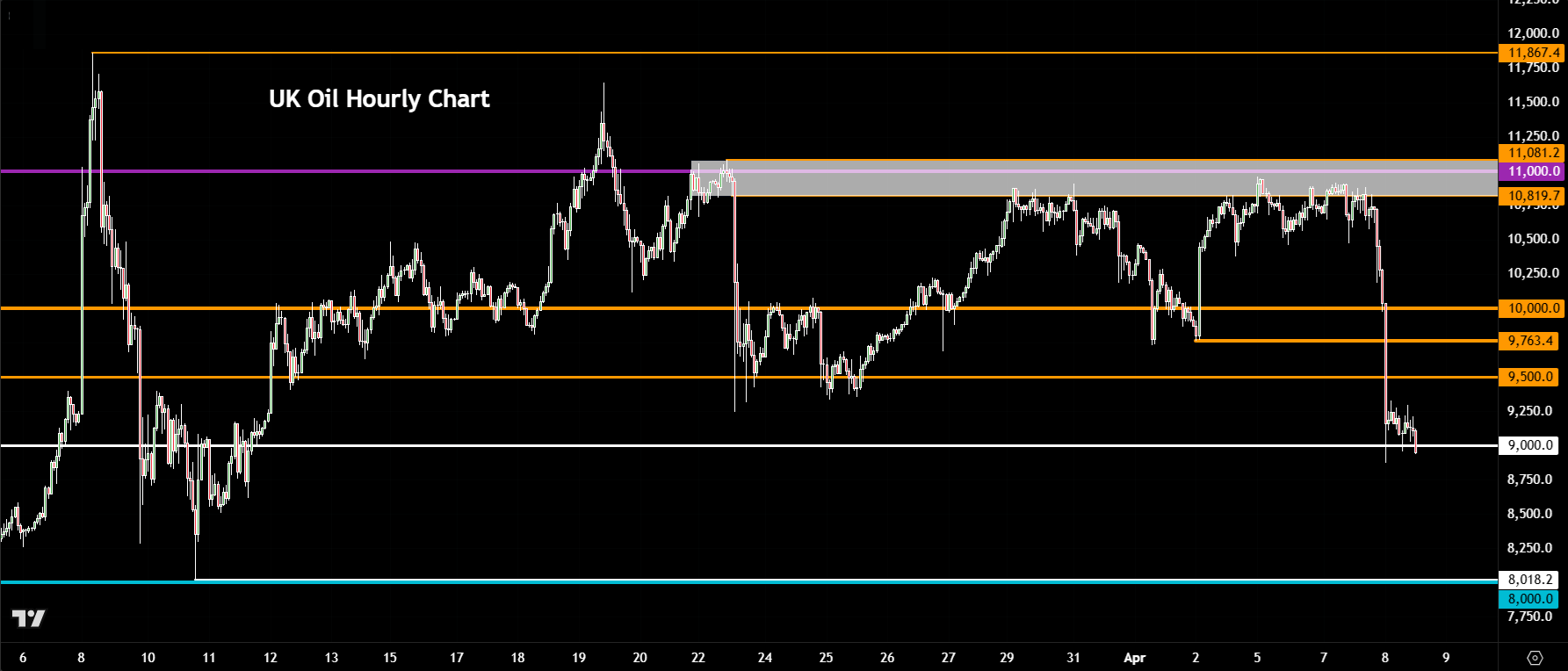
Crude oil extends drop as Trump provides more colour to ceasefire agreement
A few moments ago, Donald Trump delivered some fresh comments on the ceasefire agreement via a Social Truth post. His comments suggest that two sides are closer to ending the war completely and giving in to Tehran’s demands. Oil prices, which had paused after the big plunge when the ceasefire was announced overnight, resumed a bit further lower. It sounds all well and good, let’s hope there are no more surprises from either sides and we move on from this conflict. Markets are certainly tired of it.
This is what the U.S. president posted:
“The United States will work closely with Iran, which we have determined has gone through what will be a very productive Regime Change! There will be no enrichment of Uranium, and the United States will, working with Iran, dig up and remove all of the deeply buried (B-2 Bombers) Nuclear “Dust.” It is now, and has been, under very exacting Satellite Surveillance (Space Force!). Nothing has been touched from the date of attack. We are, and will be, talking Tariff and Sanctions relief with Iran. Many of the 15 points have already been been agreed to…”
Separately he posted that:
“A Country supplying Military Weapons to Iran will be immediately tariffed, on any and all goods sold to the United States of America, 50%, effective immediately. There will be no exclusions or exemptions! President DJT”
EUR/USD forecast: US dollar extends decline along with oil
As expected, the ceasefire agreement has trigged a noticeable shift in tone across markets. Perhaps the most important development overnight was Iran signalling safe passage through the Strait of Hormuz during the ceasefire. That’s critical. If shipping flows pick up meaningfully, it should take some of the heat out of oil prices and, by extension, unwind some of the stagflation trades that dominated recently—think weaker equities, euro, and a stronger dollar.
That said, it’s not a clean reset. March’s moves aren’t going to be fully reversed overnight. Markets will take their time, and much of those moves have already happened in the last day or two. However oil prices have more downside if supply resumes normally and quickly. That should be good news for the euro.
Markets have already reintroduced the idea of rate cuts later this year from the Fed, but conviction still feels thin. The euro is benefiting from the shift in sentiment, with EUR/USD bouncing firmly on the ceasefire headlines.
EUR/USD Technical analysis
From a technical point of view, the euro-dollar has been forming a series of higher lows in recent trade, even before the ceasefire was agreed. This suggests that a bullish structure had already been developing.
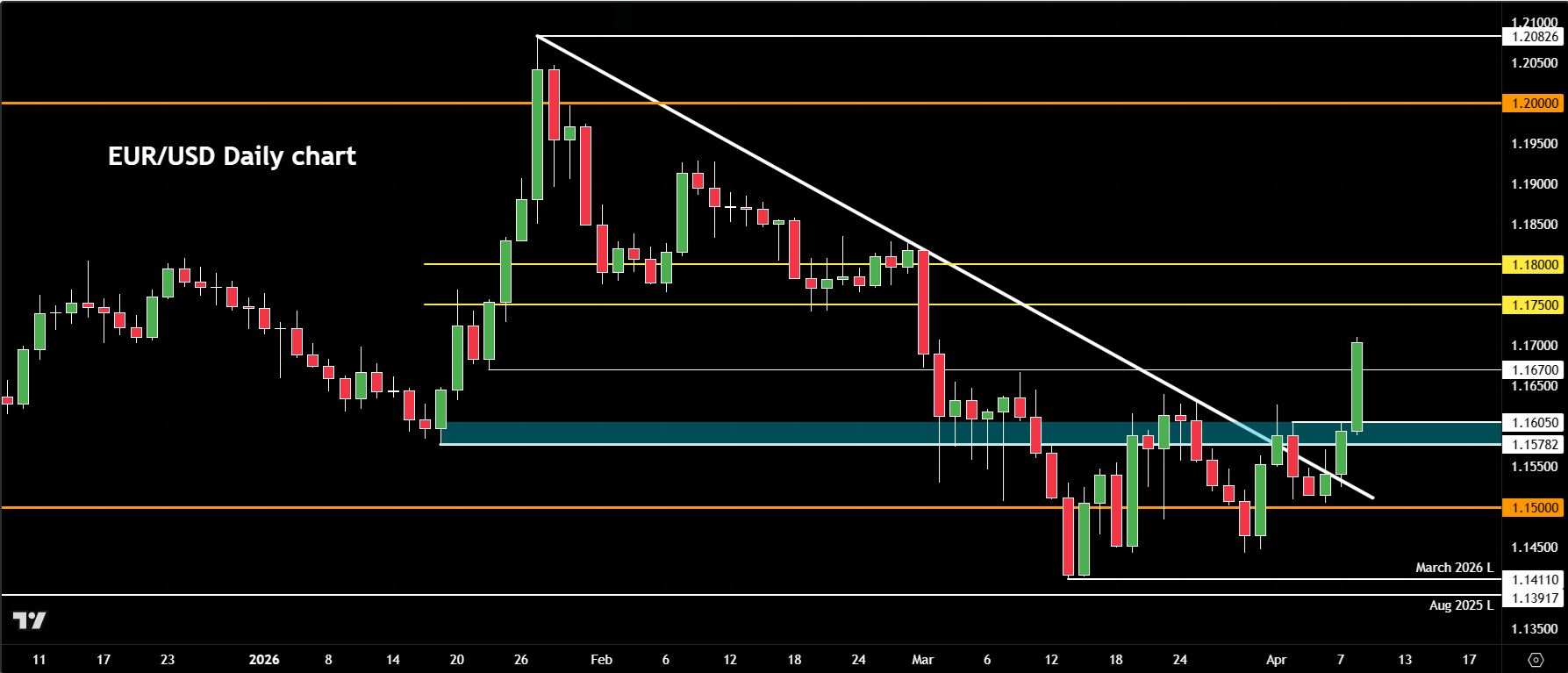
The recent spike higher in the euro-dollar exchange rate reinforces the idea that the worst of the selling pressure may now be behind us, barring any further major escalation in the Middle East conflict. As a result, dips could start to find support, and we may see a continued unwinding of long dollar positions. This, in turn, could allow EUR/USD to climb back towards the 1.1750–1.1800 area in the short term, where it may encounter resistance.
In terms of support levels, the key level to watch is Tuesday’s high at 1.1605, which now needs to hold as support. Below that, we have the January low at 1.1578, which has recently been reclaimed. This makes the 1.1578–1.1605 zone a critical support region that must hold on any pullbacks.
If this area fails to hold, the technical outlook could turn bearish once again for the euro-dollar.
Ahead of that, there are also a couple of intermediate support levels to watch, including the 1.1650–1.1670 region, where a previous high aligns with the 200-day moving average.

-- Written by Fawad Razaqzada, Market Analyst
Follow Fawad on Twitter @Trader_F_R