

Key Events
• Geopolitical risk pricing has rotated, with markets shifting from Middle East escalation hedges toward Europe as US–EU tariff risks return to focus.
• Tariff risks reminiscent of 2025 have resurfaced, pressuring major dollar pairs and lifting EURUSD back above the 1.17 mark.
• Risk-off sentiment is adding further pressure across markets, lifting haven assets ahead of tomorrow’s Trump speech at the WEF.
Geopolitical risk pricing has rotated, with markets shifting from Middle East escalation hedges toward Europe as US–EU tariff risks return to focus. Major dollar pairs are facing short-term drawdowns, including USDCAD and USDJPY, as the DXY trades back below the 99 mark. As for the euro, gains are extending above the 1.17 mark, reflecting rising economic growth risks tied to a potential tariff war.
In response to renewed US tariff threats linked to Greenland, the EU has signaled it could revisit a previously prepared €93 billion counter-tariff package on US goods, according to European media reports. While not yet activated, the measures are part of what EU officials describe as a form of “passive retaliation, remaining on the table should tensions escalate further. This keeps stakes elevated as markets look ahead to the February 1 tariff deadline.
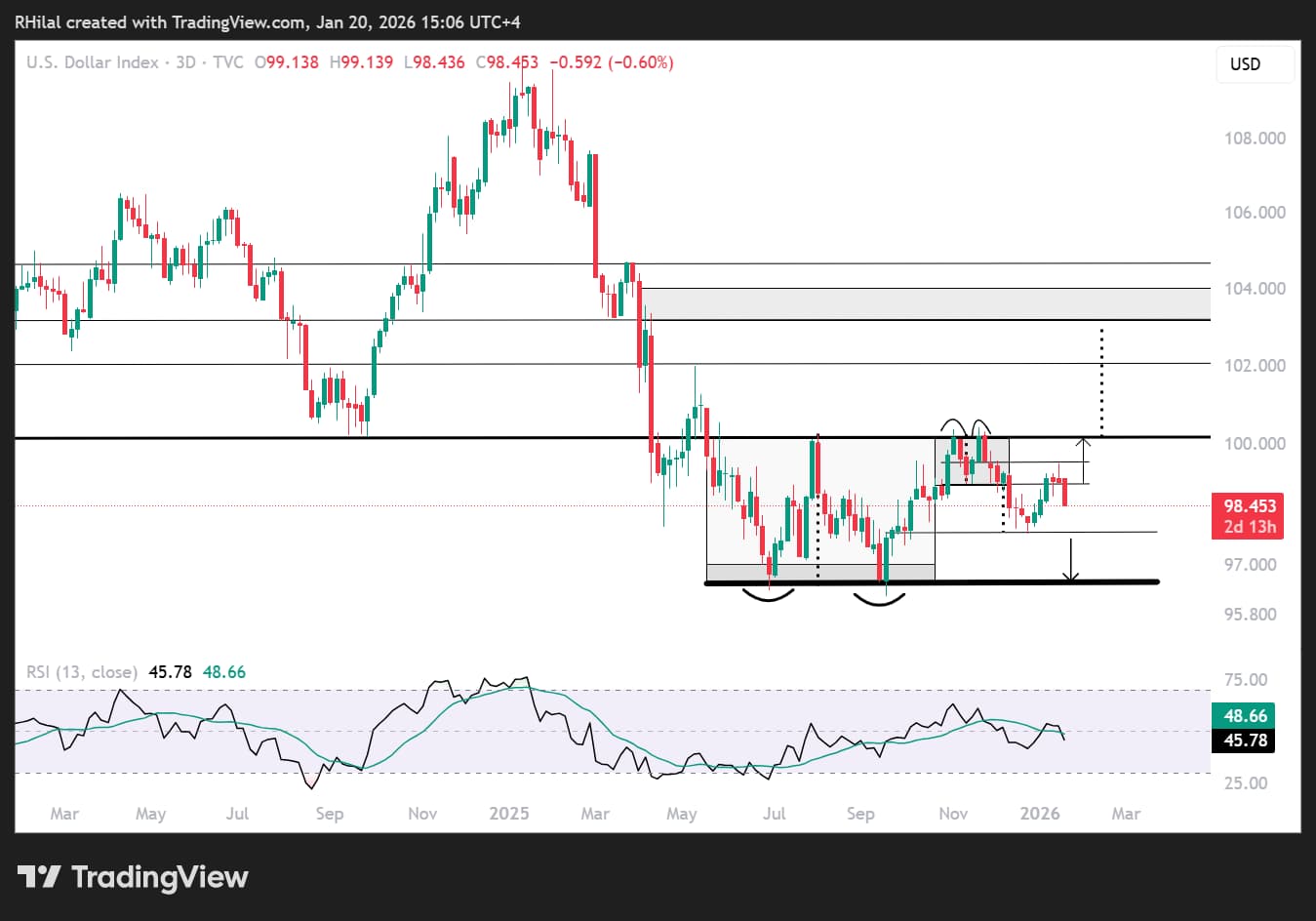
DXY Outlook: 3-Day Time Frame – Log Scale
Source: Trading view
Long-term levels on the dollar continue to hold a bullish bias above the 96 mark. However, a more decisive breakout above 100.40 is required to confirm that narrative. With tariff risks resurfacing, dollar positioning remains fragile, supporting EURUSD gains above 1.17 ahead of Trump’s speech on Wednesday and flash manufacturing and services PMI data across the eurozone and the US on Friday. Should DXY drawdowns realign with levels 97 and 96, steep bearish expectations are expected to build.
Key Levels and Scenarios in Sight
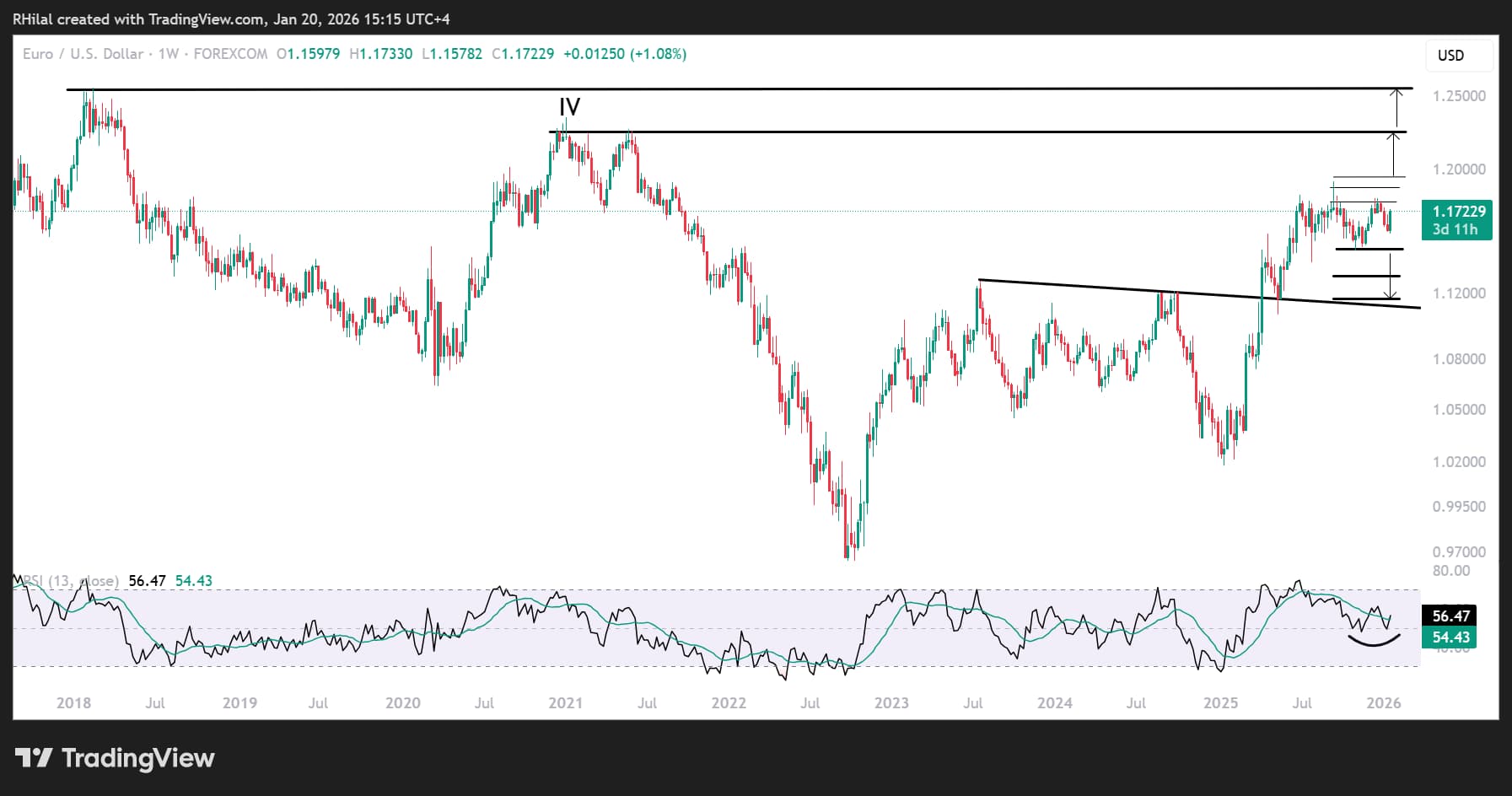
EURUSD Outlook: Weekly Time Frame – Log Scale
Source: Trading view
Zooming out to the weekly time frame, EURUSD is consolidating below its 2025 highs, with breakout potential that could extend gains toward levels last seen in 2021 and 2018 at 1.22, 1.23, and 1.25 respectively. From a relative strength index perspective, the RSI is showing a double rebound from above the 50 neutral-barrier, reinforcing a neutral-to-bullish bias unless that level is broken.
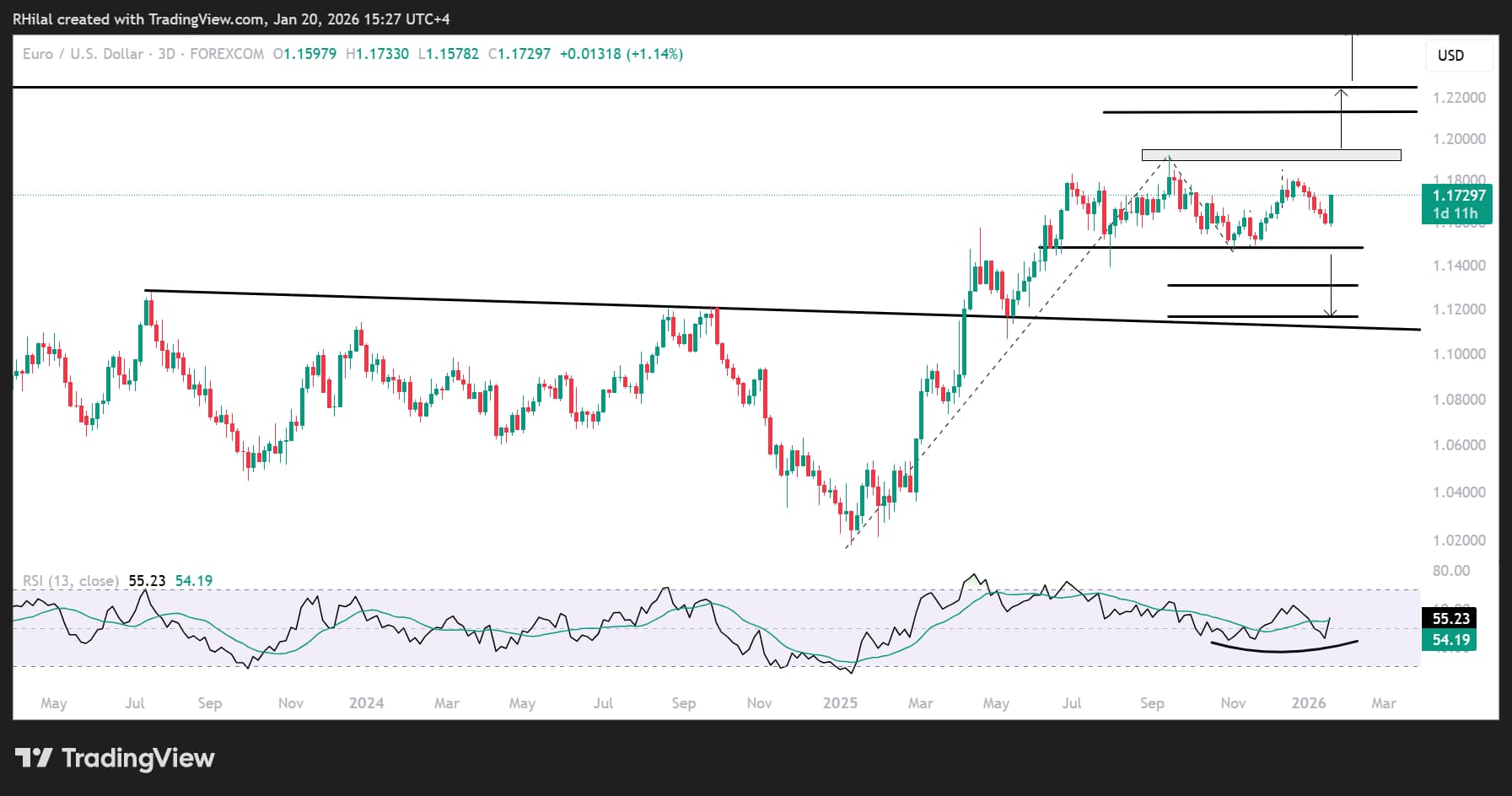
Short-term gains are currently holding around the 1.17 mark, seen more clearly on the three-day time frame below.
EURUSD Outlook: 3-day time frame – Log scale
Source: Trading view
Zooming in, the euro’s extended range since June 2025 risks evolving into a head-and-shoulders pattern should a clean break below the 1.1480 mark materialize, opening the door toward 1.13 and 1.11. On the upside, a sustained break above the 1.19 mark would bring the previously outlined bullish scenario into play, in line with a potential double bottom forming on the RSI above the 50 level.
Heightened volatility is expected amid rising US–EU tariff threats, bringing long-term time frames and key levels into focus to help separate short-term noise from long-term positioning.
Written by Razan Hilal, CMT
Follow on X: @Rh_waves