
Federal Reserve, FOMC Key Points
- Traders and economists confidently expect the Fed to leave interest rates unchanged in the 4.25-4.50% range, despite political pressure
- The chances of (at least) a dissent against the consensus decision are high, highlighting the increasing tension within the committee.
- If Chairman Powell fails to sufficiently “tee up” a September cut the US Dollar Index could break above horizontal resistance around 99.25 to its highest level since late May
When is the FOMC Meeting?
The July 2025 FOMC meeting will conclude on Wednesday, July 30 at 2:00 ET.
Fed Chairman Powell’s press conference will begin at 2:30 ET.
What are the FOMC Interest Rate Expectations?
Traders and economists confidently expect the Fed to leave interest rates unchanged in the 4.25-4.50% range.
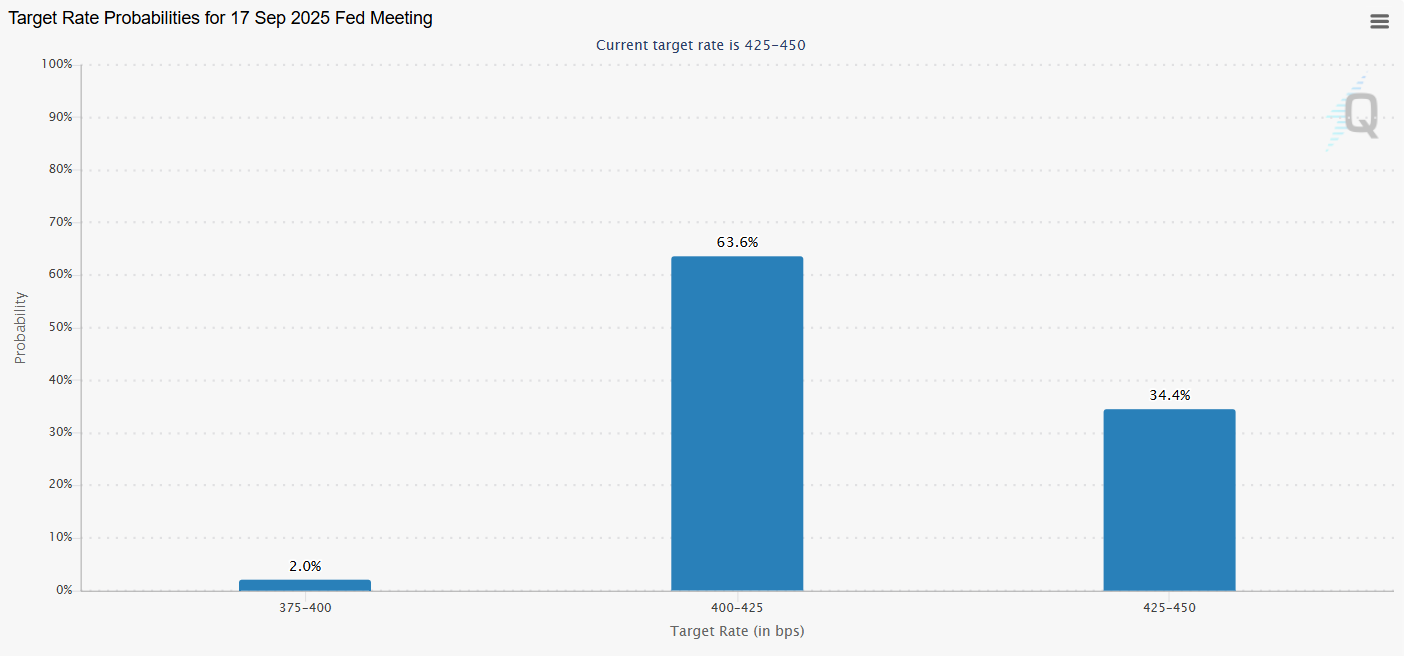
As of writing, Fed Funds futures traders are pricing in 97% odds of no change to interest rates per CME FedWatch.
Assuming the Federal Reserve leaves interest rates unchanged as expected, the market’s focus will immediately shift to the central bank’s Monetary Policy Statement and Fed Chairman Powell’s Press Conference for potential market-moving changes.
FOMC Meeting Forecast
Despite relentless political pressure from President Donald Trump, Fed Chairman Jerome Powell and Company will all-but-certainly leave interest rates unchanged in the 4.25-4.50% range this week. As we noted in last month’s report, most Fed members remain apprehensive about the potential inflationary impact of the US’s aggressive new tariff policy, highlighted by last weekend’s “framework” agreement to impose 15% tariffs on European goods.
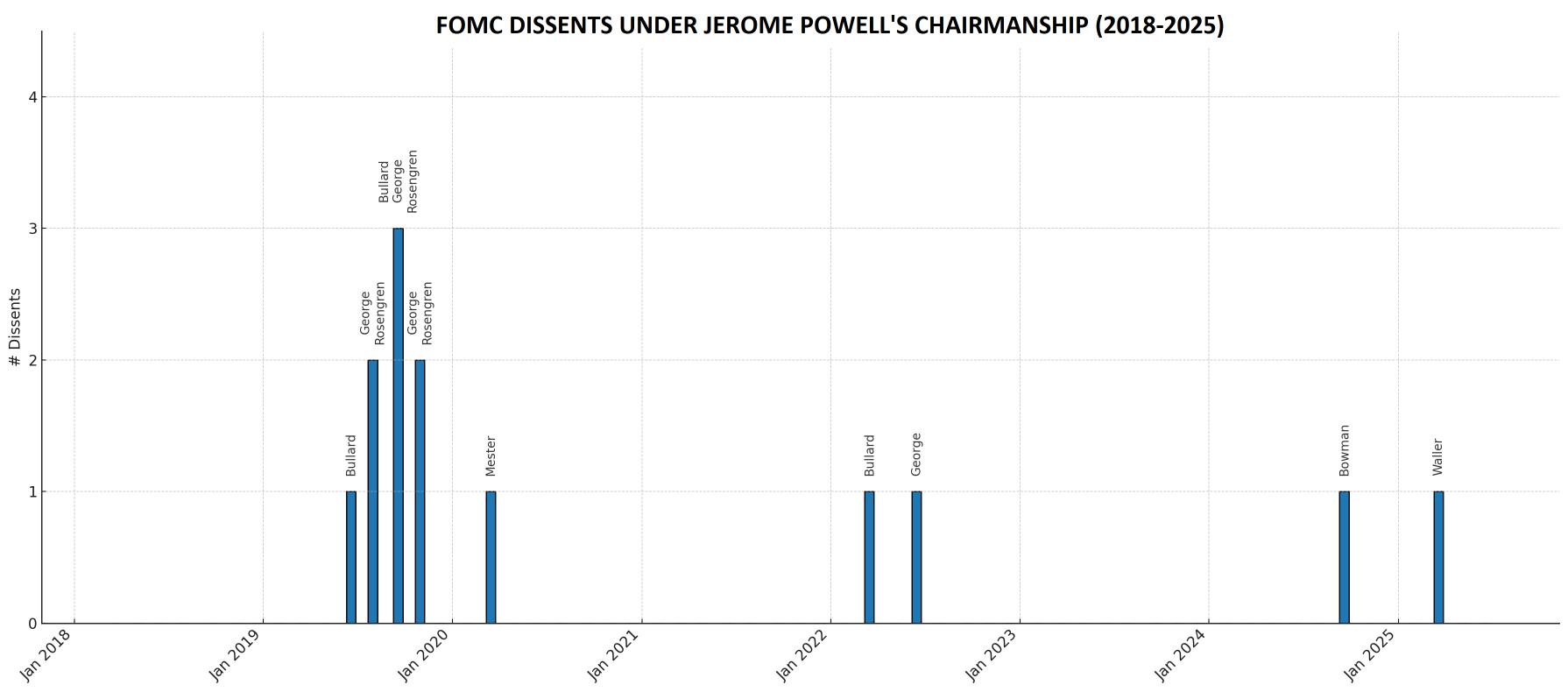
While the collective interest rate decision itself is unlikely to surprise, the chances of (at least) a dissent against the consensus decision are higher than we’ve historically seen under Jerome Powell’s Chairmanship. To wit:
- This will mark the 60th meeting under Jerome Powell’s Chairmanship, including volatile economic periods around the COVID pandemic and resulting inflationary surge, and there have only been dissents at nine (15%) of the previous meetings.
- There have been exactly two dissents in the last 20 FOMC meetings (Waller opposed to slowing the balance sheet runoff in March of this year and Bowman in favor of a smaller 25bps cut in September 2024) dating back to mid-2022.
- Since the depths of the COVID pandemic in March 2020 (36 meetings), we’ve only seen three dissents around interest rate decisions.
Source: StoneX, FOMC
This string of impressive unanimity within the central bank is likely to end this week. Based on recent comments, Fed Governor Chris Waller is likely to dissent in favor of an immediate interest rate cut. One other wildcard is Fed Vice Chair of Supervision Michelle Bowman, who has recently expressed skepticism over the inflationary impact of tariffs. If both Waller and Bowman dissent, it would mark the first double dissent from Fed governors since 1993 (previous dissents were by rotating regional Fed presidents).
Amidst the increasing tension under the surface, there’s still risk of a more-hawkish-than-expected outcome from the meeting if Chairman Powell emphasizes the upside risks to inflation from tariffs in his press conference. Quoting my StoneX colleague, Jon Hilsenrath, “The latest data suggests the Fed’s favored PCE measure of consumer price changes rose 2.5% in June from a year earlier and 2.7% excluding food and energy. A couple of 0.3 percentage point monthly prints this summer would send these inflation readings toward 3%. Unless the jobless rate moves up toward the Fed’s 4.5% mark, officials could find it hard to swallow an interest rate cut in September with inflation rising.”
With traders pricing in about 2-in-3 odds of a cut in September, the market will expect the Fed to signal such a move is likely in this week’s meeting; a more tepid, wishy-washy outlook could prompt traders to shift their expectations closer to a coinflip as we head through August:
Source: CME FedWatch
Beyond the focus on traditional economic data, the proverbial elephant in the corner of the room remains President Trump’s relentless pressure on Chairman Powell and the FOMC to cut interest rates to support the economy. While there will undoubtedly be questions about the ongoing political pressure in the press conference, expect Powell to downplay any political influence on Fed policy and redirect the focus to the Fed’s dual mandate (low inflation and stable employment). With the finish line to his tenure as Chairman in sight (May 2026), Powell is shifting his focus to cementing his legacy by sticking a “soft landing” for the economy and leaving inflation as close as possible to the central bank’s 2% target.
US Dollar Technical Analysis – US Dollar Index (DXY) Daily Chart
Source: StoneX, TradingView
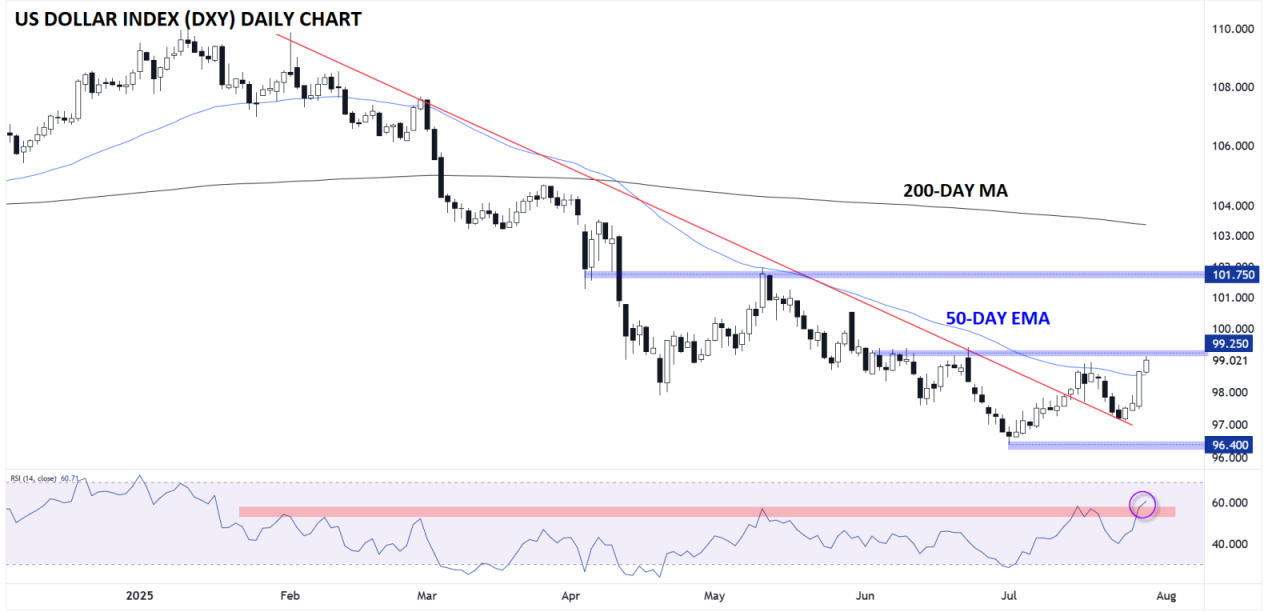
From a technical perspective, the US Dollar Index (DXY) has turned notably higher for the first time all year over the last couple of weeks. The index broke above its year-to-date bearish trend line in the middle of the month before falling to retest it from the topside last week. With this week’s bounce from that dynamic level of previous-resistance-turned-support (and the accompanying breakout in the 14-day RSI above the 60 level), the downtrend has definitively ended, though that doesn’t necessarily imply an immediate uptrend will begin.
If Chairman Powell fails to sufficiently “tee up” a September cut the US Dollar Index could break above horizontal resistance around 99.25 to its highest level since late May, opening the door for a more substantial bounce above 101.00. Meanwhile, a clear endorsement of a September cut could reverse the near-term upward momentum and take world’s reserve currency back toward 98.00 as we head into August.
-- Written by Matt Weller, Global Head of Research
Check out Matt’s Daily Market Update videos on YouTube and be sure to follow Matt on Twitter: @MWellerFX