

May Forex Seasonality Key Points
- Geopolitical developments in Iran remain the dominant theme for traders, potentially overshadowing June’s FX seasonal trends.
- Historically, June has been the third-strongest month for EUR/USD, with the world’s most widely-traded currency pair sporting an average return of +0.5% over the last 50+ years.
- Other major currency pairs have tended to show mild seasonal tendencies in June amidst a shift to summer doldrum” trading conditions.
The beginning of a new month marks a good opportunity to review the seasonal patterns that have influenced the forex market over the 50+ years since the Bretton Woods system was dismantled in 1971, ushering in the modern foreign exchange market.
As always, these seasonal tendencies are just historical averages, and any individual month or year may vary from the historic average, so it’s important to complement these seasonal leans with alternative forms of analysis to create a long-term successful trading strategy. In other words, past performance is not necessarily indicative of future results.

Euro Forex Seasonality – EUR/USD Chart
Source: TradingView, StoneX. Please note that past performance is not necessarily indicative of future results.
Historically, June has been the third-strongest month for EUR/USD, with the world’s most widely-traded currency pair sporting an average return of +0.5% over the last 50+ years. In May, EUR/USD edged lower, matching its seasonal tendency as the US-Iran conflict failed to yield a ceasefire agreement. Looking ahead, continued closure of the Strait of Hormuz is likely to weigh on Europe more than the US economy, so it may require tangible progress toward peace in the Middle East before FX traders are comfortable buying EUR/USD in size.

British Pound Forex Seasonality – GBP/USD Chart

Source: TradingView, StoneX. Please note that past performance is not necessarily indicative of future results.
Looking at the above chart, GBP/USD has, on average, seen relatively weak performance in June, with average returns of around -0.3% since 1971. Like the euro, the British pound fell against the greenback in May, and the combination of ongoing geopolitical tensions in the Middle East and weak seasonality could continue to weigh on the pair in June.

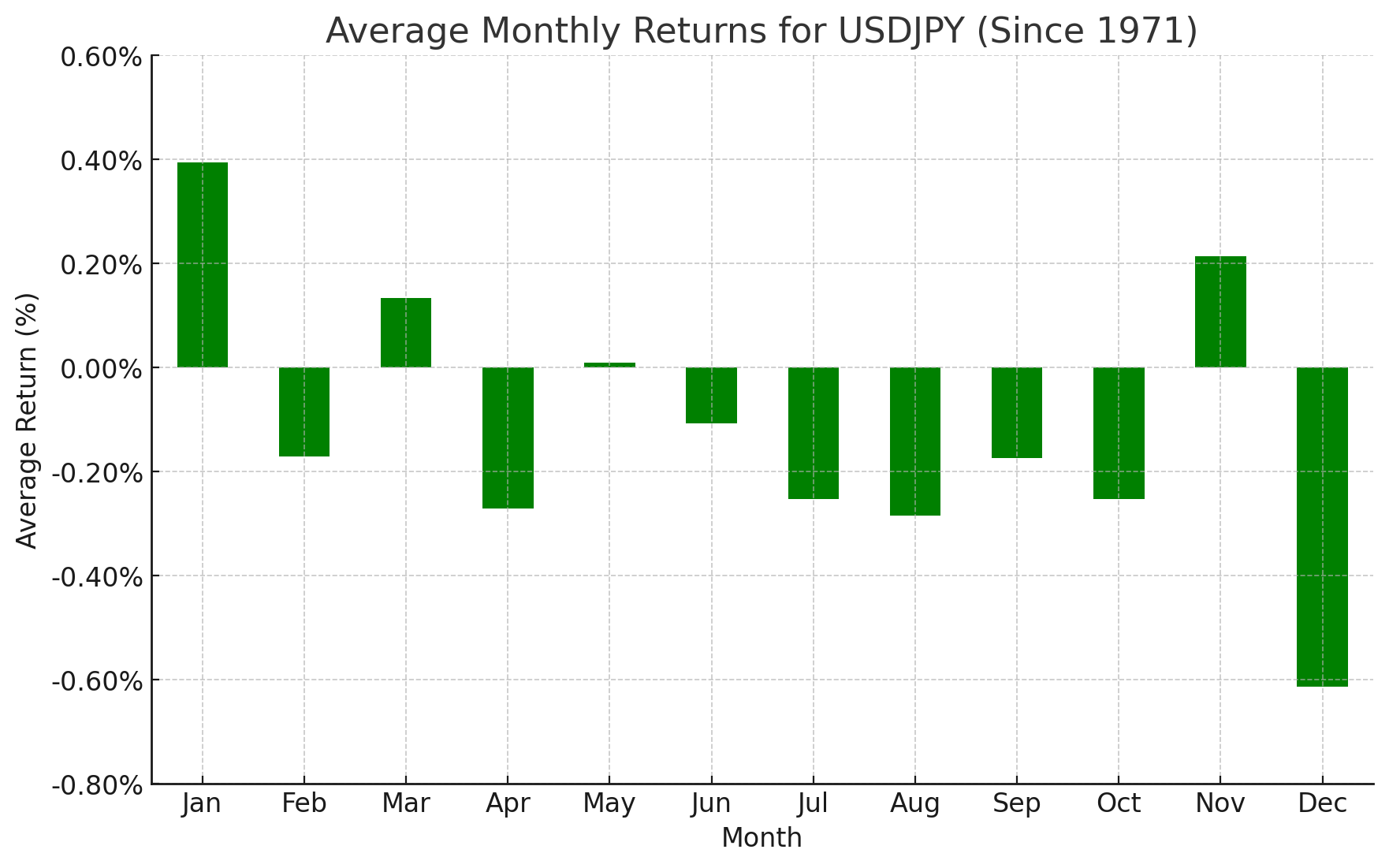
Japanese Yen Forex Seasonality – USD/JPY Chart
Source: TradingView, StoneX. Please note that past performance is not necessarily indicative of future results.
June has historically been a mixed month for USD/JPY, with the pair falling -0.1% on average since the Bretton Woods agreement. USD/JPY surged higher in May, unwinding the earlier intervention by Japanese authorities and putting market participants back in an awkward position. The BOJ is likely to raise interest rates later this month, potentially relieving some of the downside pressure on the yen, but until then (and perhaps beyond), the market could continue to “play chicken” with the Ministry of Finance around the 160 level in USD/JPY.

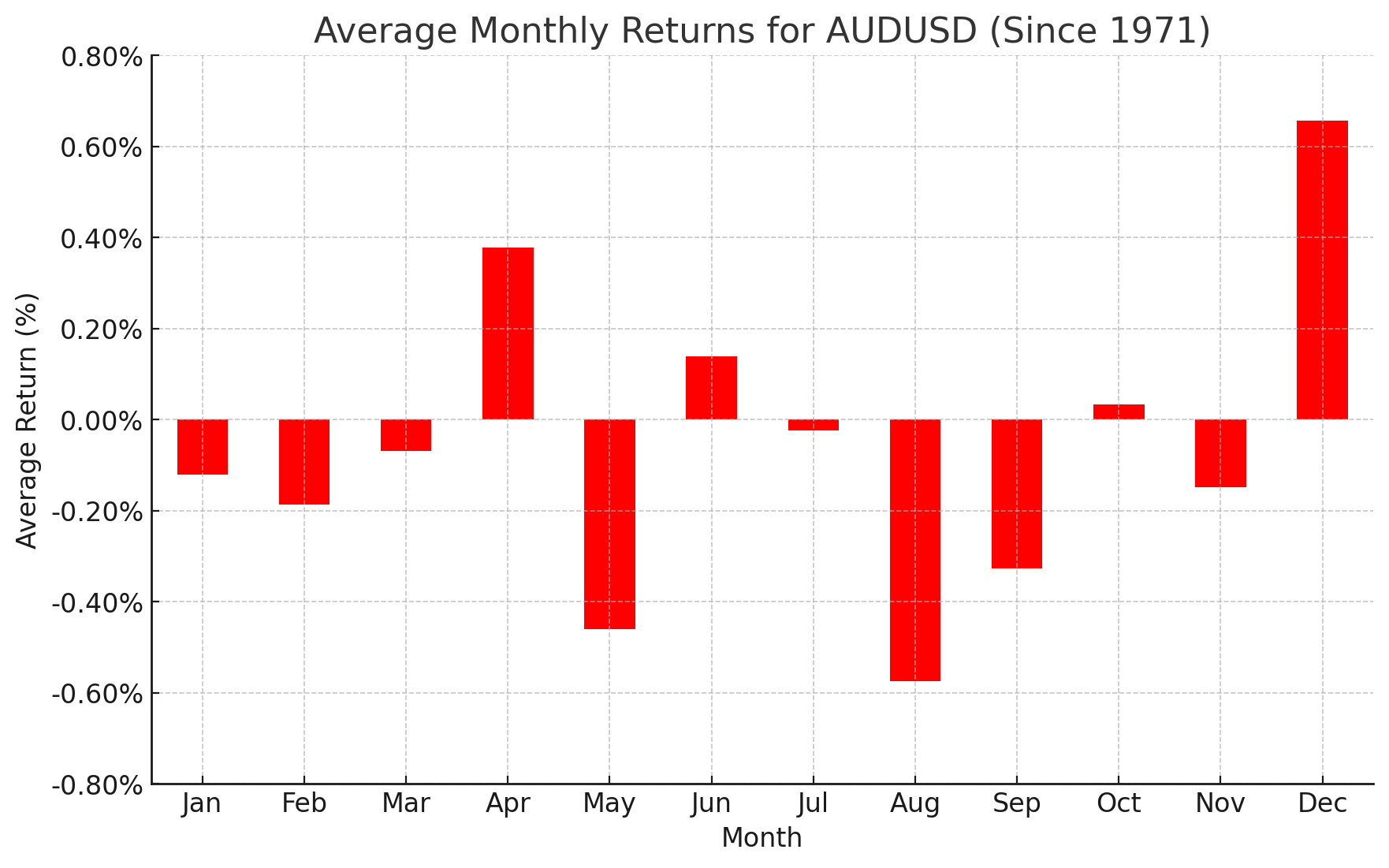
Australian Dollar Forex Seasonality – AUD/USD Chart
Source: TradingView, StoneX. Please note that past performance is not necessarily indicative of future results.
Turning our attention Down Under, AUD/USD has historically traded incrementally higher in June, with an average gain of +0.1% going back to 1971. Last month, the Aussie finished roughly flat near 0.7200 after trading both 100 pips higher and lower than that level intramonth. For this month, that same 0.7200 area will be the key “line in the sand” for traders, traders unlikely to commit strongly unless we see a clear break above or rejection below it.
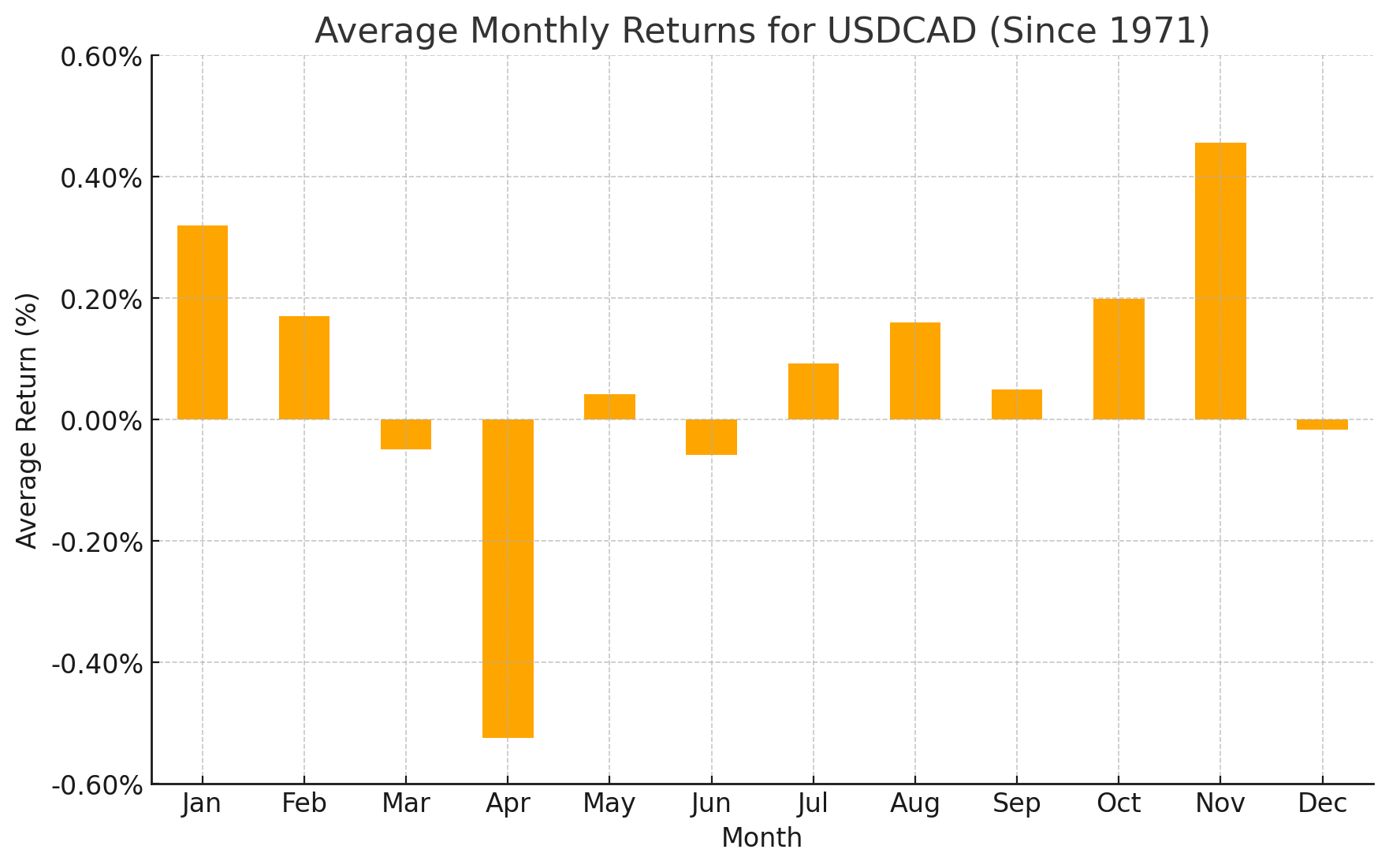
Canadian Dollar Forex Seasonality – USD/CAD Chart
Source: TradingView, StoneX. Please note that past performance is not necessarily indicative of future results.
Last but not least, June has been a neutral month on average for USD/CAD, with an average historical return of -0.1%. The North American pair rallied sharply in May, bouncing form its 18-month low in the 1.3500 area once again. Beyond developments in Iran and the subsequent impact on energy prices, the occasionally-frosty relationship between the US and Canadian administrations will take on increased significance in the coming months ahead of the potential renewal of the USMCA trade deal on July 1.
As always, we want to close this article by reminding readers that seasonal tendencies are not gospel – even if they’ve tracked relatively closely so far this year – so it’s important to complement this analysis with an examination of the current fundamental and technical backdrops for the major currency pairs.
-- Written by Matt Weller, Global Head of Research
Check out Matt’s Daily Market Update videos on YouTube and be sure to follow Matt on Twitter: @MWellerFX