The GBP/USD was holding near the 1.35 handle after the Bank of England raised interest rates to 4% in a unanimous 9-0 vote, against expectations of a 7-2 split. The cable has also benefited from the US dollar's slide after the midterm elections, although Friday's non-farm payrolls report still lies ahead which could have a more meaningful impact. With the structure still bullish, the risk to the near-term GBP/USD forecast is tilted slightly to the upside, barring a major surprise in US employment data on Friday or a sharp rebound in oil prices.
- A unanimous Bank of England hike has kept cable supported near 1.35 ahead of Friday's payrolls
- Sterling is retesting resistance as the dollar decides whether to fall further ahead of NFP
- If 1.35 holds as resistance, the bears still need a reversal pattern to tip the balance back their way
BoE hikes for first time in more than 3 years
The GBP/USD popped up by around 30 pips on the back of the Bank of England’s rate decision to hike interest rates for the first time in more than 3 years. The 25bps hike was widely expected, but the vote split was unanimous instead of 7-2 expected and one official called for an even larger 50 basis point hike, leading to increased market pricing for another move in December, albeit at 50% probability it is a coin flip but I personally doubt it will happen, barring a major escalation in the US-Iran conflict and renewed energy price shock. Still, the UK economy has been doing relatively well in recent months and that is something the BoE took into account with their decision to hike.
Why hasn’t the GBP/USD rise more meaningfully?
Well, the 25 basis point hike had been effectively fully priced, with the market expecting the central bank to have little choice but to raise rates, so the surprise lay in the vote. All nine policymakers backed the move, rather than the 7-2 split that had been expected, which explains the modest gains. The unanimous decision has kept GBP/USD supported near the 1.35 handle.
Meanwhile, UK economic surprises have improved, fiscal policy appears to be heading in the right direction and warmer relations with the European Union are helping sentiment, while oil prices have fallen noticeably in recent days.
Dollar under pressure as oil drops and Democrats take Congress
The US dollar has been a standout loser in the FX space this week. Oil prices fell another 9-10% on Wednesday, with Brent slipping back below $100 a barrel, removing one of the dollar's supporting factors while boosting the currencies of economies that rely on oil imports. Oil prices have rebounded 2.5% today, so that partly explains why the dollar’s downside has been limited.
The midterm results have clearly added to the pressure on USD. FX markets regard a Democrat-controlled Congress as mildly negative for the dollar, given the questions it raises over the AI investment boom and the risk of a fresh, protracted battle over government funding from as early as next summer.
Unless oil prices spike higher again, support for the dollar is now only likely to come from the US economy. Inflation remains above target and the Federal Reserve is preparing to tighten policy again. This week, the ISM manufacturing PMI, JOLTS job openings, factory orders and ADP private payrolls, at 86K against a forecast of 67K, have all come in stronger than expected.
Although yesterday’s ISM services index came in slightly below expectations, it remained comfortably in expansionary territory. More importantly, the employment component rose to 51.4, its highest reading since February, suggesting that labour demand remains relatively resilient.
Friday's October jobs report is the next big test for the greenback. The labour market is expected to show a modest improvement, with an estimate of 65K, after September's weak reading, but unless Friday's report is particularly poor, it is unlikely to materially change the Fed tightening narrative.
For a more sustained bearish dollar view to gain traction, we would need to see weaker US economic data and/or a more dovish Federal Reserve, prompting front-end US rates to fall more sharply than those of its major peers.
For now, the economic data is not providing much encouragement for that trade.
Technical GBP/USD forecast and key levels to watch
From a technical analysis point of view, cable has been testing the 1.3470-1.3500 resistance area in the last couple of days after rallying strongly in the wake of the US midterm elections. The 61.8% Fibonacci retracement of the last downswing also come into focus here, making it a key zone to watch heading into the NFP day on Friday.
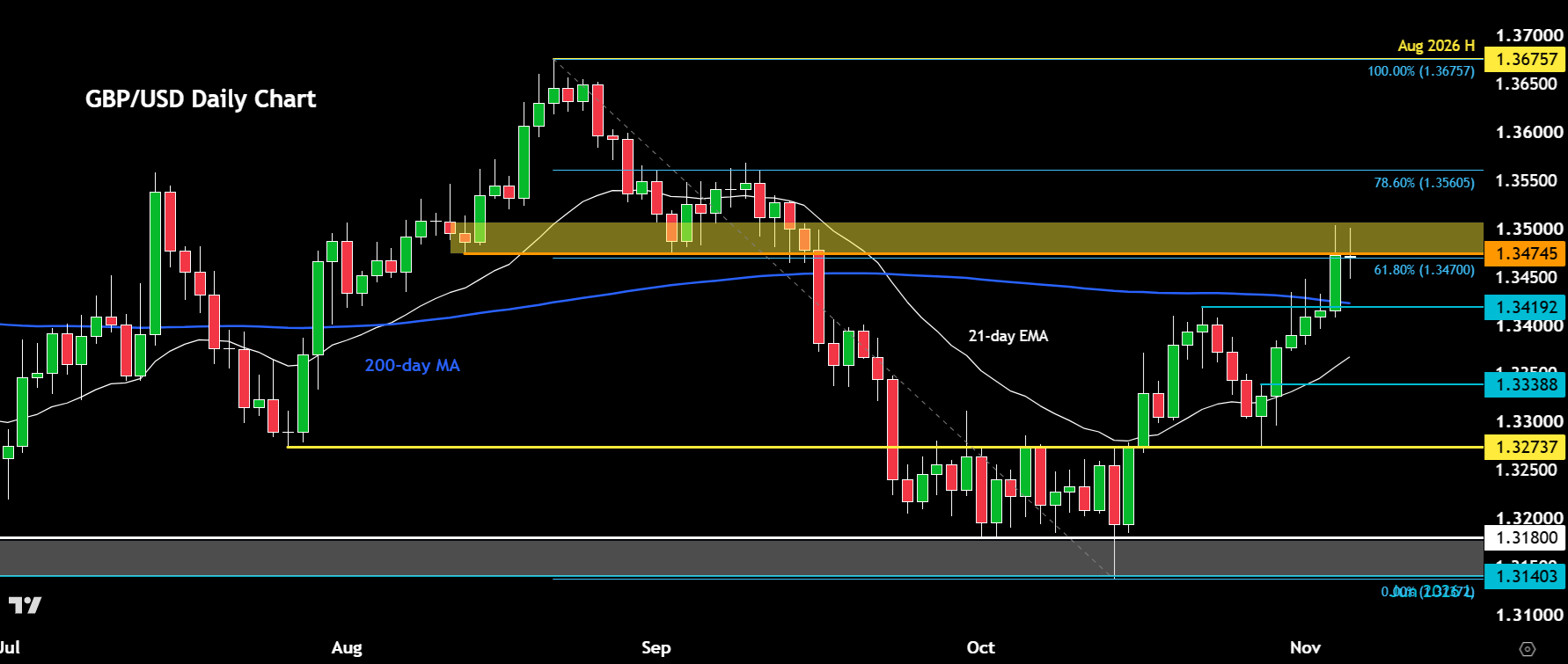
Support is seen around 1.3420, where the 200-day moving average meets prior resistance.
Given the NFP risks, it would not be surprising to see cable come under some pressure around 1.35, but the structure is bullish and dips may continue to attract GBP/USD buyers.
A failure to hold above1.3420 area on Friday could result in a correction of some sort, particularly if the US jobs report comes in stronger than expected or the dollar otherwise finds renewed support. In that case, a drop towards 1.3300, or even lower, could be on the cards.
Frequently Asked Questions
What does the Bank of England's unanimous rate hike mean for GBP/USD?
The 25 basis point increase to 4% was fully expected, but the 9-0 vote was more hawkish than the 7-2 split the market had anticipated. That has kept GBP/USD supported near 1.35, leaving Friday's US payrolls report as the next big test for cable.
What could support the US dollar this week?
A rebound in oil prices would help the greenback, as would a significant improvement in US employment data on Friday. Either could revive demand for the dollar after its post-election slide.
What could weaken the dollar further this week?
One source could be a renewed technology sell-off, given the concerns over the AI investment story. Another could be a collapse in oil prices, which would remove one of the dollar's remaining supports.
Watch GBP/USD analysis
-- Written by Fawad Razaqzada, Market Analyst | Follow Fawad on Twitter @Trader_F_R