

As the second week of February gets underway, one of the key developments has been the renewed strength in the gold market in the short term. The metal has posted two consecutive bullish sessions, gaining more than 6%, and continues to trade above the key $5,000 per ounce level. For now, buying pressure remains supported by a backdrop of still-fragile market confidence, alongside the loss of appeal in substitute assets, such as U.S. Treasury bonds, whose yield stability has coincided with a recent weakening of the U.S. dollar. If these factors persist, buying pressure in gold could remain relevant over the coming sessions.

Bond yields lose ground
At present, market probabilities suggest that the Federal Reserve will keep interest rates unchanged at 3.75% at its March 18 meeting, with an 82.2% probability, according to CME Group data. However, just a few weeks ago, the market assigned a probability above 70% that this same outlook would remain in place for the April 29 meeting. That probability has since declined to 65.2%, indicating that the scenario of higher rates for longer is no longer fully assured as the year progresses.
This uncertainty surrounding the Fed’s policy outlook has also been reflected in the behavior of the U.S. 10-year Treasury yield. After approaching the 4.3% level, yields have started to retreat and are now hovering around 4.2%, signaling a consistent short-term decline in yields.
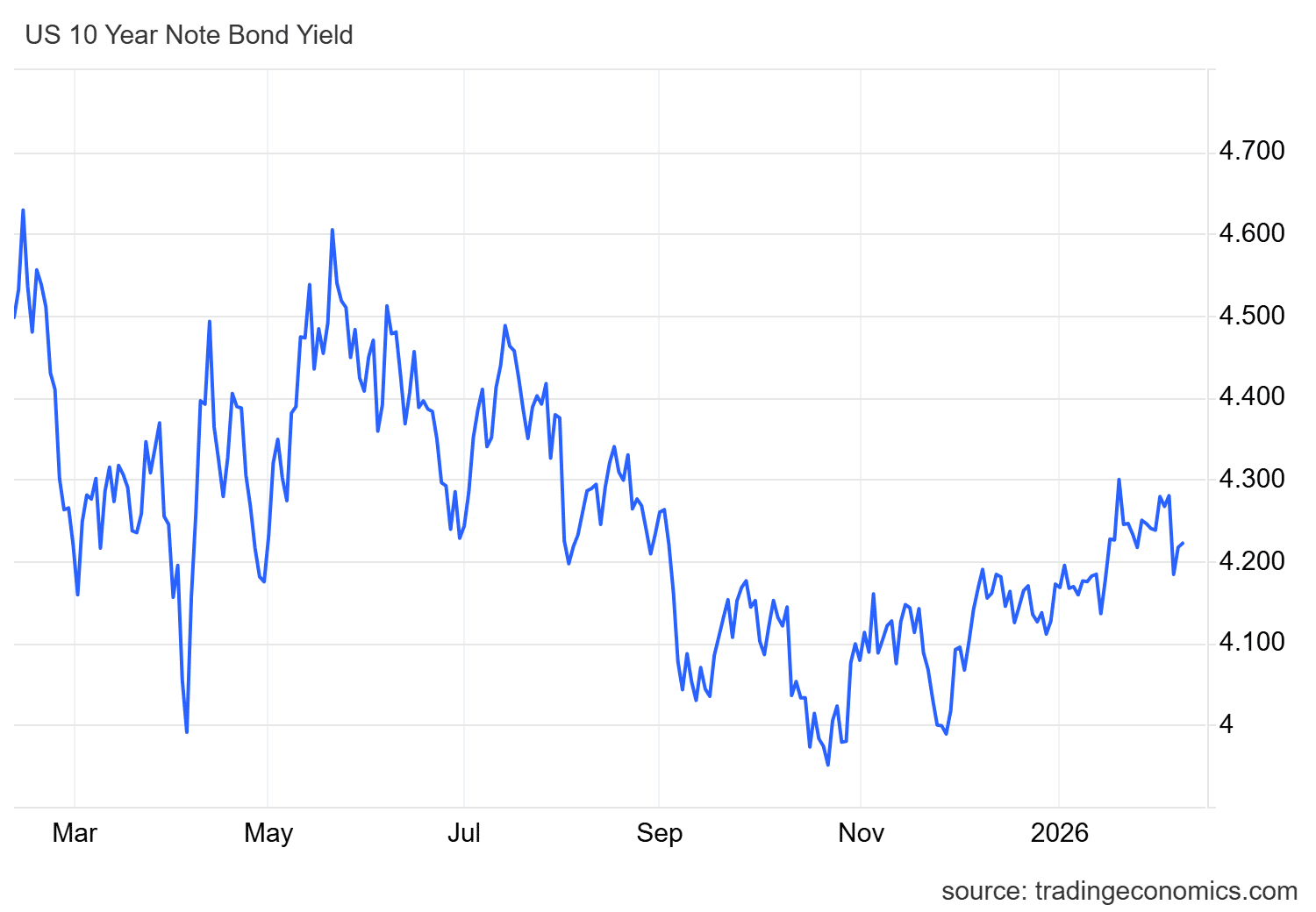
Source: TradingEconomics
This move has been significant for the U.S. dollar, as lower bond yields reduce the relative attractiveness of dollar-denominated assets. As a result, the market has begun to scale back exposure to the dollar, which is evident in the performance of the DXY index, the benchmark for dollar strength against major currencies. The index has fallen from levels near 98 toward the 96 area, highlighting a short-term loss of confidence in the U.S. currency.
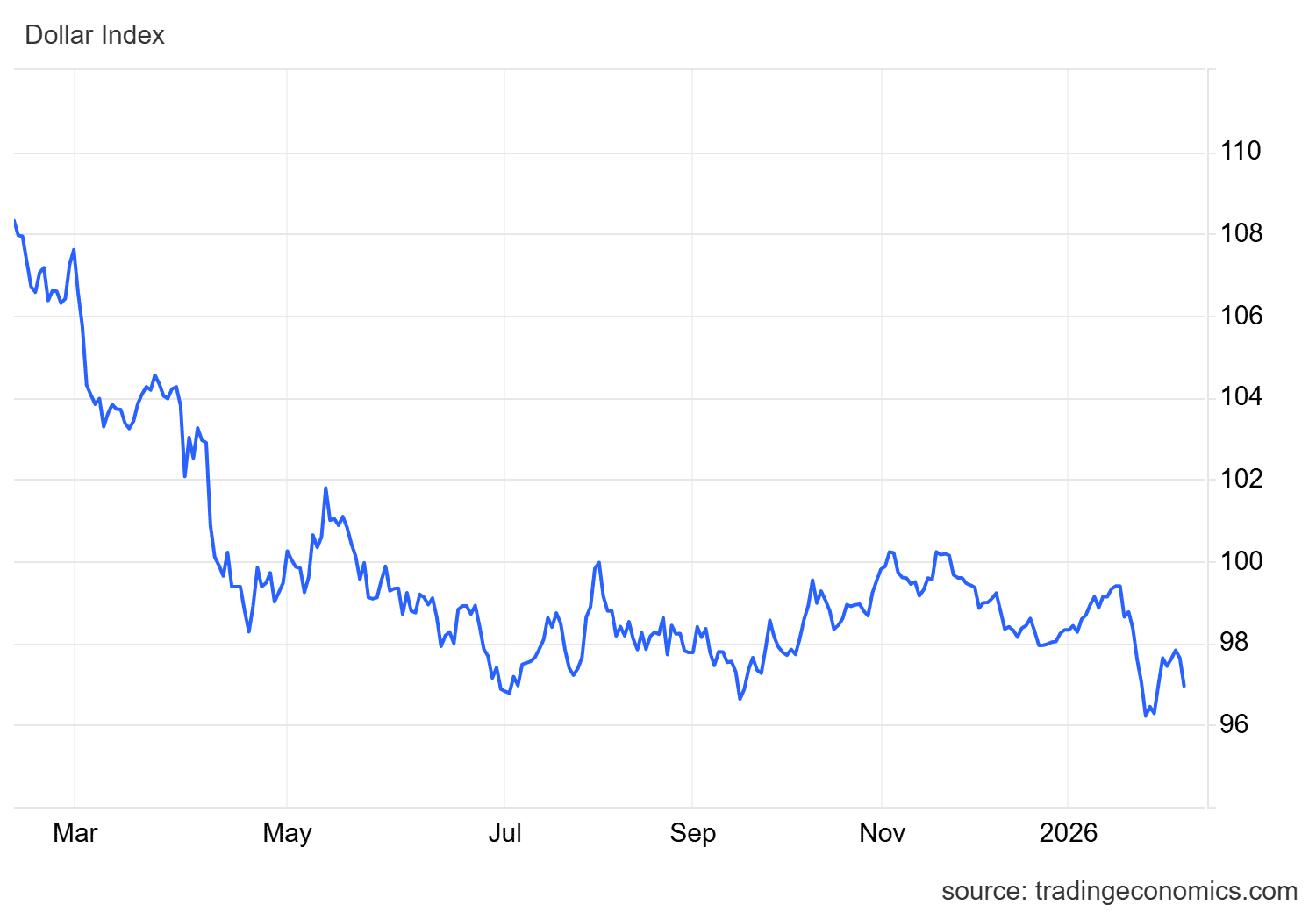
Source: TradingEconomics
Taking all of the above into account, this environment has started to favor a recovery in gold. On one hand, when the bond market loses appeal, gold tends to regain relevance as an alternative safe-haven asset. On the other, a weaker U.S. dollar generally supports gold prices, as gold is priced in dollars and a softer dollar makes it more accessible to international investors, strengthening demand perceptions.
If substitute markets continue to lose attractiveness, buying pressure in gold could continue to consolidate over the coming weeks.
Confidence remains fragile
A backdrop of weak confidence indicators typically benefits gold, as a persistent perception of risk supports demand for safe-haven assets. In this context, the Fear and Greed Index, while attempting to recover toward the 50-point area, remains in a neutral zone, failing to signal a full recovery in market confidence.
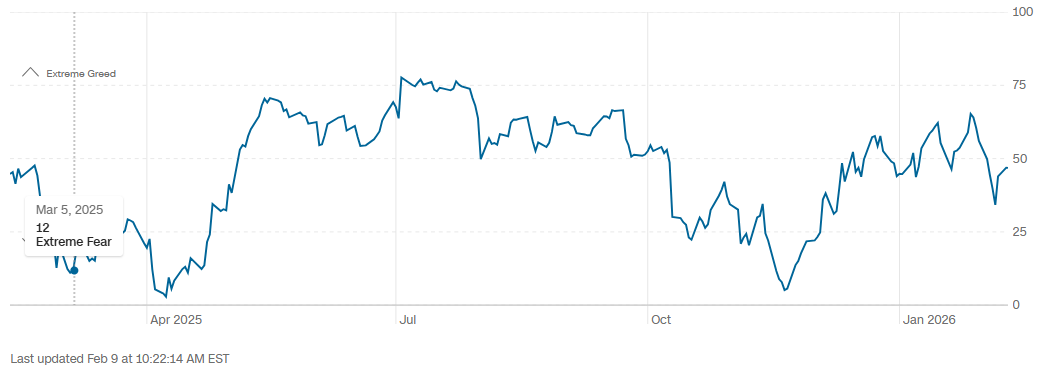
Source: CNN
As long as sentiment indicators fail to show a solid and sustained improvement, part of the market is likely to continue seeking refuge in defensive assets, such as gold. Consequently, this environment of ongoing uncertainty could continue to support meaningful buying pressure in XAU/USD in the sessions ahead.
Gold Technical Outlook
Source: StoneX, Tradingview
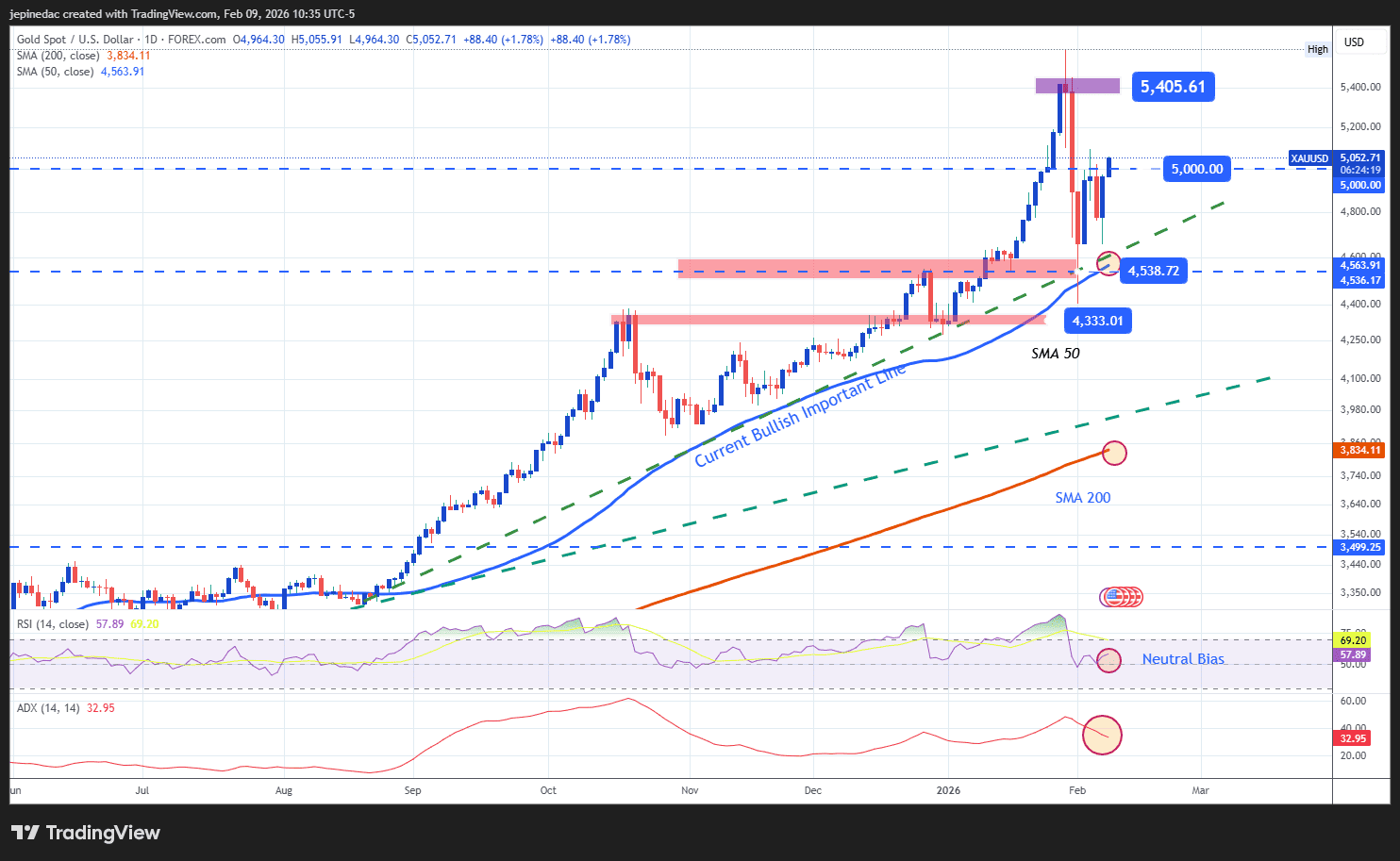
- Nothing slows the bullish trend: For several months, gold has maintained a solid bullish trend, with no downside corrections significant enough to threaten the underlying structure. As long as buying pressure holds above the $5,000 per ounce level, the uptrend is likely to remain dominant in the short term.
- RSI: The RSI continues to oscillate near the neutral 50 level, indicating a balance between buying and selling momentum over the last 14 sessions. This behavior suggests a potential phase of indecision unless a stronger directional impulse emerges.
- ADX: The ADX line has begun to decline toward the 30-point area, signaling a reduction in trend strength. If this dynamic persists, it could give way to a short-term consolidation phase.
Key levels to watch:
- $5,400 – Crucial resistance: A psychological level near record highs. A sustained move toward this area could reignite dominant buying pressure and allow the bullish trend to extend in the coming weeks.
- $5,000 – Nearby barrier: The main psychological level, which in recent sessions has generated neutral price action. As long as price fails to move decisively away from this zone, a short-term sideways range may develop, reinforcing an indecisive environment.
- $4,538 – Critical support: An area aligned with recent lows, the primary bullish trendline, and the 50-period simple moving average. A sustained break below this level would put the current bullish structure at risk and could open the door to a more dominant bearish bias in the sessions ahead.
Written by Julian Pineda, CFA, CMT – Market Analyst
Follow him on: @julianpineda25