

As the week comes to an end, the USD/JPY has started to consolidate a bullish bias in favor of the U.S. dollar, with a short-term gain of around 0.4%. For now, buying pressure persists as no significant changes are expected in the stance of the Bank of Japan (BoJ). The lack of signals regarding potential rate hikes keeps the yen under pressure, preventing it from achieving a consistent recovery. As long as the BoJ shows no willingness to adjust its monetary policy, the dollar is likely to maintain an advantage over the Japanese currency in the short term.

What to Expect from the Bank of Japan’s Decision
The BoJ’s rate decision is scheduled for September 18–19, and the consensus points to keeping the current 0.5% level unchanged. The central bank believes that although Japan’s economy has partially withstood the effects of U.S. tariffs, risks of economic slowdown still persist in the coming months.
Regarding the start of a cycle of higher rates, there is no consensus. Some suggest it could arrive toward the end of 2025 or early 2026. For this reason, the comments accompanying the upcoming decision will be crucial in confirming or dismissing that possibility.
From a macroeconomic perspective, inflation in Japan has shown a downward trend. In January it stood at 4.0%, but by July it had fallen to 3.1%, moving closer to the 2.0% target. This decline reduces the margin for an immediate rate hike, as monetary tightening could undermine economic recovery, something the bank aims to protect.
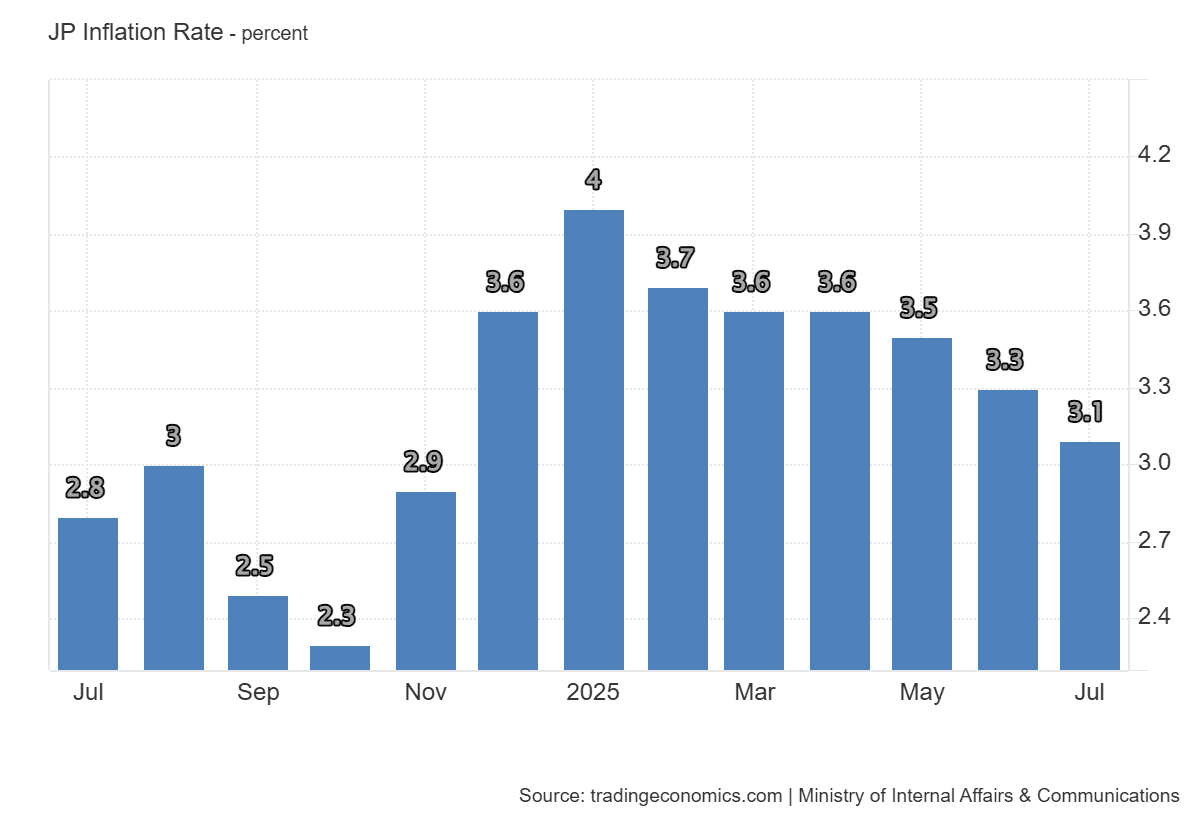
Source: TradingEconomics
Still, internal voices warn of risks. The former Vice Minister of Finance noted that current rates are too low and have contributed to the yen’s weakness. This depreciation makes imports more expensive, potentially creating additional inflationary pressures. If this effect materializes and begins to show up in the data, the BoJ would need to consider rate hikes to avoid an acceleration in imported inflation.
In conclusion, the bank faces a dilemma: keep rates low to support growth or tighten policy to curb yen weakness and contain inflation risks. This may become much clearer once comments are released after the BoJ’s upcoming decision. In the meantime, the wide gap between Japan (0.5%) and the U.S. (4.5%) reinforces the attractiveness of dollar-denominated assets over yen assets. This differential serves as a structural barrier to yen appreciation in the short term, keeping buying pressure on USD/JPY.
Is the U.S. Dollar Recovering?
Amid ongoing discussions about lower rates in the U.S. and inflation data that came in as expected, the dollar had been experiencing a steady downtrend. However, in recent days it has started to show signs of recovery. The DXY, which measures its strength against a basket of currencies, is moving back toward the 98-point level, reflecting renewed confidence in the greenback.
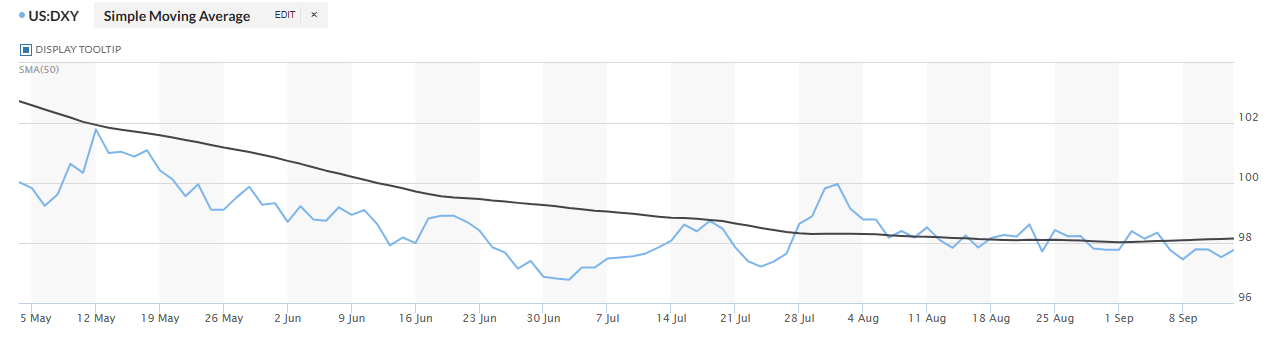
Source: MarketWatch
This movement suggests an exhaustion of selling pressure on the dollar. If it continues, it could consolidate a neutral-to-bullish environment until the Fed’s meeting on September 17. This recovery limits the yen’s ability to advance and strengthens buying pressure on USD/JPY, which could intensify in the sessions ahead.
USD/JPY Technical Forecast

Source: StoneX, Tradingview
- A New Trend Emerges: Since late April, USD/JPY has been posting higher lows, forming a bullish trendline. This movement has repeatedly tested the 200-period simple moving average, highlighting its role as a technical barrier. As long as buying pressure holds, the pair could reach new highs, confirming the consolidation of a solid uptrend in the short term.
- RSI: The RSI line maintains a positive slope and sits above the 50 level, confirming that buyers remain in control. If it continues to rise steadily, bullish pressure could intensify, further consolidating the pair’s upward bias.
- MACD: The MACD histogram remains near the zero line but has started to oscillate above it. This indicates that the strength of short-term moving averages is beginning to lean toward greater buying momentum.
Key Levels:
- 148.679 – Main Resistance: Aligns with the 200-period simple moving average and stands as the most important barrier for buyers. A clear and sustained break above this level would reinforce the bullish trend and open the way for broader recovery.
- 147.557 – Nearby Support: Level where the Ichimoku cloud and the 50-period moving average converge. As long as the price remains above, a neutral short-term environment could be maintained.
- 146.367 – Final Support: Corresponds to recent lows. A sustained drop to this area would put the current uptrend at risk and open the door to a more relevant bearish bias.
Written by Julian Pineda, CFA – Market Analyst
Follow him: @julianpineda25