

Although some cryptocurrencies managed to post a consistent recovery at the start of 2026, the crypto market as a whole has begun to face a neutral environment, as U.S. employment data fueled renewed strength in substitute assets, such as the U.S. dollar. This backdrop has reduced the short-term appeal of cryptocurrencies, particularly as the recovery in confidence indicators has remained limited. Taken together, these factors may continue to sustain an environment of indecision for cryptocurrencies over the coming trading sessions.

Macroeconomic Dynamics
The close of the week was particularly relevant due to the release of U.S. Non-Farm Payrolls (NFP) data. While markets had anticipated the creation of around 66,000 jobs in December, the official figure came in at 50,000 new jobs. Although the data undershot expectations, it did not point to a significant slowdown in the U.S. labor market.
What matters most about this release is its impact on Federal Reserve policy expectations for the first months of 2026. Currently, market-implied probabilities suggest—with readings near 95%, 71%, and 56.3%—that the central bank will maintain a neutral interest rate stance throughout the first quarter, reducing expectations for near-term rate cuts.
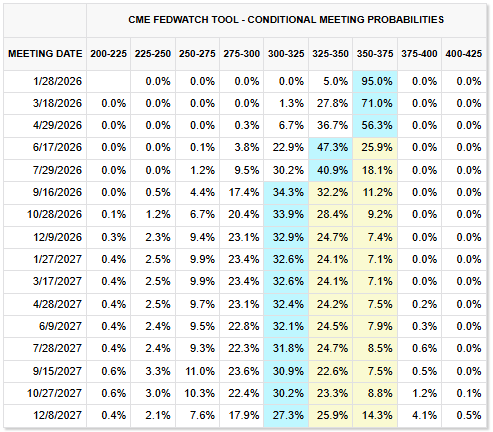
Source: CMEGROUP
This scenario is important because risk assets, such as cryptocurrencies, typically benefit from low interest rate environments, which reduce financing costs and stimulate risk appetite. However, recent data failing to support rate cuts may be limiting that appetite and redirecting flows toward markets that benefit from neutral rates, such as the Dollar market. Increased greenback attractiveness—often viewed as a substitute asset relative to cryptocurrencies like Bitcoin—could undermine sustained demand for crypto and reinforce an indecisive or weak market environment in the sessions ahead.
Bitcoin Versus Other Markets
Bitcoin has begun to show a loss of correlation with the U.S. dollar. At present, the correlation coefficient over the last 50 sessions is once again approaching negative territory, below the zero level. This suggests that the recent recovery in the U.S. Dollar Index has coincided with a loss of short-term momentum in Bitcoin. If this negative correlation becomes more consistent, it could reinforce this inverse relationship over the coming sessions. It is important to remember that correlation coefficients can change over time.
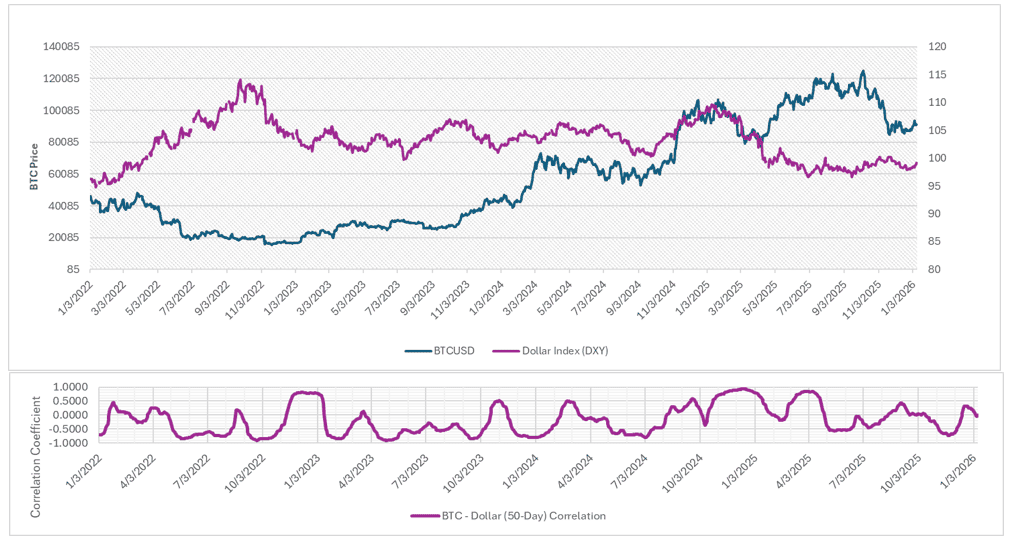
Source: Data – TVC, StoneX, Tradingview
The behavior of both assets suggests that U.S. dollar appeal has strengthened, while Bitcoin has started to lose traction. Given that BTC serves as the benchmark asset for the crypto market, this dynamic could reflect a broader trend affecting the rest of the cryptocurrency space. As substitute assets continue to gain relevance in the short term, risk appetite within the crypto market may keep declining, reinforcing a generalized phase of indecision.
Confidence Declines Again
The Crypto Fear & Greed Index has posted another decline, hovering around 41 points and returning to the boundary between “neutral” and “fear.” This move reflects a renewed drop in confidence following the rebound seen during the first days of 2026, suggesting that sentiment indicators have yet to establish a solid recovery.
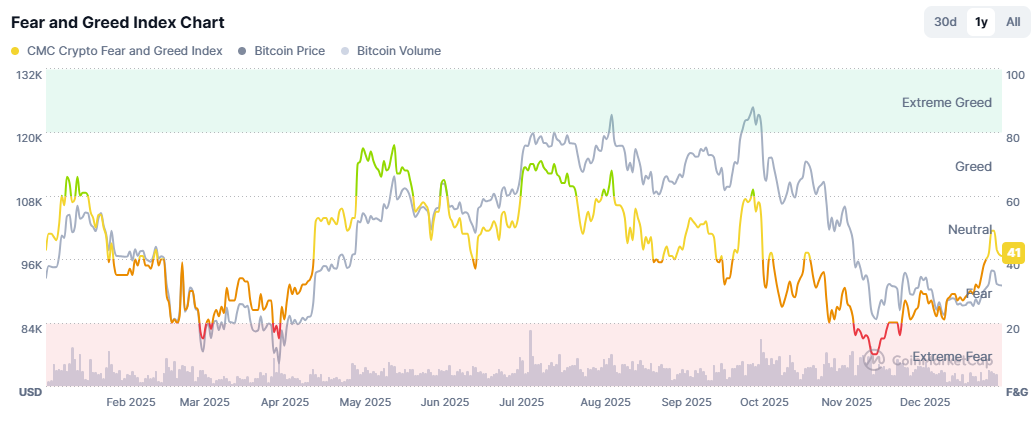
Source: Coinmarketcap
As long as the index fails to stabilize at least within neutral territory, it will be difficult for a sustained bullish bias to take hold and drive solid demand for cryptocurrencies such as Bitcoin. The persistence of weak confidence may continue to weigh on overall crypto demand and reinforce a neutral tone over the coming trading sessions.
Written by Julian Pineda, CFA, CMT – Market Analyst
Follow him on: @julianpineda25