

During the last trading session, the USD/JPY pair posted a steady gain of around 0.5%, favoring the U.S. dollar over the Japanese yen in the short term. For now, buying pressure has returned to the market following comments from the Federal Reserve, which indicated that a further rate cut later this year may not be fully confirmed. This stance has reactivated demand for the dollar, preventing the yen from recovering ground. As long as this expectation of lower odds for rate cuts persists, buying pressure on USD/JPY is likely to remain relevant.

What Did the Federal Reserve Decide?
In its latest monetary policy decision, the U.S. central bank announced a 0.25% rate cut, setting the new range at 3.75% to 4.00%. It also stated that it will end the balance sheet reduction process starting December 1, meaning the Fed will begin reinvesting maturing bonds to keep its holdings stable.
However, what truly caught the market’s attention was the statement that future rate cuts are not pre-set and will depend on the economic data released in the coming weeks. As a result, the probability of another rate cut at the December 10 meeting has decreased, while the likelihood of the Fed holding rates steady in the short term has increased.
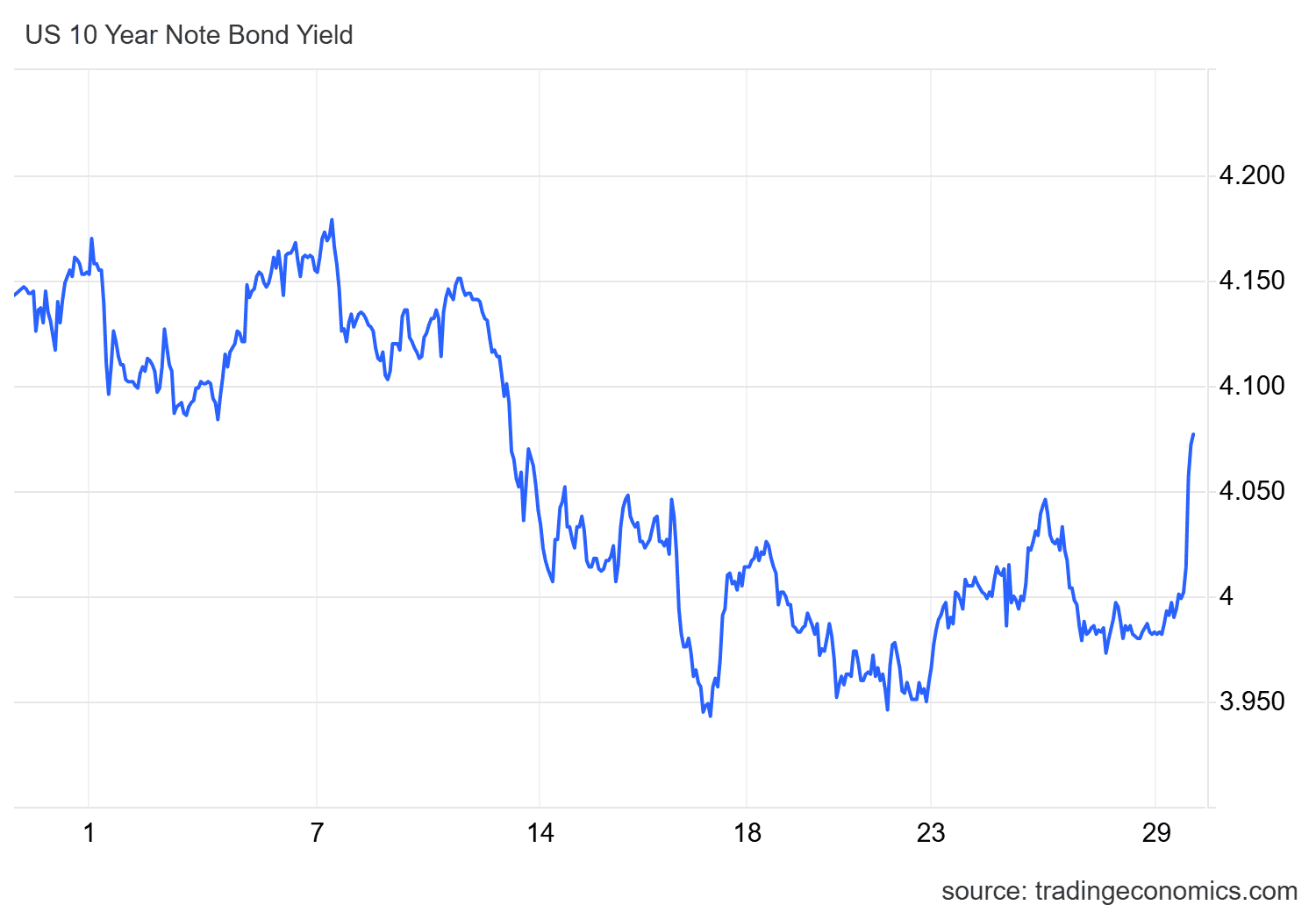
This new outlook has driven yields on 10-year U.S. Treasury bonds higher, reaching around 4%, marking their largest increase in several weeks. The rise in yields, triggered by the Fed’s comments, has improved the appeal of dollar-denominated investments, particularly in fixed-income assets, thereby supporting renewed demand for the U.S. dollar. This development has directly contributed to maintaining short-term buying pressure on the USD/JPY pair.
Source: TradingEconomics
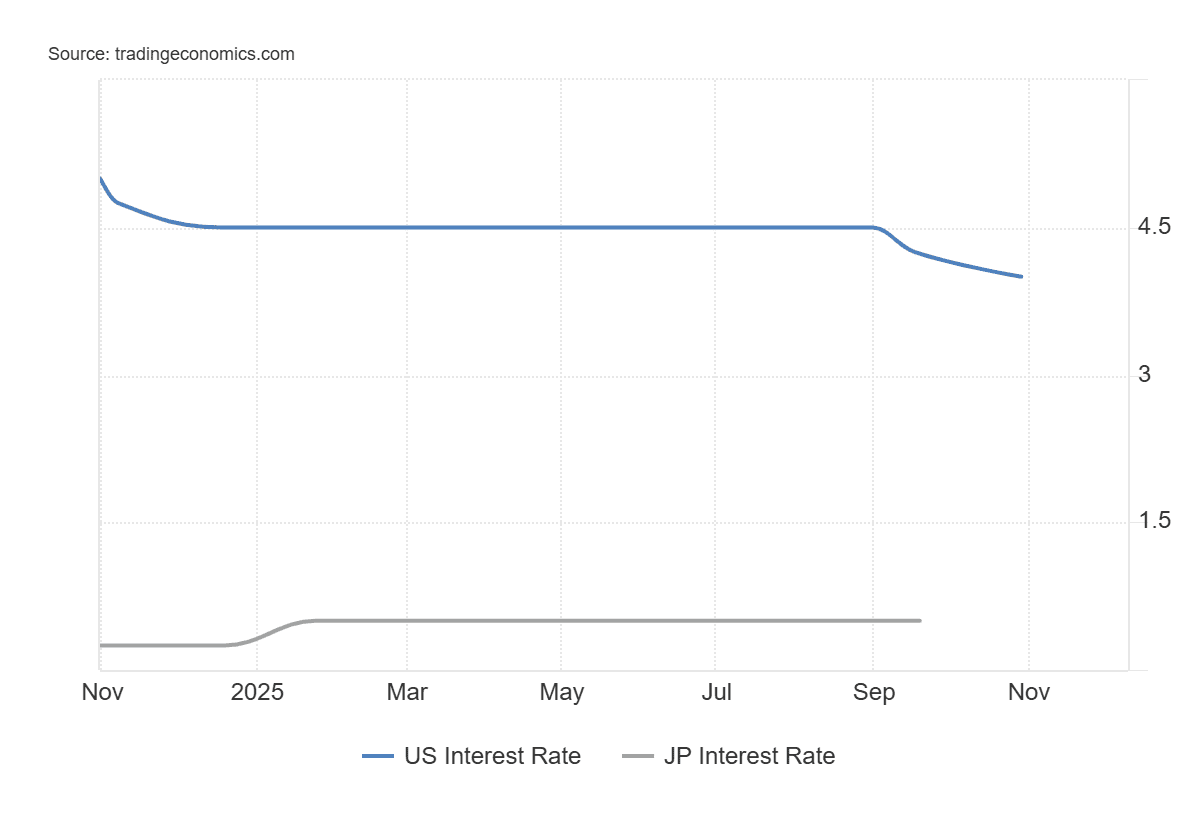
Meanwhile, despite the Fed’s rate cut to the new 4% range, U.S. interest rates remain significantly higher than those of the Bank of Japan, which holds its benchmark rate near 0.5%. As long as the Fed adopts a less dovish stance, this interest rate differential between the two countries will remain wide. This dynamic continues to make U.S. Treasury bonds more attractive than Japanese fixed-income assets, generating capital flows toward the dollar and limiting the yen’s upside potential.
Source: TradingEconomics
Consequently, if this rate divergence between the Fed and the Bank of Japan remains elevated, steady demand for U.S. dollars could prevent the yen from recovering and sustain bullish pressure on USD/JPY in the coming sessions.
USD/JPY Technical Outlook
Source: StoneX, Tradingview
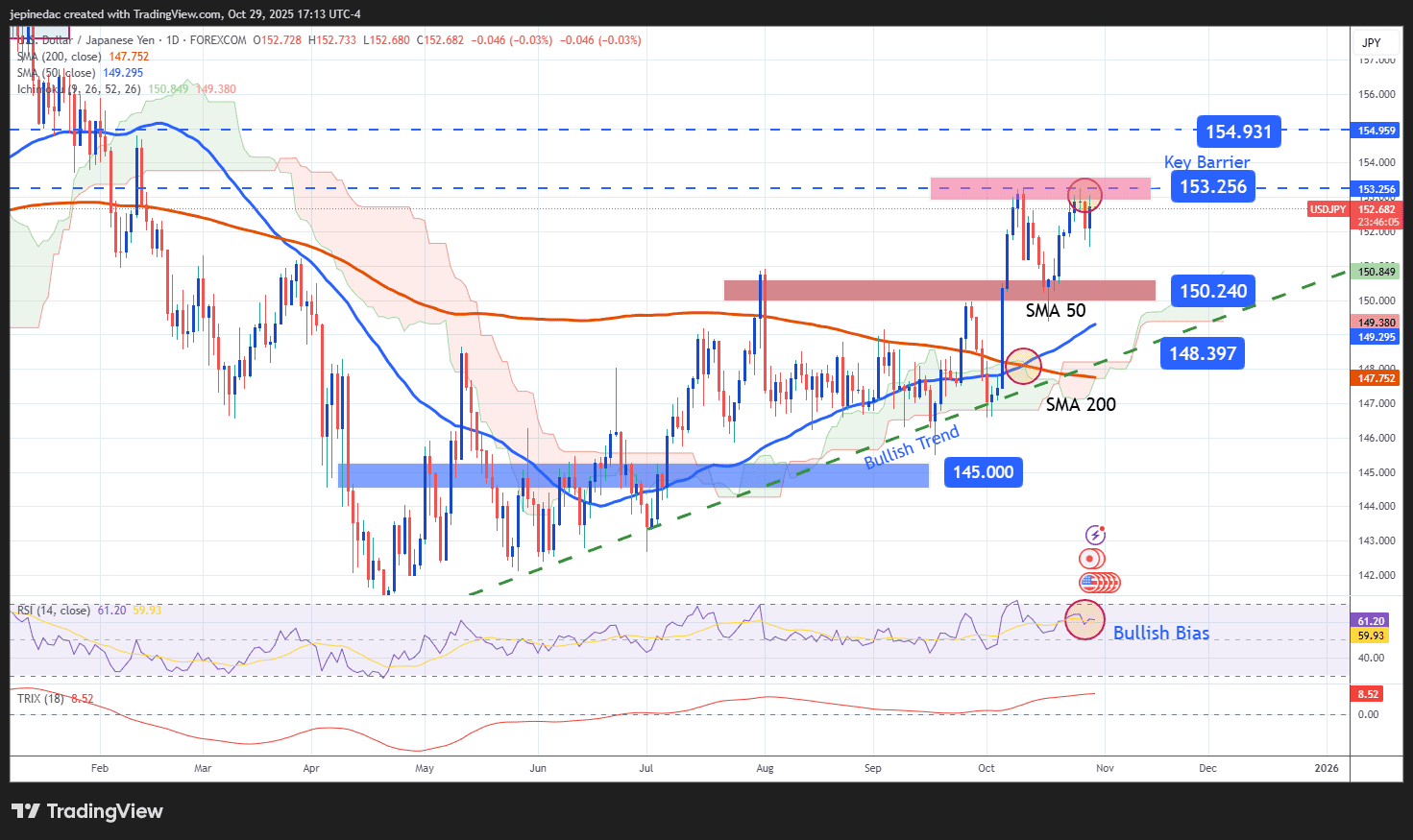
- Uptrend Gains Relevance: Recent USD/JPY price movements continue to respect an ascending trendline that has been in place for several weeks. So far, the recent pullbacks have not been strong enough to threaten this structure, meaning the bullish trend remains the dominant technical pattern. If buying pressure stays firm, the trend could become more aggressive in the medium term.
- RSI: The RSI line remains above the 50 level, showing that bullish momentum continues to dominate the average of the last 14 trading sessions. If the RSI keeps rising, it could indicate sustained buying pressure for the USD/JPY in the short term.
- TRIX: The TRIX indicator remains above the zero line, suggesting a steady bullish strength in exponential moving averages. If the TRIX line continues to climb, it would further confirm a dominant uptrend in the broader market outlook.
Key Levels:
- 153.256 – Key Resistance: This level corresponds to recent highs in USD/JPY and stands as the most significant short-term barrier. A sustained breakout above it could trigger a stronger bullish trend in the coming sessions.
- 150.240 – Near-Term Support: This zone represents a recent retracement area, where price indecision could emerge. If the pair continues to fluctuate around this level, a short-term sideways channel may develop.
- 148.397 – Major Support: This level aligns with the 200-period moving average and the ascending trendline. A break below this zone would threaten the current bullish structure and could signal the start of a bearish correction in the medium term.
Written by Julian Pineda, CFA – Market Analyst
Follow him on: @julianpineda25