

The USD/MXN continues to trade under consistent upward pressure, and over the past four trading sessions, it has maintained a steady appreciation of more than 0.8%, reinforcing a persistent bullish bias in the market. For now, as the Bank of Mexico’s decision approaches, peso weakness remains in place. If the central bank confirms a low interest rate outlook, selling pressure on the peso could persist, potentially leading to further strength in USD/MXN in the coming sessions.

What to Expect from Banxico’s Decision
Today, November 6, the Bank of Mexico (Banxico) will announce its monetary policy decision. Once again, expectations suggest that another rate cut could be announced, lowering the benchmark rate from the current 7.5% to 7.25%. However, what will truly matter is whether Banxico maintains this rate-cut outlook in its post-decision commentary, as that could trigger a more pronounced weakness in the Mexican peso in the short term.
Currently, Mexico’s interest rate remains significantly higher than that of the U.S. Federal Reserve (Fed), whose reference level stands near 4%. With the potential adjustment, Mexico would move to a 7.25% rate, maintaining a wide interest rate differential between the two central banks. This spread has been one of the key factors preventing a deeper depreciation of the peso against the U.S. dollar in recent weeks.
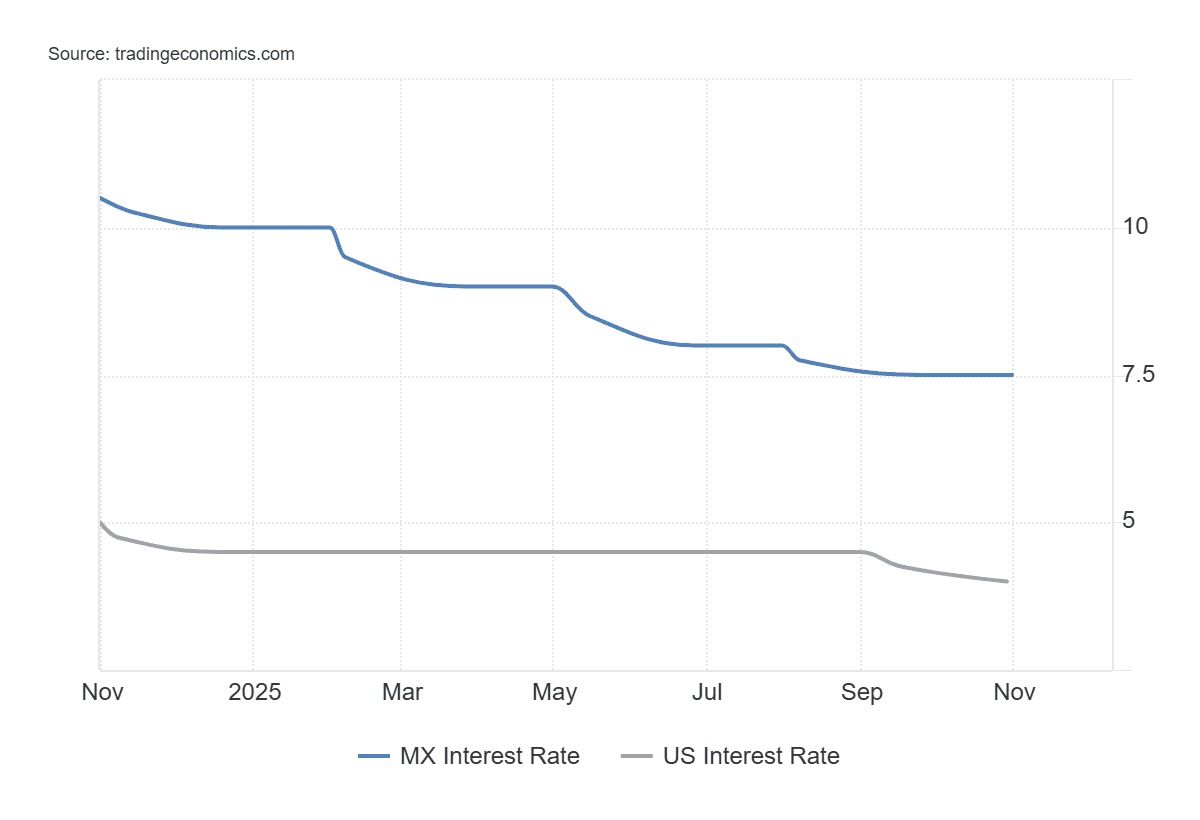
Source: TradingEconomics
However, it is important to note that the Federal Reserve has recently adopted a more neutral stance regarding future rate cuts. According to the CME Group’s probability model for the upcoming December meeting, there is currently a 72.86% chance of a 0.25% rate cut, down from 84.8% at the start of October. This suggests that there is no full consensus for a December cut, especially as the Fed continues to issue cautious statements dependent on incoming economic data.
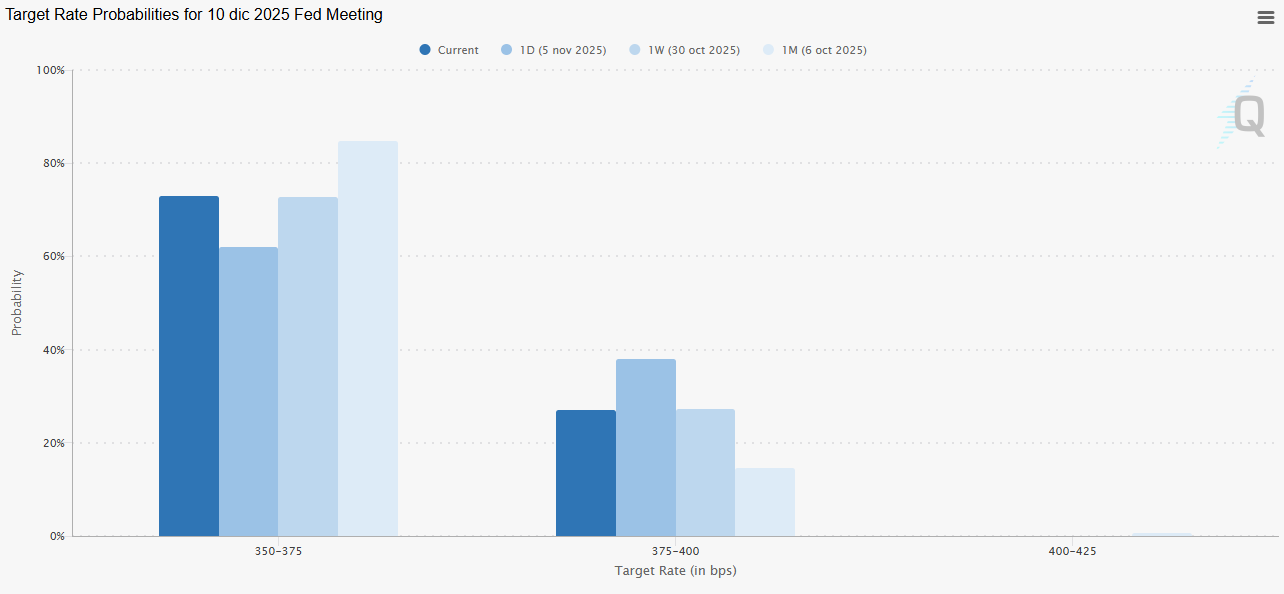
Source: CMEGROUP
Given this backdrop, if the Bank of Mexico continues to lower rates while the Federal Reserve keeps them unchanged, the rate differential that has supported the peso’s strength for most of the year could narrow over time, potentially eroding investor confidence in peso-denominated assets. This could translate into stronger demand for U.S. dollars, driven by the monetary policy divergence between the two central banks. Therefore, if Banxico adopts a more dovish tone today, prioritizing economic growth, the peso’s appeal could weaken, leading to increased buying pressure on USD/MXN in the coming sessions.
Is the U.S. Dollar Still Strong?
Over the past week, the U.S. dollar has shown renewed strength in its short-term movements, as reflected in the performance of the DXY index, which measures the dollar’s value against a basket of major currencies. The DXY has remained above the 100-point level, reaffirming that the bullish bias remains dominant in the market.
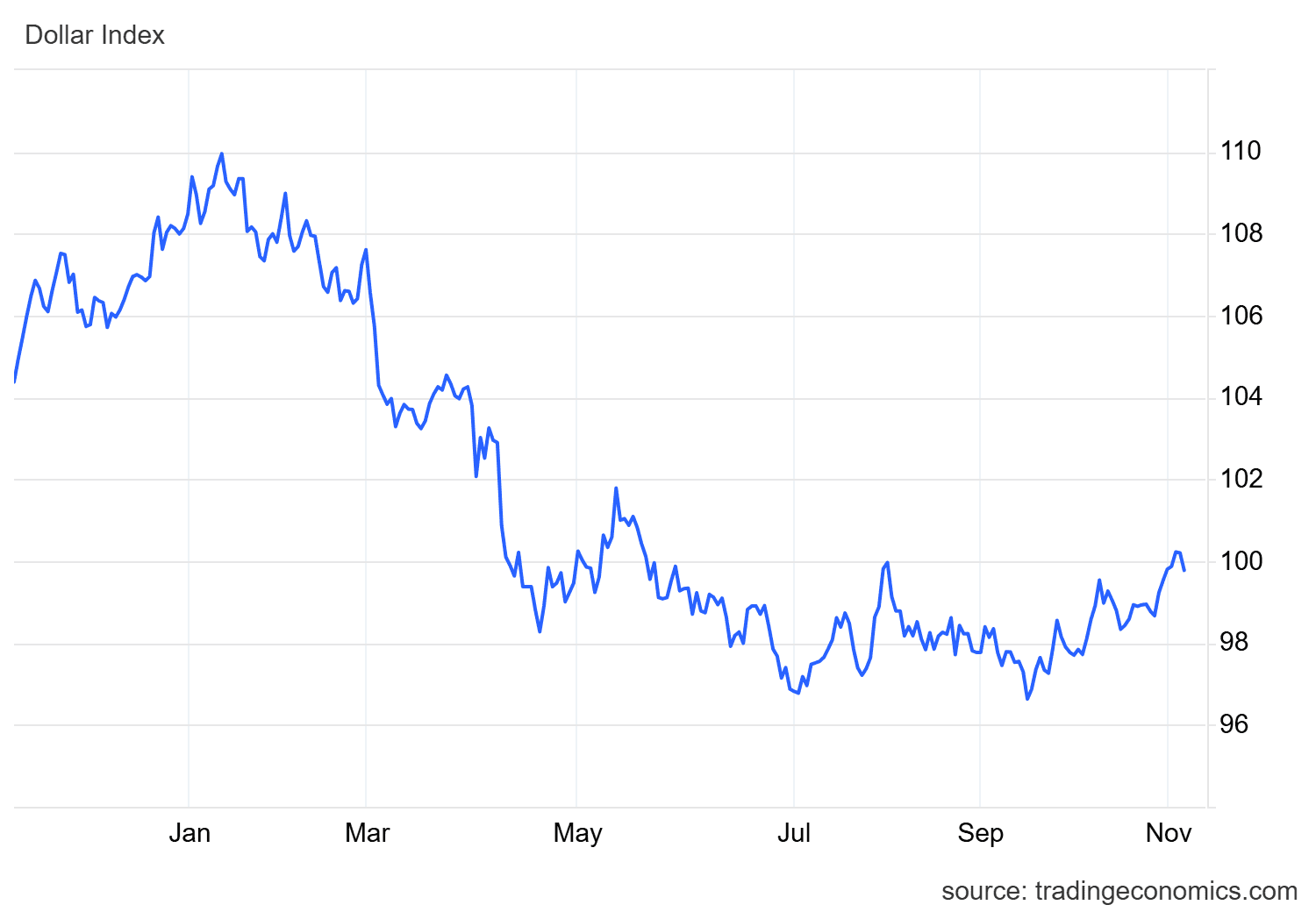
Source: TradingEconomics
This renewed confidence in the U.S. dollar suggests that short-term demand for the currency remains firm. As long as this trend continues, the Mexican peso may struggle to regain ground, allowing sustained buying pressure on the USD/MXN in the short term.
Technical Outlook for USD/MXN

Source: StoneX, Tradingview
- A possible bullish channel begins to emerge: Since mid-September, the USD/MXN has been forming higher lows, opening the possibility of a consistent bullish channel developing in price movements. As long as buying pressure remains above the 100-period simple moving average, this ascending channel could gain greater technical relevance in the short term, paving the way for a more defined bullish structure.
- RSI: The RSI indicator line shows an upward slope, with readings above the neutral 50 level, indicating that buying momentum has started to dominate. If the RSI continues this upward trend, it could support a stronger bullish pressure in the coming sessions.
- MACD: The MACD histogram has begun to show sustained movements above the zero line, suggesting that buying strength remains active in short-term moving averages. As long as this pattern continues, bullish pressure is likely to remain relevant in the market.
Key Levels to Watch:
- 18.91 – Main resistance: This level corresponds to a retracement area observed in August and aligns with the 23.6% Fibonacci retracement. Price movements breaking above this level could pave the way for a more aggressive bullish trend in the coming sessions.
- 18.50 – Nearby barrier: This area coincides with the 50-period moving average and the Ichimoku cloud. As long as the price remains near this zone, a technical neutrality may persist, potentially forming a short-term sideways range.
- 18.22 – Relevant support: This level aligns with the most significant retracement area of recent weeks. A break below this zone, with sustained bearish movements, could restore the broader downtrend that dominated much of the year and lead to a stronger bearish bias in the short term.
Written by Julian Pineda, CFA – Market Analyst
Follow him on: @julianpineda25