

Talking Points:
- While the S&P 500 has pushed to record highs, sentiment as measured by the CNN Fear & Greed Index suggests a contrarian concern which may be weighing on crypto
- Gauging various market correlations to BTCUSD, it seems that the leading coin may be most sensitive to inflation expectations – but that can change with key event risk
- Favorable regulatory changes and broader capital acceptance by major financial institutions speaks to deeper TradFi integration
The crypto market levelled out this past week following a two-week tumble from record highs for the likes of Bitcoin. The bounce seems to have staved off a more progressive bearish reversal for now, but the fundamental lead on the market is left to significant ambiguity. At the same that Bitcoin has attempted to form a base, risk benchmarks have extended their climb to fresh cycle highs, the Dollar has struggled but inflation figures have offered a mixed picture. For BTC and its most significant peers to re-establish trend, we likely need a clear bead from one of these key lines of influence for the market.
CNN Fear & Greed Index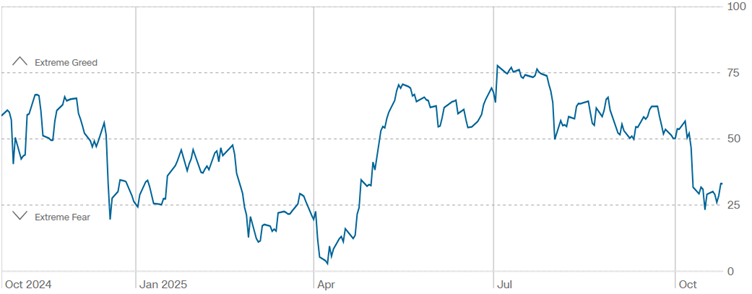
Source: CNN.com
The Prevailing Fundamental Driver
Until recently, the crypto market has been drawing most heavily on its role as a disruptive speculative benchmark. The correlation between BTCUSD and the S&P 500 (as a pacer for risk appetite) had sustained a strong positive relationship. That alignment has significantly flagged over the past few weeks. Considering that other risk-leaning assets (eg global equities, emerging markets, high yield fixed income) have conformed to the US indices’ advance, it doesn’t seem that there is uncertainty behind systemic risk appetite – though the CNN Fear & Greed Index does suggest some measure of contrarian pressure. While there has been a gradual adoption of crypto into the mainstream financial space, it is unlikely that crypto has dislodged itself from the speculative ebb and flow. We likely are just awaiting a more definitive drive – with a greater sensitive to meaningful unwind.
Chart of BTCUSD Overlaid with S&P 500 and 20-Day Correlation Coefficient (Daily)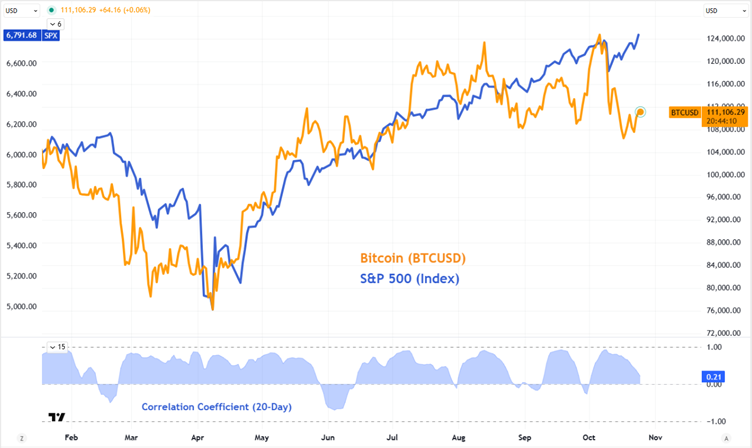
Source: TradingView
A significantly more pointed correlation for Bitcoin lately is its alignment to timely inflation measures – below we see it correlated to US 10-year breakeven inflation rates. There were a slew of inflation readings this past week including the September CPI update, delayed by the federal government shutdown. While headline inflation cooled slightly, it was still well above the Fed’s target and core inflation accelerated to match its highest year-over-year reading since May 2024. Combined with the elevated forecast for price pressures through measures like the University of Michigan consumer confidence survey and New York Fed’s SCE, there is charge for this novel inflation hedge – particularly as the Dollar struggles and Gold finds itself stretched to extremes. The FOMC rate decision this week should put a finer point on inflation expectations and the digital market’s appeal as an economic hedge.
Chart of BTCUSD Overlaid with US 10-Year Breakeven Inflation Rate and 20-Day Correlation Coefficient (Daily)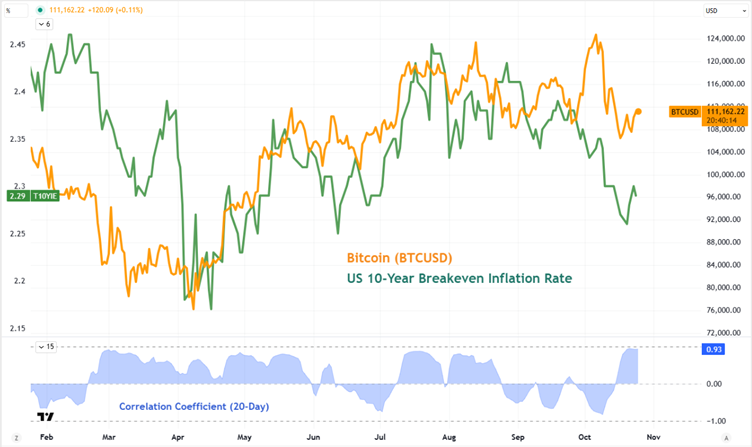
Source: TradingView
While its short-term correlation may have slackened, the crypto market’s general three month congestion looks to draw a similar levelling to the DXY Dollar Index. The broader measure of the benchmark currency offers one of the better representations for fiat demand. Should the Greenback commit to a strong recovery or resume its bearish course wholeheartedly, it is likely that BTCUSD will draw from the momentum. The FOMC rate decision is the most capable event for dictating a committed move for the Dollar, but it is possible that such a move comingles with risk trends or deviates from the underlying appetite for traditional currency.
Chart of BTCUSD Overlaid with Inverted DXY Dollar Index and 20-Day Correlation Coefficient (Daily)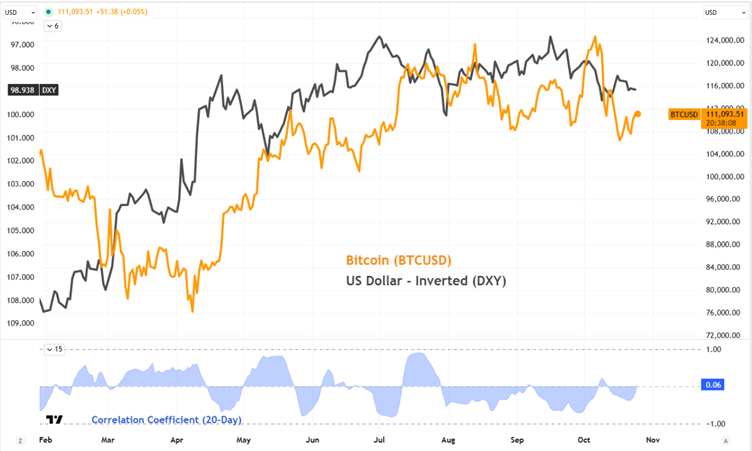
Source: TradingView
Comparable but Relative Market Volatility
Implied volatility generally reflects a market’s relative capacity for volatility when provoked by effective fundamental catalysts. The DVOL crypto market implied volatility index has followed the same trajectory as its major asset counterparts this past week, but it remains notably elevated relative to more traditional markets like emerging markets, equities and of course Treasuries. The exception is gold which experienced extreme volatility this past week in a correction from record highs.
Chart of Gold, Bitcoin, Emerging Market, S&P 500 and Treasury Implied Volatility (Daily)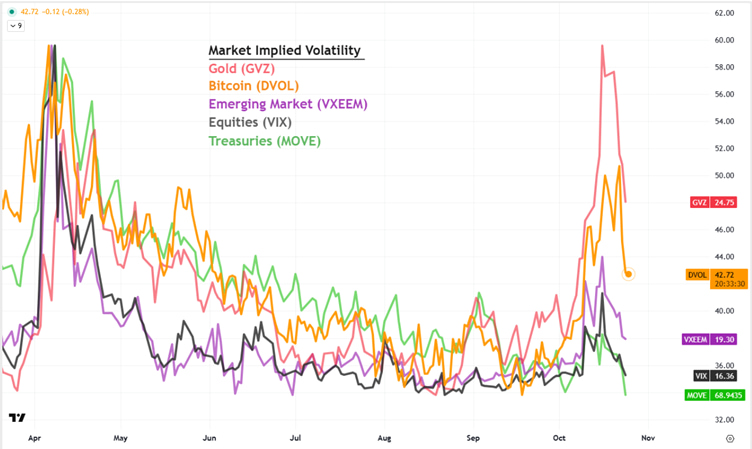
source: Tradingview
Regulatory and Traditional Finance Shifts
From the systemic and persistent market influences to the foundational, there have been a few important headlines this past week that should be considered for its reflection of the systemic adoption of the crypto market into the traditional financial space. It was reported late into the week that US President Donald Trump would select Michael Selig, chief council of the CFTC’s crypto task force, to take up the mantel as the chair of the Commodity Futures Trading Commission. This move adds to the crypto supporting drive by the administration alongside policy like the GENIUS and CLARITY acts aimed at making the United States a leader in cryptocurrency.
Meanwhile, it was also reported that top financial players JPMorgan would allow institutional clients to post Bitcoin and Ethereum as collateral by the end of the year – reversing what seemed to be an underlying scepticism around the market. The more fundamental adoption we see of the market by major institutions and inclusion into the traditional financial space, the more robust the bullish trend will become. At the same time, the volatility that has appealed to speculators will also bleed off, leading to a less bombastic level of activity.
-- Written by: John Kicklighter, Global Head of Content