




Forex Friday: DXY and USD/CAD in focus
In this week’s edition, we discuss the dollar and its impressive rally and the Canadian dollar.
Share this:
Welcome to Forex Friday, a weekly report in which we discuss selected currency themes mainly from a macro viewpoint, but we also throw in a pinch of technical analysis here and there. In this week’s edition, we discuss the dollar and its impressive rally and the Canadian dollar.
Dollar hits highest since 2002
There was a brief sell-off on the dollar in mid-week when the Fed Chair Jay Powell started speaking at the FOMC press conference. Powell confirmed that “75bps isn’t something the FOMC is actively considering,” but that fell on deaf ears as the greenback surged back higher on Thursday, before consolidating on the back of a mixed US jobs report on Friday. Judging by the dollar’s reaction, it doesn’t seem like the markets are taking Powell seriously, as my colleague Joe Perry commented in his post FOMC reaction. Investors are now looking ahead to next week’s release of US CPI. In March, consumer prices raced to a fresh multi-decade high of 8.5% from 7.9% y/y print that had been recorded in February.
Year-to-date, the greenback has now risen more than 8% against a basket of foreign currencies. It has done particularly well against the yen, rising some 13% to repeated multi-decade highs versus the Japanese currency. European currencies have also suffered at the expense of the world’s reserve currency. The pound, euro and franc have all dropped around 7-8 percent each.
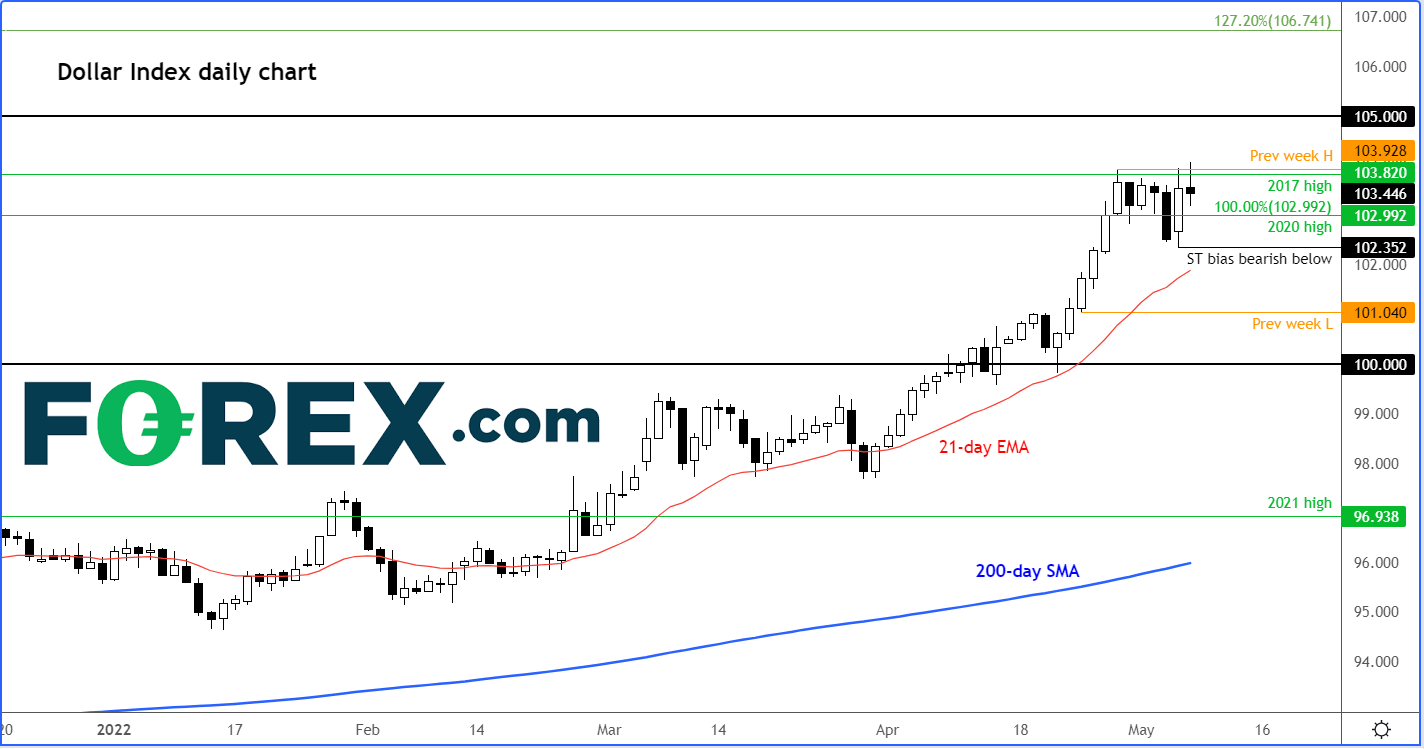
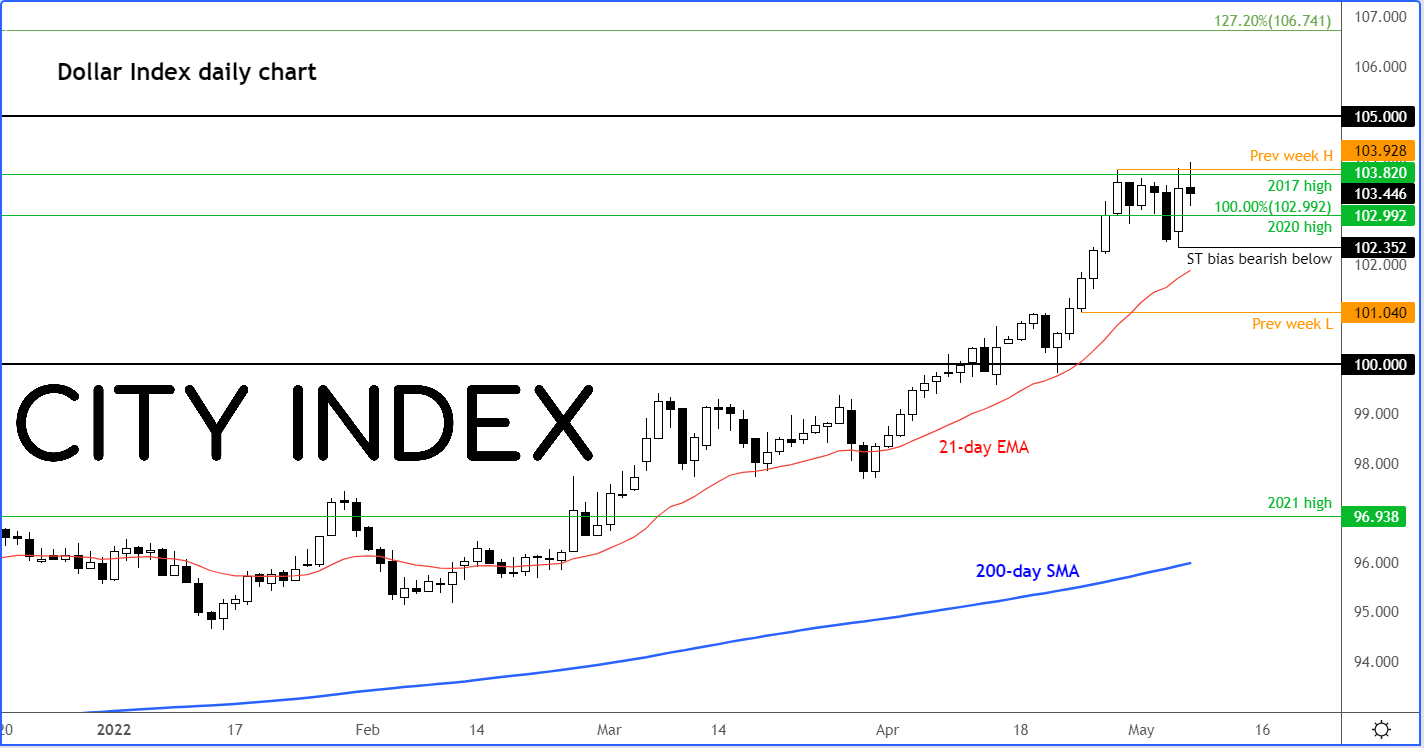
The greenback has been in a strong uptrend since the start of 2021. At just over 104.00, the Dollar Index this week reached its best level since 2002, after surpassing the peaks of 2020 (~103.00) and 2017 (~103.80), before easing back amid profit-taking and bargain hunting of downbeat foreign currencies. The King of FX has been doing exceptionally well against currencies where the central bank is still relatively more dovish, such as the yen, yuan, euro and franc.
So, why has dollar rallied so much?
In short, because of a strong economic rebound from the pandemic and, more to the point, soaring inflation. As price pressures have been rising rapidly over the past year or so, the Fed (and other central banks) has been rushing to tighten its ultra-loose monetary policy, in order to avoid letting inflation get completely out of control. To a great degree, the FOMC has failed to achieve this goal, given that consumer prices have reached 8.5%, their highest since the early 80s. There is a risk that prices could get even higher before easing back.
Expectations that interest rates will continue to rise in the US has caused the dollar to rise against currencies where the central bank is expected to keep interest rates comparatively lower. In other words, investors have been piling into the dollar to earn higher interest.
USD/CAD testing key resistance
One particular pair to watch is the USD/CAD, which has not moved much as rising oil prices have helped to support the Canadian dollar. But Friday’s significantly weaker jobs report from the North American nation saw the CAD drop noticeably. Canada’s jobless rate dropped to 5.2%, a modern low, but employment only rose by 15K compared with 40K expected.
Will we see a breakout above 1.2900?
In the week ahead, the economic calendar is very quiet, although we still do have US CPI, German ZEW, UK GDP and Chinese trade data all to look forward to. But do keep an eye and ear out on Fed speakers, the direction of the equity markets and generally risk appetite, which could provide fresh energy for FX.
Source for all charts used in this article: StoneX and TradingView.com
Welcome to Forex Friday, a weekly report in which we discuss selected currency themes mainly from a macro viewpoint, but we also throw in a pinch of technical analysis here and there. In this week’s edition, we discuss the dollar and its impressive rally and the Canadian dollar.
Dollar hits highest since 2002
There was a brief sell-off on the dollar in mid-week when the Fed Chair Jay Powell started speaking at the FOMC press conference. Powell confirmed that “75bps isn’t something the FOMC is actively considering,” but that fell on deaf ears as the greenback surged back higher on Thursday, before consolidating on the back of a mixed US jobs report on Friday. Judging by the dollar’s reaction, it doesn’t seem like the markets are taking Powell seriously, as my colleague Joe Perry commented in his post FOMC reaction. Investors are now looking ahead to next week’s release of US CPI. In March, consumer prices raced to a fresh multi-decade high of 8.5% from 7.9% y/y print that had been recorded in February.
Year-to-date, the greenback has now risen more than 8% against a basket of foreign currencies. It has done particularly well against the yen, rising some 13% to repeated multi-decade highs versus the Japanese currency. European currencies have also suffered at the expense of the world’s reserve currency. The pound, euro and franc have all dropped around 7-8 percent each.
The greenback has been in a strong uptrend since the start of 2021. At just over 104.00, the Dollar Index this week reached its best level since 2002, after surpassing the peaks of 2020 (~103.00) and 2017 (~103.80), before easing back amid profit-taking and bargain hunting of downbeat foreign currencies. The King of FX has been doing exceptionally well against currencies where the central bank is still relatively more dovish, such as the yen, yuan, euro and franc.
So, why has dollar rallied so much?
In short, because of a strong economic rebound from the pandemic and, more to the point, soaring inflation. As price pressures have been rising rapidly over the past year or so, the Fed (and other central banks) has been rushing to tighten its ultra-loose monetary policy, in order to avoid letting inflation get completely out of control. To a great degree, the FOMC has failed to achieve this goal, given that consumer prices have reached 8.5%, their highest since the early 80s. There is a risk that prices could get even higher before easing back.
Expectations that interest rates will continue to rise in the US has caused the dollar to rise against currencies where the central bank is expected to keep interest rates comparatively lower. In other words, investors have been piling into the dollar to earn higher interest.
USD/CAD testing key resistance
One particular pair to watch is the USD/CAD, which has not moved much as rising oil prices have helped to support the Canadian dollar. But Friday’s significantly weaker jobs report from the North American nation saw the CAD drop noticeably. Canada’s jobless rate dropped to 5.2%, a modern low, but employment only rose by 15K compared with 40K expected.
Will we see a breakout above 1.2900?

In the week ahead, the economic calendar is very quiet, although we still do have US CPI, German ZEW, UK GDP and Chinese trade data all to look forward to. But do keep an eye and ear out on Fed speakers, the direction of the equity markets and generally risk appetite, which could provide fresh energy for FX.
Source for all charts used in this article: StoneX and TradingView.com
How to trade with City Index
You can trade with City Index by following these four easy steps:
- Open an account, or log in if you’re already a customer
• Open an account in the UK
• Open an account in Australia
• Open an account in Singapore
- Search for the company you want to trade in our award-winning platform
- Choose your position and size, and your stop and limit levels
- Place the trade
How to trade with FOREX.com
You can trade with FOREX.com by following these four easy steps:
- Open an account, or log in if you’re already a customer
- Search for the instrument you want to trade in our award-winning platform
- Choose your position and size, and your stop and limit levels
- Place the trade
Related tags:

The complete CFD trading experience
Award-winning platforms, competitive spreads, low commissions and dedicated support.
We live and breathe the markets and are dedicated to helping traders realise their ambitions as we continue to set the industry bar.
Economic calendar
Web Trader platform
Our sophisticated web-based platform is packed with features.
Related articles

Japanese Yen Forecast: USD/JPY 4% Rally Challenges Post-Intervention Downtrend 9 24 2026
USD/JPY momentum has shifted sharply higher, putting a major resistance confluence in focus as U.S. and Japanese event risk builds.


Oil Quietly Hands the Fed a Reason to Stay Hawkish
Oil prices and the U.S. dollar are both on the front foot as elevated energy costs feed Fed warnings that inflation may prove sticky.

S&P 500 forecast: Stocks extend drop as correction risks grow
US and global equity markets have extended Wednesday’s sell-off, with Wall Street opening lower after a weak handover from Asia and Europe. The deterioration in risk appetite has been spreading across global markets. The dollar was firmer, Treasury yields were holding onto yesterday’s gains, while gold, silver and bitcoin were all under pressure alongside equities and major currencies.
StoneX Europe Ltd may make third party material available on this website which may contain information included but not limited to the conditions of financial markets. The material is for information purposes only and does not contain, and should not be construed as containing, investment advice and/or investment recommendation and/or an investment research and/or an offer of or solicitation for any transactions in financial instruments; any decision to enter into a specific transaction shall be made by the client following an assessment by him/her of their situation.
StoneX Europe Ltd makes no representation or warranty and assumes no liability as to the accuracy or completeness of the information provided, nor any loss arising from any investment based on a recommendation, forecast or other information supplied. You should always seek independent advice as to your suitability to speculate in any related markets and your ability to assume the associated risks, if you are at all unsure. We are not under any obligation to update any such material. Any opinion made may be personal to the author and may not reflect the opinion of StoneX Europe Ltd.