


History of commodity markets
Commodity trading has grown from a physical market to a largely digital one used by traders and investors to hedge positions and speculate on the future.
Share this:

Commodity markets have played a significant role in the world of trade and finance for centuries. These markets provide a platform for buying and selling various raw materials and primary products, known as commodities. In this article, we will delve into the history of commodity markets, exploring what commodities are, the types of commodities traded, how commodity markets operate, and a timeline of their development.
What are commodities?
Commodities are goods or products that are interchangeable with other goods of the same type. They are usually raw materials or primary products that are used in the production of other goods or consumed directly.
Types of commodities
Commodities can be broadly categorized into four main groups: energy, metals, agriculture, and livestock.
- Energies: This category includes crude oil, natural gas, heating oil, and gasoline. Energy commodities are crucial for powering industries, transportation, and residential needs.
- Metals: Precious metals like gold, silver, and platinum, as well as industrial metals like copper, aluminum, and steel, fall into this category. Metals are widely used in various industries, including construction, electronics, and manufacturing.
- Agriculturals: Agricultural commodities encompass products such as wheat, corn, soybeans, cotton, coffee, sugar, and cocoa. These commodities are vital for the food industry and agricultural production.
- Livestock: This category includes live cattle, lean hogs, and feeder cattle. Livestock commodities are essential for the meat and dairy industry.
How commodity markets operate
Commodity markets provide a platform for buyers and sellers to trade commodities. These markets are primarily divided between physical and derivative exchanges.
- Physical commodity exchanges facilitate buying and selling with the intention of actual delivery. Examples of physical commodity exchanges include the Chicago Mercantile Exchange (CME) and the London Metal Exchange (LME).
- Derivative exchanges, such as the New York Mercantile Exchange (NYMEX) and the Intercontinental Exchange (ICE), facilitate the trading of derivative contracts tied to commodities. These contracts, such as futures and options, derive their value from an underlying commodity. Traders can speculate on the future price movements of commodities without taking physical delivery.
How are commodities priced?
Commodity prices are determined by levels of supply and demand, with heavy consideration given for future market conditions. The contract size for commodities differs depending on the type of commodity traded. For example, grains like corn and wheat are commonly traded in 5,000-bushel contracts, while oil is traded at 1,000 barrels per contract.
Some commodity prices are influenced by seasonal demand, like oil prices which rise in the summer. Ecological events like hurricanes and droughts can also affect the price of commodities by interfering with their production.
What are futures contracts?
Futures contracts are agreements to take delivery of an asset at a future date, often at a pre-determined price. They are especially useful for commodities trading, because they allow you to speculate on the future price of goods without having to physically hold those goods.
Learn more about futures contracts and how they’re traded with our guide to trading futures.
Timeline of commodity markets
Commodity trading has a rich history that can be traced back thousands of years. The market predates other economic trading like stocks and foreign exchange. Many civilisations can attribute their dominance and success to creating vast exchange systems to transfer commodities.
Modern commodity markets have become much more complex than their early origins thanks to digital exchanges, derivatives and futures contracts. Here is a timeline highlighting significant developments in commodity markets:
Early forms of commodity trading: 4500 BC
The earliest recorded commodity trading took place in Ancient Mesopotamia between 4500 BC and 4000 BC. People traded livestock and forms of commodity money like shells and later gold and silver.
As gold and silver coins became more popular, commodity markets spread across Europe with urbanization making it easier to transport livestock and agricultural commodities.
Japan rice exchange: 1700
During Japan’s Edo period, rice merchants stored their products in warehouses and sold receipts of their stock as ‘rice tickets.’ These tickets were the first recorded forms of futures contracts. They operated as a promise to exchange rice as a mode of raising funds, eventually becoming their own form of represented currency.
By 1730, the government established the Dojima Rice Exchange which allocated two separate markets, spot and future, for the trade of rice tickets. Similar to modern exchanges, the Dojima exchange operated with a membership system and clearing house.
Chicago Board of Trade founded: 1848
The Chicago Board of Trade (CBOT) was established in April 1814 as the first modern futures and options exchange. The exchange was created by several prominent grain merchants looking to capitalise on Chicago’s position amid a growing network of railroads and telegraph lines across the US.
The CBOT quickly became the global centre for agricultural commodities trading. In 1865 the exchange created standardized futures contracts for grains like wheat, corn and oats. Soybean futures were introduced in 1936 and quickly became one of the most actively traded commodities.
New York Board of Trade established: 1870
After the development of grain futures trading, the New York Cotton Exchange was founded to facilitate cotton futures. Two years later, dairy merchants created the Butter and Cheese Exchange in New York, later renamed the New York Mercantile Exchange (NYMEX). Coffee, sugar and cocoa would be added to the NYMEX in 1916.
London Metal Exchange formed: 1877
The London Metal Exchange (LME) is the world’s foremost exchange for forwards, futures and options contracts on base, ferrous and precious metals. It is the last exchange in Europe to still operate open-outcry trading, but an electronic system is also used.
Chicago Mercantile Exchange formed: 1933
The Chicago Mercantile Exchange, better known as COMEX, was established in a merger between several individual exchanges. It is now one of the most recognizable metal exchanges along with the London Metal Exchange.
Electronic trading developed: 1999
The turn of the century marked a shift from open-outcry operations to electronic trading. Electronic trading offered lower commissions to traders but allowed for a more efficient system and easier regulation.
Electronic trading also allowed retail traders to join the market, as anyone can place trades through online platforms without having to rely on live brokers. These online platforms also offer trading charts, market news and analysis, educational tools and technical analysis programs.
How to trade commodities online
You can trade dozens of commodities on FOREX.com, from oil and natural gas to grains and livestock. Follow these steps to start trading commodities today:
- Open an account or log-in if already a customer
- Search for the metal or commodity you’d like to trade in our award-winning platform
- Choose your position and size, and your stop and limit levels
- Place the trade
Alternatively, you can practice trading with a FOREX.com demo account or learn more about trading commodities.
Commodity markets today
With the explosion of online trading and rise of faster news cycles, commodities trading has more than doubled in popularity during the last century. The market has also become more volatile reacting to political upheavals, economic crises, trade wars and evolving technologies.
As more players were able to gain access to commodities trading, the market became a popular hedge against other investments and trades like stocks and foreign exchange. This has brought millions of new dollars to commodities markets, making them more liquid and impacting the price of commodity-based goods.
Today, commodity markets continue to evolve as new emerging-market economies develop their production of commodities and new resources like lithium and uranium gain prominence with technological advancements. FOREX.com analysts publish daily coverage of commodity markets you can access for free on our news and analysis page.
Related tags:
Latest market news




The complete CFD trading experience
Award-winning platforms, competitive spreads, low commissions and dedicated support.
We live and breathe the markets and are dedicated to helping traders realise their ambitions as we continue to set the industry bar.
Economic calendar
Web Trader platform
Our sophisticated web-based platform is packed with features.
Related articles
Gold Q4 2026 outlook: Resilience in the face of rallying dollar and yields
As we headed towards the latter stages of Q3 and into Q4, the Fed had just hiked rates in a hawkish FOMC meeting, while the likes of the ECB and BoJ had also tightened their respective policies. Oil prices remained elevated amid the prolonged US-Iran conflict. Meanwhile, bond yields were breaking out, and the dollar was higher across the board. Yet, remarkably, gold was still holding in the positive territory for the third quarter, even if it had weakened somewhat in September.

Gold Analysis: Rising Yields and Dollar Strength Weigh on XAU/USD
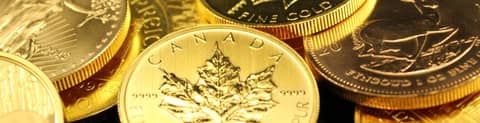
The trading week continues, and for now gold remains under notable pressure in the short term. This can be seen in the performance of XAU/USD over the last three trading sessions, where the metal has declined by more than 2.00%, bringing a bearish bias back into focus after it had lost momentum in recent weeks.

Gold, silver shrug off a brutal macro stress test
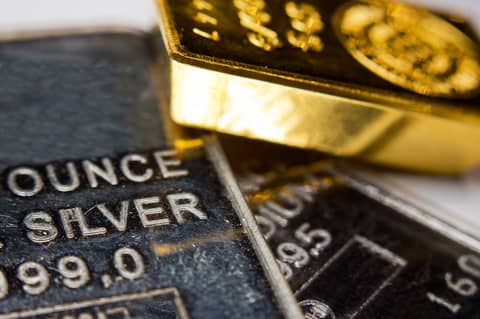
A hawkish Fed, surging short-dated Treasury yields and a firmer dollar failed to deliver the kind of damage usually seen in precious metals.

StoneX Europe Ltd may make third party material available on this website which may contain information included but not limited to the conditions of financial markets. The material is for information purposes only and does not contain, and should not be construed as containing, investment advice and/or investment recommendation and/or an investment research and/or an offer of or solicitation for any transactions in financial instruments; any decision to enter into a specific transaction shall be made by the client following an assessment by him/her of their situation.
StoneX Europe Ltd makes no representation or warranty and assumes no liability as to the accuracy or completeness of the information provided, nor any loss arising from any investment based on a recommendation, forecast or other information supplied. You should always seek independent advice as to your suitability to speculate in any related markets and your ability to assume the associated risks, if you are at all unsure. We are not under any obligation to update any such material. Any opinion made may be personal to the author and may not reflect the opinion of StoneX Europe Ltd.