



Crypto Outlook: Fears of a More Aggressive Fed Return to the Market
With September nearing its end, the cryptocurrency market is beginning to show greater caution heading into the close of the week. This comes after a strong start, when prices moved sharply higher on the back of short-covering activity and renewed optimism surrounding potential regulatory developments for the crypto industry.
Share this:

With September nearing its end, the cryptocurrency market is beginning to show greater caution heading into the close of the week. This comes after a strong start, when prices moved sharply higher on the back of short-covering activity and renewed optimism surrounding potential regulatory developments for the crypto industry. However, part of that momentum has started to fade as concerns surrounding a potentially more aggressive Federal Reserve have returned to the spotlight. This factor could limit the market's ability to sustain its recent gains and increase the risk of a broader period of indecision in the sessions ahead.

Are Fed Concerns Returning?
This week's price action has been particularly important for the cryptocurrency market. At the start of the week, assets such as Bitcoin experienced a significant rally, supported by growing attention toward initiatives involving tokenized equities and blockchain-based trading solutions. This development reinforced expectations that cryptocurrencies could become more deeply integrated into traditional financial markets, helping demand recover after weeks of uncertainty.
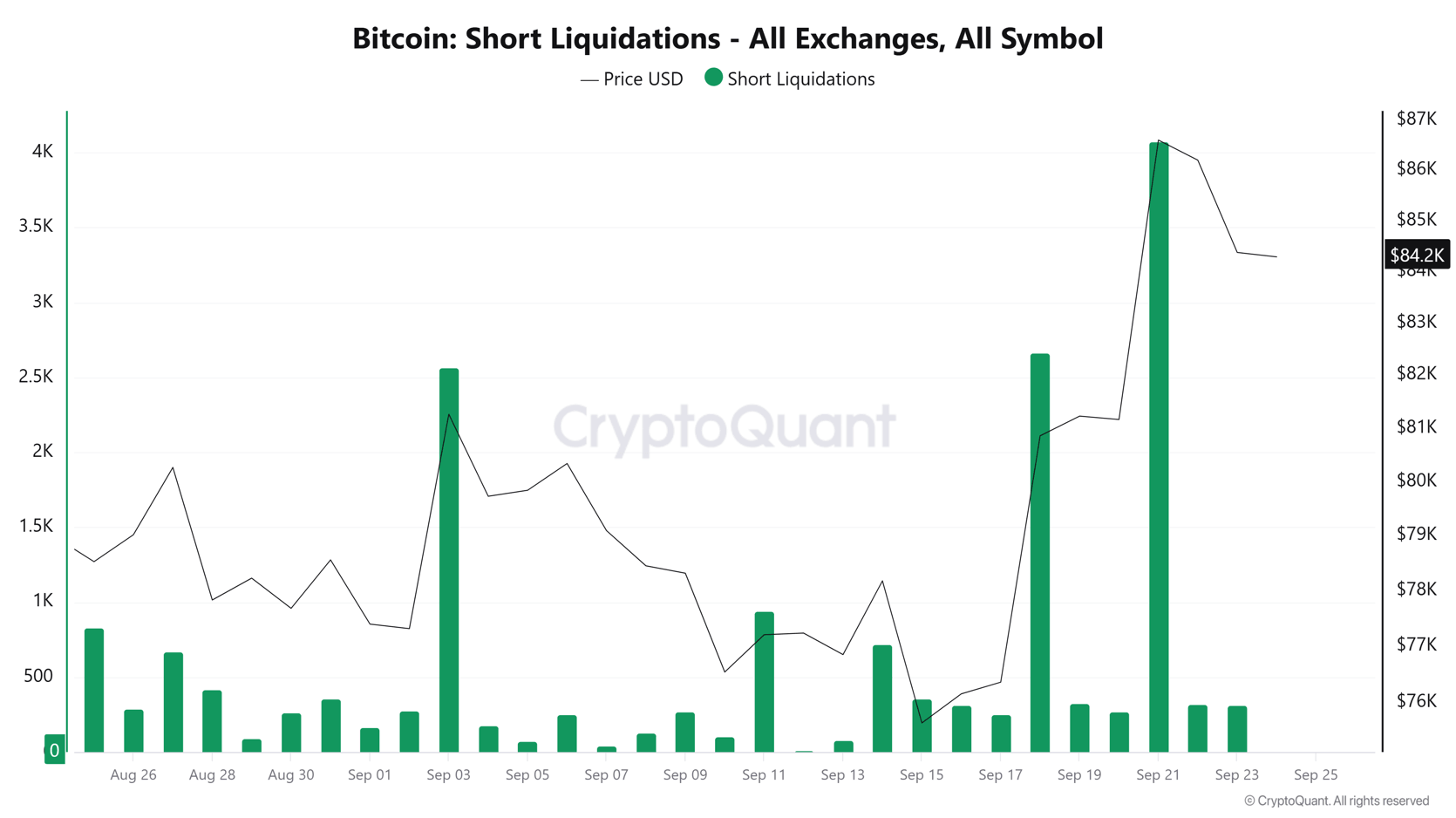
However, the most important driver emerged when Bitcoin began breaking through key technical levels. This triggered a wave of short-position liquidations, a process that typically creates additional buying pressure as traders are forced to close bearish positions. The effect was particularly visible on September 21, when short liquidations reached one of their highest levels of the past month. As a result, buying momentum accelerated not only in Bitcoin but also across several other major cryptocurrencies that participated in the rally.
Source: Cryptoquant
As the week progressed, however, market strength began to moderate. Part of this shift can be linked to renewed concerns surrounding the Federal Reserve. Over recent days, several policymakers defended the decision to raise interest rates and reiterated that further tightening could be necessary if inflation continues to remain stubbornly elevated. These comments gained importance because they reinforced expectations for another rate increase at the October 28 meeting, with market probabilities continuing to show nearly a 70% chance of additional tightening.
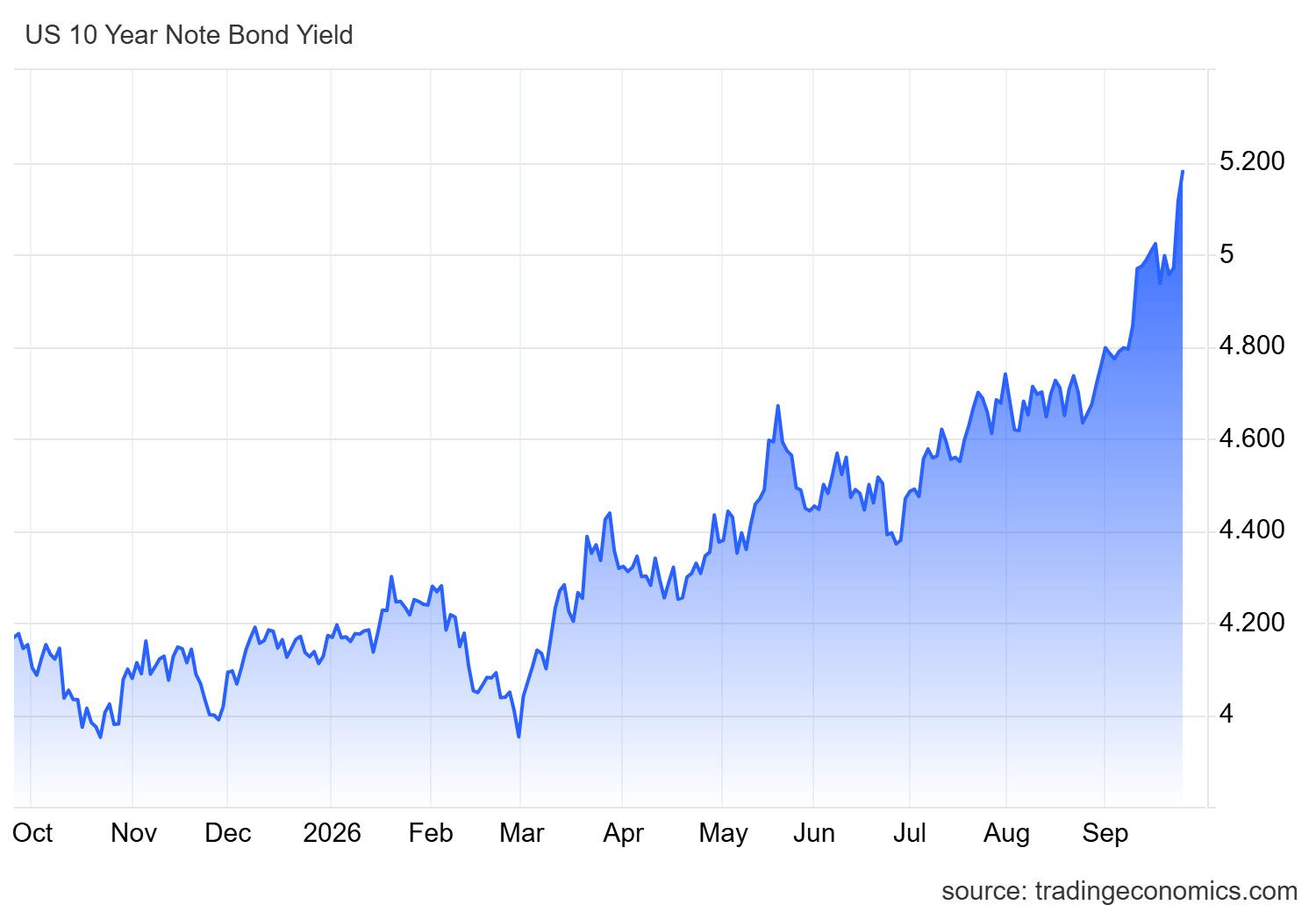
This environment is typically less favorable for cryptocurrencies. Higher interest rates tend to reduce liquidity available for risk-oriented investments while simultaneously improving the appeal of more stable alternatives. U.S. Treasury bonds are one example. Currently, 10-year Treasury yields remain above the 5.00% level, increasing their relative attractiveness compared with more volatile assets such as cryptocurrencies.
Source: TradingEconomics
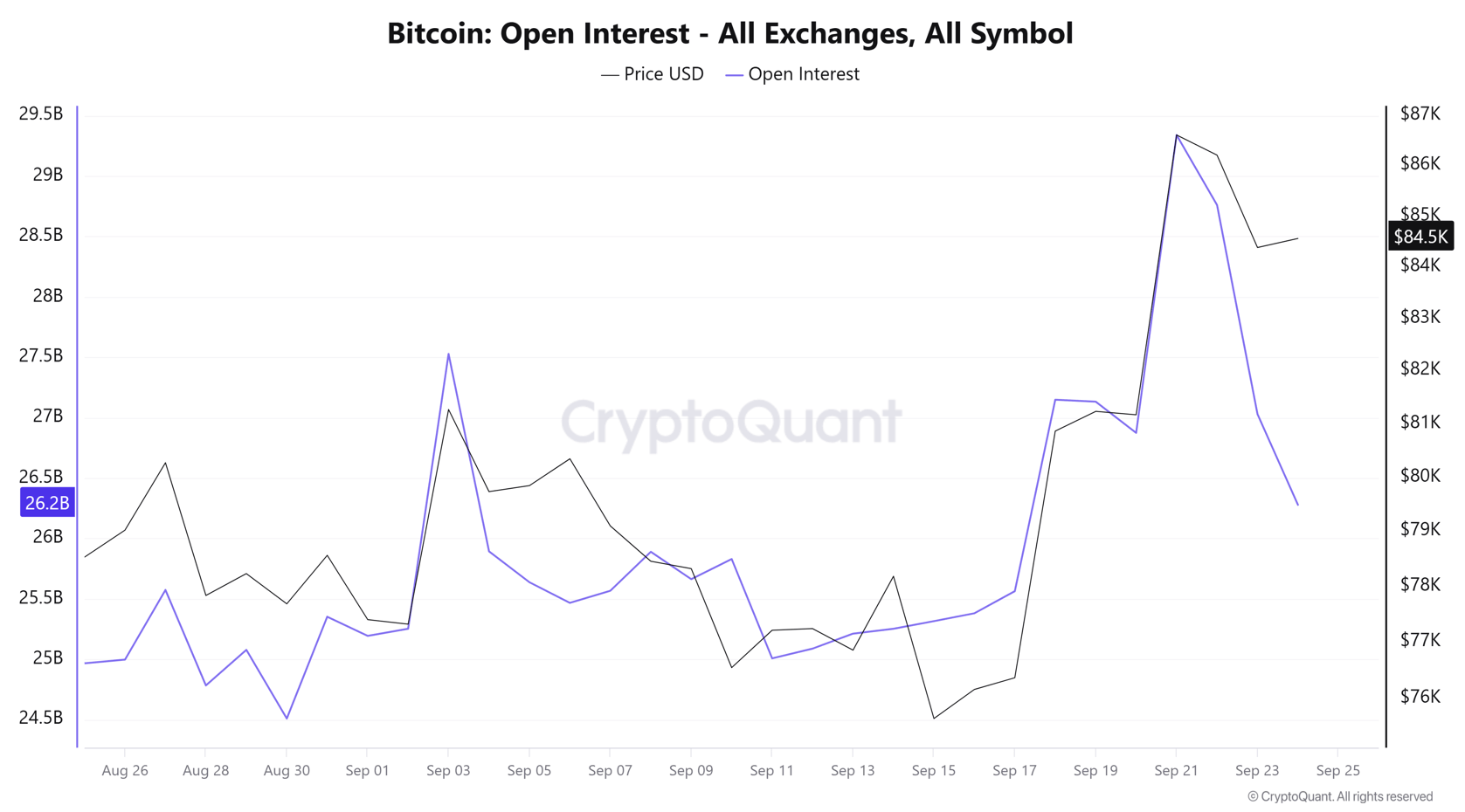
This dynamic is already beginning to appear in Bitcoin itself. The asset's Open Interest, which measures the total value of open positions across the market, has declined back toward the $26 billion area after reaching higher levels earlier in the week. When declining Open Interest coincides with softer price action, it is often associated with the closure of long positions or a rise in market caution. This behavior may reflect growing concerns surrounding a potentially more aggressive Federal Reserve.
Source: Cryptoquant
As a result, the recovery seen during the first half of the week appears to have been driven primarily by short-position liquidations and improving regulatory expectations. However, a more aggressive central bank and an increasingly attractive bond market are once again emerging as factors that could limit demand. If these conditions persist, a broader phase of indecision may begin to regain relevance across the cryptocurrency market.
Bitcoin Versus Other Markets
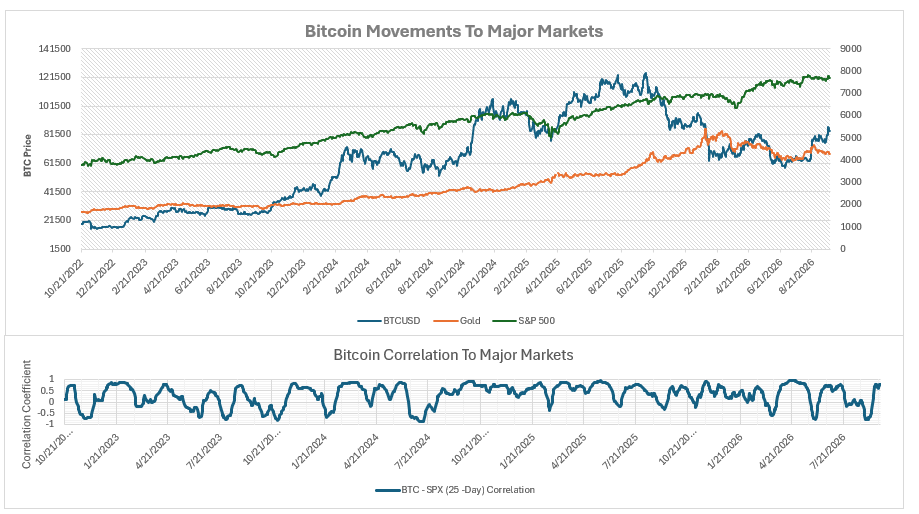
It is also important to monitor the relationship between Bitcoin and traditional risk assets such as the S&P 500 (SPX). The 25-session correlation coefficient between BTC and the U.S. equity benchmark remains close to 1, highlighting a very strong positive relationship between the two markets. Correlation coefficients can change over time.
Source: Data – TVC, StoneX, Tradingview
This relationship matters because U.S. equity markets have recently begun to struggle to extend gains beyond record highs. Part of that hesitation is tied to expectations of a more aggressive Federal Reserve, and Bitcoin appears to be responding in a similar manner. This suggests that the leading cryptocurrency is once again behaving more like a traditional risk asset and may continue reacting to many of the same macroeconomic drivers that influence equity markets.
This remains particularly important because Bitcoin continues to act as the primary benchmark for the broader cryptocurrency sector. As long as the positive correlation between BTC and major stock indices remains elevated, the caution observed in markets such as the SPX could also spill over into cryptocurrencies and contribute to a more pronounced period of indecision over the coming sessions.
Confidence Begins to Show Signs of Moderation
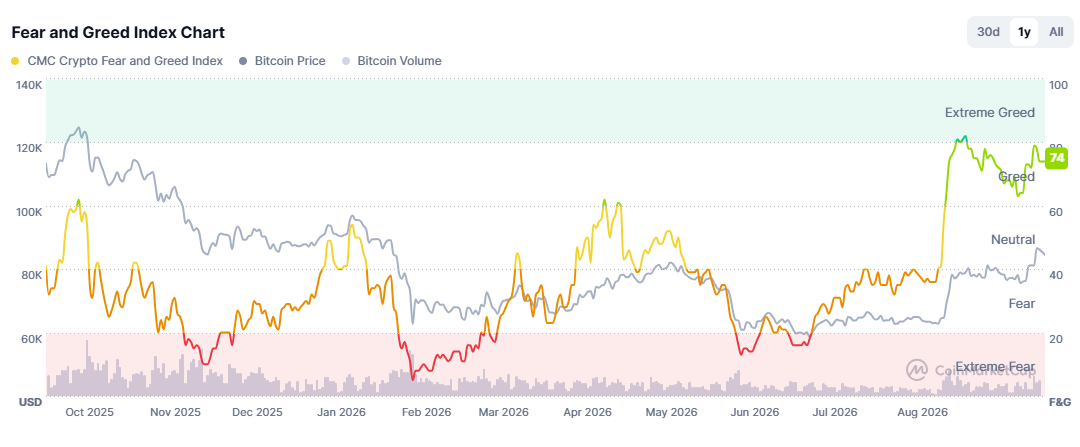
Recent movements in the Crypto Fear & Greed Index also point to a more cautious market environment. The indicator currently stands near 74 points, remaining firmly within "Greed" territory but still unable to reach the "Extreme Greed" zone. This is noteworthy because it suggests that sentiment remains positive, yet the pace of improvement seen earlier in the week has started to slow.
Source: Coinmarketcap
The evolution of this indicator remains important because it serves as a useful gauge of risk appetite across the cryptocurrency market. If confidence continues to lose momentum, it could begin to limit the market's ability to sustain strong demand in the short term. Under this scenario, the recent slowdown in sentiment could become another indication that a broader period of indecision is beginning to emerge across the crypto sector.
Written by Julian Pineda, CFA, CMT – Market Analyst
Follow him on: @julianpineda25




The complete CFD trading experience
Award-winning platforms, competitive spreads, low commissions and dedicated support.
We live and breathe the markets and are dedicated to helping traders realise their ambitions as we continue to set the industry bar.
Economic calendar
Web Trader platform
Our sophisticated web-based platform is packed with features.
Related articles

Bitcoin Analysis: Is Uncertainty Returning to BTC?
Recent trading sessions have not been particularly supportive of a clear directional move in Bitcoin. This can be seen in the behavior of the price over the last four sessions, where fluctuations have remained close to 1.00% without establishing a consistent trend. As a result, a growing sense of neutrality is beginning to emerge around BTC.

Gold Dips Below Three-Month Uptrend, Bitcoin Pulls Back from Nine-Month High
Gold has dipped below its three-month uptrend, while Bitcoin has pulled back from a nine-month high as U.S. bond yields test levels last seen in 2004 and 2007. Risks build as Fed rate-hike expectations remain above 70%, while the Dollar Index holds near yearly highs.


Crypto Outlook: Altcoins Lead the Rally as Bitcoin Pauses
With only a few days left in September, the cryptocurrency market continues to show a constructive short-term outlook. The latest trading week has delivered meaningful gains across most major digital assets and, broadly speaking, the bullish bias remains the dominant force within the market.
StoneX Europe Ltd may make third party material available on this website which may contain information included but not limited to the conditions of financial markets. The material is for information purposes only and does not contain, and should not be construed as containing, investment advice and/or investment recommendation and/or an investment research and/or an offer of or solicitation for any transactions in financial instruments; any decision to enter into a specific transaction shall be made by the client following an assessment by him/her of their situation.
StoneX Europe Ltd makes no representation or warranty and assumes no liability as to the accuracy or completeness of the information provided, nor any loss arising from any investment based on a recommendation, forecast or other information supplied. You should always seek independent advice as to your suitability to speculate in any related markets and your ability to assume the associated risks, if you are at all unsure. We are not under any obligation to update any such material. Any opinion made may be personal to the author and may not reflect the opinion of StoneX Europe Ltd.