



USD/JPY Weekly Outlook: Coiling beneath multi-decade highs
The yen remains on the back foot despite softer US inflation, while USD/JPY continues to compress beneath key resistance. Here's what matters this week and the levels that could determine the next major move.
Share this:

- Yen ignores what should have been bullish news
- Tech earnings could matter more than economic data
- Traditional USD/JPY drivers losing influence
- Momentum, technicals still favour upside
Broader narrative remains intact
USD/JPY starts the week sitting just beneath the highest levels seen in decades. While the pair has struggled to break higher, the price action continues to tighten, raising the risk that the next meaningful move may be a breakout to fresh multi-decade highs.
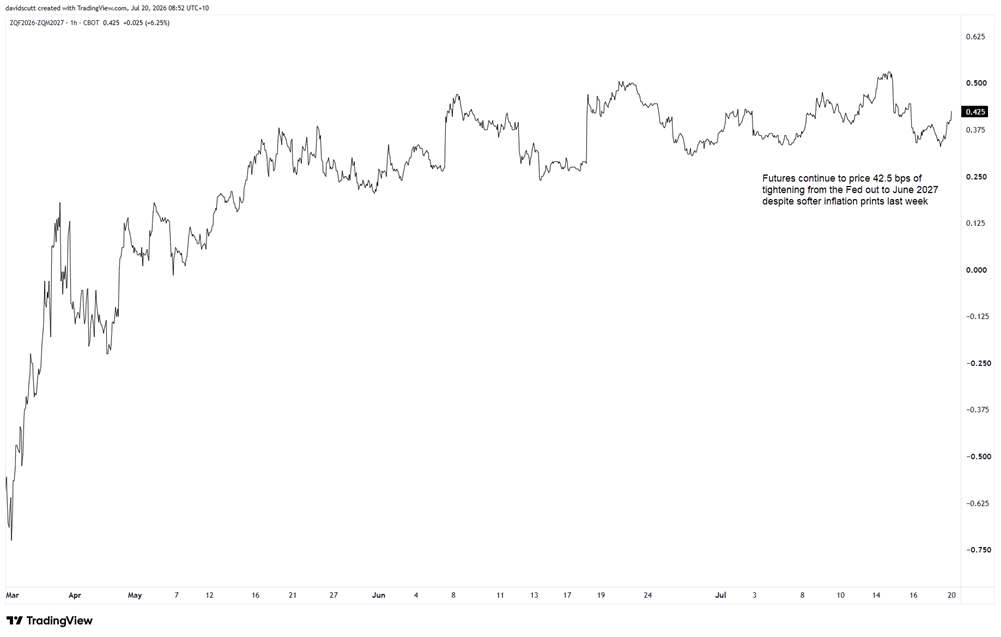
Last week did little to change the broader narrative of persistent yen weakness. Softer US inflation would normally have weighed on the dollar, but that was offset by another lift in energy prices as tensions in the Gulf escalated.
Higher crude prices have been a recurring headwind for the yen this year. As the world's largest energy producer and a net energy exporter, the US is far better placed to absorb higher energy costs than Japan, which remains heavily reliant on imported fuel. That not only exposes Japan's vulnerability from a terms of trade and energy security perspective, but also keeps alive the risk that higher energy costs add to US inflation pressures and force the Fed to keep policy tighter for longer.
Source: TradingView
That may explain Friday's muted reaction to what would normally be bullish yen headlines out of Japan. Reuters reported that the government will reaffirm the BOJ's independence in setting monetary policy, a development that, at face value, should have been supportive for the yen. Separate reports also suggested policymakers continue to explore ways to encourage the GPIF to allocate more capital to domestic assets.
Despite both stories, neither generated much of a market reaction. The lack of interest in the recycled GPIF headlines was particularly notable given similar reports sparked a sharp rally in the yen only a week earlier. The market has already moved on.
A quiet calendar, but not a quiet week
Source: TradingView
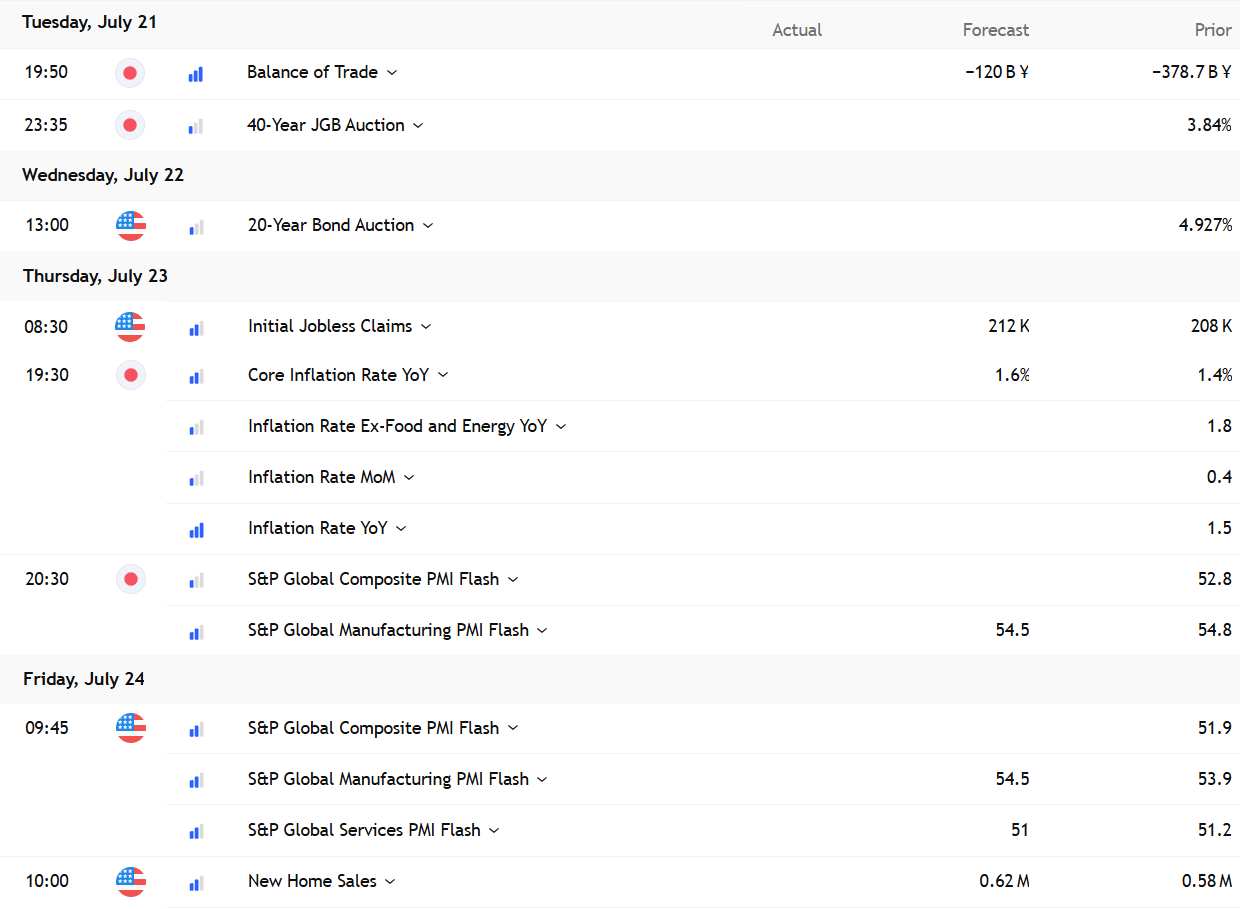
There's nothing on this week's calendar that stands out as being likely to move USD/JPY. The Fed is in its pre-meeting blackout period ahead of next week's FOMC decision, while Japan's nationwide CPI report rarely generates much of a market reaction. Markets have tended to place far greater weight on Tokyo CPI and, more recently, the BOJ's preferred measure of underlying inflation, which won't be released until next week.
Japan is also observing the Marine Day public holiday on Monday, likely keeping liquidity lighter than usual.
That leaves developments in the Gulf and another heavy week of tech earnings as the main event risks. Results from Alphabet, Tesla, Intel and memory chipmaker SK Hynix will be watched closely after selling pressure in AI-related stocks intensified late last week. If that weakness extends, it could trigger an unwind in carry trades, creating downside risk for USD/JPY.
Whether that becomes a meaningful driver of USD/JPY is another question.
A market without a clear compass
Source: TradingView
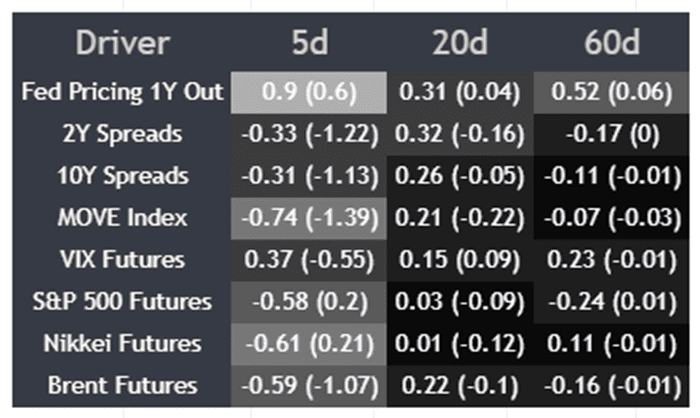
The correlation matrix above provides little evidence that any single factor has consistently driven the pair over the past month or quarter. Relationships with US-Japan two-year and 10-year yield spreads have both been weak, while correlations with broader measures of risk sentiment have also been limited.
Fed pricing over the next year showed the strongest relationship with USD/JPY over the past week. That's worth monitoring, but the absence of similar signals from Treasury yields suggests it's too early to conclude it has become the dominant driver.
USD/JPY Coiling beneath resistance
Source: TradingView
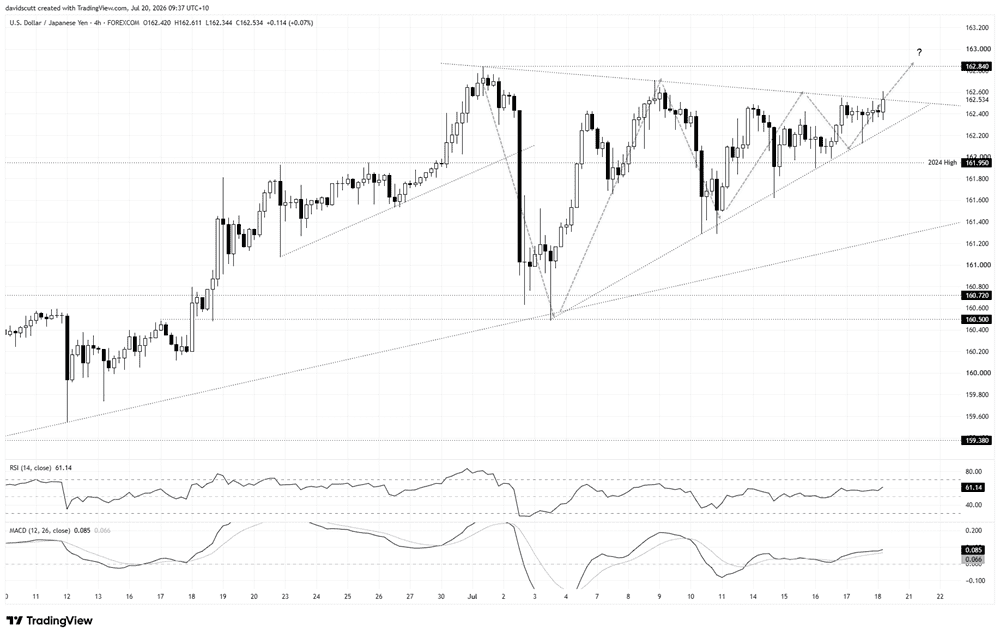
From a technical perspective, USD/JPY continues to coil beneath the multi-decade highs set earlier this month. On the four-hour chart, the pair is trading within a narrowing trading range, bounded by a descending trendline from the July 1 high and a rising trendline from the July 3 low. Multiple tests of both trendlines suggest a decisive move may not be far away.
While the pair briefly traded above downtrend resistance in early Monday trade, the move has yet to attract meaningful follow-through. Even so, the broader technical picture continues to favour the topside. RSI (14) has climbed back above the neutral 50 level to 61, while MACD has completed a bullish crossover and continues to diverge from its signal line.
A convincing break above trendline resistance would bring the July 1 high at 162.84 back into focus. Given the size of the consolidation, a successful breakout could also produce a multi-big-figure move, placing 164 and potentially 165 on the radar for bulls.
On the downside, the rising trendline remains the first level of support. Below that, 161.50 and the former multi-decade high at 160.73 are the key levels to watch.
Latest market news




The complete CFD trading experience
Award-winning platforms, competitive spreads, low commissions and dedicated support.
We live and breathe the markets and are dedicated to helping traders realise their ambitions as we continue to set the industry bar.
Economic calendar
Web Trader platform
Our sophisticated web-based platform is packed with features.
Related articles
EUR/USD Q4 2026 Outlook: Euro at a Crossroads as Fed, ECB Tighten 9 25 2026
EUR/USD enters Q4 at a pivotal inflection point as competing Fed-ECB policy paths and persistent inflation risks collide with major technical support.

USD/JPY Q4 2026 Outlook: Hawkish Fed Pricing Clashes With Intervention Risk
The year-end tug-of-war is clear: hawkish Fed pricing supports USD/JPY, while intervention risk limits the upside.

Japanese Yen Forecast: USD/JPY 4% Rally Challenges Post-Intervention Downtrend 9 24 2026
USD/JPY momentum has shifted sharply higher, putting a major resistance confluence in focus as U.S. and Japanese event risk builds.
StoneX Europe Ltd may make third party material available on this website which may contain information included but not limited to the conditions of financial markets. The material is for information purposes only and does not contain, and should not be construed as containing, investment advice and/or investment recommendation and/or an investment research and/or an offer of or solicitation for any transactions in financial instruments; any decision to enter into a specific transaction shall be made by the client following an assessment by him/her of their situation.
StoneX Europe Ltd makes no representation or warranty and assumes no liability as to the accuracy or completeness of the information provided, nor any loss arising from any investment based on a recommendation, forecast or other information supplied. You should always seek independent advice as to your suitability to speculate in any related markets and your ability to assume the associated risks, if you are at all unsure. We are not under any obligation to update any such material. Any opinion made may be personal to the author and may not reflect the opinion of StoneX Europe Ltd.