
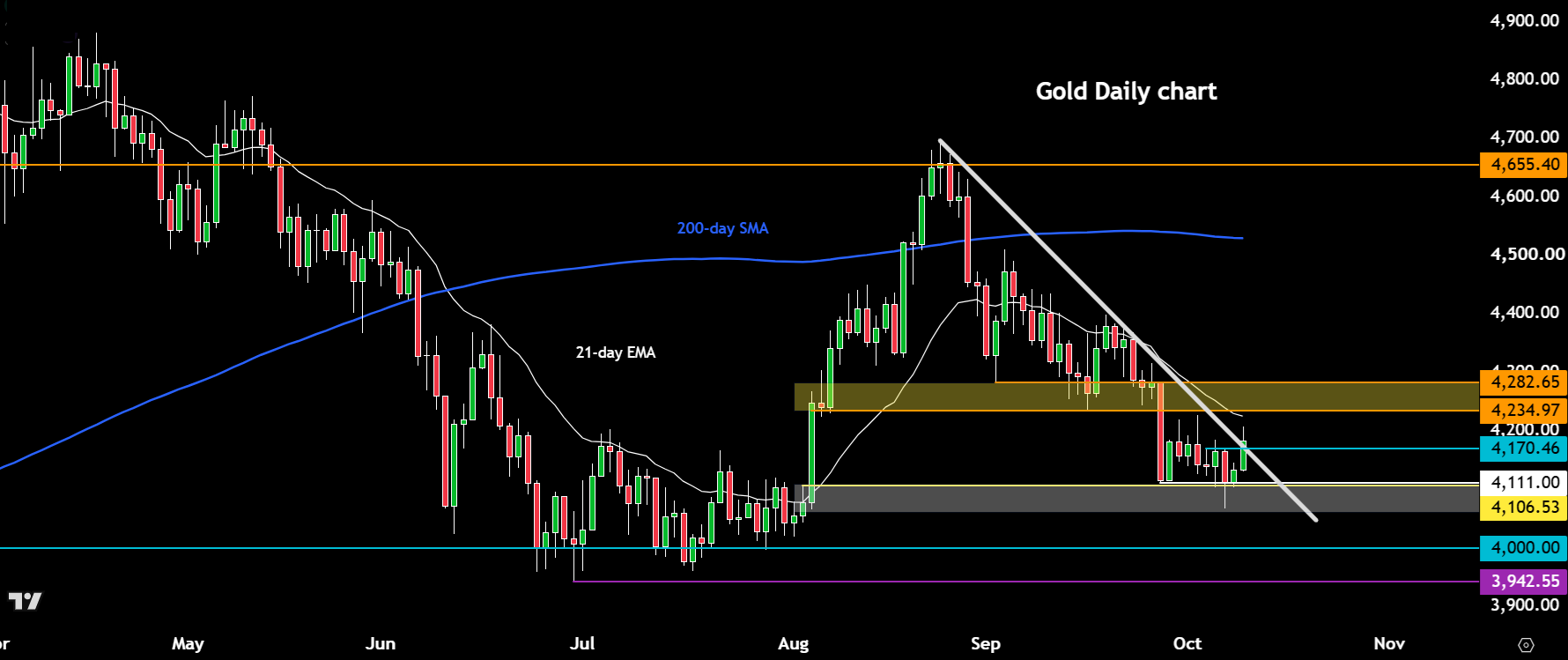
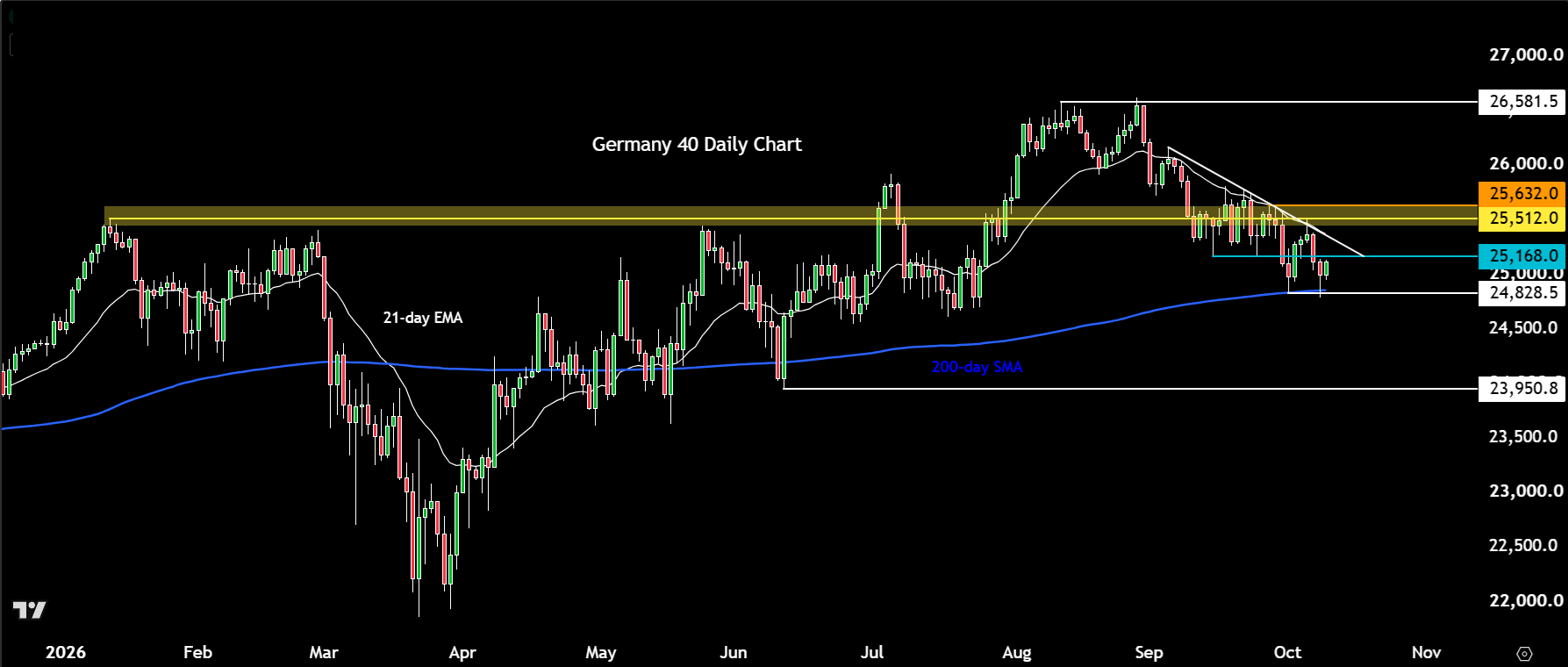
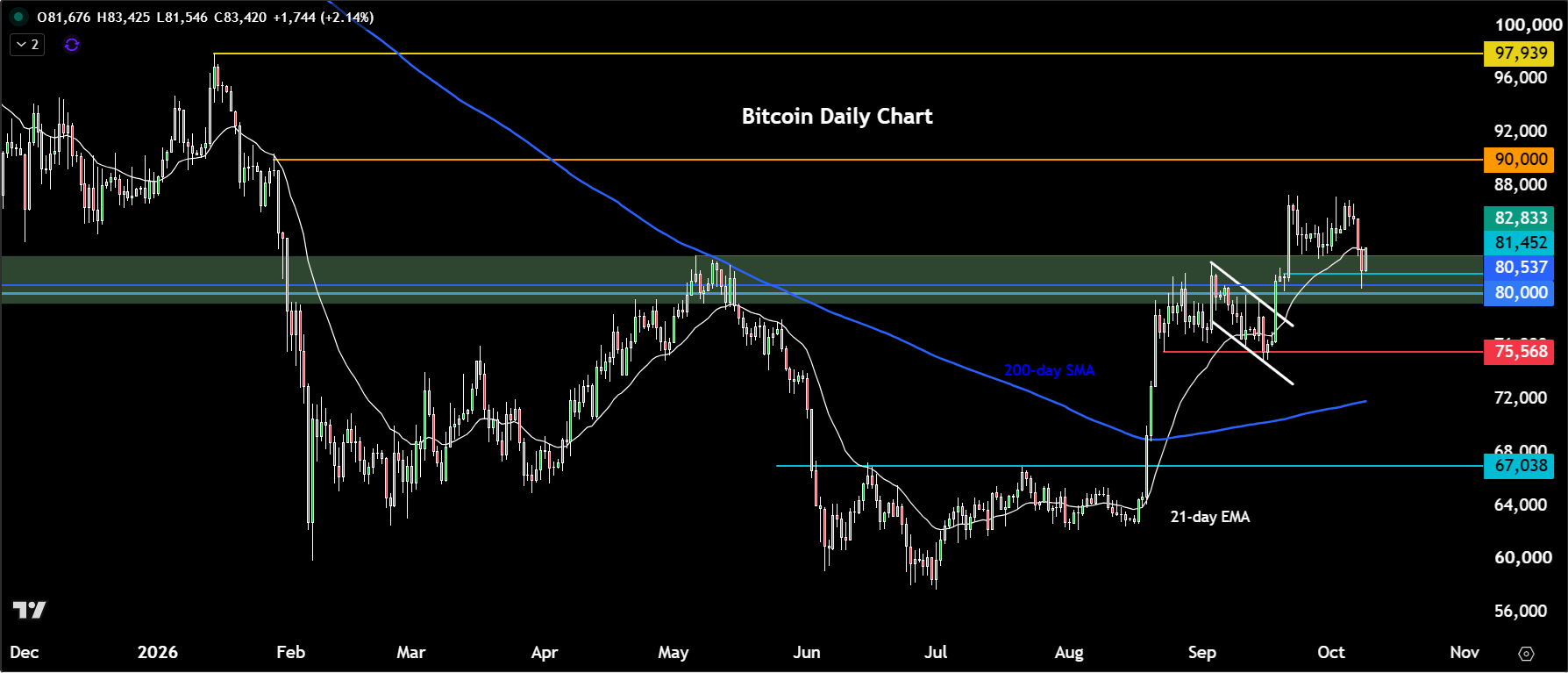
Markets went from risk off to risk on yesterday afternoon and we have since kicked on with some follow-up buying of stocks, gold and silver, while the dollar has also shown signs of weakness. Risk appetite turned positive after bond yields and oil prices both retreated yesterday. But after the turbulence of recent sessions, it is too early to assume the pressure has disappeared completely. Still, it is an encouraging sign, nonetheless. Gold’s sharp recovery from recent lows suggests a low might be in place. Bitcoin and the DAX have also formed interesting price action. Looking ahead, we have some UoM sentiment data from the US while Canada releases its monthly jobs report. Next week, the focus will turn to US inflation and central bank speeches.
Before discussing the macro factors in greater detail, let’s have a quick look at the charts first.
Gold’s recovery points to potential bottom
Gold has surged higher after yields eased back. Persistent central bank demand in the physical form and ETF inflows by investors have provided support and cushioned the downside from a strong US dollar and rising yields recently. And now with the metal trying to break its bearish trend line, we could see some follow-up technical buying if the bulls succeed here. The metal has also defended a rather important level near $4100.
Read our Gold Q4 2026 outlook
DAX potential double bottom
The DAX has formed a potential double bottom reversal pattern around its 200-day average. This is a very important technical zone near 24,800ish. A break above the bearish trend line is still needed for confirmation, but the early signs are positive.
Bitcoin jumps as $80K support holds
Bitcoin has stormed back higher after yesterday's drop as risk appetite returns. Crucially, it has held that breakout level near $80K. The bias remains bullish towards $90K unless we see a lower low beneath $80K now.
Whether the risk rally will continue remains to be seen, and a lot will now depend on the direction of oil prices, bond yields and economic data. Let’s discuss those macro factors in greater detail.
Could oil fall further?
Oil has remained steady after coming sharply off its highs yesterday as traders unwound some of the geopolitical risk premium built into crude prices on fears of US strikes against Iran. Trump’s post that he is not going to do that have reduced those immediate concerns, although much will now depend on Tehran’s response to Washington’s proposal.
A constructive response could see oil fall further as markets price in a lower risk of supply disruption, while a more hostile response would probably put a floor under prices. Iranian Foreign Minister Araghchi said yesterday that Tehran was reviewing Washington’s response and expected to reply within the next few days.
The softer oil prices are also helping the broader risk mood, although falling bond yields are arguably just as important.
European stocks climb after yesterday’s drop in yields
European stocks have opened firmly higher, partly catching up with Wall Street after US equities managed to recover much of their earlier losses late in yesterday’s session. That rebound came after European markets had already closed, leaving the region playing catch-up this morning.
More importantly, the sharp rise in borrowing costs seen earlier this week has eased. Higher yields have been one of the biggest sources of pressure on equities, particularly in Europe where concerns over government finances, including in France, have added to the unease surrounding sovereign debt.
There were also some encouraging signals from the US Treasury market yesterday, where the 30-year bond auction attracted solid demand, suggesting investors are still prepared to buy long-dated government debt despite the recent sell-off.
The benchmark 10-year yield had reached a fresh 24-year high, but both 10- and 30-year yields subsequently moved lower following the auction. The bid-to-cover ratio came in at 2.54, above the six-auction average of 2.41, while indirect bidders — which include foreign investors — took 72.3% of the supply, compared with an average of 69.1%.
That is certainly a positive sign, but I wouldn’t get too carried away with the rebound just yet.
The underlying concerns haven’t gone away. Inflation remains a problem, oil prices are still elevated, and governments are facing increasingly expensive borrowing costs. In other words, the relief we are seeing today is largely about a reduction in immediate pressure rather than a fundamental change in the market backdrop.
For now, falling yields and a softer geopolitical risk premium are giving equity bulls some breathing room.
The real test, however, will be whether they can hold onto those gains. With next week’s US CPI report still ahead, markets may not have to wait long for the next catalyst.
Coming up: Canadian jobs report and UoM Surveys
The Canadian jobs report comes at a time when the CAD has been taking a sharp drop even if expectations over a rate hike from the BoC have been on the rise. This is a reflection of the recent US dollar strength than anything else. But last month’s drop of 41.7K was completely unexpected following three months of solid gains in employment. Let’s see how the labour market held up in September.
A quieter week for US data will be wrapped by the release of University of Michigan’s closely watched consumer sentiment and inflation expectations surveys. The latter will be watched closely as elevated oil and gas prices continue to boost actual and perceived inflation. Any surprise readings here could hurt sentiment and trigger sharp moves in forex markets.
Week ahead: US inflation and central bank speeches
US CPI is due Wednesday, October 14. Following the recent soft patch in US data, which took the sting out of the dollar and yields rally, all eyes will be on September inflation data this week with CPI on Wednesday and PPI due on Thursday. Investors will not want to see a sharp rise in CPI as that could trigger fresh volatility in financial markets. CPI has been easing in recent months to stand at 2.4% year on year in August.
Thursday will see the release of several macro pointers from the US economy. As well as retail sales, we will have PPI, jobless claims and a couple of manufacturing indices from key states. Together with CPI a day earlier, these data releases could set the tone for the direction of U.S. dollar for the remainder of the week, with no other major releases expected until the FOMC meeting at the twilight of the month.
Central bank speeches will start from Wednesday. The heads of major central banks are due to speak at the Annual Meetings of the International Monetary Fund and World Bank Group, in Bangkok. BoE’s Bailey, ECB’s Lagarde and BOC’s Macklem all speak on Wednesday, while the likes of SNB’s Schlegel (Thursday) and Fed’s Warsh (Friday) will deliver their speeches later on in the week.