

Seven trading sessions ago, gold began a new and consistent bullish momentum, and as of today the metal has accumulated a gain of more than 4% in the short term, reinforcing a general bullish bias in the market. Buying pressure has remained firm due to the structural weakness of the U.S. dollar and the growing institutional interest in gold demand over recent sessions. Both factors have acted as key fundamental catalysts, helping the precious metal strengthen consistently, an effect that could continue to support steady buying pressure in the coming days.

The Dollar Loses Ground
Next week marks the final Federal Reserve meeting of 2025, and according to CME Group probabilities, there is currently an 89.4% chance of a 0.25% interest rate cut. This expectation has gradually reduced demand for U.S. Treasury bonds, which in turn has limited inflows of foreign capital into these instruments and weakened short-term demand for the U.S. dollar.
This can be clearly seen in the movements of the DXY index, which tracks the dollar’s strength against other assets. The index now shows a persistent negative slope, remaining below the key psychological level of 100 points and currently hovering around 99.4 points.
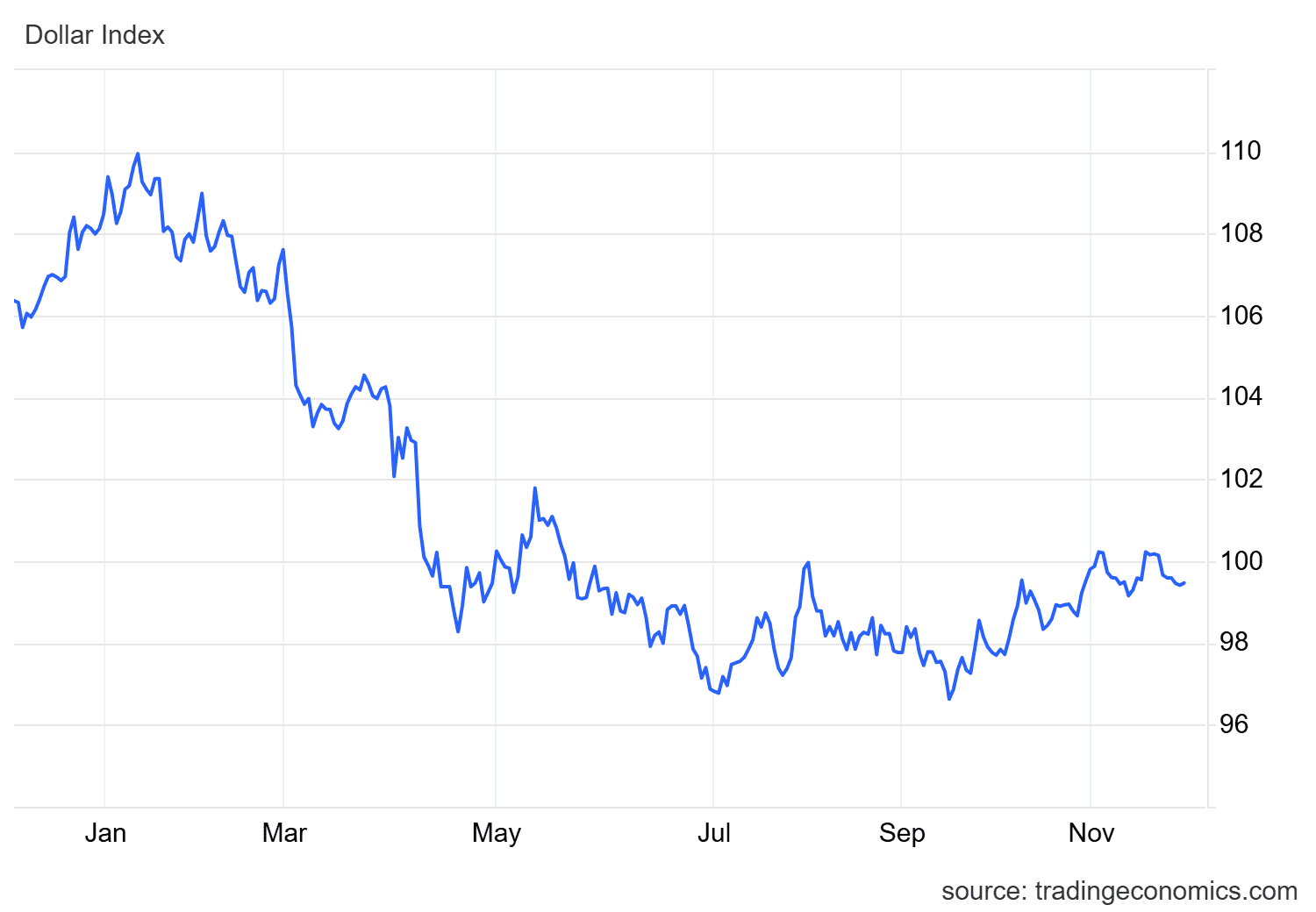
Source: TradingEconomics
It is important to remember that the U.S. dollar is considered a temporary safe-haven asset, and gold is priced globally in dollars. As a result, a persistently weak dollar makes gold relatively cheaper for foreign investors, boosting short-term demand. Additionally, when the dollar loses appeal, gold regains its status as the preferred safe-haven asset, further supporting its demand.
This dynamic is evident in gold ETF flows, which have registered three consecutive weeks of positive demand. In the week ending November 21, net gold inflows reached 3.1 tons, highlighting a rebound in institutional appetite for the metal, supported by weakness in the dollar and in Treasury bonds—its main substitutes.
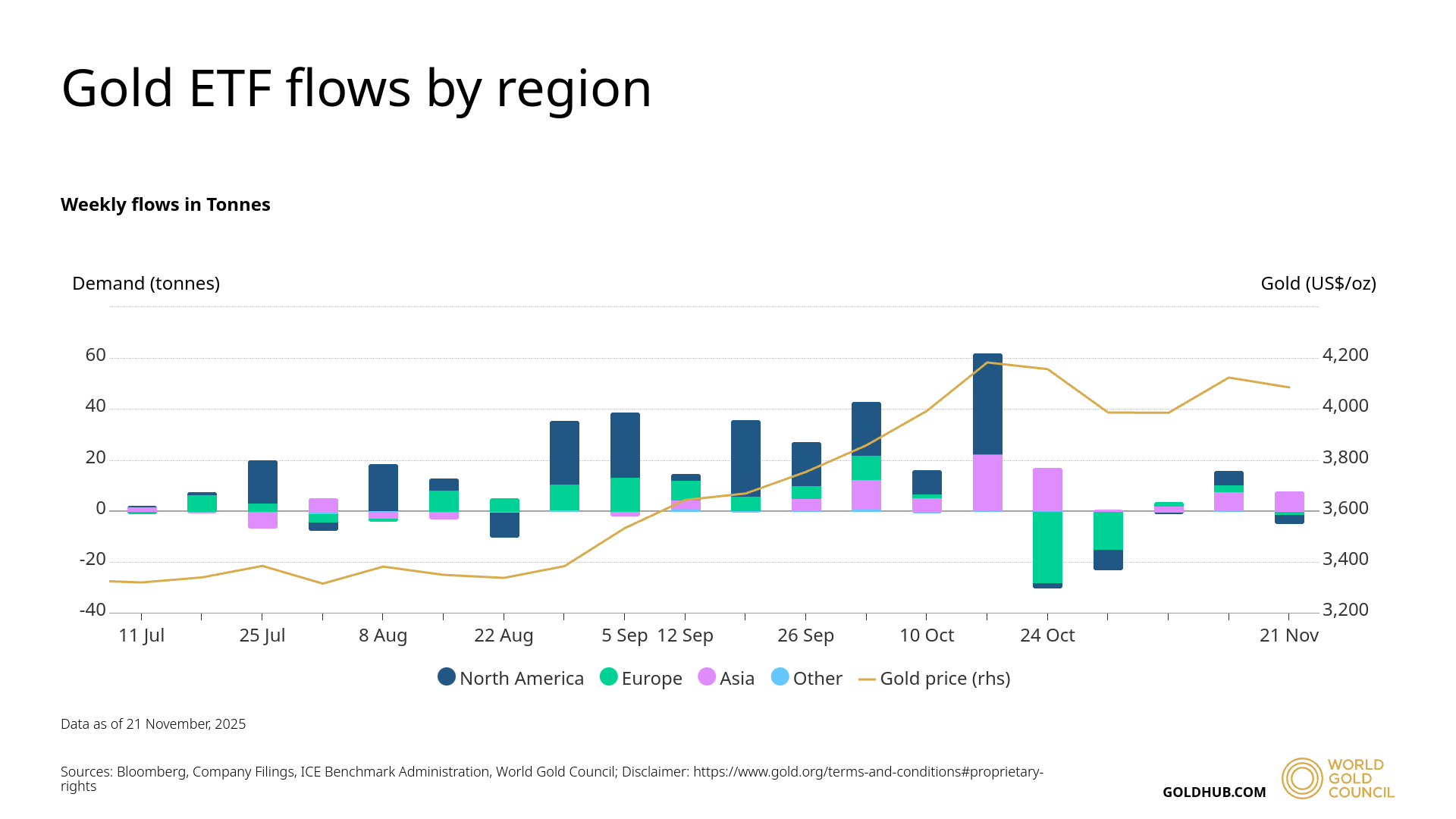
Source: GolgOrg
Taken together, these factors suggest that a more dovish stance from the Federal Reserve has boosted demand for gold in the short term. If weakness continues across gold substitute assets, the metal could maintain consistent buying pressure heading into the end of 2025.
Is Market Confidence Still Playing a Role?
Despite strong swings during the second half of 2025, gold remains widely regarded as a key global safe-haven asset, benefiting particularly in periods when market confidence deteriorates and risk appetite softens.
Currently, overall market sentiment remains negative. CNN’s Fear and Greed Index sits at 25 points, still within the “extreme fear” zone. Although confidence has shown slight improvement, it remains insufficient to sustain a stable appetite for risk assets in the short term.
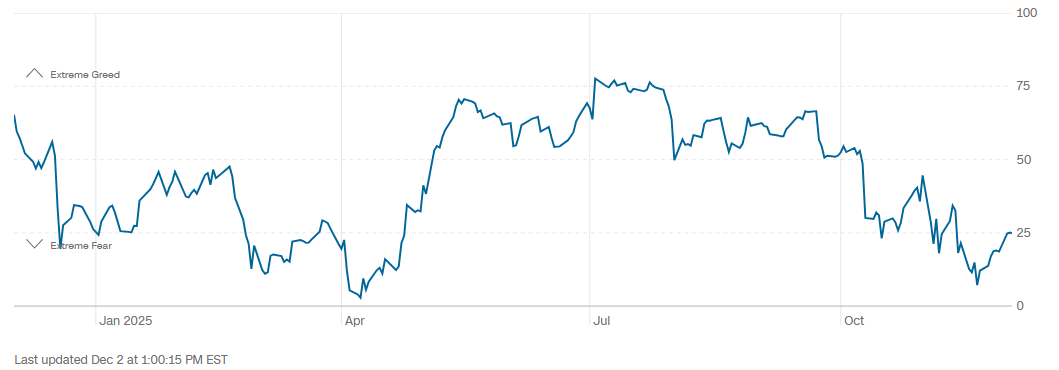
Source: CNN
As long as confidence does not move—even temporarily—out of the extreme fear zone, safe-haven assets will continue to play a significant role. In this scenario, gold could maintain steady demand, especially if confidence indicators fail to recover meaningfully. Over time, this may continue to support persistent buying pressure on XAU/USD.
Gold Technical Outlook
Source: StoneX, Tradingview
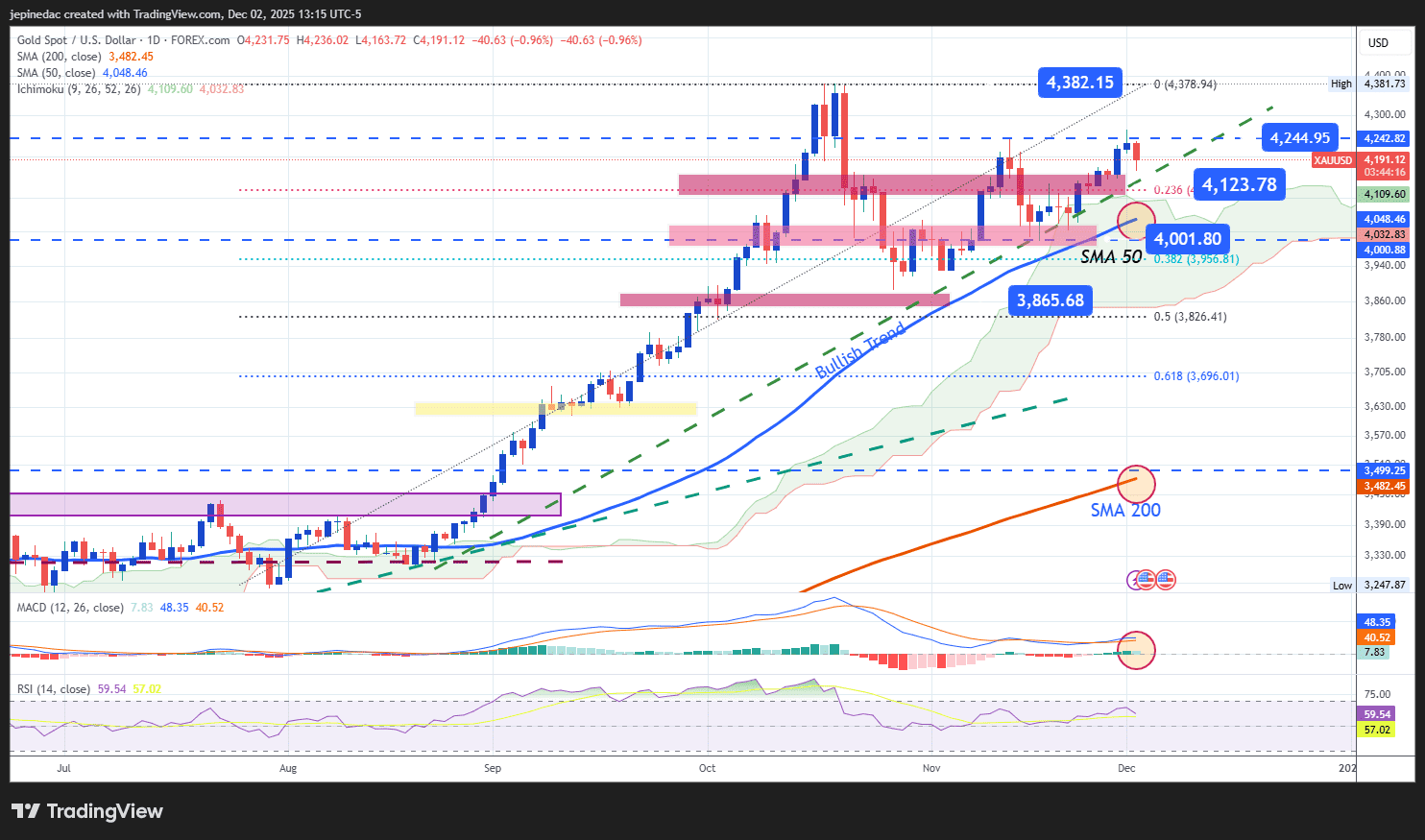
- Uptrend Holds Firm: For more than three months, gold has maintained a consistent upward trendline. Despite recent corrections, this structure remains intact and without significant signs of a breakdown, making it the most important technical reference for upcoming price movements. If price action remains above the 50-period simple moving average, a sustained bullish bias could continue to dominate the short term.
- RSI: In recent sessions, the RSI line has remained above the neutral 50 level, indicating that buying momentum has dominated over the last 14 sessions. If this trend continues, it could keep supporting bullish pressure in gold.
- MACD: The MACD histogram remains consistently above the zero line, signaling that short-term moving-average strength continues to favor buyers. If the histogram continues to advance, it could reinforce a stronger bullish impulse in the metal.
Key Levels to Watch:
- 4,244 USD – Crucial Resistance: This level corresponds to recent highs. A breakout above it could strengthen bullish momentum, potentially allowing price to retest the historical highs.
- 4,124 USD – Nearby Barrier: A neutrality zone defined by frequent pullbacks, aligned with the 23.6% Fibonacci retracement. Failure to break this level could lead to a short-term sideways range.
- 4,000 USD – Critical Support: Considered the most important psychological level. It aligns with the 38.2% Fibonacci retracement and the 50-period moving average. A break below this zone would put the uptrend at risk and could activate a more aggressive bearish bias, potentially triggering a new downtrend.
Written by Julian Pineda, CFA, CMT – Market Analyst
Follow him at: @julianpineda25