





US Auctions will be closely monitored this week
On February 25th, the Treasury auctioned 7-year notes. It did not go well.
Share this:

This week, the US Treasury will be auctioning off the following:
- Tuesday: 3-year notes
- Wednesday: 10-year notes
- Thursday: 30-year bonds
In addition, the Treasury will also be issuing a few short-term duration bills (less than 1 year). There is also a good deal of corporate bond supply this week.
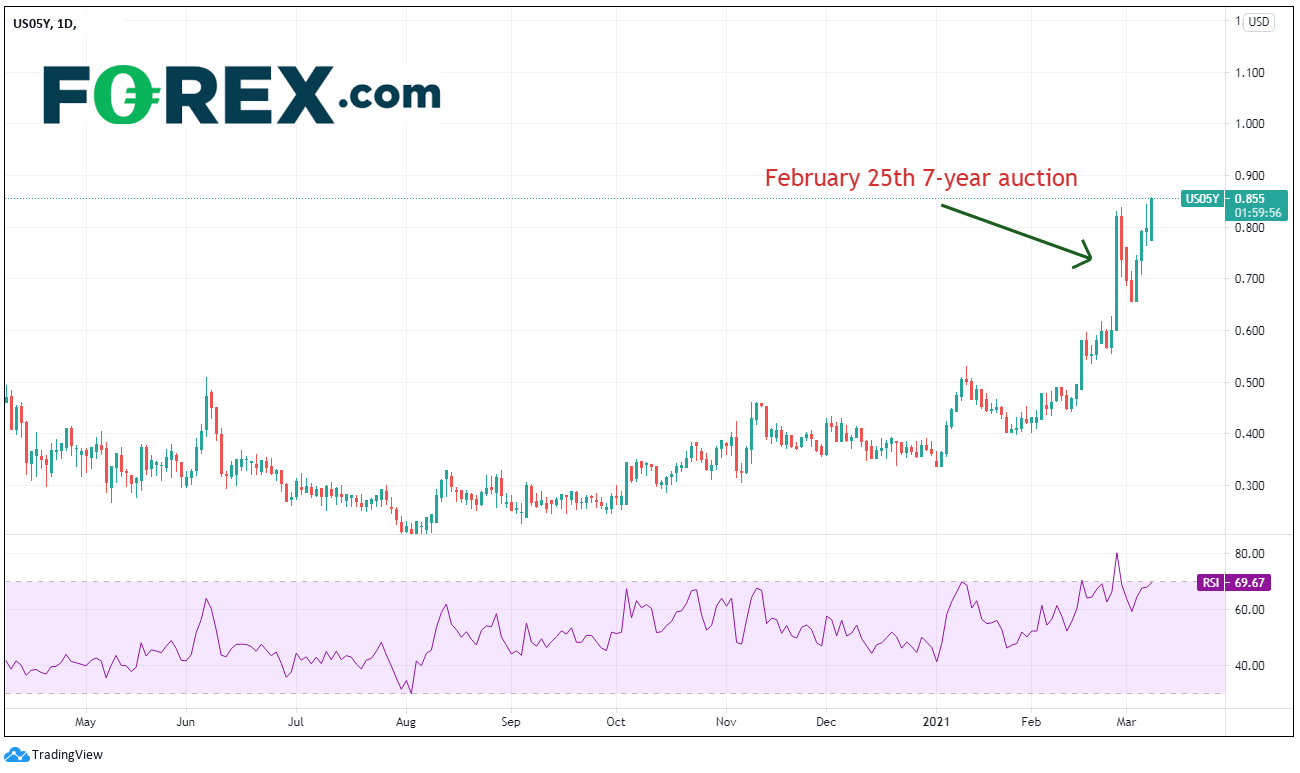
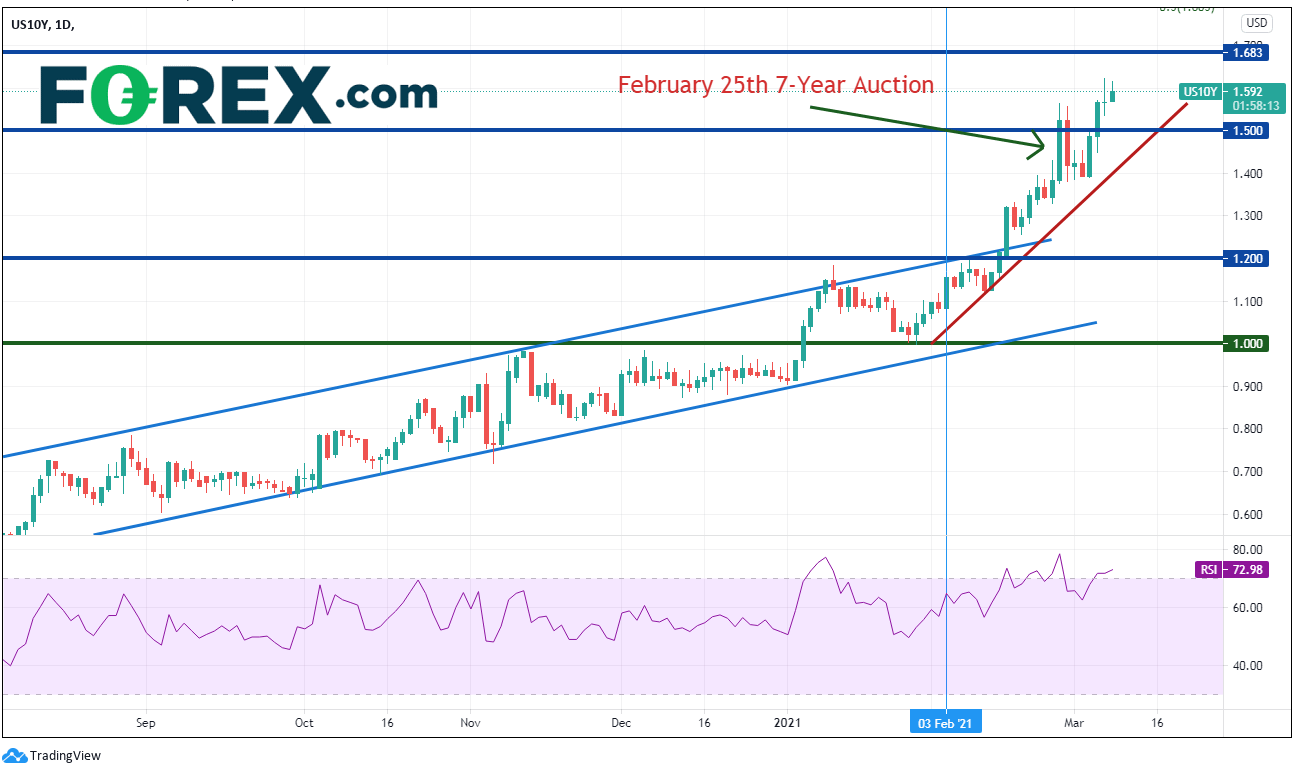
Recall on February 25th when the Treasury auctioned 7-year notes. It did not go well. As a result, bond prices moved lower (on less demand) and yields moved higher (yields move inversely to bond prices):
5-Year Yields
Source: Tradingview, City Index
10-Year Yields
Source: Tradingview, City Index
Terms to know for the auction:
In addition to yields (which should be compared the previous auctions) There are several data points released after the results of the auctions are made available (usually a few minutes after 1:00pm ET). However, there are two important ones to pay attention to in order to determine if an auction went well:
1) Bid-to-Cover (from Investopedia): the dollar amount of bids received vs the amount of Treasury securities sold. Bid-to-Cover ratios typically exceed 2.0. A successful bid-to-ratio should substantially exceed the average of the 12 previous ones. A low ratio is an indication of a poor auction.
*The bid-to-cover from the 7-year auction on February 25h was 2.045, the lowest on record
2) Indirect vs Direct bidders (from Investopedia): An indirect bidder, commonly a foreign entity) bids throughs another party. A direct bidder purchases the Treasuries during the auction for themselves or their house account. Indirect bidders are often used as a proxy for demand by foreign investors.
*In the 7-year auction on February 25th, only 38.06% of the bidders were indirect bidders. This left direct bidders (mainly primary dealers) taking away the balance of the auction.
Market Reaction: With the weak 7-year auction on February 25th, the markets sold bonds, sold stocks, and bought US Dollars ( as yields went higher). Traders could expect a similar reaction this week if they auctions are poor. Therefore, US Dollar counter currencies should move lower verse the US Dollar if results are poor.
Learn more about forex trading opportunities.This week, the US Treasury will be auctioning off the following:
- Tuesday: 3-year notes
- Wednesday: 10-year notes
- Thursday: 30-year bonds
In addition, the Treasury will also be issuing a few short-term duration bills (less than 1 year). There is also a good deal of corporate bond supply this week.
Recall on February 25th when the Treasury auctioned 7-year notes. It did not go well. As a result, bond prices moved lower (on less demand) and yields moved higher (yields move inversely to bond prices):
5-Year Yields
Source: Tradingview, FOREX.com
10-Year Yields
Source: Tradingview, FOREX.com
Terms to know for the auction:
In addition to yields (which should be compared the previous auctions) There are several data points released after the results of the auctions are made available (usually a few minutes after 1:00pm ET). However, there are two important ones to pay attention to in order to determine if an auction went well:
1) Bid-to-Cover (from Investopedia): the dollar amount of bids received vs the amount of Treasury securities sold. Bid-to-Cover ratios typically exceed 2.0. A successful bid-to-ratio should substantially exceed the average of the 12 previous ones. A low ratio is an indication of a poor auction.
*The bid-to-cover from the 7-year auction on February 25h was 2.045, the lowest on record
2) Indirect vs Direct bidders (from Investopedia): An indirect bidder, commonly a foreign entity) bids throughs another party. A direct bidder purchases the Treasuries during the auction for themselves or their house account. Indirect bidders are often used as a proxy for demand by foreign investors.
*In the 7-year auction on February 25th, only 38.06% of the bidders were indirect bidders. This left direct bidders (mainly primary dealers) taking away the balance of the auction.
Market Reaction: With the weak 7-year auction on February 25th, the markets sold bonds, sold stocks, and bought US Dollars ( as yields went higher). Traders could expect a similar reaction this week if they auctions are poor. Therefore, US Dollar counter currencies should move lower verse the US Dollar if results are poor.
Learn more about forex trading opportunities.Related tags:
Latest market news




The complete CFD trading experience
Award-winning platforms, competitive spreads, low commissions and dedicated support.
We live and breathe the markets and are dedicated to helping traders realise their ambitions as we continue to set the industry bar.
Economic calendar
Web Trader platform
Our sophisticated web-based platform is packed with features.
Related articles
EUR/USD Q4 2026 Outlook: Euro at a Crossroads as Fed, ECB Tighten 9 25 2026
EUR/USD enters Q4 at a pivotal inflection point as competing Fed-ECB policy paths and persistent inflation risks collide with major technical support.

USD/JPY Q4 2026 Outlook: Hawkish Fed Pricing Clashes With Intervention Risk
The year-end tug-of-war is clear: hawkish Fed pricing supports USD/JPY, while intervention risk limits the upside.


Japanese Yen Forecast: USD/JPY 4% Rally Challenges Post-Intervention Downtrend 9 24 2026
USD/JPY momentum has shifted sharply higher, putting a major resistance confluence in focus as U.S. and Japanese event risk builds.
StoneX Europe Ltd may make third party material available on this website which may contain information included but not limited to the conditions of financial markets. The material is for information purposes only and does not contain, and should not be construed as containing, investment advice and/or investment recommendation and/or an investment research and/or an offer of or solicitation for any transactions in financial instruments; any decision to enter into a specific transaction shall be made by the client following an assessment by him/her of their situation.
StoneX Europe Ltd makes no representation or warranty and assumes no liability as to the accuracy or completeness of the information provided, nor any loss arising from any investment based on a recommendation, forecast or other information supplied. You should always seek independent advice as to your suitability to speculate in any related markets and your ability to assume the associated risks, if you are at all unsure. We are not under any obligation to update any such material. Any opinion made may be personal to the author and may not reflect the opinion of StoneX Europe Ltd.