


USD/JPY Update: The yen reacts aggressively again, reviving speculation about possible intervention
During the latest trading session, the yen has once again shown a meaningful increase in volatility, with USD/JPY falling by more than 1.00% in the short term in favor of the Japanese currency, reactivating a dynamic of broader price swings.
Share this:

During the latest trading session, the yen has once again shown a meaningful increase in volatility, with USD/JPY falling by more than 1.00% in the short term in favor of the Japanese currency, reactivating a dynamic of broader price swings.
This move has reignited speculation about potential yen-buying operations by Japan. Although there have been no official confirmations, the speed of the move and the lack of clear macroeconomic catalysts suggest that there could be intervention—or at least strong expectations of it. In this context, if it is confirmed that Japanese authorities have chosen to follow this path, selling pressure on USD/JPY could intensify in the coming sessions.


Doubts grow over a possible intervention
The close of last week had already marked a key event, as reports began to emerge about a possible intervention in the FX market by the Japanese government and the Bank of Japan, through yen purchases and dollar sales, with estimates pointing to around 5–6 trillion in yen buying.
Days after that event, the behavior observed in the current session shows a similar dynamic, with sharp yen gains occurring without a clear macroeconomic explanation, reinforcing the idea that this type of intervention could be repeating in the short term.
As is common in these situations, there have been no official confirmations from Japanese authorities. However, they have reiterated that they are closely monitoring the market and are prepared to act against excessive movements. This creates a scenario in which, even without direct confirmation, the market interprets that the yen has entered a phase of high sensitivity, where any comment or rumor can trigger sharp price moves.
It is important to remember that Japan has clear incentives to intervene. A weak yen increases the cost of imported energy and food, which can generate additional inflationary pressure in the economy. In this context, intervention would aim to contain these effects, making such actions consistent with the current economic environment.
Taking all of this into account, this event stands out as one of the most relevant catalysts for the yen this year. If active participation by Japanese authorities in the FX market is confirmed, this could consolidate the currency’s recent strength and maintain more structured downside pressure in USD/JPY in the coming weeks.
Japanese bonds continue to show stability
Another relevant factor for USD/JPY is the evolution of the bond market in Japan. Recent inflation data has shown a slight increase, rising from 1.3% in February to 1.5% in March, which has led to expectations of a firmer stance from the Bank of Japan, at least in the short term.
This context has contributed to a recovery in Japanese bond yields, with 10-year yields now positioned above 2.5%, one of the highest levels seen in the past decade. This dynamic reflects a meaningful shift compared to previous years, when Japan was characterized by extremely low interest rates.
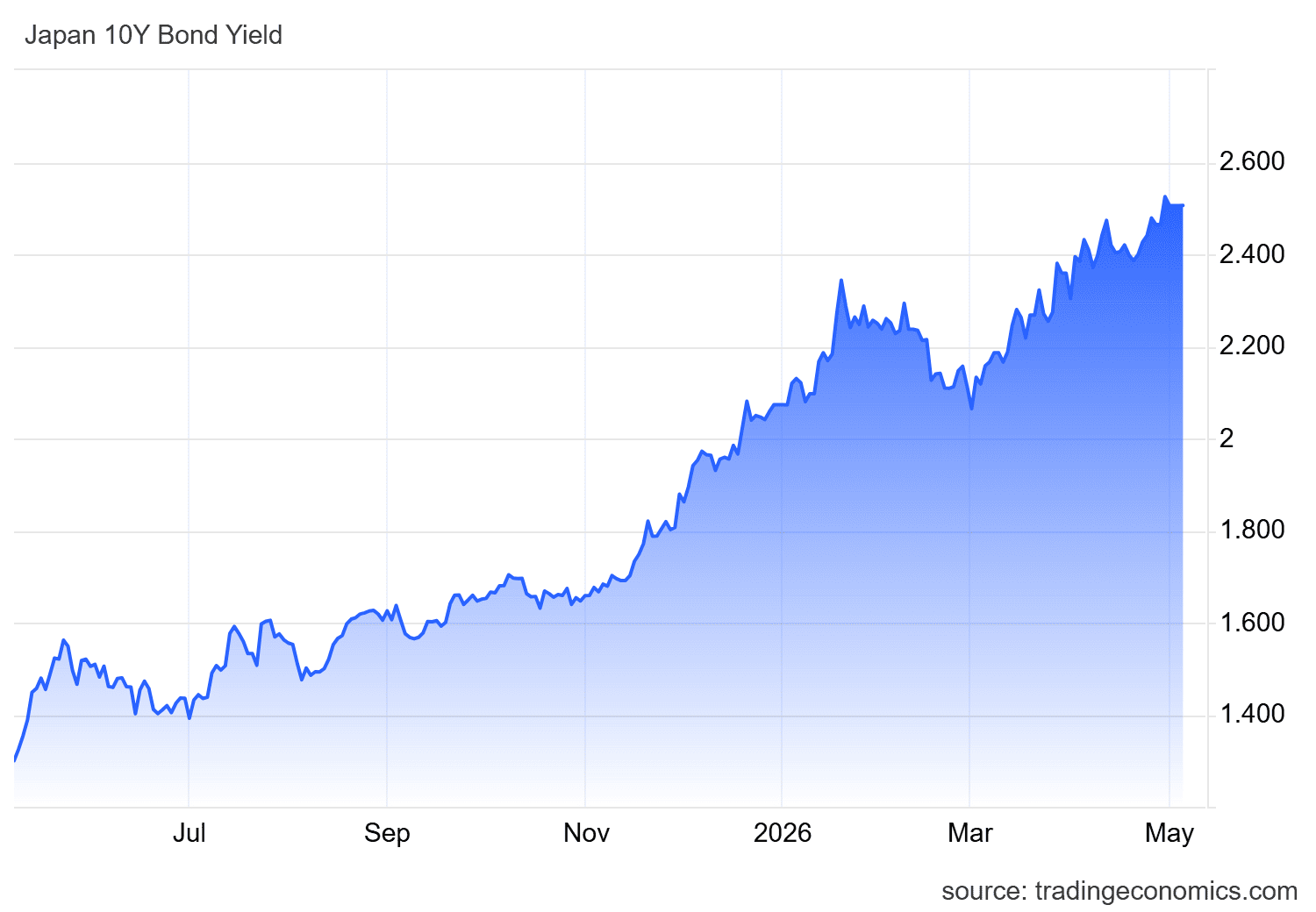
Source: TradingEconomics
This environment is becoming increasingly relevant because, as yields in Japan stabilize or continue to rise, the country’s bonds may begin to attract international capital. This could translate into stronger demand for the yen, reinforcing the recent trend.
Moreover, if this dynamic is combined with potential future policy adjustments from the Bank of Japan, the Japanese bond market could become more competitive relative to markets such as the United States, further increasing its attractiveness.
Taken together, this factor may be contributing to the recent recovery in the yen and supporting continued downside pressure in USD/JPY in the short term.
Technical outlook for USD/JPY
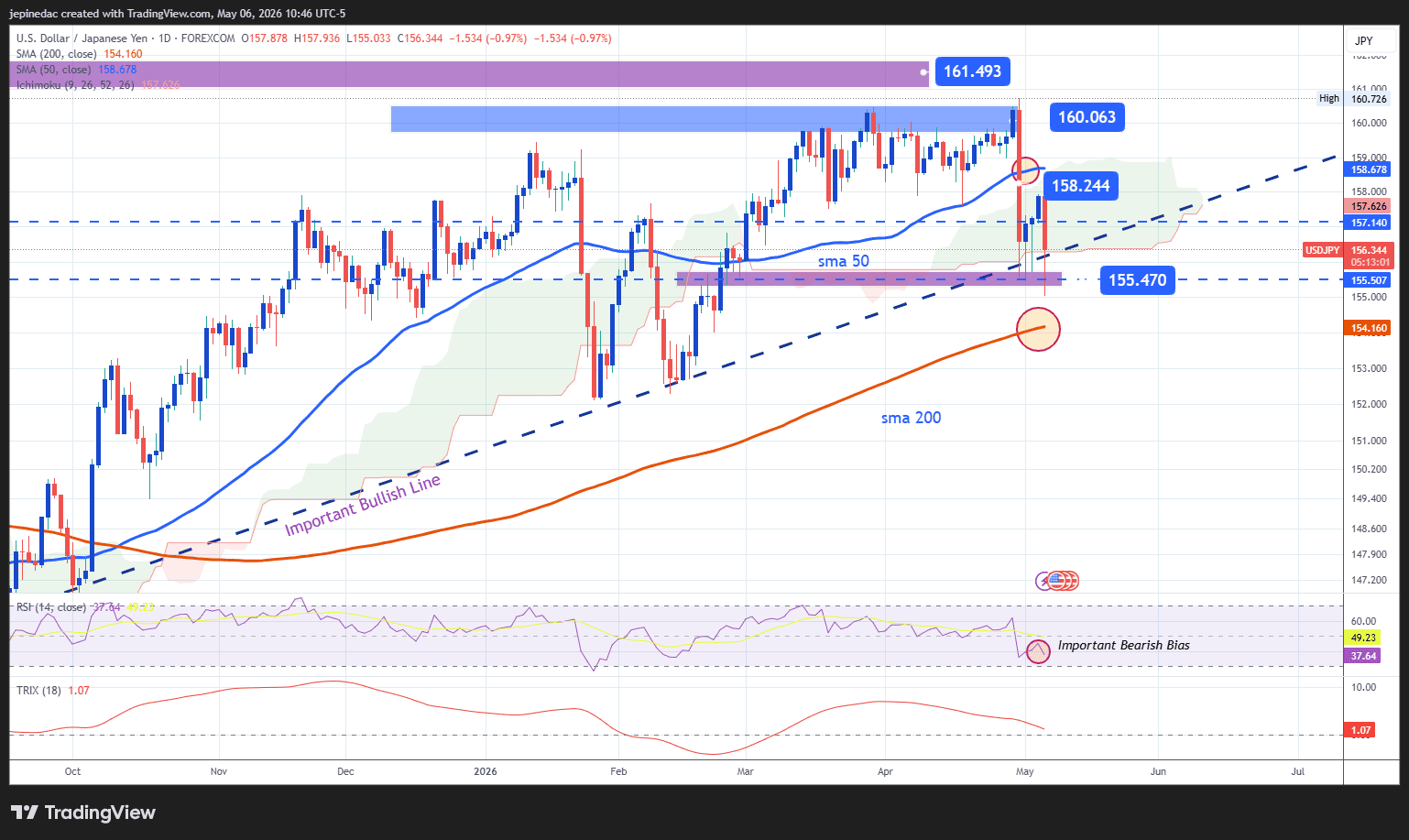
Source: StoneX, Tradingview
- Price enters a critical zone: Recent bearish movements have pushed USD/JPY into a key technical area, where the long-term upward trendline that had been holding for months is now being tested. This is particularly important, as a consolidation of selling pressure could lead to a break of this structure, signaling a meaningful shift in market structure. Such a move could open the door to a more dominant bearish bias in the coming sessions. However, unless this break is confirmed, the market may continue to show periods of indecision, especially given the lack of clear confirmation regarding intervention.
- RSI: The RSI remains below the 50 level, indicating that selling momentum continues to dominate in the short term. In addition, recent price action suggests that bearish pressure has not yet weakened, which could continue to support corrective moves. If the indicator remains in this zone, it may reinforce a short-term bearish outlook for USD/JPY.
- TRIX: The TRIX indicator shows a clear downward slope and is approaching the neutral level at 0, suggesting that long-term moving average momentum is losing strength. As this dynamic continues, it could reinforce a more structured bearish bias in the pair’s price action.
Key levels:
- 160.000 – Key resistance: A key psychological level aligned with recent highs. Moves toward this area could reactivate the broader uptrend and restore bullish momentum in the medium term.
- 158.244 – Near-term barrier: A neutral zone aligned with the 50-period moving average. This level acts as a key reference point, and price action around it could reinforce a phase of indecision or even lead to the formation of a short-term range.
- 155.470 – Key support: A level of recent lows aligned with the base of the long-term trendline. This is a critical area, as a break below it would fully invalidate the long-term bullish structure and open the door to a more dominant bearish bias that could extend over several weeks.
Written by Julian Pineda, CFA, CMT – Market Analyst
Follow him on: @julianpineda25
Related tags:
Latest market news




The complete CFD trading experience
Award-winning platforms, competitive spreads, low commissions and dedicated support.
We live and breathe the markets and are dedicated to helping traders realise their ambitions as we continue to set the industry bar.
Economic calendar
Web Trader platform
Our sophisticated web-based platform is packed with features.
Related articles
Japanese Yen Forecast: USD/JPY 4% Rally Challenges Post-Intervention Downtrend 9 24 2026
USD/JPY momentum has shifted sharply higher, putting a major resistance confluence in focus as U.S. and Japanese event risk builds.

Oil Quietly Hands the Fed a Reason to Stay Hawkish
Oil prices and the U.S. dollar are both on the front foot as elevated energy costs feed Fed warnings that inflation may prove sticky.


Oil, USD/JPY Forecast: Two trades to watch
Oil recovers above $90 amid a lack of progress in US-Iran diplomacy. USD/JPY rises to 158 on widening Fed-BoJ policy outlook.

StoneX Europe Ltd may make third party material available on this website which may contain information included but not limited to the conditions of financial markets. The material is for information purposes only and does not contain, and should not be construed as containing, investment advice and/or investment recommendation and/or an investment research and/or an offer of or solicitation for any transactions in financial instruments; any decision to enter into a specific transaction shall be made by the client following an assessment by him/her of their situation.
StoneX Europe Ltd makes no representation or warranty and assumes no liability as to the accuracy or completeness of the information provided, nor any loss arising from any investment based on a recommendation, forecast or other information supplied. You should always seek independent advice as to your suitability to speculate in any related markets and your ability to assume the associated risks, if you are at all unsure. We are not under any obligation to update any such material. Any opinion made may be personal to the author and may not reflect the opinion of StoneX Europe Ltd.