








AUD/USD Outlook: Headwinds from China Data and RBA Policy
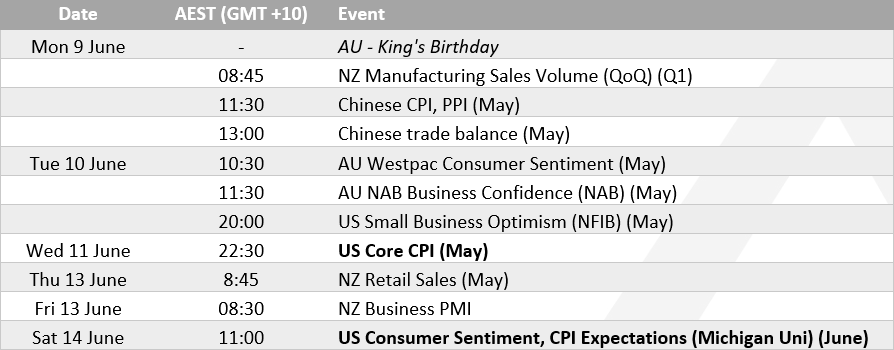
65c continues to defy AUD/USD of a bullish breakout. Inflation data from China and the US are key data points for Australian dollar traders to keep an eye on this week.
Share this:

The Australian dollar remains vulnerable this week as fresh signs of deflation from China and soft Q1 GDP data fuel expectations of a July rate cut from the Reserve Bank of Australia (RBA). With AUD/USD repeatedly failing to hold above 65c, traders now turn their focus to upcoming US inflation figures for clues on the Federal Reserve’s next move. Together, these macro forces are keeping the Aussie trapped within a familiar range — and tipping the balance toward downside risks.
AUD/USD Outlook: Headwinds from China Data and RBA Policy
The Reserve Bank of Australia Look Set to Cut In July
Australia’s sluggish growth in Q1 has likely cemented another 25bp cut from the RBA on July 4. Barring an upside surprise from monthly CPI report on June 25.
- Real GDP rose just 0.2% q/q (0.6% prior) and remained steady at 1.3% y/y.
- Consumption was also a mere 0.2% (0.5% prior)
- Manufacturing and services PMIs were barely expansionary
- Retail sales were also sluggish in May
- Odds of an RBA cut in July have risen to 86%, according to the RBA cash rate futures
AUD/USD Vulnerable as China Inflation Data Points to Deflation
There’s lots of talk about deflation in China. If true, it points to softer global growth and deflation (to at least disinflation elsewhere). Which is a far cry from the highly inflationary environment we were promised due to Trump’s tariffs. China release CPI and PPI figures on Monday, with inflation expected to have contracted -0.2% in May (-0.1% prior) and producer prices to have sunk -3.1% y/y in May (-2.7% y/y prior). This could weigh on AUD/USD if this trend persists. Even if not, it is hard to see how it is bullish for the Australian dollar.
US inflation is the main economic event this week
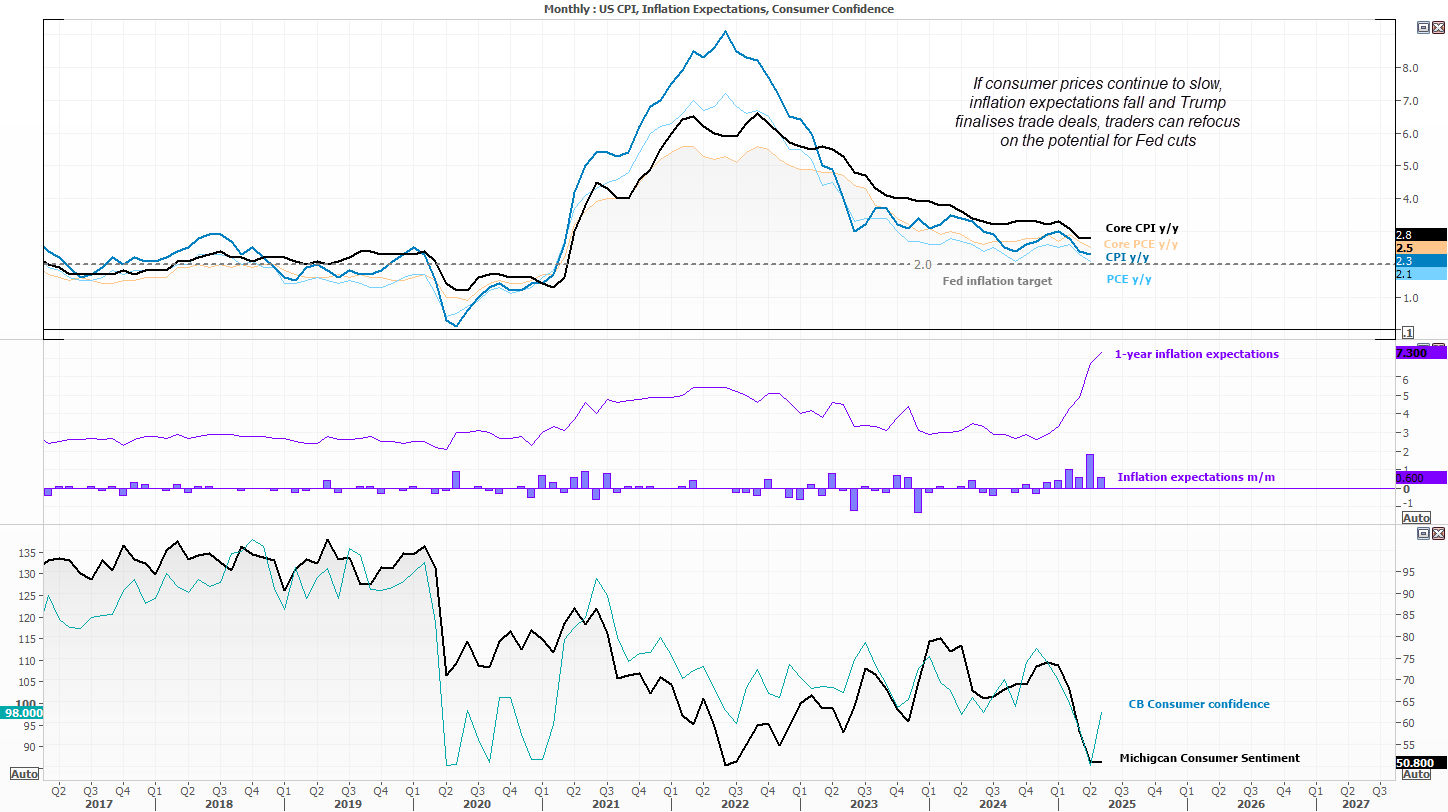
Trump’s tariffs have not proven as inflationary as many had feared, with the latest core PCE price index rising just 0.1% in May — marking a three-year low of 2.5% y/y and reflecting sluggish consumer spending. If President Trump manages to secure trade deals and draw a line under the trade war, recession concerns may ease considerably. That would allow traders to refocus on Federal Reserve policy. A softer US CPI report this week could bolster expectations for a Fed rate cut.
The University of Michigan consumer sentiment report is likely to show a rebound on Friday, though form very low levels. The Conference Board’s own sentiment report snapped a 5-month losing streak in May, with its 12.3 m/m increase being its fastest in over three years.
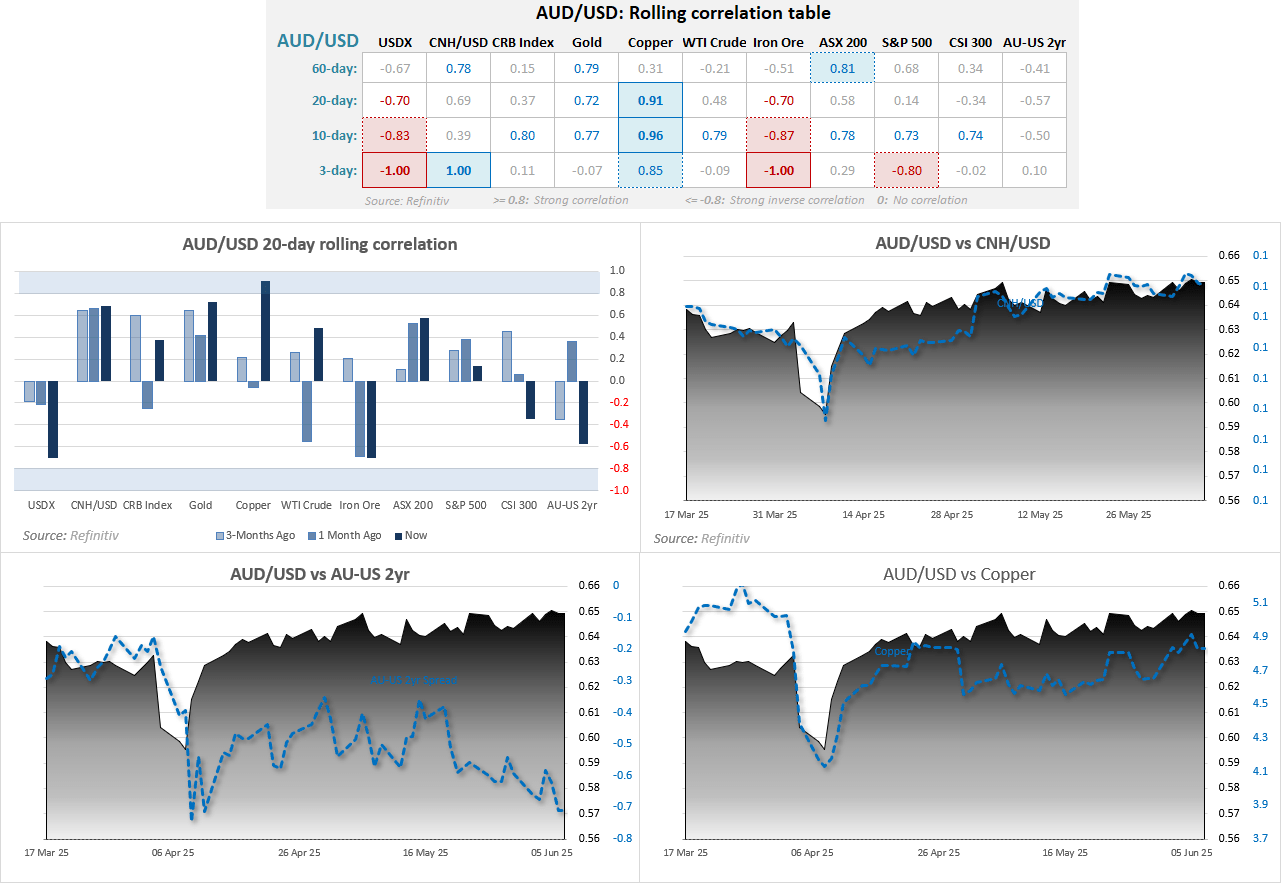
AUD/USD correlations:
- The correlation between the Australian dollar and Chinese yuan is losing its potency, with the 10-day correlation slipping to 0.39 (1.0 = perfect correlation, -1.0 = perfect inverse).
- However, it remains robust over the 60-day period at 0.78.
- The broader trend between AUD/USD and CNH/USD still looks visually strong, with USD/CNH finding support at 7.164 and the Aussie once again pulling back from the 65c level.
- The positive correlation between copper and AUD/USD that we noted last week remains intact, but the relationship with gold has seemingly broken down for now.
- The correlation between yield differential between the US and Australia have continued to diminish.
AUD/USD Futures – Market Positioning From The COT Report:
- Once again, week-over-week changes to AUD/USD net-short exposure have been minimal and borderline insignificant.
- Large speculators increased net-short exposure by approximately 2,000 contracts, while asset managers trimmed theirs by just 340 contracts.
- Both groups increased gross long and short positions, so although volumes ticked higher, it offers no clear directional bias.
- This aligns with price action, which remains trapped within the familiar 0.64–0.65 range.
AUD/USD Technical Analysis
The Australian dollar has spent most of the past two weeks consolidating within the 0.64–0.65 range. While daily momentum has edged higher over the past week, yet another false intraday break above 65c was met with a bearish reversal candle — classic hallmarks of a “sucker punch” for AUD/USD bulls.
More importantly, the US dollar appears poised for a bounce, while USD/CNH continues to hold above key support at the October high (7.1640). It’s difficult to envision a sustainable breakout above 65c for AUD/USD while the Chinese yuan remains firm at that level.
Unless this backdrop shifts, the preference remains to fade rallies toward 65c and seek dips closer to 64c. It may not be glamorous, but so far, it’s been working.
-- Written by Matt Simpson
Follow Matt on Twitter @cLeverEdge
How to trade with City Index
You can trade with City Index by following these four easy steps:
- Open an account, or log in if you’re already a customer
• Open an account in the UK
• Open an account in Australia
• Open an account in Singapore
- Search for the market you want to trade in our award-winning platform
- Choose your position and size, and your stop and limit levels
- Place the trade
Latest market news




Open an account in minutes
Experience award-winning platforms with fast and secure execution.
Economic calendar
Web Trader platform
Our sophisticated web-based platform is packed with features.
Related articles
Australian Dollar Forecast: AUD/USD Breaks Multi-Month Range, Hits 10-Month Low 11 14 2026
Aussie bears are closing in on major technical support, with next week's Australian employment data raising the stakes for a pivotal reaction.

USD/JPY Weekly Outlook: Bulls Eye Higher Range After Historic Rate Shock
A historic US rate shock has sent USD/JPY above 160, but with intervention risks rising and few major economic catalysts ahead, AI sentiment could hold the key to the next move.

US Dollar Price Action Setups: EUR/USD, USD/JPY
The US Dollar broke out to a fresh yearly high after the CPI report, and that Dollar strength was on full view in pretty much all major pairings with a particular push in EUR/USD.
The information on this web site is not targeted at the general public of any particular country. It is not intended for distribution to residents in any country where such distribution or use would contravene any local law or regulatory requirement. The information and opinions in this report are for general information use only and are not intended as an offer or solicitation with respect to the purchase or sale of any currency or CFD contract. All opinions and information contained in this report are subject to change without notice. This report has been prepared without regard to the specific investment objectives, financial situation and needs of any particular recipient. Any references to historical price movements or levels is informational based on our analysis and we do not represent or warranty that any such movements or levels are likely to reoccur in the future. While the information contained herein was obtained from sources believed to be reliable, author does not guarantee its accuracy or completeness, nor does author assume any liability for any direct, indirect or consequential loss that may result from the reliance by any person upon any such information or opinions.
Futures, Options on Futures, Foreign Exchange and other leveraged products involves significant risk of loss and is not suitable for all investors. Losses can exceed your deposits. Increasing leverage increases risk. Spot Gold and Silver contracts are not subject to regulation under the U.S. Commodity Exchange Act. Contracts for Difference (CFDs) are not available for US residents. Before deciding to trade forex, commodity futures, or digital assets, you should carefully consider your financial objectives, level of experience and risk appetite. Any opinions, news, research, analyses, prices or other information contained herein is intended as general information about the subject matter covered and is provided with the understanding that we do not provide any investment, legal, or tax advice. You should consult with appropriate counsel or other advisors on all investment, legal, or tax matters. References to FOREX.com or GAIN Capital refer to StoneX Group Inc. and its subsidiaries. Please read Characteristics and Risks of Standardized Options.