

As the trading week continues to unfold, gold is once again facing difficulties in regaining momentum in the short term. This can be seen in the performance of the last three trading sessions, where the metal has declined by approximately 0.9%, resuming a bearish dynamic that has once again become evident in recent market activity.
For now, selling pressure has remained in place following the release of the Federal Reserve minutes, an event that has helped sustain the strength of competing markets such as the U.S. dollar and Treasury bonds. As long as this dynamic remains intact, the weakness observed around gold could continue to play an important role in the sessions ahead.

What Did the Federal Reserve Minutes Reveal?
The minutes from the Federal Reserve's September meeting provided investors with additional details regarding the central bank's current view of monetary policy. One of the most important takeaways was that the rate hike implemented during that meeting received unanimous support from Fed officials, who continue to believe that inflation remains elevated and that monetary policy has not yet become restrictive enough to guarantee a lasting moderation in inflationary pressures. The minutes also indicated that most policymakers continue to view another rate increase before the end of 2026 as a likely scenario. While this does not necessarily point to a more aggressive Federal Reserve in the very near term, it does keep the possibility of additional rate hikes alive and suggests that the central bank has not fully abandoned its restrictive stance.
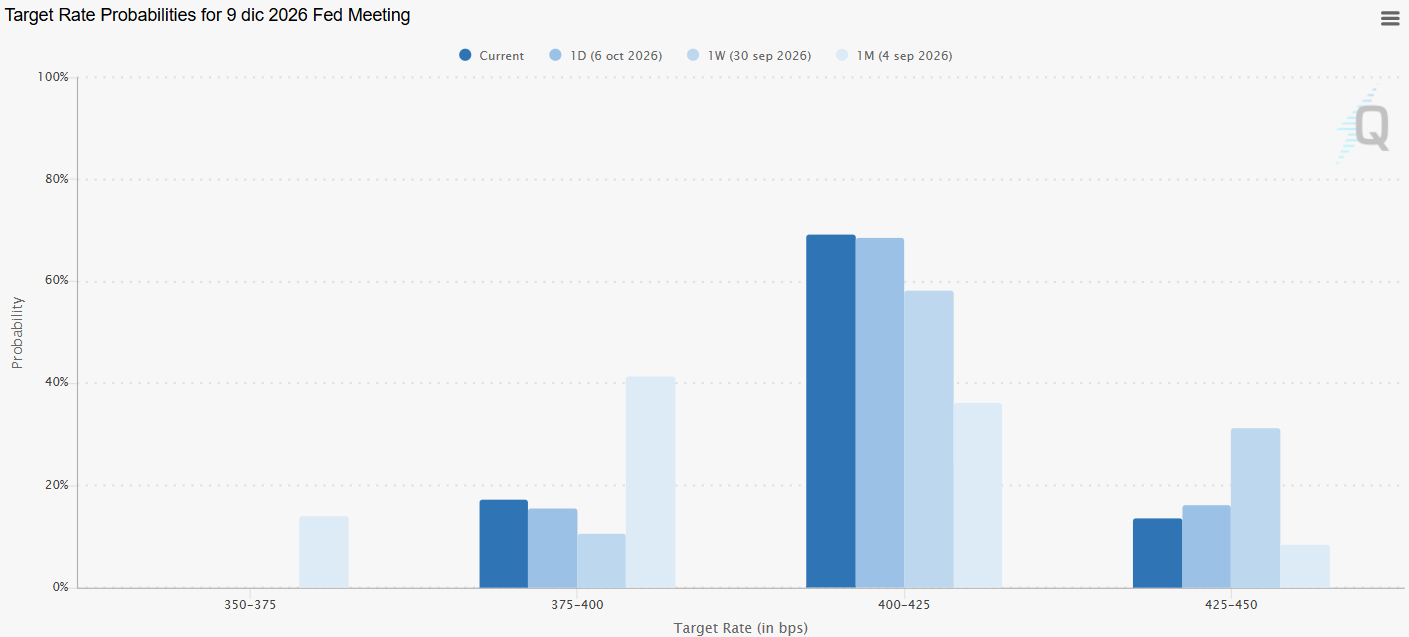
This remains important because, although markets still assign a probability greater than 80% to a scenario where rates remain unchanged at the October 28 meeting, expectations for the final months of the year have become increasingly firm. Markets are currently pricing in roughly 70% probability that the benchmark rate will reach the 4.25% area before year-end, above the current 4.00% level. In other words, although the near-term outlook continues to point toward a relatively stable Fed, the minutes have reinforced the view that rates could move higher again before the end of the year, supporting the perception of a potentially more aggressive central bank over the coming months.
Source: CMEGROUP
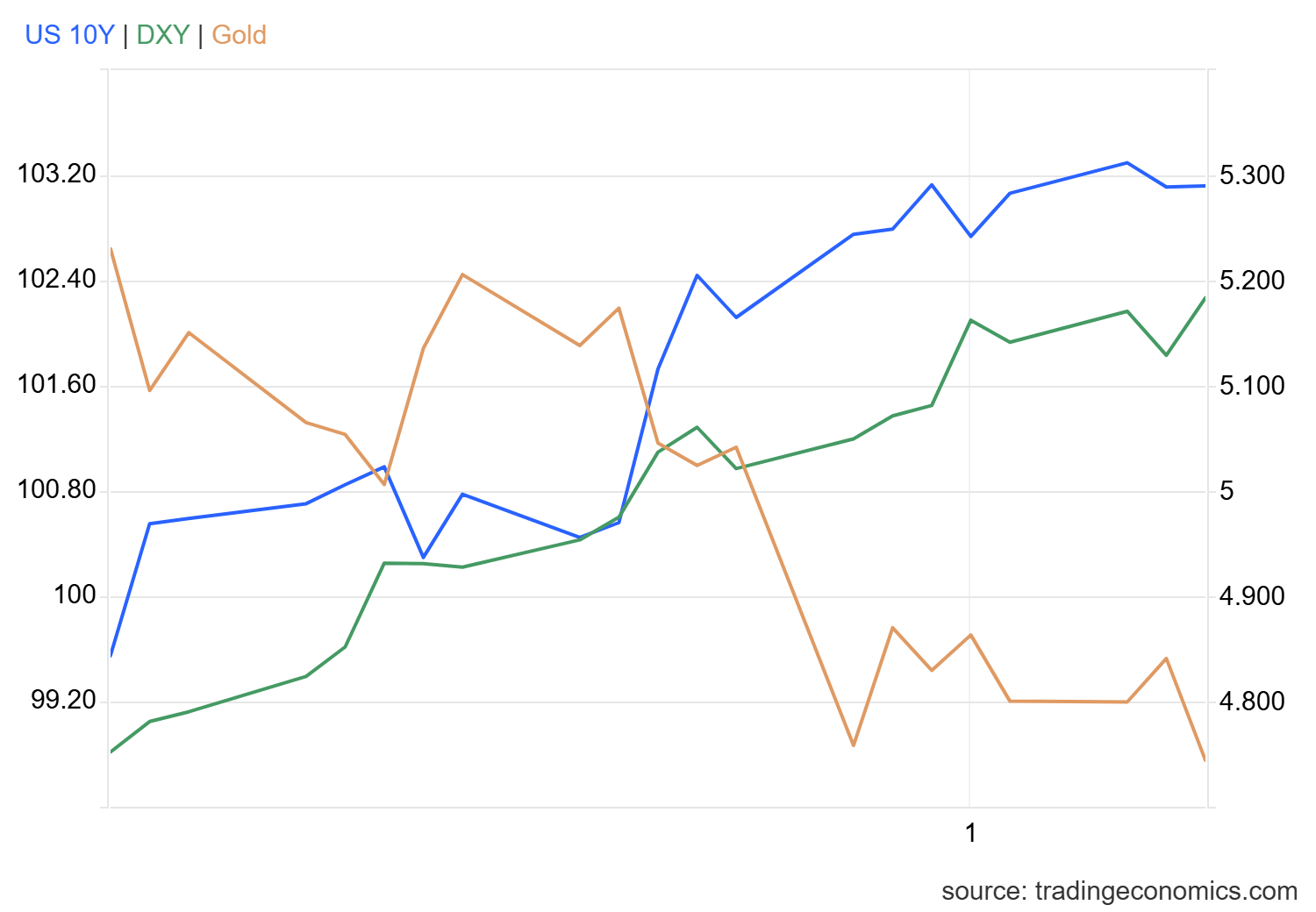
This outlook has continued to support two of gold's main competitors: U.S. Treasuries and the U.S. dollar. Even after the release of the minutes, 10-year Treasury yields continue to trade near the 5.3% area, remaining close to some of the highest levels seen in decades. At the same time, the DXY, which measures the strength of the U.S. dollar against its major peers, continues to hold above the 102-point mark, highlighting that demand for the dollar remains significant.
Source: TradingEconomics
The importance of this dynamic lies in the fact that both the dollar and the bond market continue to act as major alternatives to gold in the short term. As yields remain elevated and the dollar retains its strength, the precious metal continues to struggle to attract consistent demand. This relationship has become increasingly evident in recent weeks, with gains in both Treasury yields and the U.S. dollar occurring alongside declines in gold prices, highlighting the market's sensitivity to changes in monetary policy expectations.
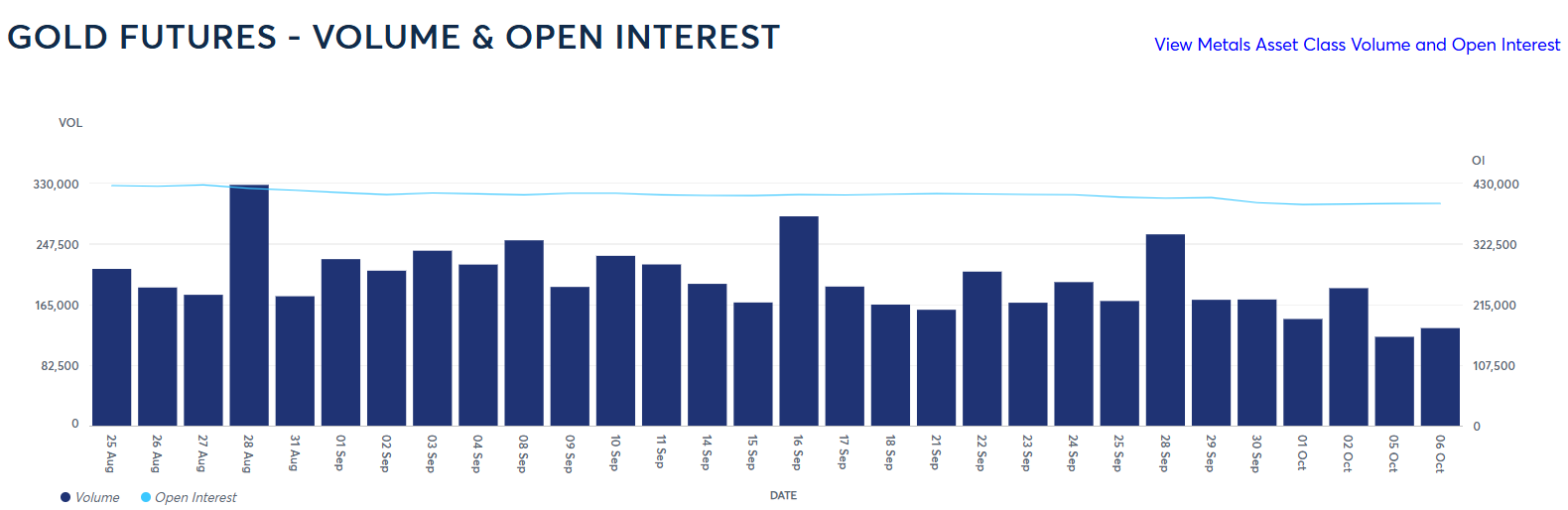
This cautious environment can also be seen in recent futures market activity. On one hand, trading volume continues to hover near the lowest levels observed over the past month, with only 133,000 contracts traded as of October 6. On the other hand, Open Interest, which measures the total number of open positions in the market, continues to display a relatively flat trend and a lack of meaningful new long positions. This combination suggests that caution had already been gaining traction before the release of the Fed minutes and, rather than supporting a recovery in demand, the event ended up reinforcing a sense of weakness that remains evident across gold price action.
Source: CMEGROUP
Taking all of this into account, the Federal Reserve minutes appear to have reinforced a backdrop in which the bond market remains highly attractive and the U.S. dollar continues to maintain considerable strength. As long as this dynamic persists, both markets could continue limiting gold's ability to recover and may keep the weakness observed around XAU/USD relevant in the sessions ahead.
Gold Technical Forecast
Source: StoneX, Tradingview
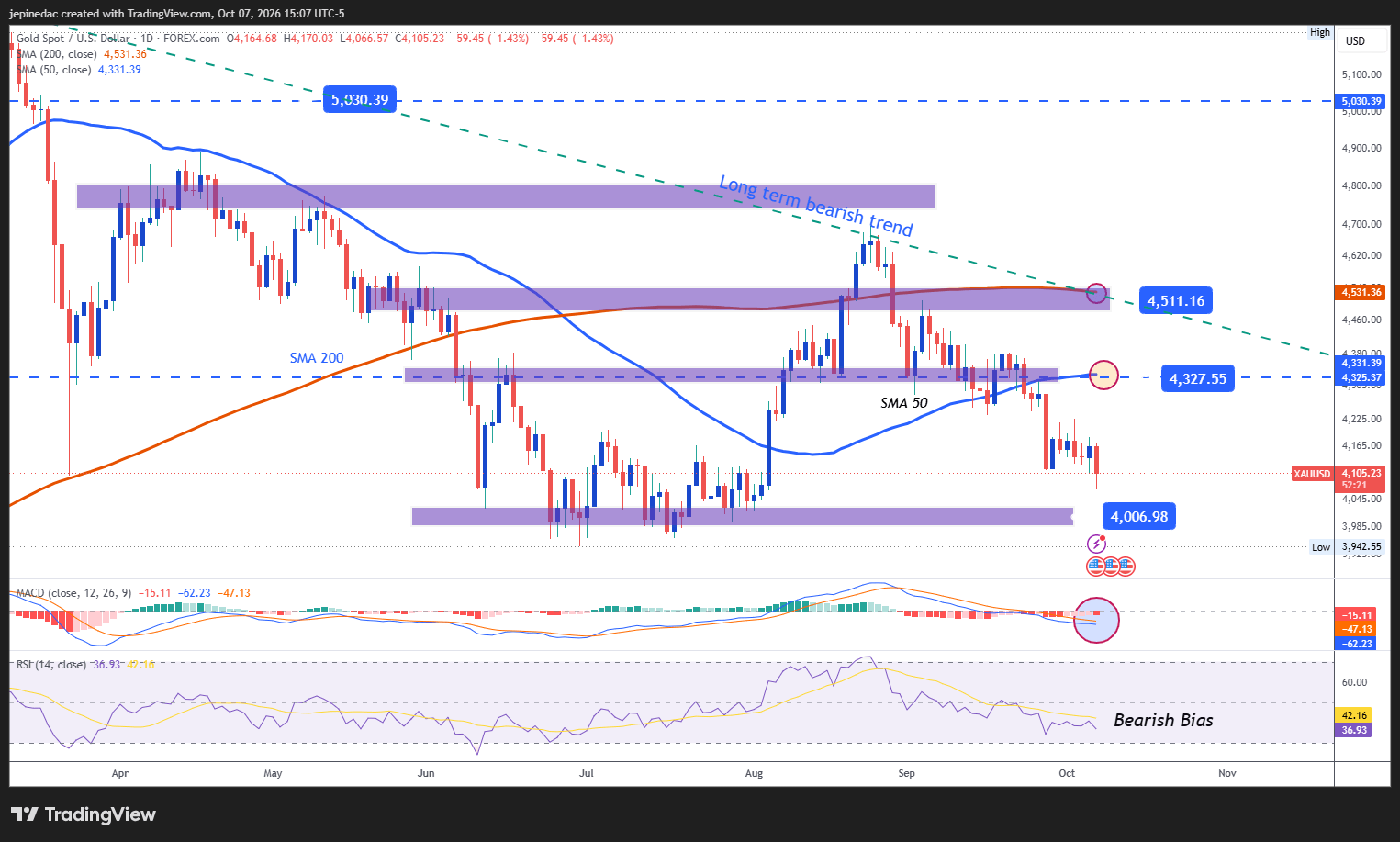
- The long-term bearish trendline is regaining relevance: Since the early months of 2026, gold had been developing within an important long-term bearish trendline that dominated much of its price action. Although this structure lost relevance during August, the recent loss of momentum has once again increased the importance of the bearish bias. As long as this dynamic remains in place, the long-term downtrend could regain its role as the dominant technical structure on the chart, particularly if key support levels begin to break during the weeks ahead.
- RSI: The RSI continues to trade below the 50 neutral level, a reading that keeps bearish momentum relevant within recent price action. As long as this condition remains intact, the weakness observed around gold could continue to play an important role in the short term.
- MACD: The RSI continues to trade below the 50 neutral level, a reading that keeps bearish momentum relevant within recent price action. As long as this condition remains intact, the weakness observed around gold could continue to play an important role in the short term.
Key Levels to Watch:
- $4,500 – Major Resistance: An important upside barrier that coincides with the most significant highs on the chart and partially aligns with the 200-period simple moving average. Price action returning toward this area could challenge the dominant bearish trend and begin opening the door to a more consistent bullish bias in the weeks ahead.
- $4,330 – Near-Term Barrier: An important retracement zone that also aligns with the 50-period simple moving average. This level could become the primary reference to monitor in the event of short-term bullish corrections.
- $4,000 – Critical Support:A major support zone that also coincides with an important psychological level for the market. Sustained moves toward this area could reinforce the dominance of sellers and favor a further extension of the long-term bearish trend over the coming weeks.
Written by Julian Pineda, CFA, CMT – Market Analyst
Follow him on: @julianpineda25