



USD/JPY Analysis: Is the Yen Still Weak Despite the BOJ Rate Hike?
The Japanese yen continues to face challenging conditions in the short term. By the end of the week, USD/JPY had gained nearly 2.00% over the previous five trading sessions, highlighting ongoing weakness in the yen and showing that the U.S. dollar continues to gain ground.
Share this:

The Japanese yen continues to face challenging conditions in the short term. By the end of the week, USD/JPY had gained nearly 2.00% over the previous five trading sessions, highlighting ongoing weakness in the yen and showing that the U.S. dollar continues to gain ground. Buying pressure around the pair has remained intact even after the Bank of Japan's latest rate hike, suggesting that markets remain more focused on the prospect of a more aggressive Federal Reserve. As long as this fundamental backdrop remains in place, buying pressure around USD/JPY could continue to play an important role in the sessions ahead.

Can the BOJ Keep Up with the Fed?
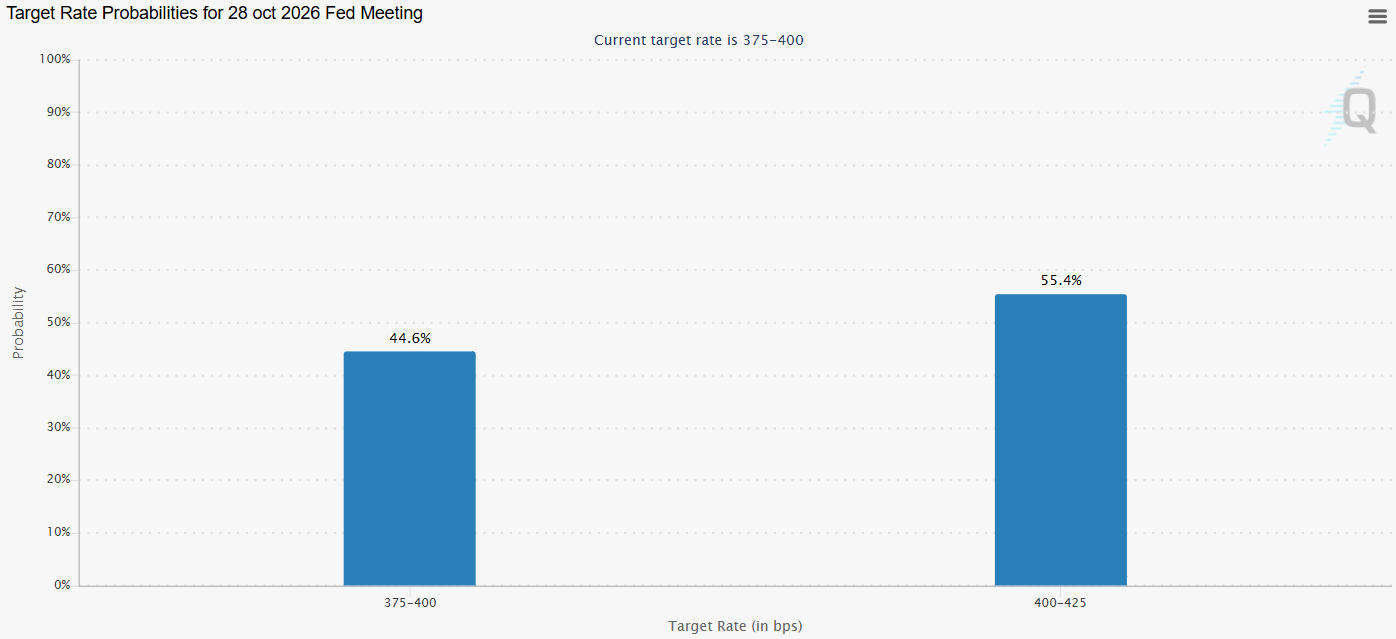
One of the most important events of the week was the Federal Reserve's decision to raise interest rates from 3.75% to 4.00%. The move marked the institution's first rate increase of the year and reinforced expectations of a more aggressive stance in the months ahead. In fact, the CME Group probability tracker still assigns roughly a 55% chance of another increase toward the 4.25% area at the October 28 meeting, highlighting that markets continue to lean toward a more restrictive Federal Reserve.
Source: CMEGROUP
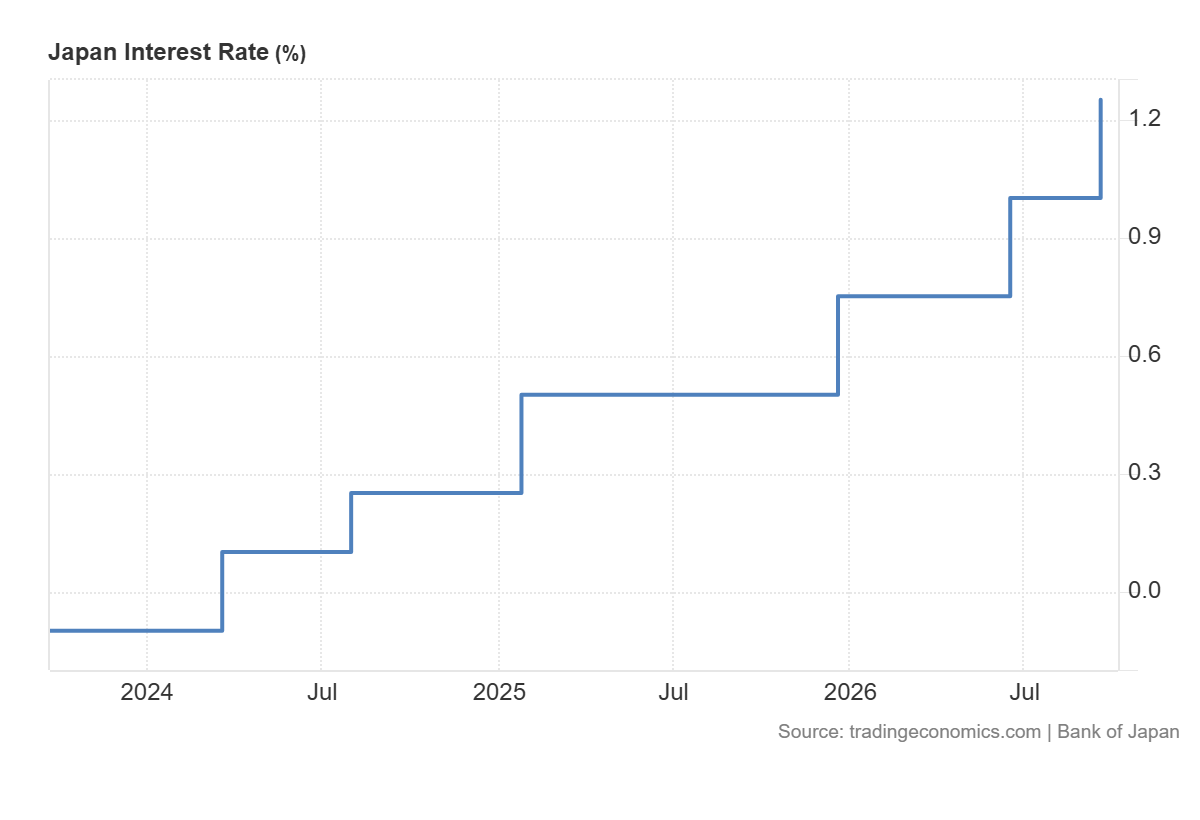
Following that event, the Bank of Japan also announced its latest policy decision, raising rates from 1.00% to 1.25%, the highest level seen in decades. The move reinforces the normalization process that the institution has been pursuing and shows that Japan continues to gradually move away from the ultra-low-rate environment that characterized much of the last several years.
Source: TradingEconomics
In broader terms, a more aggressive Bank of Japan could increase the appeal of yen-denominated investments, as it reflects an important shift in Japanese monetary policy. However, the decision ultimately failed to provide meaningful support for the currency. On one hand, markets had largely priced in the rate hike in advance. On the other, comments from Kazuo Ueda maintained a more cautious tone regarding future tightening. The governor emphasized that there is no predetermined path for accelerating rate increases and left the door open for upcoming meetings to pass without additional changes.
This outlook contrasts with current expectations for the Federal Reserve. While investors continue to anticipate further rate hikes in the United States, the Bank of Japan appears closer to entering a pause phase. This divergence between the two institutions may be limiting the relative attractiveness of yen-denominated investments while continuing to support demand for dollar-linked assets.
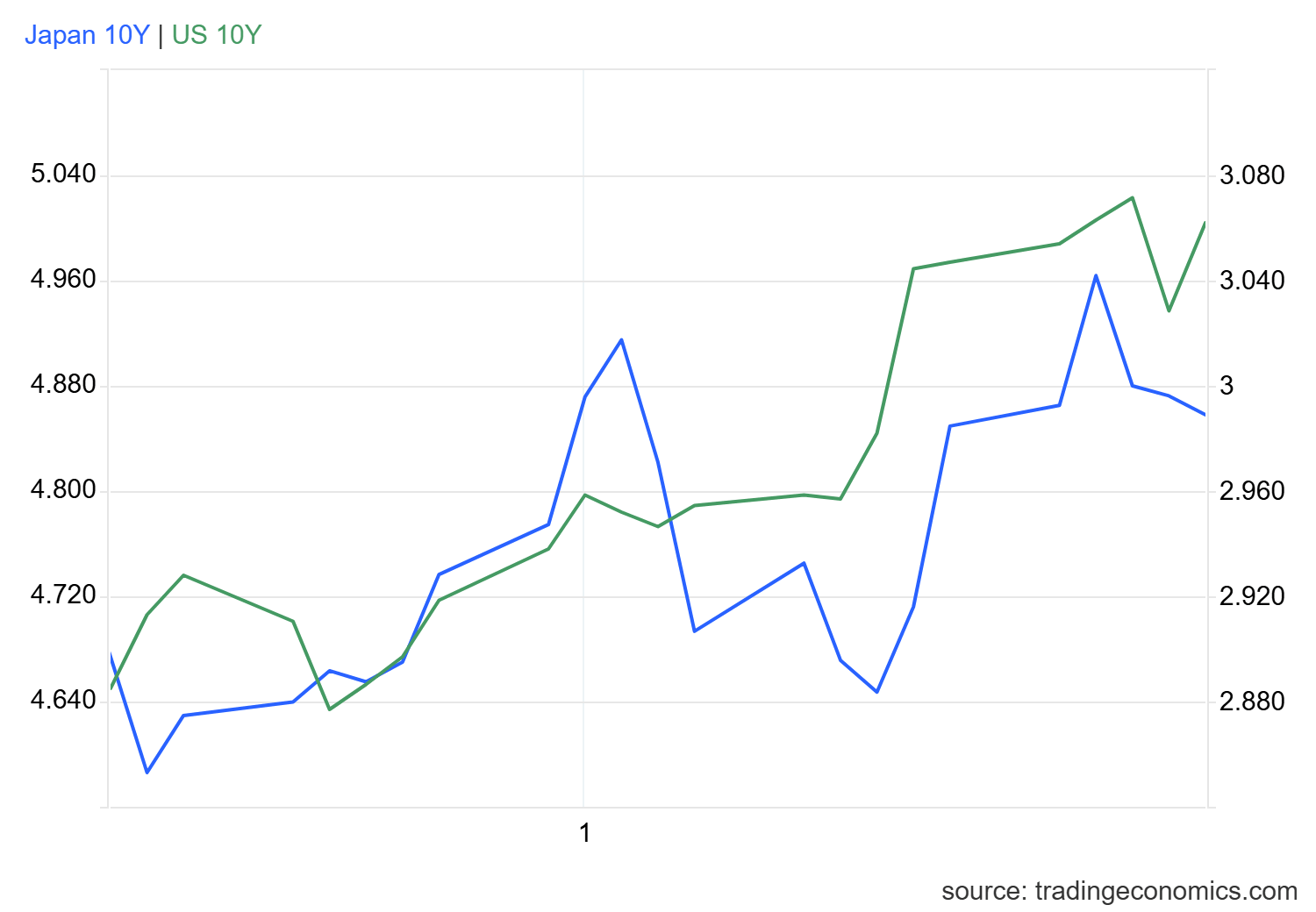
It is also important to monitor the reaction of the bond market following the decisions of both central banks. While U.S. 10-year Treasury yields continue to trade near highs above 5.00%, Japanese bonds of the same maturity have shown renewed weakness and have retreated below the 3.00% area. This suggests that while U.S. fixed-income assets continue to gain appeal, Japanese bonds are still struggling to narrow the yield differential. As a result, the relative advantage remains firmly tilted in favor of the United States.
Source: TradingEconomics
Taking all of this into account, the central bank landscape continues to favor the U.S. dollar. Markets expect the Federal Reserve to remain more aggressive than the Bank of Japan over the coming months, a divergence that could continue to influence bond markets and make it more difficult for the yen to stage a sustained recovery against the dollar. As long as this dynamic remains intact, meaningful buying pressure around USD/JPY could continue to dominate price action in the weeks ahead.
USD/JPY Technical Forecast
Source: StoneX, Tradingview
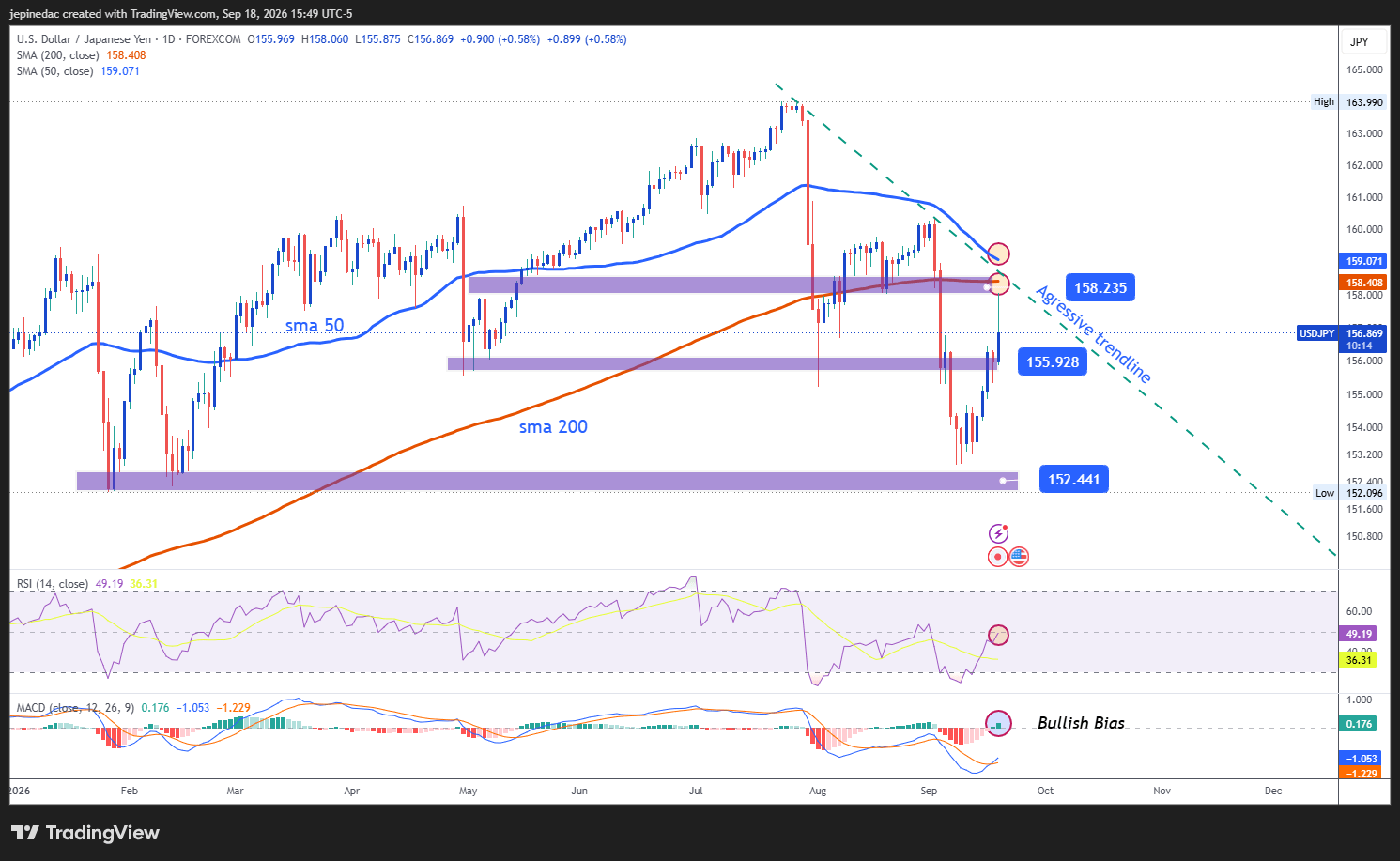
- Trendline Struggles to Hold: Over recent weeks, USD/JPY had been developing a well-defined bearish trendline that emerged as one of the most important technical structures on the daily chart. However, this reference is beginning to lose relevance as the recent recovery in price gains momentum. If selling pressure fails to return over the coming sessions, the structure could lose influence and open the door to a more established bullish move over the weeks ahead.
- RSI: The RSI continues to trend higher and is now approaching the 50 neutral level. This reading suggests that buying momentum over the last 14 sessions is becoming increasingly relevant and, if this behavior persists, could signal a stronger bullish bias around USD/JPY.
- MACD: A similar picture can be observed in the MACD, whose histogram continues to trade above the 0 neutral line. This reading indicates that the average strength of shorter-term moving averages remains constructive and reinforces the possibility of a more consistent bullish bias during upcoming sessions.
Key Levels:
- 158.23 – Key Resistance: This level coincides with important retracement areas from previous weeks and the 200-period simple moving average. Price action above this level could bring an end to the bearish structure seen in recent weeks and open the door to a more meaningful bullish bias on the daily chart.
- 55.92 – Near-Term Barrier: This is the closest relevant retracement zone and remains the primary level to monitor in the event of short-term corrective pullbacks.
- 152.44 – Major Support: A key support area that coincides with lows not seen since February of this year. A move back toward this level could restore relevance to a bearish bias that has recently faded and extend the downward trend as the dominant structure over the coming weeks.
Written by Julian Pineda, CFA, CMT – Market Analyst
Follow him on: @julianpineda25
Latest market news




Open an account in minutes
Experience award-winning platforms with fast and secure execution, and enjoy tight spreads from 0.5 pts on FX and 0.3 pts on indices.
Economic calendar
Web Trader platform
Our sophisticated web-based platform is packed with features.
Related articles
USD/JPY forecast: Dollar remains fundamentally supported ahead of CPI
The USD/JPY eased lower today with the greenback also declining against several other currencies. However, at the time of writing, oil prices were bouncing back and yields were off their lows again. The US dollar hadn’t moved much yet, but these forces could help it to regain its poise ahead of the release of US CPI on Wednesday.
British Pound Technical Outlook: GBP/USD Bulls Fight to Stabilize at Critical Support 10 13 2026
GBP/USD is compressing into a tight near-term range just above key support, with a breakout likely to provide the next directional cue.

EUR/USD forecast: Downside risks persist despite recovery
Amid a lack of any major news, the FX markets have been largely in consolidation mode in the first half of Tuesday’s session. The US dollar eased along with bond yields and oil prices, allowing downbeat currencies like the euro to rebound modestly. With US CPI data due for release on Wednesday, don’t expect much in the way of a sharper decline in USD ahead of it. If anything, we could see the dollar buying resume, especially if crude oil prices catch a bid again amid the ongoing situation.
This report is intended for general circulation only. It should not be construed as a recommendation, or an offer (or solicitation of an offer) to buy or sell any financial products. The information provided does not take into account your specific investment objectives, financial situation or particular needs. Before you act on any recommendation that may be contained in this report, independent advice ought to be sought from a financial adviser regarding the suitability of the investment product, taking into account your specific investment objectives, financial situation or particular needs.
StoneX Financial Pte. Ltd., may distribute reports produced by its respective foreign entities or affiliates within the StoneX group of companies or third parties pursuant to an arrangement under Regulation 32C of the Financial Advisers Regulations. Where the report is distributed to a person in Singapore who is not an accredited investor, expert investor or an institutional investor (as defined in the Securities Futures Act), StoneX Financial Pte. Ltd. accepts legal responsibility to such persons for the contents of the report only to the extent required by law. Singapore recipients should contact StoneX Financial Pte. Ltd. at 6826 9988 for matters arising from, or in connection with the report.
In the case of all other recipients of this report, to the extent permitted by applicable laws and regulations neither StoneX Financial Pte. Ltd. nor its associated companies will be responsible or liable for any loss or damage incurred arising out of, or in connection with, any use of the information contained in this report and all such liability is hereby expressly disclaimed. No representation or warranty is made, express or implied, that the content of this report is complete or accurate.
StoneX Financial Pte. Ltd. is not under any obligation to update this report.
Trading CFDs carries a high level of risk that may not be suitable for some investors. Consider your investment objectives, level of experience, financial resources, risk appetite and other relevant circumstances carefully. The possibility exists that you could lose some or all of your investments, including your initial deposits. If in doubt, please seek independent expert advice. Visit www.forex.com/en-sg/terms-and-policies for the complete Risk Disclosure Statement.