



USD/JPY Analysis: Japan's Interventions Continue to Support Yen Strength
The yen has continued to gain relevance during recent trading sessions and, over the last four trading days, USD/JPY has declined by nearly 3.6%, highlighting the strength currently being displayed by the Japanese currency against the U.S. dollar.
Share this:

The yen has continued to gain relevance during recent trading sessions and, over the last four trading days, USD/JPY has declined by nearly 3.6%, highlighting the strength currently being displayed by the Japanese currency against the U.S. dollar. This selling pressure has remained in place as markets continue digesting recent updates regarding Japan's currency interventions while also maintaining expectations of a more aggressive Bank of Japan. As long as these factors remain dominant, downside pressure on USD/JPY could continue to be an important feature of the market in the sessions ahead.

Is Intervention Risk Returning to Japan?
The most important short-term development behind the yen's recent strength relates to the latest confirmations regarding Japan's efforts to support its currency through direct intervention.
Recent data revealed that Japan carried out a record intervention program during August. International reserves declined by approximately $76.6 billion, marking the largest monthly drop seen in recent years and falling from July's peak of $1.287 trillion in total reserves. As a result, markets have interpreted a significant portion of this decline as being linked to yen-buying operations.
In addition, the Ministry of Finance confirmed that approximately $98.6 billion was deployed in currency interventions through August 26, including operations conducted in coordination with the United States. This information is particularly important because it confirms that intervention threats are no longer merely theoretical but are instead supported by figures directly released by the Japanese government.
The market's interpretation has been straightforward: Japanese authorities remain willing to sell dollars and buy yen aggressively whenever they believe the currency is under excessive pressure. Consequently, this confirmation has increased expectations that intervention could continue to play an important role in the months ahead, helping reinforce demand for the yen over the short term.
Alongside this situation, expectations of a more restrictive monetary policy from the Bank of Japan also remain important. Markets are currently assigning more than a 62% probability to a rate increase at the September 17 meeting, taking the benchmark rate from 1.00% to 1.25%. This reflects continued expectations that Japan will gradually move away from the ultra-low interest rate environment that has characterized its monetary policy for decades.
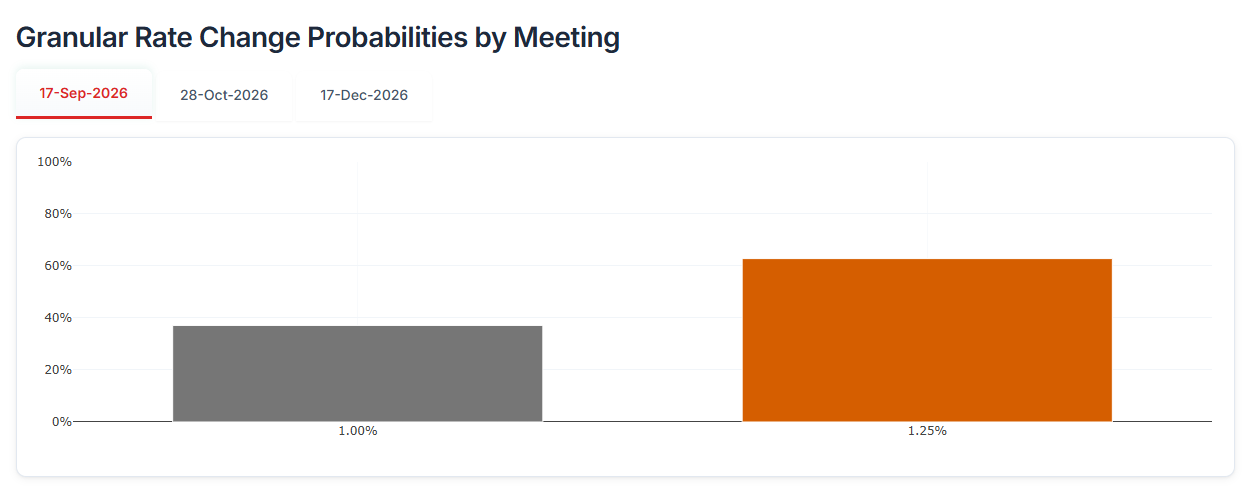
Source: centralbankwatch
Taking all of this into account, the outlook surrounding the yen appears to have changed significantly compared with previous weeks. Expectations of additional interventions and a more aggressive Bank of Japan are helping support interest in the Japanese currency. On one hand, markets continue to consider the possibility of renewed yen purchases by authorities. On the other, higher interest rates improve the relative attractiveness of yen-denominated investments. As long as these factors remain in place, downside pressure on USD/JPY could continue to be an important feature of the short-term outlook.
Could the U.S. Dollar Become a Threat?
At the same time, it is important to recognize that the main obstacle to further yen strength could remain the U.S. dollar. This issue gained importance after last Friday's NFP report, which delivered employment figures well above expectations and once again supported the possibility of a more aggressive Federal Reserve.
Although this dynamic has not yet translated into a significant recovery in the dollar itself, it could become a relevant factor over the coming weeks. For now, the DXY Index continues to trade around the 98-point area without registering meaningful declines and remains relatively stable near the lows established in recent weeks.
Part of this lack of reaction may be explained by the U.S. market holiday, which tends to reduce both activity and volatility across financial markets.
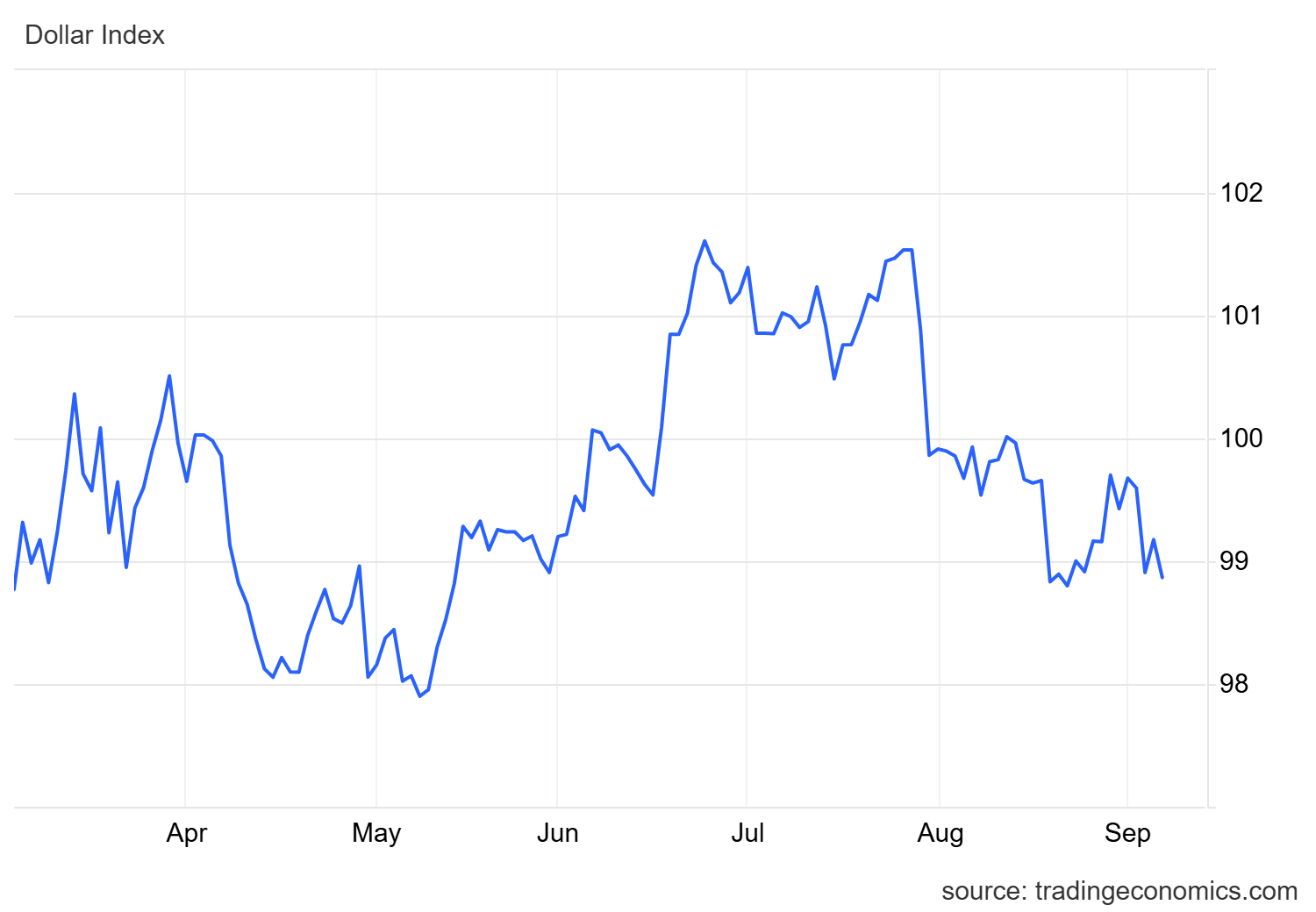
Source: TradingEconomics
The key point to monitor is whether expectations of a more hawkish Federal Reserve begin translating into a more meaningful recovery in the dollar. If that occurs, part of the yen's recent advance could begin to face resistance. Under such a scenario, USD/JPY could move into a more balanced trading environment, particularly if both central banks continue progressing toward more restrictive policy settings over the coming months.
USD/JPY Technical Outlook
Source: StoneX, Tradingview
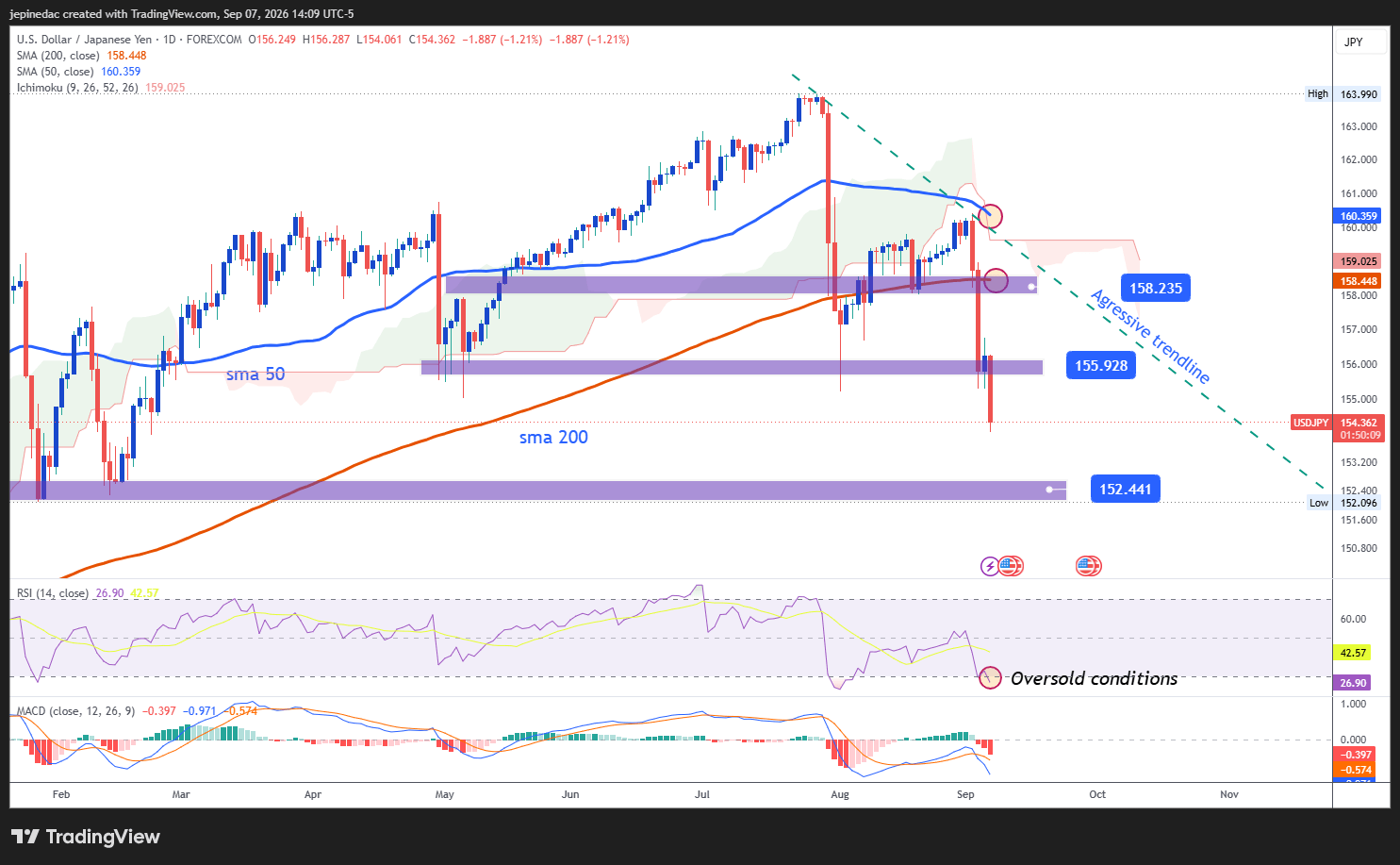
- A Potential Trendline Begins to Take Shape: The recent decline in USD/JPY has led to the formation of a sequence of increasingly lower lows on the chart, a development that is beginning to shape a potential bearish trendline. As long as selling pressure remains dominant, this structure could continue to strengthen and become the most important technical pattern to monitor in the weeks ahead.
- MACD: The MACD histogram continues to move below the neutral 0 line, indicating that the average strength of short-term moving averages remains tilted toward the downside. As long as this behavior persists, bearish momentum could continue dominating market activity.
- RSI: A similar dynamic can be seen in the RSI, which continues to move lower below its neutral threshold. However, it is also worth noting that the indicator has now fallen below the 30 oversold level. This suggests that selling pressure may be becoming excessive in the short term and could create room for temporary bullish corrections over the coming sessions.
Key Levels:
- 158.235 – Key Resistance: This level coincides with the 200-period Simple Moving Average and represents the most important upside barrier on the chart. Price action returning toward this area could challenge the formation of the current bearish structure and favor a broader phase of consolidation during the weeks ahead.
- 155.928 – Nearby Barrier: This area corresponds to the nearest retracement zone on the chart and stands as the primary reference point for potential short-term bullish corrections.
- 152.441 – Key Support: A support area not seen since February and currently the most important downside barrier within the market. A move toward this level could reinforce the dominant bearish bias and further confirm the downtrend structure that has emerged during recent sessions.
Written by Julian Pineda, CFA, CMT – Market Analyst
Follow him on: @julianpineda25
Latest market news




Open an account in minutes
Experience award-winning platforms with fast and secure execution, and enjoy tight spreads from 0.5 pts on FX and 0.3 pts on indices.
Economic calendar
Web Trader platform
Our sophisticated web-based platform is packed with features.
Related articles
USD/JPY forecast: Dollar remains fundamentally supported ahead of CPI
The USD/JPY eased lower today with the greenback also declining against several other currencies. However, at the time of writing, oil prices were bouncing back and yields were off their lows again. The US dollar hadn’t moved much yet, but these forces could help it to regain its poise ahead of the release of US CPI on Wednesday.
British Pound Technical Outlook: GBP/USD Bulls Fight to Stabilize at Critical Support 10 13 2026
GBP/USD is compressing into a tight near-term range just above key support, with a breakout likely to provide the next directional cue.

S&P 500 Forecast: SPX holds steady as tech stocks decline and banks rise post-earnings
U.S. stocks are mixed ahead of the open on Tuesday, with tech stocks leading the decline as investors also weigh bank earnings.

This report is intended for general circulation only. It should not be construed as a recommendation, or an offer (or solicitation of an offer) to buy or sell any financial products. The information provided does not take into account your specific investment objectives, financial situation or particular needs. Before you act on any recommendation that may be contained in this report, independent advice ought to be sought from a financial adviser regarding the suitability of the investment product, taking into account your specific investment objectives, financial situation or particular needs.
StoneX Financial Pte. Ltd., may distribute reports produced by its respective foreign entities or affiliates within the StoneX group of companies or third parties pursuant to an arrangement under Regulation 32C of the Financial Advisers Regulations. Where the report is distributed to a person in Singapore who is not an accredited investor, expert investor or an institutional investor (as defined in the Securities Futures Act), StoneX Financial Pte. Ltd. accepts legal responsibility to such persons for the contents of the report only to the extent required by law. Singapore recipients should contact StoneX Financial Pte. Ltd. at 6826 9988 for matters arising from, or in connection with the report.
In the case of all other recipients of this report, to the extent permitted by applicable laws and regulations neither StoneX Financial Pte. Ltd. nor its associated companies will be responsible or liable for any loss or damage incurred arising out of, or in connection with, any use of the information contained in this report and all such liability is hereby expressly disclaimed. No representation or warranty is made, express or implied, that the content of this report is complete or accurate.
StoneX Financial Pte. Ltd. is not under any obligation to update this report.
Trading CFDs carries a high level of risk that may not be suitable for some investors. Consider your investment objectives, level of experience, financial resources, risk appetite and other relevant circumstances carefully. The possibility exists that you could lose some or all of your investments, including your initial deposits. If in doubt, please seek independent expert advice. Visit www.forex.com/en-sg/terms-and-policies for the complete Risk Disclosure Statement.