

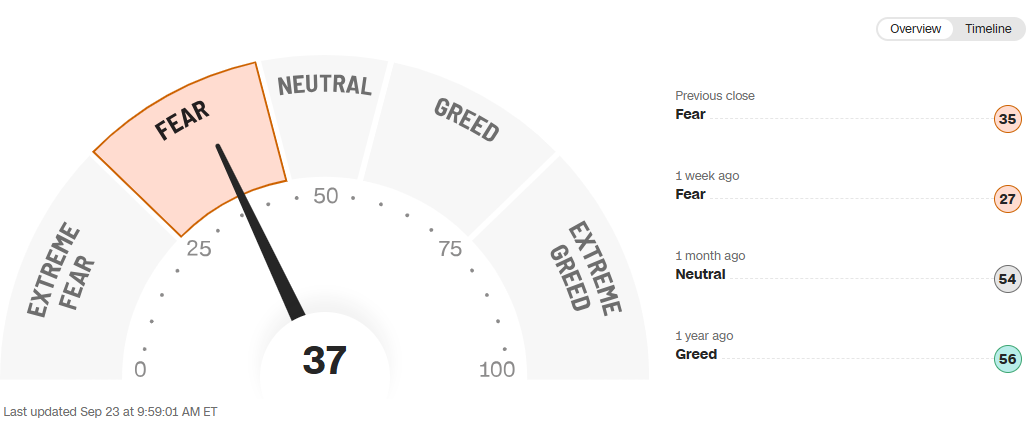
Despite the latest rally in U.S. indices and the dollar, signs of a short-term slowdown are emerging. Momentum indicators are stretched on both hourly and daily time frames, while market sentiment remains in fear territory.
Fear & Greed Index
Source: CNN
DXY, Crude Oil and U.S. Treasury Yields
Source: TradingView
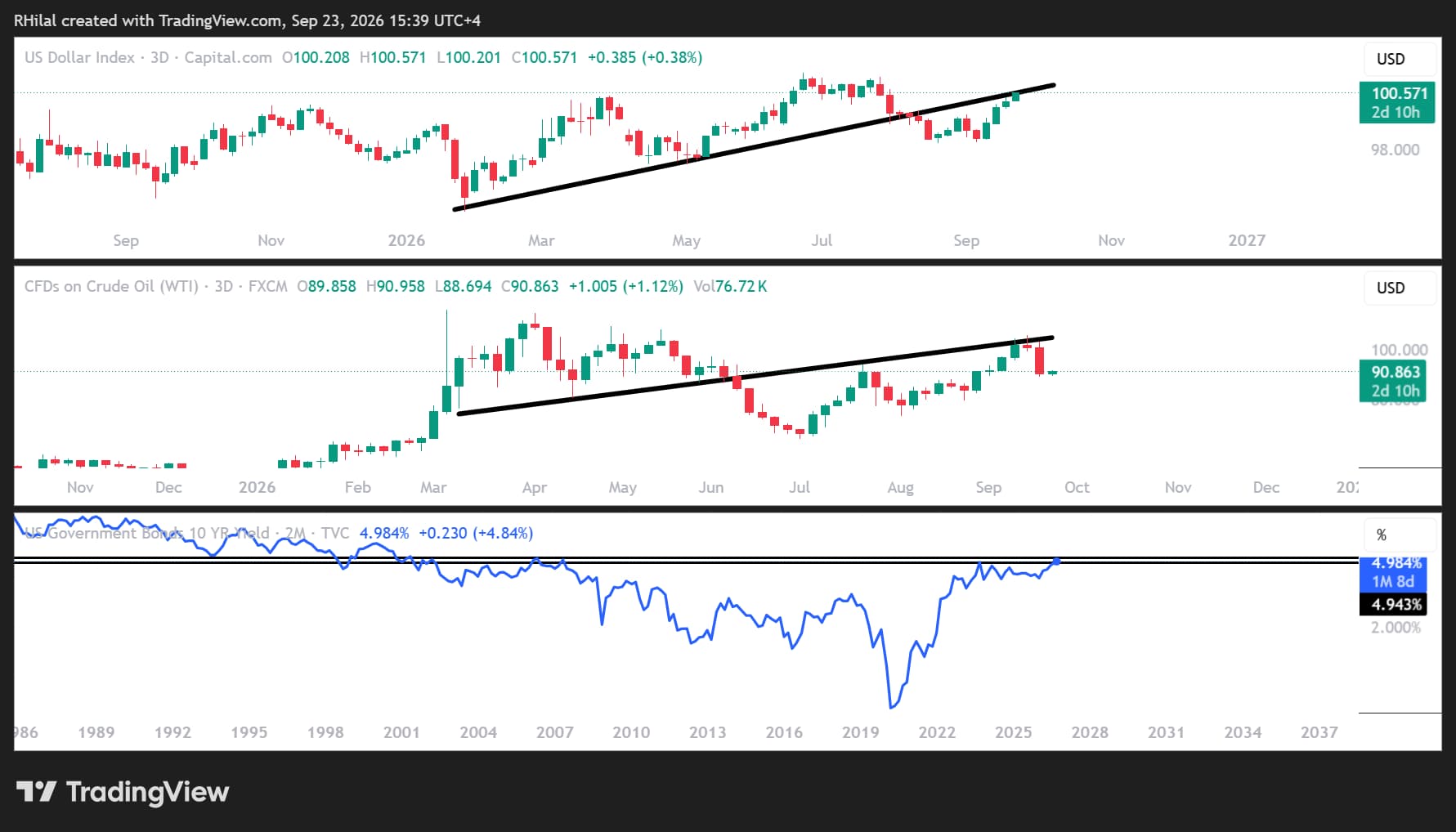
These three charts are important for interpreting market developments amid energy-supply disruption risks and renewed inflation concerns.
Market sentiment remains broadly cautious. The U.S. Dollar Index is attempting to reclaim its 2026 uptrend, while crude oil prices have pulled back more than 12% from a 7-month resistance zone.
This combination creates a mixed cross-asset signal with direct implications for currency markets and equity indices:
- The dollar’s rebound toward 101 is increasing pressure on major currency pairs, including the euro, which is trading close to its yearly lows.
- The pullback in crude oil is easing inflationary pressure and supporting a more resilient outlook for U.S. markets ahead of the midterm elections.
- The U.S. 10-year Treasury yield remains near highs last seen in 2007, reinforcing a cautious market outlook as expectations for another Federal Reserve rate hike rise above 53% for the October meeting, according to the CME FedWatch Tool.
The relationship between these assets is now central to the broader market outlook. A continued pullback in crude oil and Treasury yields could support risk assets, while a sustained dollar breakout and renewed strength in oil could increase pressure on currencies and equities.
EUR/USD Price Outlook: Daily Time Frame — Log Scale
Source: TradingView
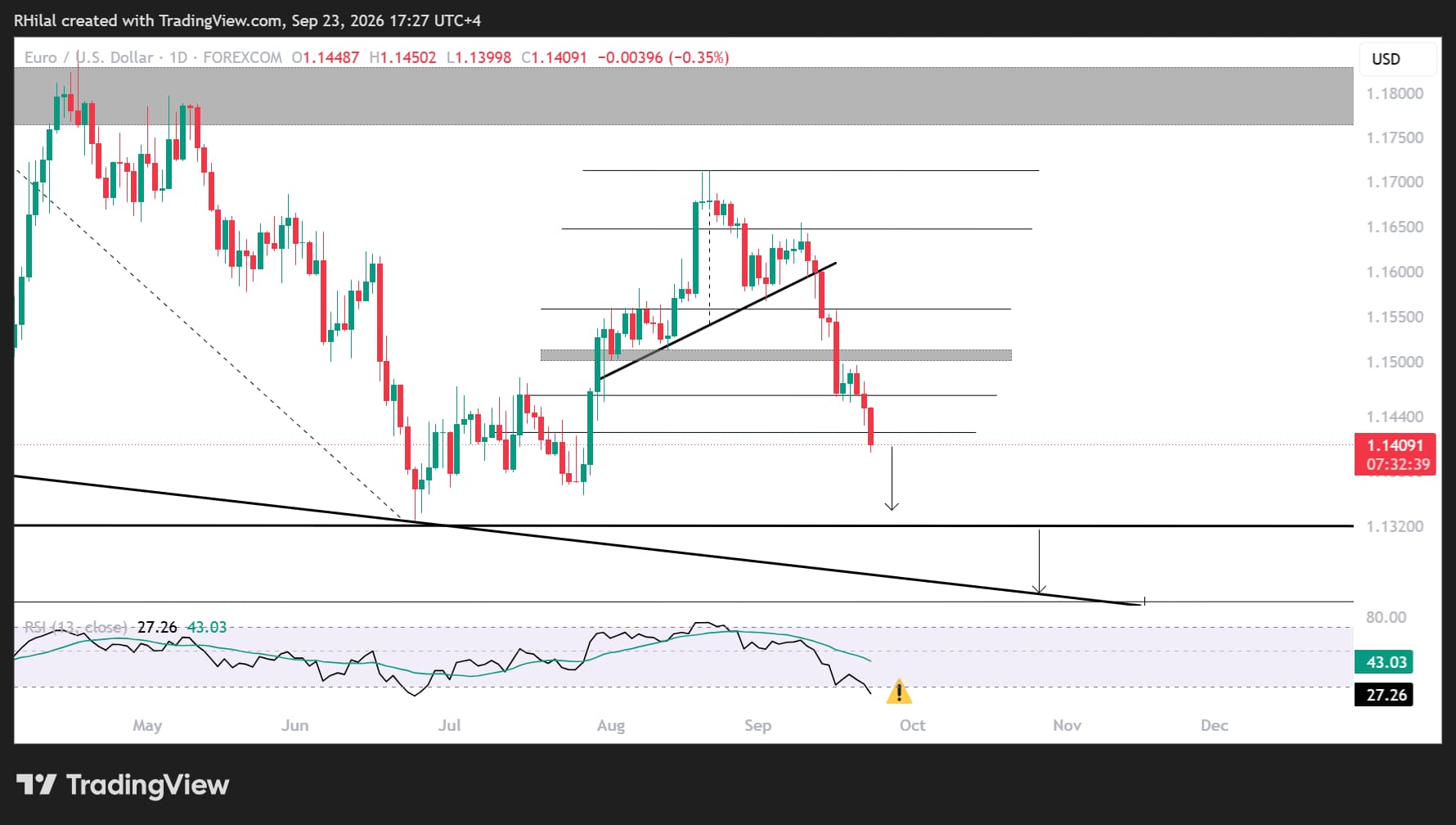
EUR/USD’s latest decline is approaching the psychological support level at 1.1400, which also aligns with the 78.6% Fibonacci retracement of the June–August advance.
A breakdown below this area would expose the yearly low near 1.1320. However, momentum indicators on both hourly and daily time frames are deeply oversold, increasing the risk of a short-term reversal before new 2026 lows are confirmed.
A sustained breakdown below 1.1320 would open the way toward the multi-year downtrend support extending from July 2025 near 1.1240. This area could provide another potential bullish reversal zone.
A sustained move below that support would increase the risk of a deeper decline toward 1.1100.
On the upside, the longer-term bullish bias would remain in place if the DXY fails to break above the 101–101.80 resistance zone and EUR/USD holds above 1.1320 before reclaiming 1.1520.
A move back above 1.1520 would signal improving bullish momentum and reduce the risk of a broader structural breakdown.
Nasdaq Price Outlook: Daily Time Frame — Log Scale
Source: TradingView
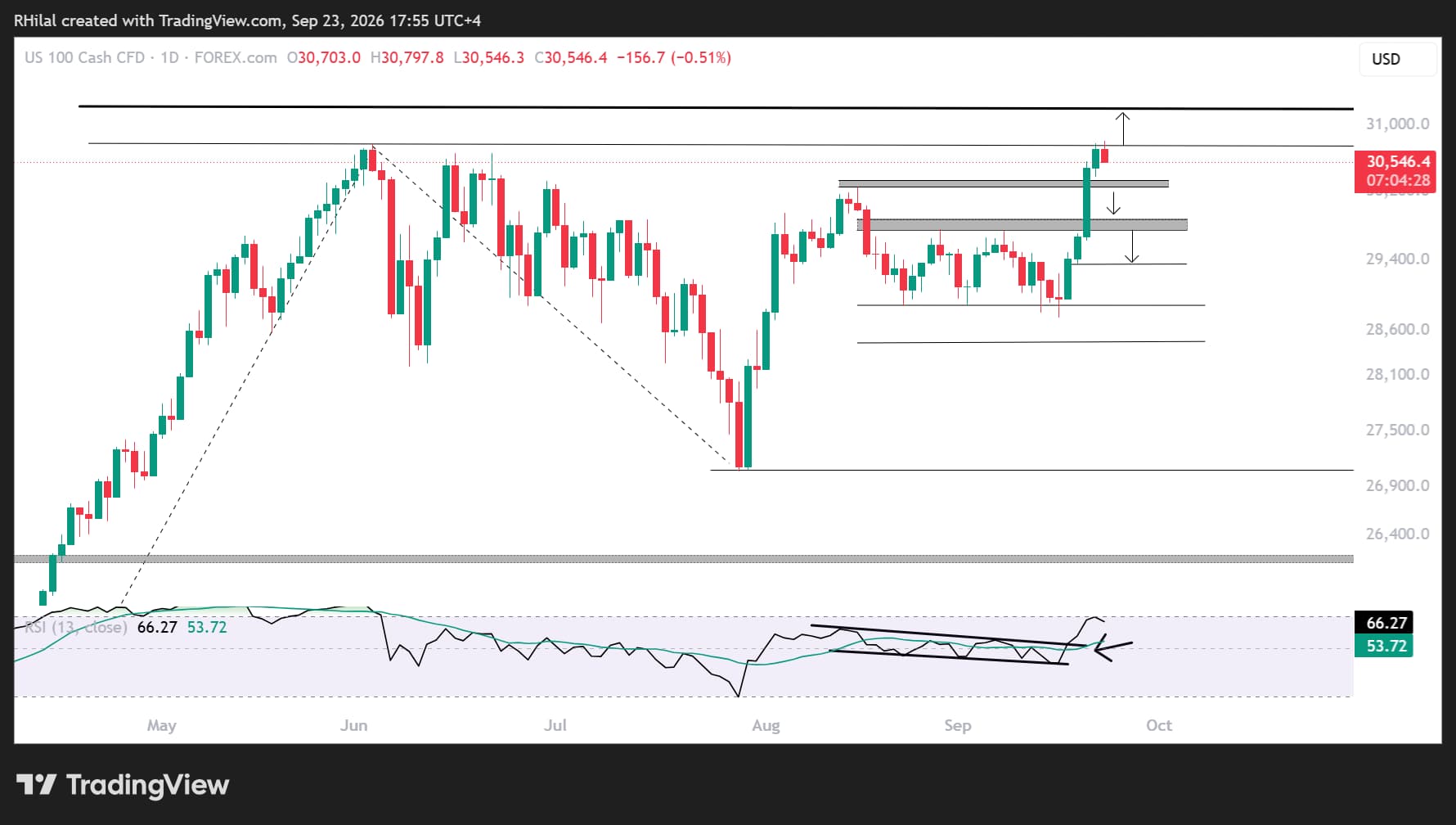
Following its breakout above the multi-week resistance near 29,800, the Nasdaq rally accelerated toward the record high near 30,750.
The index is now showing stretched overbought momentum on both daily and hourly time frames, increasing the risk of a short-term pullback.
A close above the 30,750 record high would extend the bullish move toward 31,200, although this area could also attract profit-taking given the overbought conditions and continuing market and Federal Reserve uncertainty.
On the downside, a breakdown below 30,200 would weaken the short-term bullish structure.
This level represents the August 17 high and the 27.2% retracement of the September advance. A sustained move below it would extend the decline toward the previous multi-week resistance near 29,800.
The 29,800 area could either create another dip-buying opportunity or allow the bearish bias to reassert itself, exposing 29,200 and then 28,800.
I analyze these charts in my weekly webinar
Register here for the next session
From a cross-asset perspective, the market remains caught between a resilient risk-on structure and growing short-term reversal risks.
The pullback in crude oil is easing inflationary pressure, but elevated Treasury yields and a dollar attempting to reclaim its 2026 uptrend continue to limit market gains.
A sustained break above 101–101.80 in the DXY, a renewed rise in crude oil prices or a continued increase in Treasury yields would strengthen the bearish reversal risks across EUR/USD and the Nasdaq.
In contrast, a failure by the dollar to break higher, combined with softer crude oil prices and lower Treasury yields, could support further gains in risk assets despite the current overbought momentum conditions.
Written by Razan Hilal, CMT
Follow on X: @Rh_waves