


2025’s Biggest Surprise: The (Lack of) Market Impact from Economic Policy and Data
From the US tariff policy to central bank meetings to the US government shutdown, seemingly major traditional economic developments were less impactful than in previous years - what does it mean moving forward?
Share this:

2025’s Biggest Surprise: The (Lack of) Market Impact from Economic Policy and Data
Key Points
- My biggest surprise in 2025 was the lack of impact from economic data and policy decisions on markets.
- From the US tariff policy to central bank meetings to the US government shutdown, seemingly major traditional economic developments were less impactful than in previous years.
- Traders may want to take any official policy announcements and data with a grain of salt and at least become more aware of alternative data sources in 2026.
While there were plenty of surprising market moves in 2025 (the big rally to record highs in Gold and Silver, multi-year lows in oil, the continued march higher in equity indices all come to mind), my biggest surprise in 2025 was the lack of impact from economic data and policy decisions on markets.
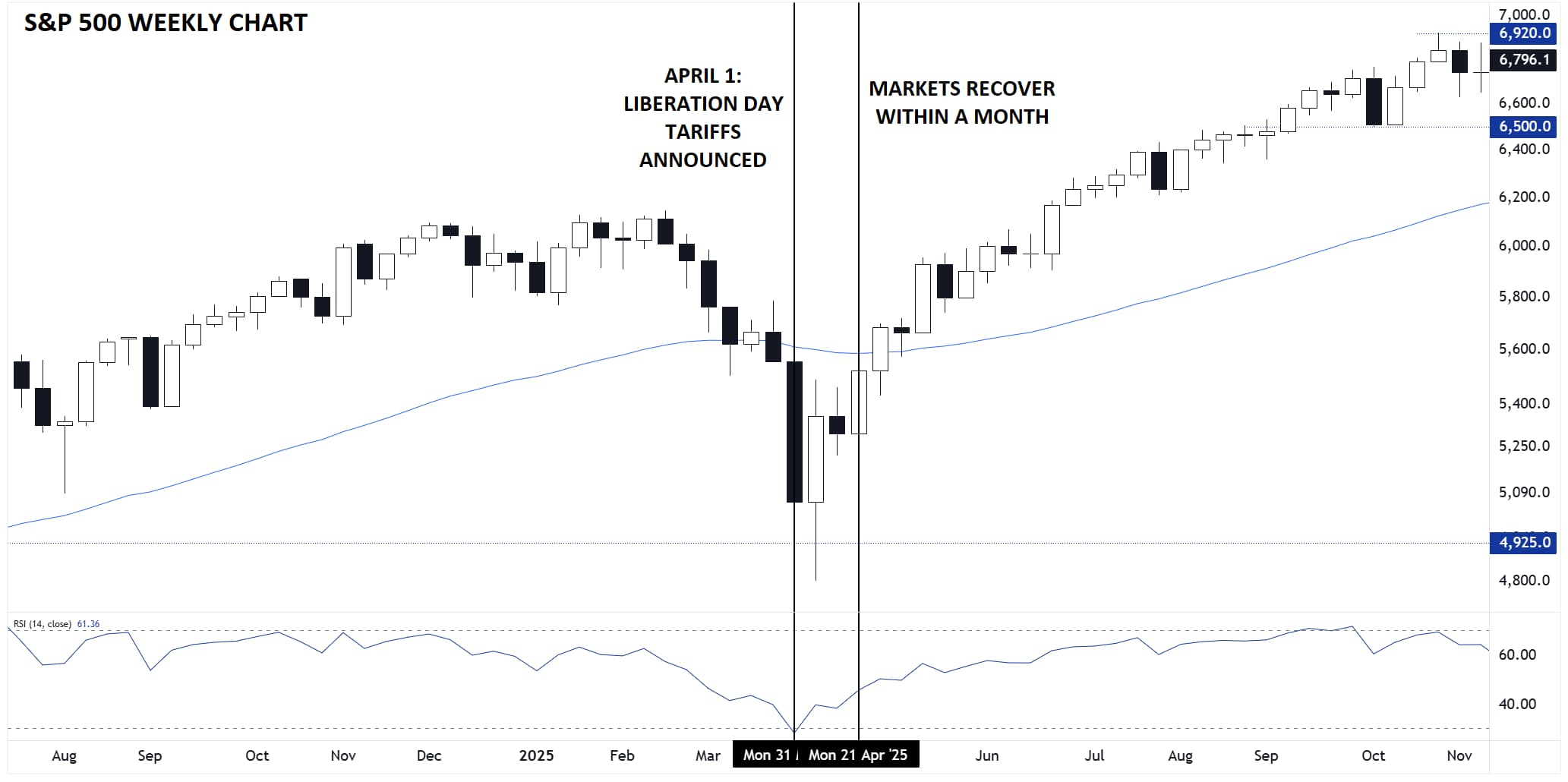
The clearest example of this phenomenon comes from the US’s impositions of the highest tariffs in a century, a policy that many economists suggested would tip the world’s largest economy into a recession, with obvious implications for markets. As the chart below shows, the S&P 500 did see a quick decline on the release, but that move was rapidly reversed, before the imposition of most of the tariffs, and powered onward to new highs in short order:
Source: StoneX, TradingView

Of course, there were ostensibly logical explanations ex-post: The tariffs ultimately haven’t been implemented to the extent outlined on the world’s second-largest economy, companies have used alternative shipping points to sidestep the tariffs, carve outs have limited their impact, the impact hasn’t fully emerged due to inventory cycles, etc. Regardless, the ultimate impact for any traders who viewed this shift as anything but a couple week blip was that they overreacted
This same dynamic has played out in other policy announcements, from tax cuts to increased fiscal spending to central bank interest rate decisions to the longest government shutdown in US history.
Likewise, we’ve seen a widespread decline in the impact of historically significant economic data. Especially in the US, but to an extent in other countries as well, traders have quickly shrugged off “surprising” readings on inflation, jobs, GDP, and sentiment.
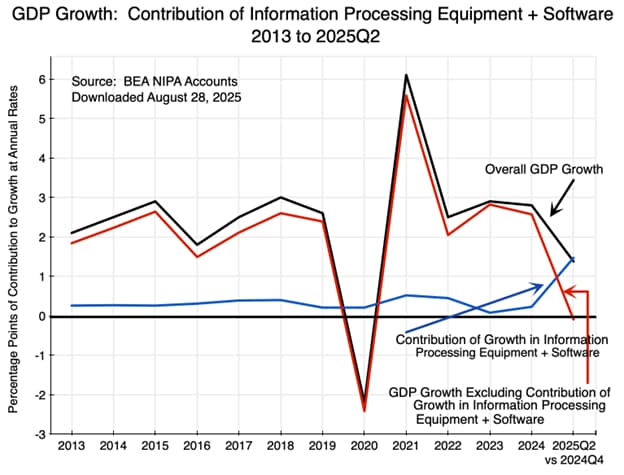
From my perspective, there are at least two reasons why we’ve seen this dynamic play out. Most importantly, the dominant theme of the rise of AI and the associated wealth effect have rendered more traditional economic measures less significant. As long as the AI “Hyperscalers” continue to invest in building data centers, the other aspects of economic growth and other data will continue to take a back seat:
Source: BEA, AnEconomicSense
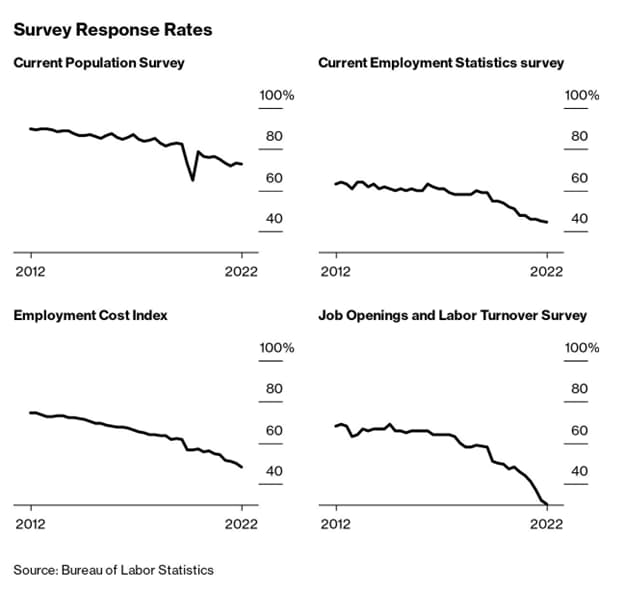
The other reason traders have mostly disregarded economic surprises is that there are reasons to believe that the underlying data is increasingly not representative of the underlying economic conditions. Most economic data has been compiled via surveys for decades…and post-COVID, fewer and fewer people are responding to those very surveys:
Source: BLS, Bloomberg
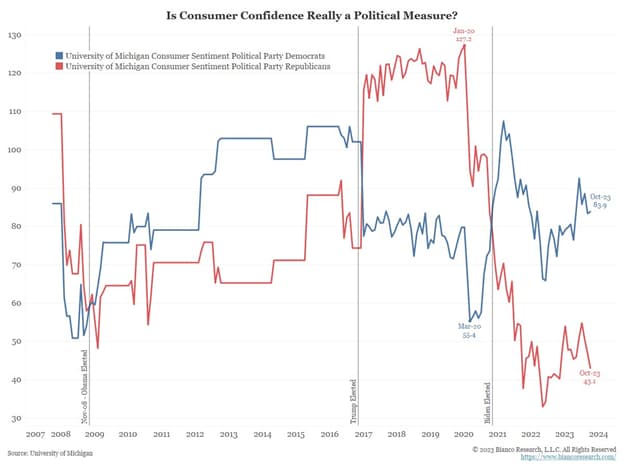
Tautologically, a survey with fewer respondents is inevitably going to be less precise and indicative of the underlying conditions. At the same time, the widening political gulf is leading more and more consumers to evaluate the economy through their own political lens, rather than an objective view of the underlying business conditions. The UofM Consumer Sentiment survey, for example, has documented wild fluctuations in sentiment around elections, based solely on the current occupant of the White House:
Source: UofM, Jim Bianco
The good news, at least for news- and data-focused traders, is that this surprise may not be permanent. If the AI trade cools down or political biases become less salient in the coming years, traditional economic policy and data could quickly regain its previous importance for markets. Additionally, as we saw during the US government shutdown, alternative forms of data can help fill the gaps and provide a more holistic view of economic conditions, even if the standard data is marred by issues with response rates and political biases.
One key takeaway for traders heading into 2026 would be to take any official policy announcements and data with a grain of salt and at least become more aware of alternative data sources to help inform their trades and maximize their chances of success.
-- Written by Matt Weller, Global Head of Research
Check out Matt’s Daily Market Update videos on YouTube and be sure to follow Matt on Twitter: @MWellerFX
Related tags:



The complete CFD trading experience
Award-winning platforms, competitive spreads, low commissions and dedicated support.
We live and breathe the markets and are dedicated to helping traders realise their ambitions as we continue to set the industry bar.
Economic calendar
Web Trader platform
Our sophisticated web-based platform is packed with features.
Related articles
US Midterm Forecast: The Key Risks for Traders to Watch Through the US Elections
Prediction markets are pricing in nearly 75% odds of a Democratic sweep in this week’s US midterm elections, a development that would result in a split from the single party Republican rule of the past two years - what will it mean for markets?

GBP/USD outlook: Currency Pair of the Week | November 2, 2026
The GBP/USD heads into a crowded week of event risk, with the midterm elections, a Bank of England rate decision and Friday's non-farm payrolls report all capable of moving markets sharply. The greenback remains fundamentally well supported by a hawkish Federal Reserve, but much of that is already priced in, while the renewed sell-off in technology stocks has exposed its vulnerability.


USD/JPY Weekly Outlook: Oil shock offsets mounting AI concerns
USD/JPY has barely moved despite tumbling US Treasury yields and a sharp selloff in AI stocks. Can elevated energy prices continue to offset the pressure?

StoneX Europe Ltd may make third party material available on this website which may contain information included but not limited to the conditions of financial markets. The material is for information purposes only and does not contain, and should not be construed as containing, investment advice and/or investment recommendation and/or an investment research and/or an offer of or solicitation for any transactions in financial instruments; any decision to enter into a specific transaction shall be made by the client following an assessment by him/her of their situation.
StoneX Europe Ltd makes no representation or warranty and assumes no liability as to the accuracy or completeness of the information provided, nor any loss arising from any investment based on a recommendation, forecast or other information supplied. You should always seek independent advice as to your suitability to speculate in any related markets and your ability to assume the associated risks, if you are at all unsure. We are not under any obligation to update any such material. Any opinion made may be personal to the author and may not reflect the opinion of StoneX Europe Ltd.