



Crypto Fundamental Analysis: Central banks are not helping confidence recover
The trading week comes to an end and, with just one week remaining before March concludes, the cryptocurrency market is once again showing a consistent sense of neutrality and weakness.
Share this:

The trading week comes to an end and, with just one week remaining before March concludes, the cryptocurrency market is once again showing a consistent sense of neutrality and weakness. This is mainly because confidence has not been able to remain strong following the central bank decisions that took place during this week.
It appears that market dynamics have once again shifted toward more stable assets, leaving aside appetite for risk markets such as cryptocurrencies. If this trend persists, the current phase of indecision may continue to remain relevant during the coming trading sessions.


Central bank week does not support risk appetite
The trading week was marked by multiple global monetary policy events, including decisions from the Federal Reserve, the European Central Bank, and the Bank of Canada, among others. Overall, both the speeches and the decisions shared a common theme: concern over persistent inflation heading into 2026.
Comments from Federal Reserve officials, such as Jerome Powell, indicated that inflation risk remains present, particularly due to recent increases in energy prices. Similarly, the European Central Bank has also pointed out that inflation continues to be a significant challenge.
For this reason, most central banks have adopted a cautious stance. In the case of the Federal Reserve, expectations for potential rate cuts have even been pushed out to October 2027, where, according to the CME Group, there is approximately a 32.0% probability of a rate reduction in the United States. This scenario reinforces the idea that interest rates could remain elevated for an extended period, limiting expectations for cuts in the short term.
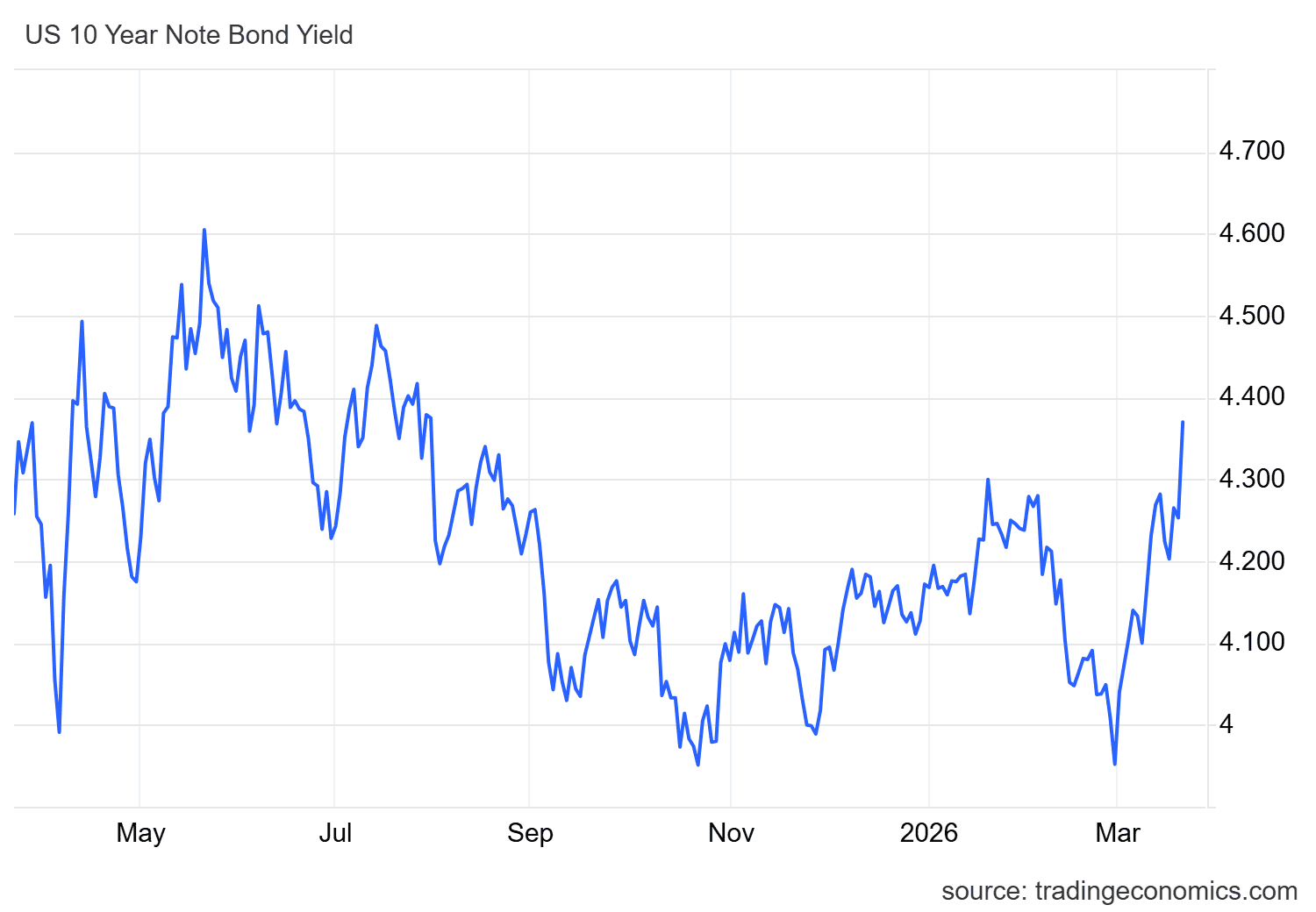
This context has begun to directly impact on the bond market, which is considered a key substitute for risk assets such as Bitcoin. Following central bank decisions, the yield on U.S. 10-year Treasury bonds has once again moved above the 4.3% level, increasing its attractiveness by offering greater stability.
Source: TradingEconomics
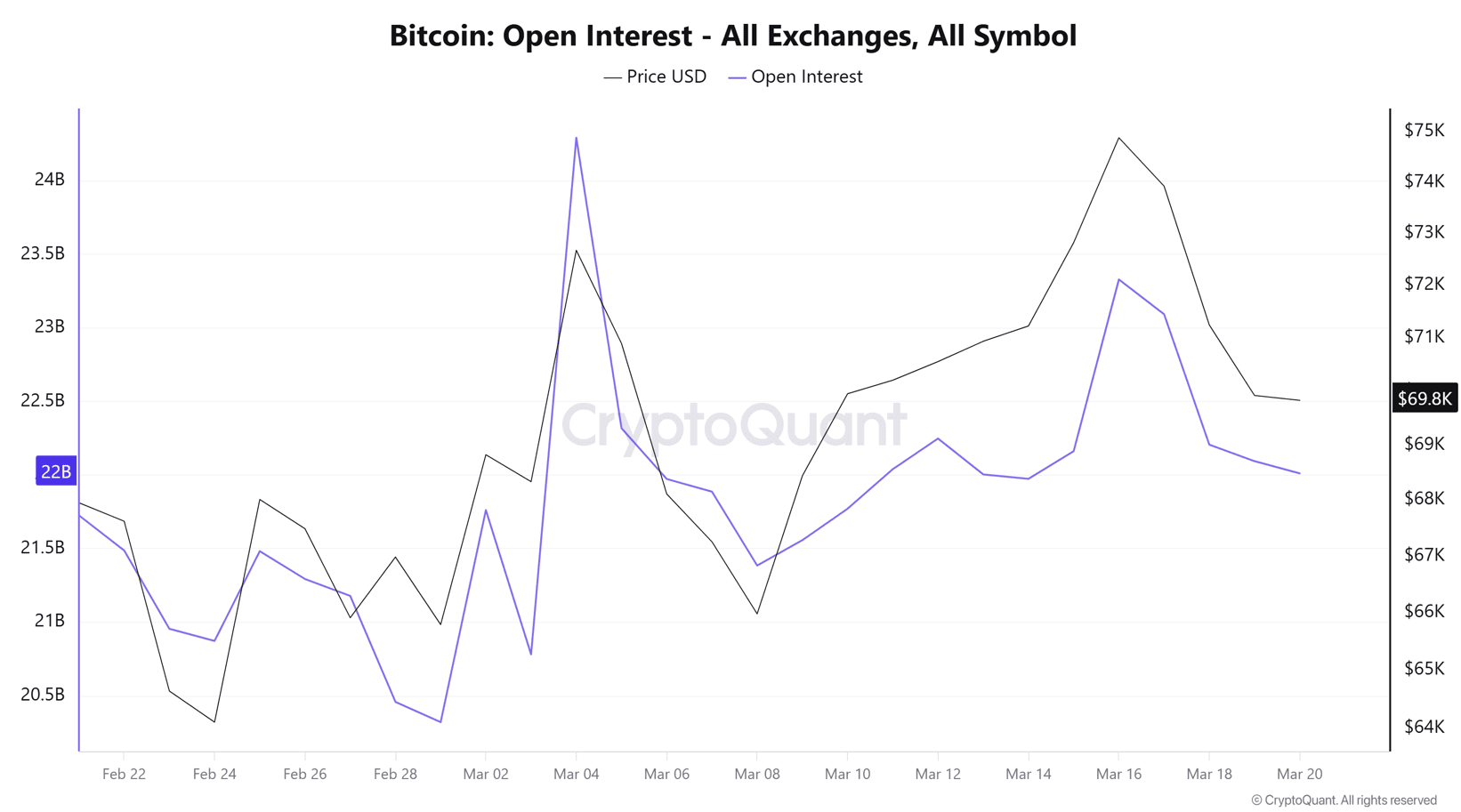
In fact, this decline in interest toward cryptocurrencies and the possible rotation of capital into other assets is already being reflected in Bitcoin-related metrics. When analyzing Open Interest, which measures total open positions across exchanges, it can be observed that, as of March 20, the indicator has fallen below $22 billion, showing a consistent downward trend.
This dynamic suggests that, alongside the decline in Bitcoin’s price, there has also been a reduction in long positions, reflecting weaker demand and a potential migration of capital toward other markets, such as bonds.
Source: Cryptoquant
Taking all of the above into account, it appears that central bank events, rather than strengthening confidence in the crypto market, have instead supported the attractiveness of the bond market. A higher interest rate environment does not favor investment in risk assets, and the recent rise in yields has captured market attention in the short term, limiting the recovery potential of cryptocurrencies.
If this dynamic continues, the market may remain in a phase of indecision or even weakness, affecting the price movements of major cryptocurrencies in the coming sessions.
Bitcoin versus other markets
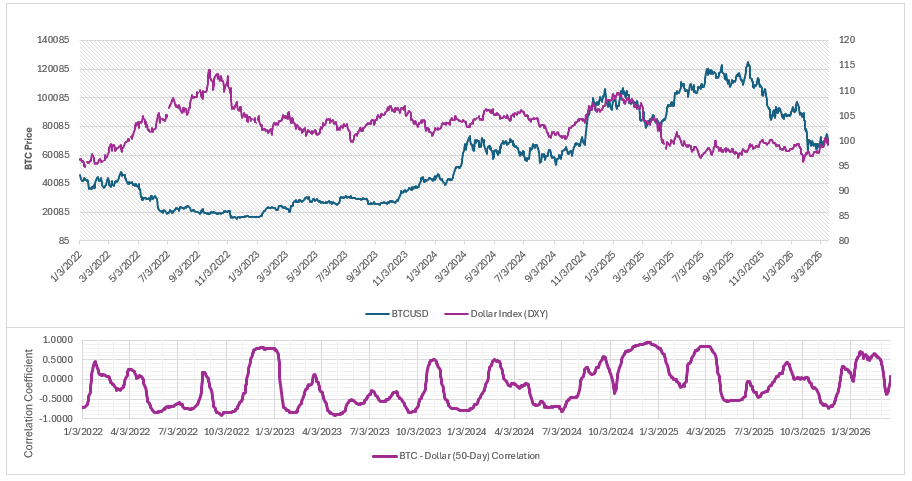
Now, Bitcoin has begun to show a notable loss of correlation with other assets that have recently shown strong recovery, such as the U.S. dollar, as reflected in the behavior of the DXY index.
The correlation coefficient between both markets is currently near 0, indicating a lack of consistent relationship over the last 50 sessions. This suggests that Bitcoin and dollar movements have become decoupled in the short term. It is important to note that this indicator can change over time.
This behavior shows that, unlike more stable assets, Bitcoin is not currently attracting consistent capital inflows, nor is it being perceived as a temporary safe-haven asset in the short term.
Source: Data – TVC, StoneX, Tradingview
In this context, while other markets such as bonds or the U.S. dollar are showing greater stability and demand, Bitcoin continues to struggle to attract investor interest. If capital flows continue shifting toward these substitute assets, the crypto market may maintain a neutral or weak performance in the short term.
Confidence returns to lows
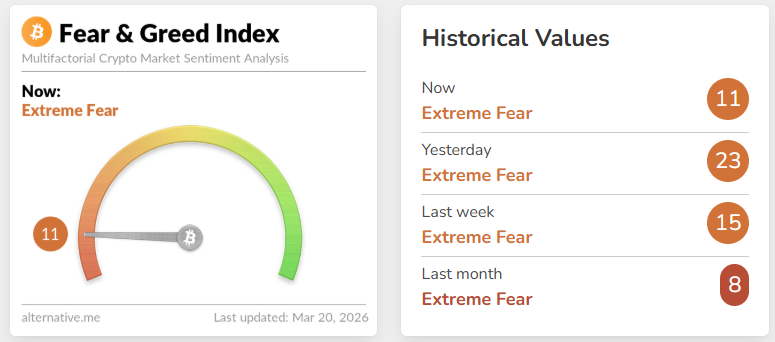
The Fear and Greed Index for cryptocurrencies continues to fluctuate around 11 points, marking the lowest levels of recent weeks and indicating a return to the “extreme fear” zone.
Source: Alternativeme
In this context, low confidence continues to hinder the consolidation of sustained demand. As long as sentiment indicators fail to show clear improvement, a sense of weakness and indecision is likely to continue dominating crypto market movements in the short term.
Written by Julian Pineda, CFA, CMT – Market Analyst
Follow him on: @julianpineda25
Latest market news




The complete CFD trading experience
Award-winning platforms, competitive spreads, low commissions and dedicated support.
We live and breathe the markets and are dedicated to helping traders realise their ambitions as we continue to set the industry bar.
Economic calendar
Web Trader platform
Our sophisticated web-based platform is packed with features.
Related articles
Bitcoin Analysis: BTC Slips Below 60k as Demand Continues to Fade
As November approaches its end, weakness around Bitcoin remains evident in the short term. During today's trading session alone, the cryptocurrency has lost nearly 2.0% of its value and continues to reflect a relatively consistent bearish dynamic.

Currencies, Commodities, and Indices Test Key Confluence Zones
The U.S. dollar index sits near its 2026 high as Fed rate hike risk and U.S.-Iran tensions push gold, stocks and Bitcoin onto key support levels.


What Bitcoin's Test of 2020-2026 Support Means for Risk Sentiment
The Bitcoin price forecast now centers on a confluence zone where the uptrend linking higher lows since 2020 meets former resistance and the 2026 low.
StoneX Europe Ltd may make third party material available on this website which may contain information included but not limited to the conditions of financial markets. The material is for information purposes only and does not contain, and should not be construed as containing, investment advice and/or investment recommendation and/or an investment research and/or an offer of or solicitation for any transactions in financial instruments; any decision to enter into a specific transaction shall be made by the client following an assessment by him/her of their situation.
StoneX Europe Ltd makes no representation or warranty and assumes no liability as to the accuracy or completeness of the information provided, nor any loss arising from any investment based on a recommendation, forecast or other information supplied. You should always seek independent advice as to your suitability to speculate in any related markets and your ability to assume the associated risks, if you are at all unsure. We are not under any obligation to update any such material. Any opinion made may be personal to the author and may not reflect the opinion of StoneX Europe Ltd.