



Crypto Fundamental Analysis: Risk sentiment rises as crypto appetite declines
As March draws to a close, the cryptocurrency market has begun to show a consistent weakening bias, accompanied by declining confidence. This comes as appetite for risk assets continues to fade in the short term, driven by rising risk sentiment following new developments in the Middle East conflict.
Share this:

As March draws to a close, the cryptocurrency market has begun to show a consistent weakening bias, accompanied by declining confidence. This comes as appetite for risk assets continues to fade in the short term, driven by rising risk sentiment following new developments in the Middle East conflict. This environment is pushing markets toward more stable assets, making the lack of interest in crypto more evident. If confidence fails to recover, this could continue to support sustained selling pressure in the coming sessions.


Rising tensions weigh on risk appetite
The trading week has been marked by attempts to advance negotiations in the Middle East conflict. The United States presented a 15-point plan aimed at achieving a short-term ceasefire; however, Iran rejected the initial conditions, raised its demands, and stated it would only accept an agreement under its own terms. This suggests that a diplomatic resolution is not likely in the near term.
Market reaction has been clear, with a steady increase in risk perception, alongside a rebound in energy prices, as WTI crude once again approaches the $100 level.
This environment has reduced appetite for risk assets, as market participants shift toward more stable alternatives such as the U.S. dollar and the bond market. This dynamic is also reflected in Bitcoin, where the Open Interest indicator—measuring total open positions—has shown a notable increase, reaching levels near $22.2 billion.
However, this rise in Open Interest has been accompanied by a decline in BTC price, suggesting that the increase may be driven by short positions, reflecting weaker demand and a growing preference for downside exposure in the short term.
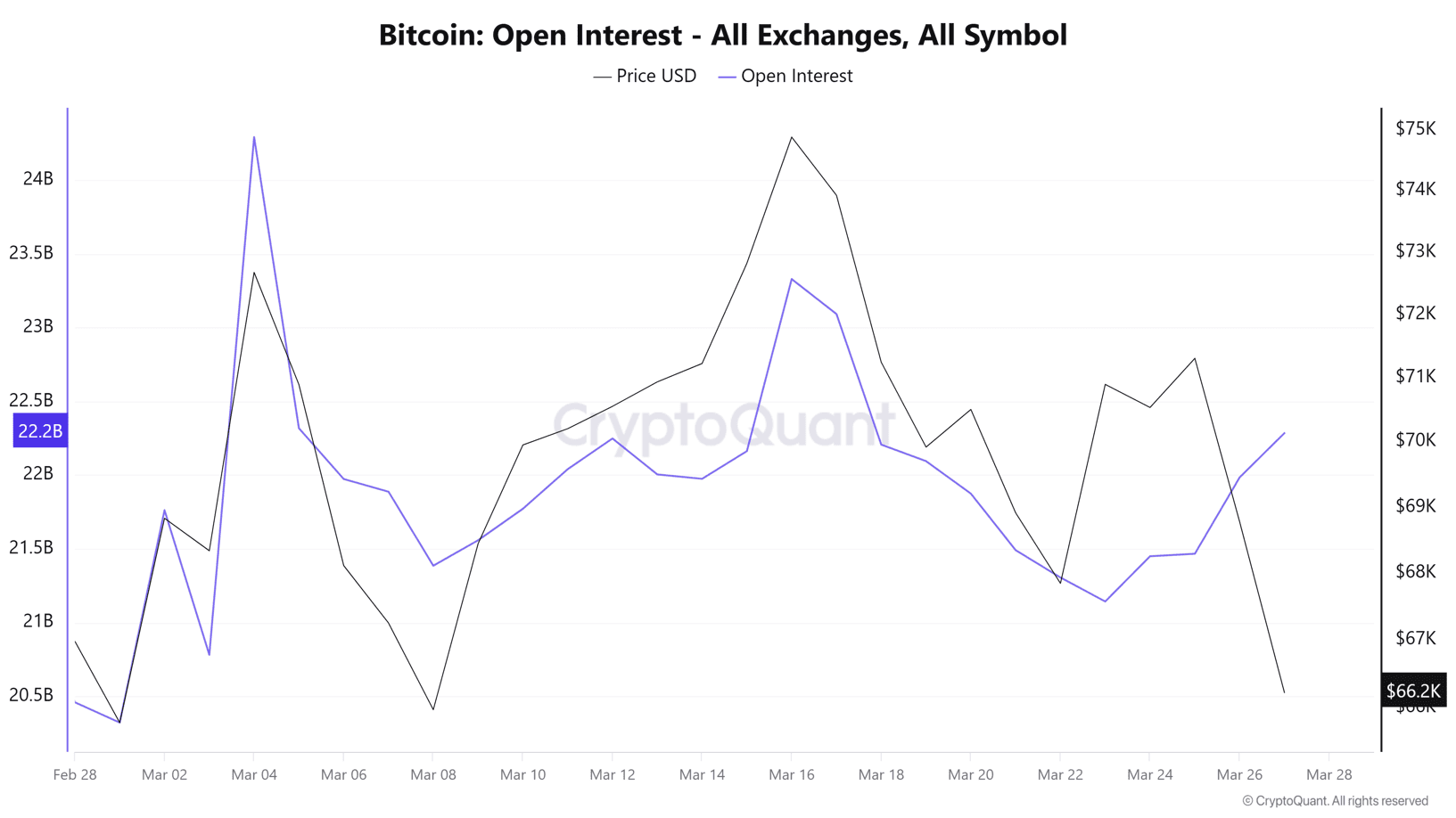
Source: CryptoQuant
Taking all of this into account, as the conflict remains active, Bitcoin—and the broader crypto market—appears unable to sustain enough appeal to attract consistent demand. This suggests that capital may continue to shift toward safer assets, and as long as no clear resolution emerges, the relevance of cryptocurrencies could continue to decline, supporting ongoing selling pressure in the short term.
Bitcoin versus other markets
At the moment, Bitcoin has begun to show a loss of correlation with assets that have recently strengthened, such as the U.S. dollar, as reflected in the behavior of the DXY index.
The correlation coefficient remains around 0.15 over the last 10 sessions, highlighting a short-term disconnect. While the dollar has shown increasing strength, Bitcoin has moved sideways or weakened, failing to track safe-haven assets. It is important to note that correlation can change over time.
This environment suggests that Bitcoin is not attracting consistent capital flows or positioning itself as a short-term safe-haven, while markets continue to favor more stable assets like the dollar.
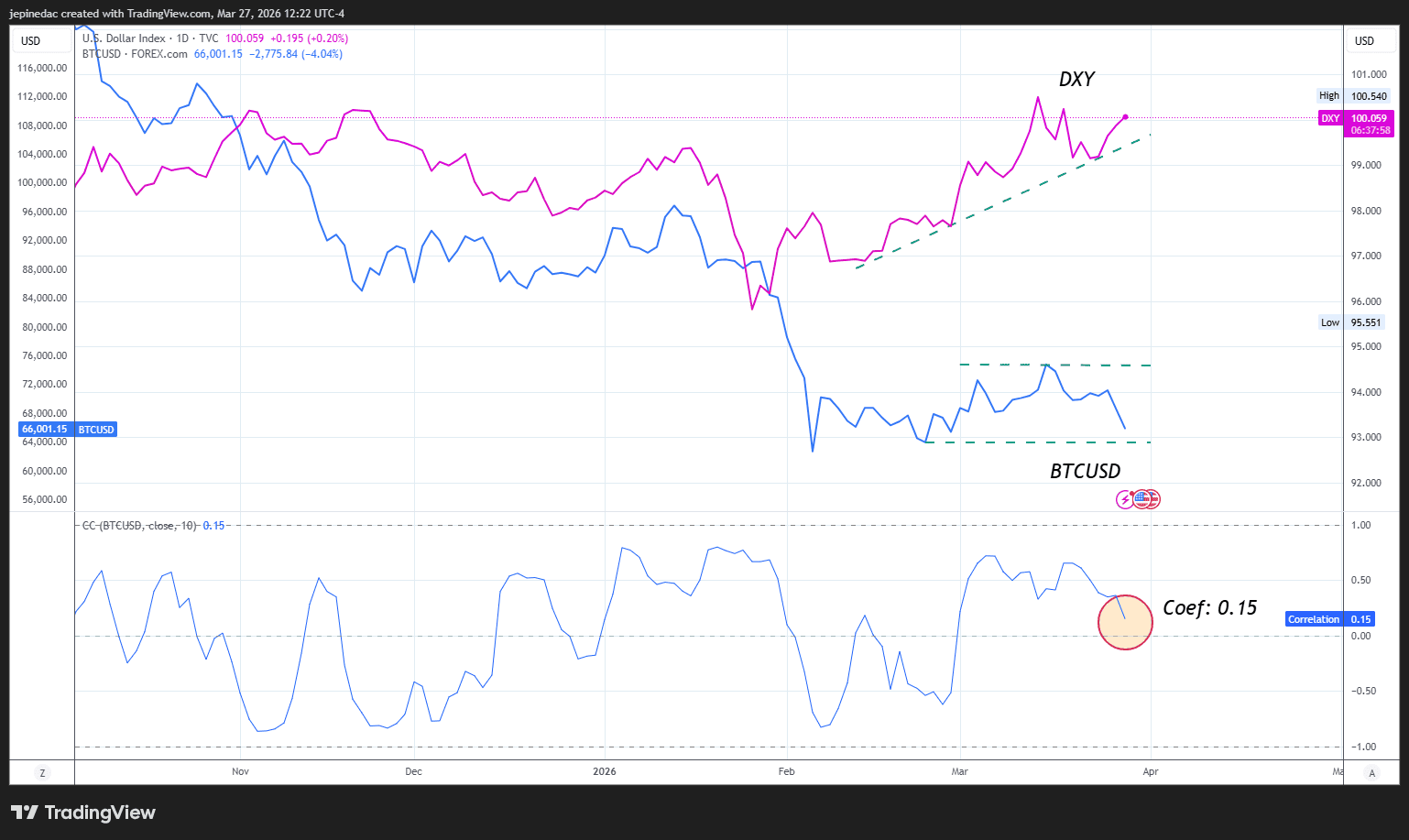
Source: Data – TVC, StoneX, Tradingview
In this context, as bonds and the U.S. dollar continue to show stronger demand and stability, the crypto market is likely to remain in a weak or sideways phase in the short term.
Confidence declines again
The Fear and Greed Index for cryptocurrencies, although it showed a modest recovery in previous sessions, has weakened again toward the end of the week, falling to around 22 points and returning to the boundary between “fear” and “extreme fear.” This reflects a continued deterioration in confidence and a rising perception of risk in the crypto market.
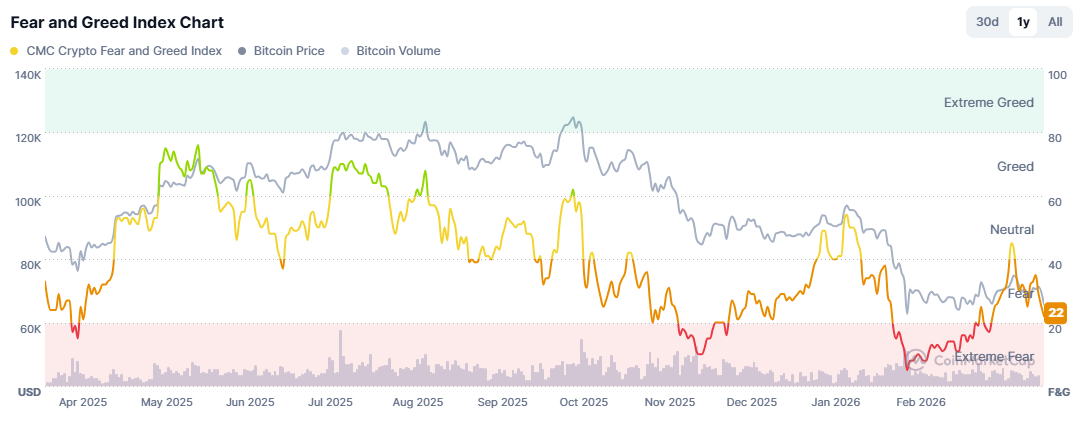
Source: Coinmarketcap
In this environment, weak confidence continues to limit the development of sustained demand, reflecting a gradual decline in market appetite. If the index fails to recover or returns consistently to the “extreme fear” zone, it could reinforce a bearish sentiment, increasing the likelihood of continued selling pressure in the coming sessions.
Written by Julian Pineda, CFA, CMT – Market Analyst
Follow him on: @julianpineda25



The complete CFD trading experience
Award-winning platforms, competitive spreads, low commissions and dedicated support.
We live and breathe the markets and are dedicated to helping traders realise their ambitions as we continue to set the industry bar.
Economic calendar
Web Trader platform
Our sophisticated web-based platform is packed with features.
Related articles
Bitcoin Analysis: What's Next for BTC After the Fed Meeting?
One of the most relevant themes surrounding Bitcoin in the short term continues to be the persistent lack of direction that has started to dominate market activity. As recent price action shows, BTC has moved by only around 0.5% over the last three trading sessions, a relatively limited variation when compared to the 3.0% daily swings that were observed just a few weeks ago.

U.S. Dollar Index Nears 2026 Highs as December Hike Bets Top 70%
The U.S. Dollar Index is retesting its 2026 highs as Treasury yields climb, oil prices stay elevated, and December rate hike bets top 70%.


Can Gold Hold Its 2026 Lows as Silver Breaks Below Its Own?
Gold and silver prices are testing their 2026 lows as U.S. 10-year Treasury yields pull back more than 8% from highs last seen in 2002.
StoneX Europe Ltd may make third party material available on this website which may contain information included but not limited to the conditions of financial markets. The material is for information purposes only and does not contain, and should not be construed as containing, investment advice and/or investment recommendation and/or an investment research and/or an offer of or solicitation for any transactions in financial instruments; any decision to enter into a specific transaction shall be made by the client following an assessment by him/her of their situation.
StoneX Europe Ltd makes no representation or warranty and assumes no liability as to the accuracy or completeness of the information provided, nor any loss arising from any investment based on a recommendation, forecast or other information supplied. You should always seek independent advice as to your suitability to speculate in any related markets and your ability to assume the associated risks, if you are at all unsure. We are not under any obligation to update any such material. Any opinion made may be personal to the author and may not reflect the opinion of StoneX Europe Ltd.